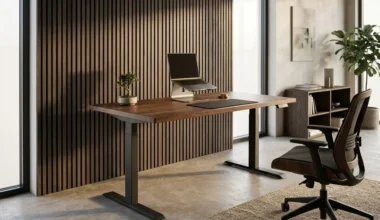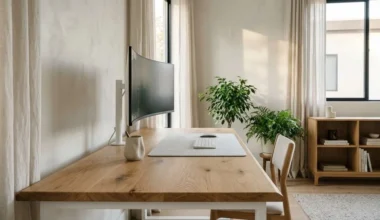
In Nordic architectural traditions, lighting is never treated as a mere technical utility; it is celebrated as an art form that shapes human emotion and wellbeing. During prolonged northern winters where daylight is scarce, creating hygge – a deep sense of comforting warmth – depends upon intentional illumination layers. When applied to a modern Scandinavian workspace, lighting transforms a simple workstation into an inviting creative haven.
Harsh fluorescent overhead fixtures flood rooms with sterile, flat white light that washes out tactile textures and strains the eyes. By curating warm 2700K light sources, you soften the room’s atmosphere, soften shadow boundaries, and cultivate deep mental stillness. For a broader look at spatial design that nurtures human calm, explore the design insights across our Ornista home living space portfolio.
Key Takeaways
- Layering task, ambient, and accent illumination prevents harsh optical contrast and visual fatigue.
- A warm color temperature between 2700K and 3000K fosters psychological ease and protects circadian rhythms.
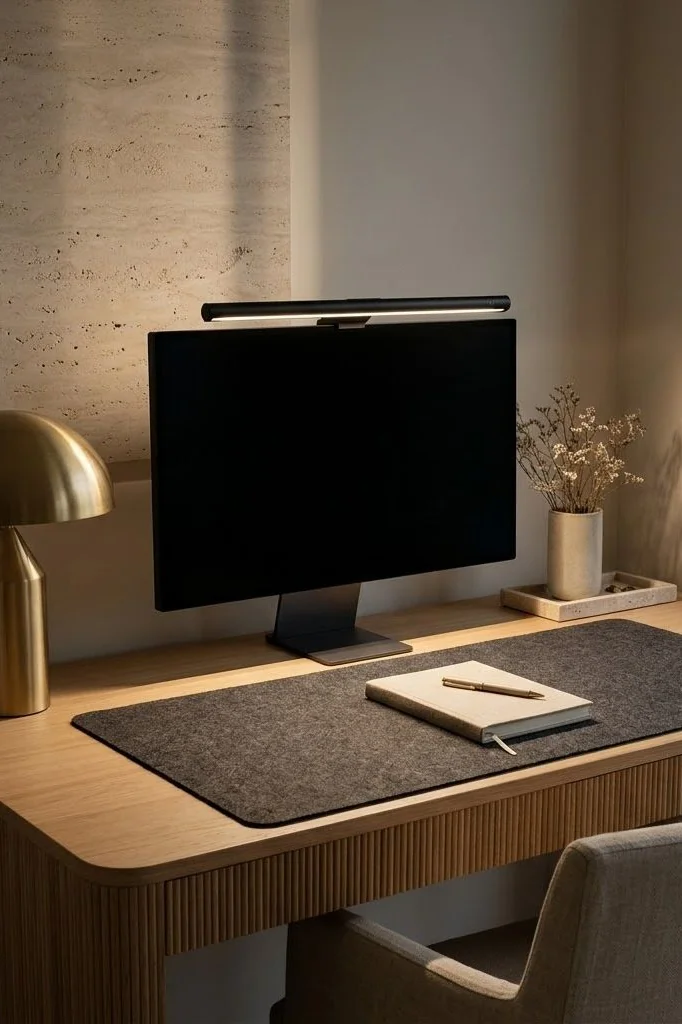
- Screen light bars project asymmetric forward beams that illuminate the desk mat without causing screen glare.
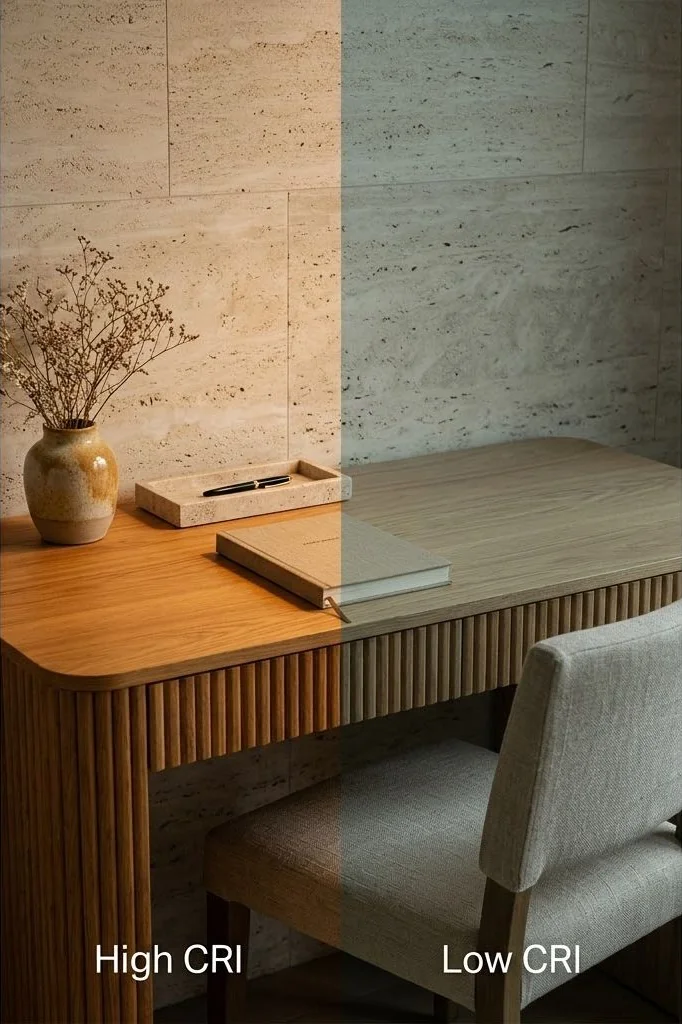
- High color rendering index (CRI >= 95) LEDs reveal authentic wood grains and tactile material tones.
- Dimmable rotary switches allow effortless lighting adaptation from morning focus to moody evening reading.
The Three Essential Layers of Minimalist Workspace Light
A well-balanced lighting scheme relies on three distinct yet harmonious layers:
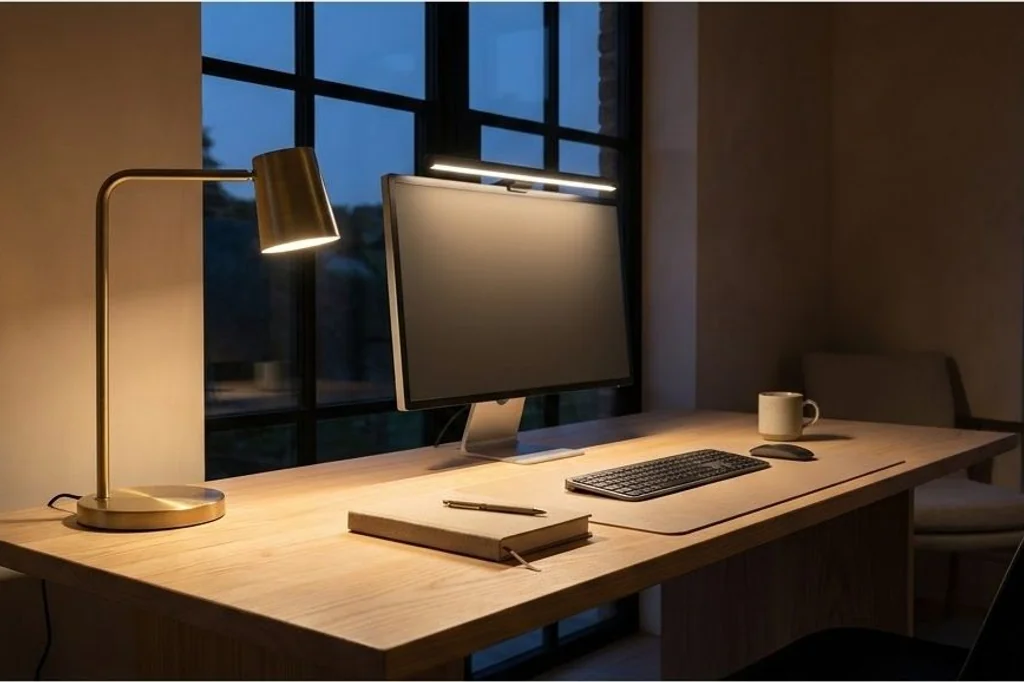
1. Task Illumination: Focused directional light directed precisely where hands and eyes interact with tools. A sculptural desk lamp with an adjustable cantilever arm or an asymmetric monitor light bar provides crisp reading illumination across documents and keyboards without spilling into eyes.
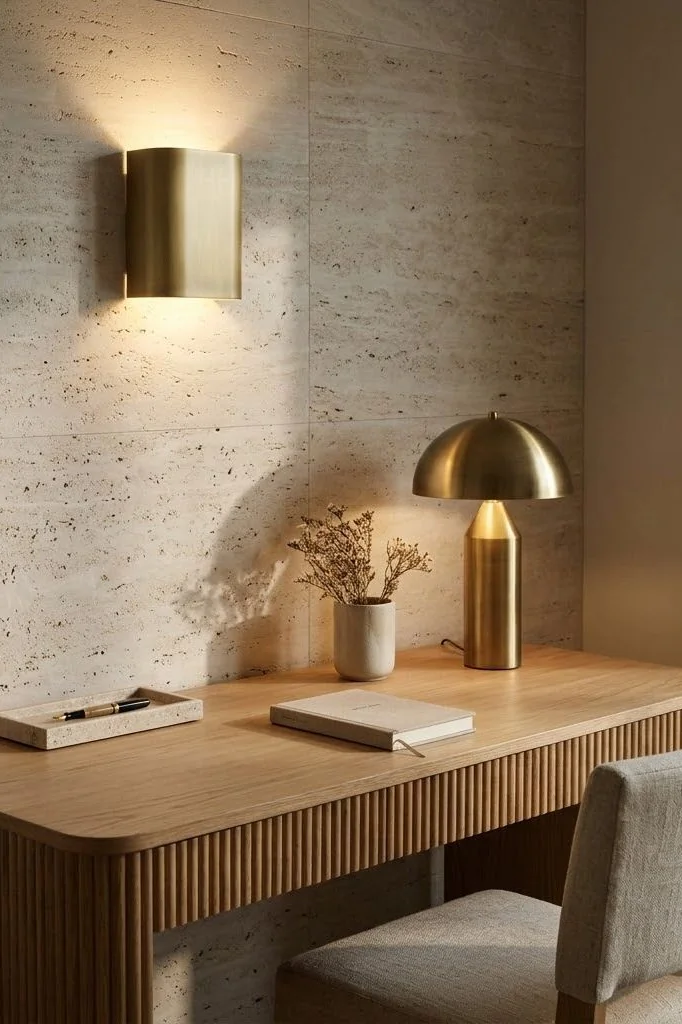
2. Ambient Illumination: Gentle, diffused light that fills the room’s volume, eliminating harsh luminance contrasts between a bright computer display and pitch-black surrounding walls. Dimmable wall sconces, uplighting floor lamps, or hidden cove LEDs bouncing off warm plaster achieve this balance effortlessly.
3. Accent and Tactile Glow: Low-intensity lighting that highlights specific architectural materials, such as a directional spotlight grazing the textured grain of a solid oak desk or illuminating hand-thrown ceramic vessels on a floating shelf.
Screen Light Bars: Asymmetric Optical Precision
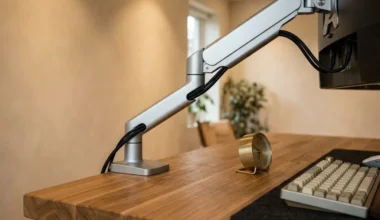
One of the most valuable innovations in modern desk lighting is the monitor-mounted light bar. Traditional desk lamps positioned beside a screen often cast unwanted reflections across glass panels, producing optical glare that accelerates eye strain.
Screen light bars perch discreetly atop the monitor bezel, projecting an asymmetric optical beam downward and outward onto the desk mat. Crucially, the light cutoff angle prevents rays from hitting the display surface itself. This illuminates the wooden work surface evenly while occupying zero desktop footprint. For a harmonious desk aesthetic, pair your light bar with curated accessories detailed in our guide on Scandinavian desk shelf organization.
Color Temperature Calibration: 2700K Versus 4000K
Color temperature, measured in Kelvin (K), dictates the psychological tone of the workspace. Cool white light between 4000K and 5000K is common in commercial office towers to simulate midday sun and maintain high alertness. However, in residential sanctuaries, continuous exposure to cool spectrum light can trigger nervous system restlessness.
Calibrating your light sources to a warm 2700K to 3000K spectrum creates a cozy, firelit ambience that relaxes the mind while providing ample visual clarity. Look for LED bulbs specified with a Color Rendering Index (CRI) of 95 or higher (R9 > 80). High CRI illumination prevents solid timber desks from looking dull or greenish, rendering rich amber oak and chocolate walnut tones with radiant natural vibrancy.
Sculptural Lamp Design: Materiality and Form
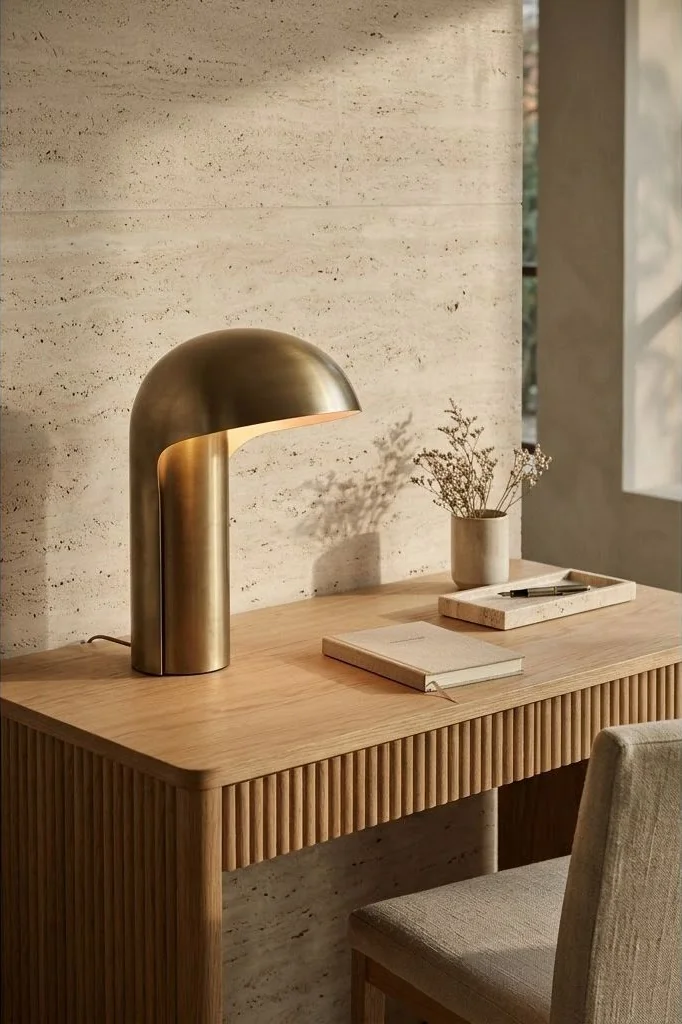
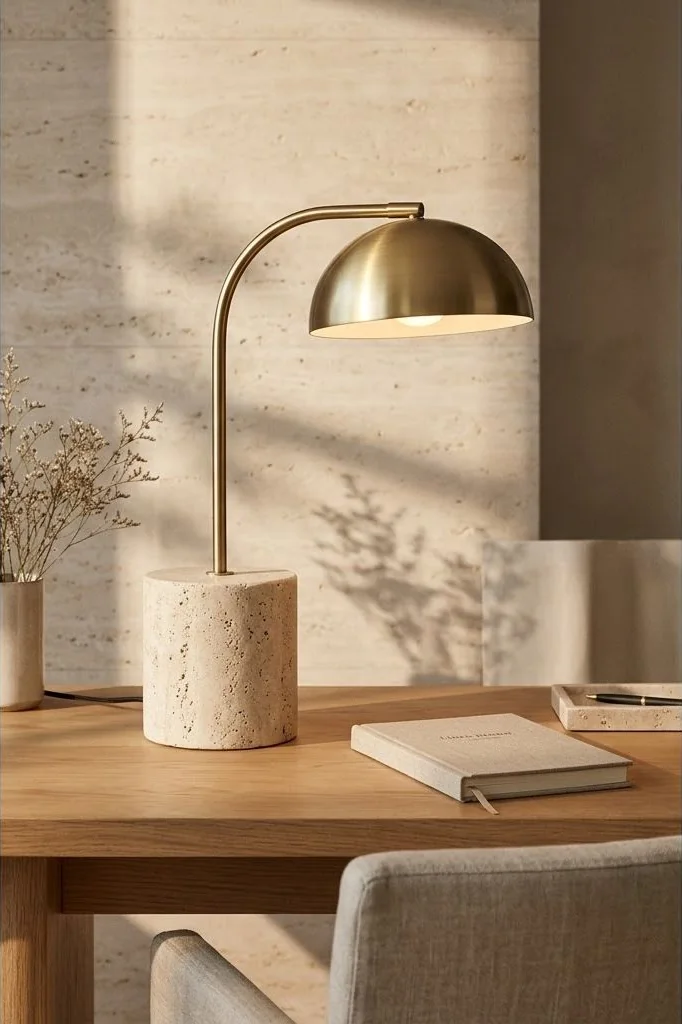
In a warm minimalist interior, the desk lamp operates as a functional sculpture when unlit during the daytime. Avoid cheap plastic fixtures with visible seams or garish logos. Instead, invest in luminaires crafted from honest, tactile materials.
Brushed solid brass develops a delicate, organic patina over time, echoing the warm undertones of natural timber tops. Spun aluminum with a matte chalk-white or charcoal powder coat introduces crisp architectural geometry. Heavy cast-iron or honed travertine plinth bases ground the lamp firmly, ensuring stability when articulating the swivel arm. For complementary material pairing ideas, consult our study on solid wood desk maintenance care.
Daylight Sculpting and Window Positioning
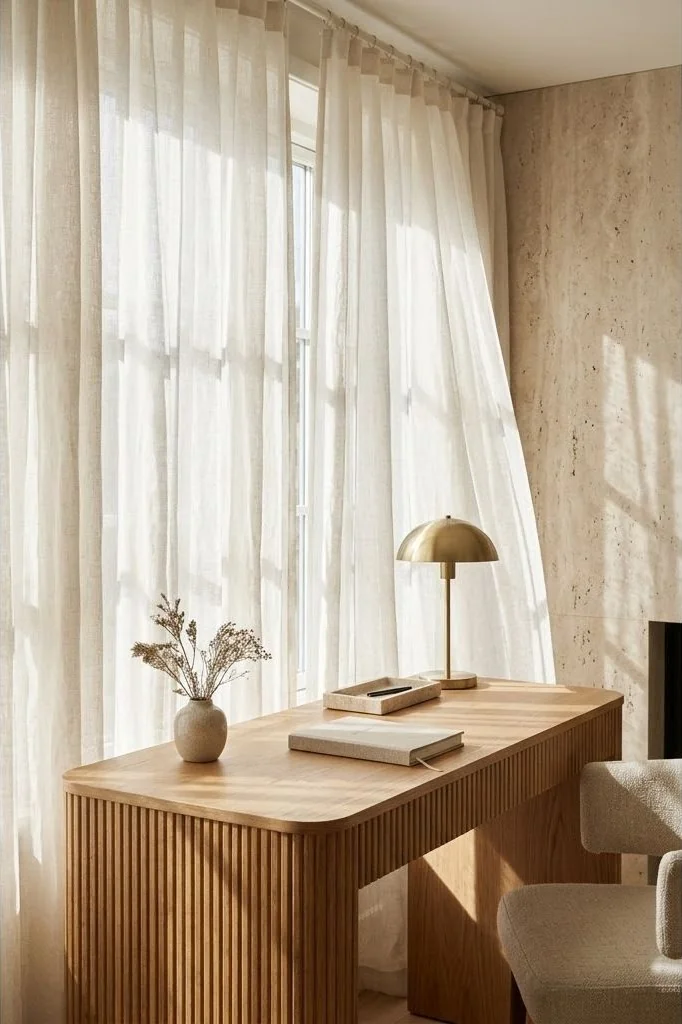
Artificial illumination must integrate seamlessly with shifting natural sunlight. Positioning a desk perpendicular to large windows allows soft north- or east-facing daylight to wash sideways across the work surface, avoiding harsh frontal glare or backlighting shadows.
Outfit windows with sheer Belgian linen drapes or woven wood shades. As daylight fades into dusk, transition smoothly into your warm artificial lighting layers. As observed in interior architecture surveys by Dwell, spaces that mindfully modulate light throughout the day nurture prolonged focus while honoring the natural circadian rhythms of the body.
Core Spatial Principles for Nordic Workspaces
To ensure your workspace layout retains its serene balance through evolving seasons and technology updates, anchor your setup around three timeless architectural guidelines:
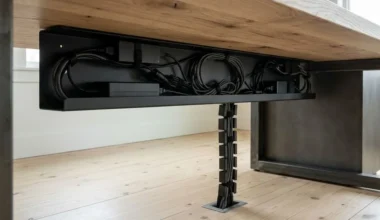
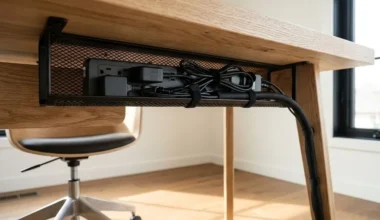
First, maintain visual lightness by preserving negative space. Resist the urge to fill every square inch of your desktop with gadgets or decorative items; bare wood surface is itself a restorative visual rest for tired eyes. Second, establish consistent material dialogue throughout the room. If your desk features white oak, echo that pale grain in picture frames, floating bookshelves, or flooring trims. Third, hide technical friction completely: ensure that all power distribution, charging cables, and peripheral transformers remain entirely invisible from normal standing and seated sightlines.
Cultivating Enduring Harmony in Intentional Workspaces
Creating an inspiring Scandinavian workspace is not a fleeting weekend project or an exercise in surface styling. It represents a deeper architectural dialogue between physical form, natural textures, and the mental rhythms of daily work. When you eliminate chaotic cable nests and replace synthetic surfaces with honest, living timber, the entire emotional resonance of the room transforms.
Each morning becomes an opportunity to step into an environment specifically engineered to protect mental clarity and nurture deep creative immersion. By investing care into fine details – from tactile wood grains and recessed cable trays to balanced 2700K ambient illumination – you build an enduring sanctuary that honors both personal wellbeing and professional craft.
Frequently Asked Questions
Why should cold 5000K lighting be avoided in home office workspaces?
Cold bluish light produces intense glare on wooden surfaces and suppresses natural melatonin production, disrupting evening sleep cycles.
Does a monitor light bar replace a traditional desk lamp?
A monitor light bar provides flawless forward task light for keyboard work, but pairing it with a warm ambient lamp creates depth and spatial balance.
What is CRI and why does it matter for wood desk setups?
Color Rendering Index measures how faithfully a light source reveals natural colors; a CRI above 95 ensures rich timber grain tones look warm and lifelike.
How can I prevent backlighting glare when my desk faces a window?
Incorporate sheer linen drapes to diffuse direct harsh sunlight into soft, even ambient illumination.