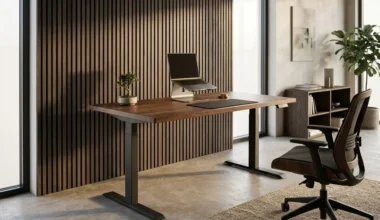
Adopting scandinavian desk shelf organization is one of the most effective strategies for introducing vertical hierarchy and calm intentionality into a modern home office. In Scandinavian interior design, spatial serenity depends on purposeful layering. A single flat desktop often becomes a cluttered landing zone where keyboards, notebooks, coffee mugs, and loose cords compete for horizontal space.
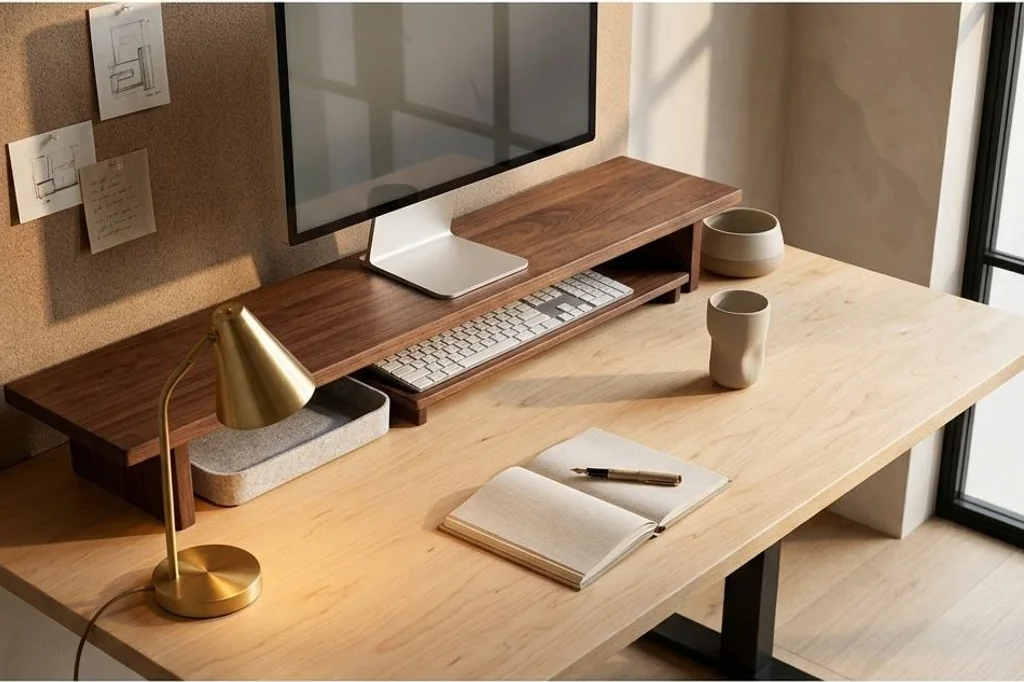
Introducing a solid hardwood desk shelf or monitor riser creates an architectural second tier. This dual-tier zoning allows you to separate active input tools from passive reference items and concealed technology. The upper shelf positions displays at comfortable ergonomic eye level, while the recessed lower cavity creates dedicated parking bays that swallow docking hubs, cables, and peripherals out of sight.
Key Takeaways
Core methods for mastering Scandinavian desk shelf organization:
- A solid timber desk shelf establishes clear spatial zoning, dividing active work zones from passive peripheral storage.
- The lower horizontal cavity discreetly conceals Thunderbolt docking hubs, external SSD drives, and peripheral cord clutter.
- Dedicated parking bays allow keyboards and trackpads to slide completely out of sight during analog reading or writing sessions.
- Curating tactile catchall trays made of wool felt, turned wood, and brushed brass imposes intentional visual boundaries on small accessories.
- Concealing a warm 2700K downward-facing LED light strip beneath the riser bathes the desk pad in glare-free ambient task illumination.
The Architectural Anatomy of a Dual-Tier Desk Shelf
A well-crafted Scandinavian desk shelf is an architectural structure engineered to bear weight while maintaining visual lightness. Unlike bulky plastic monitor stands, an authentic timber riser utilizes premium solid hardwoods such as American walnut, European white oak, or pale birch ply. The horizontal shelf board typically measures between 36 and 48 inches in length, supported by low-profile aluminum or cork-cushioned steel legs that span 4 to 5 inches in height. For foundational inspiration on Nordic spatial composition, study the Ornista aesthetic living ethos.
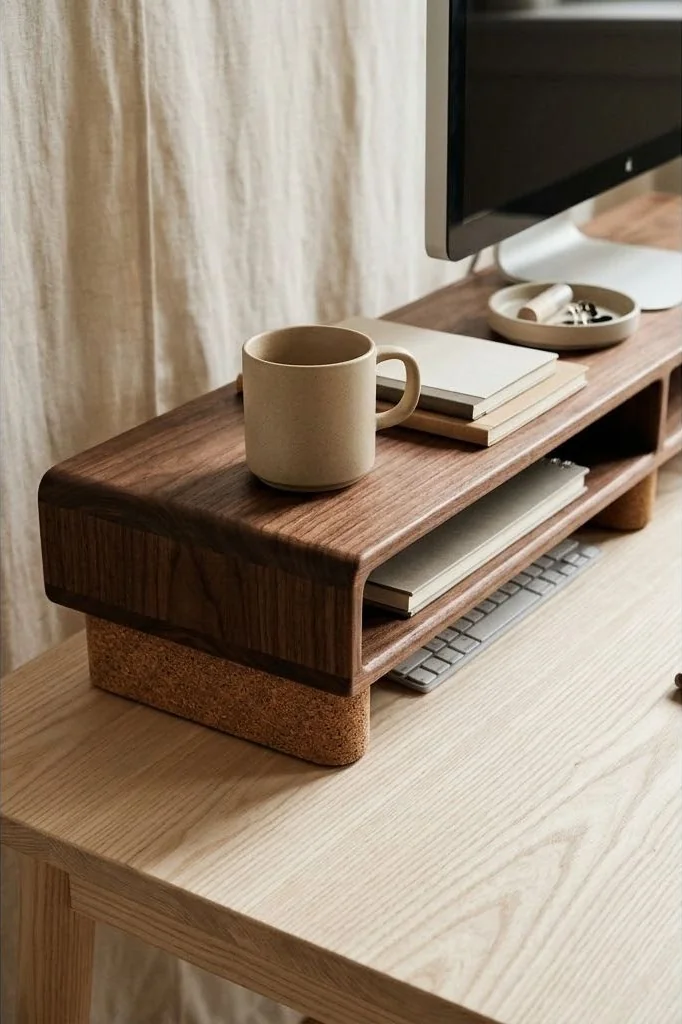
By raising display monitors 4 to 5 inches above the primary desk surface, the shelf naturally aligns your horizontal gaze with the upper third of the screen, reducing forward head posture and spinal fatigue. Simultaneously, the open span beneath the shelf introduces negative space that makes the entire desk appear broader and more breathable. When pairing your shelf with a timber work surface, choosing harmonious solid wood desk tops for scandinavian setup creates curated textural cohesion across both horizontal tiers.
Concealing Docking Stations and USB Hubs Beneath the Riser
High-powered Thunderbolt docks, external backup drives, and multiport USB hubs are vital tools for modern knowledge work, yet their flashing LED status lights and spiderweb wiring easily degrade a serene office atmosphere. The horizontal cavity beneath a desk shelf functions as the ideal concealment chamber.
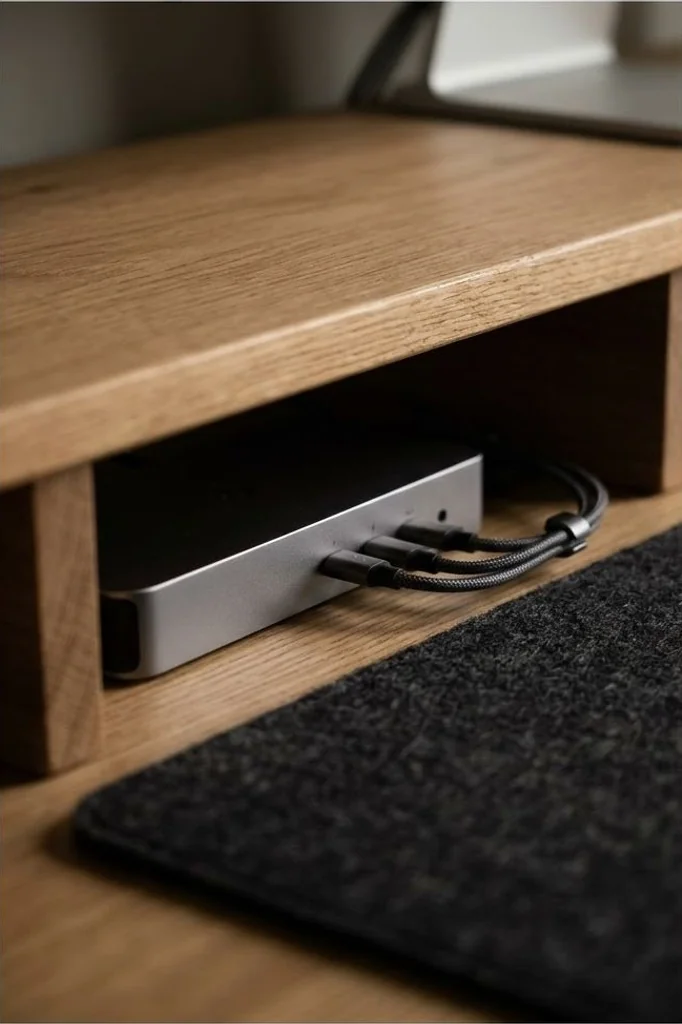
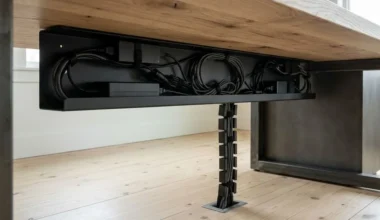
Place your docking hub deep beneath the rear center of the shelf riser. Route its upstream host cable forward through a small routed notch or beneath a wool desk pad to connect seamlessly to your laptop. By bundling short 6-inch patch cords behind the dock and pairing them with structured hidden cable routing for minimalist desk setup, all peripheral data lines disappear into the lower shadows, leaving only clean ports accessible along the front perimeter.
Curating Tactile Trays: Wool Felt, Anodized Metal, and Stoneware
Minimalism is not about emptying a space entirely; it is about intentional containment. Small analog items such as fountain pens, brass pencil sharpeners, USB thumb drives, and reading glasses naturally migrate across the desk during a productive day. Without dedicated containment vessels, these items scatter across the timber surface and create visual noise.

A curated desk shelf uses textured catchall trays to establish clear physical boundaries. Pair a molded German merino wool felt tray with a machined brass pen rest or a raw unglazed stoneware dish. These natural materials soften the hard edges of digital monitors and keyboards, introducing sensory warmth. Editorial reviews published by Dezeen observe that tactile material contrasts in Scandinavian home studios anchor human focus and bring emotional grounding to digital workflows.
Keyboard and Trackpad Parking Bays for Frictionless Reset
A primary functional benefit of a desk shelf is the keyboard parking bay. Throughout the workday, knowledge workers frequently shift between intensive digital typing and analog tasks such as sketching, drafting concepts in a paper journal, or reading architectural monographs. A static keyboard occupying prime desk real estate presents a constant physical barrier to these analog modes.
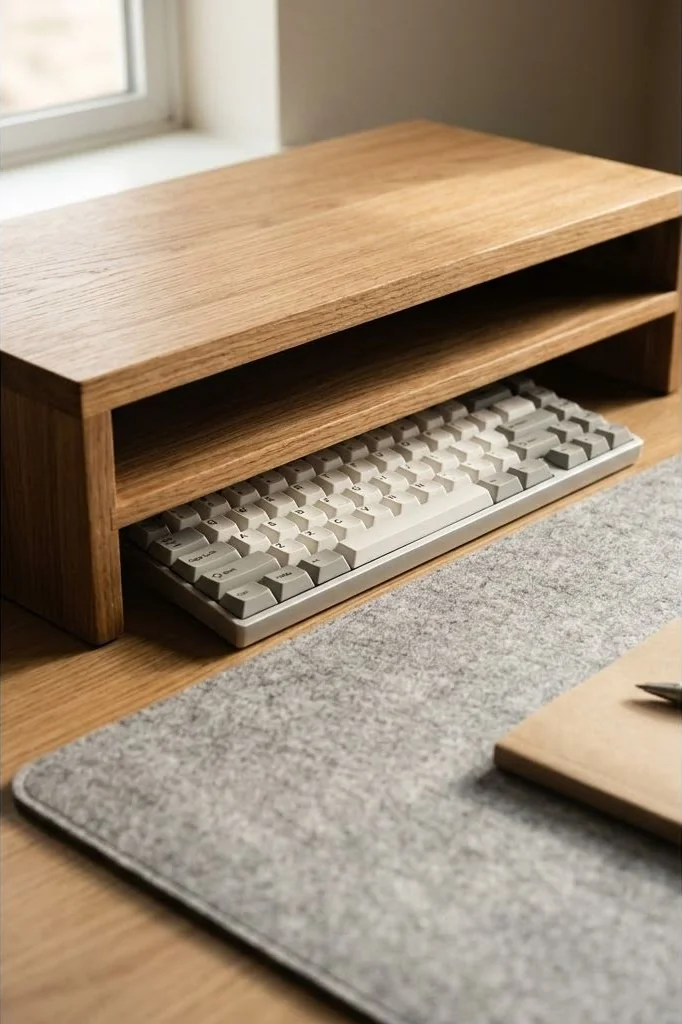
Ensure the clearance between the desk shelf support legs is wide enough to accommodate your keyboard and trackpad side-by-side, typically requiring at least 22 to 24 inches of clear span. When digital tasks conclude, sliding the keyboard effortlessly under the shelf immediately clears an expansive horizontal expanse on your wool desk mat. This physical transition marks an intentional cognitive shift, signaling the brain to slow down and engage with deep, focused analog thought.
Proportion and Visual Weight: Matching Shelf Length to Desktop Span
Spatial proportion dictates how harmonious the desk shelf appears within the overall room layout. A desk shelf that extends the exact full width of the desktop can look rigid and boxy, resembling an industrial cubicle partition. Conversely, an undersized 20-inch monitor riser centered on a massive 72-inch executive desk appears lost and visually insignificant.
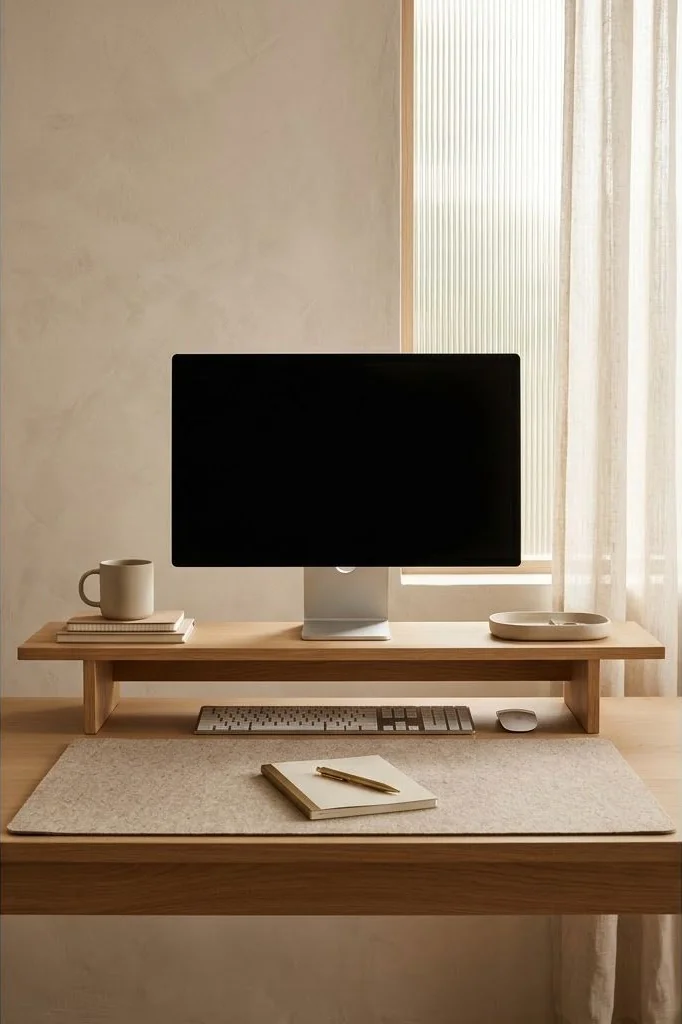
The ideal visual ratio follows the classic design guideline of maintaining approximately 6 to 8 inches of exposed desktop margin on either side of the shelf riser. For instance, pairing a 44-to-48 inch shelf with a 60-inch desktop provides generous lateral breathing room. This negative space accommodates a sculptural task lamp, a ceramic coffee mug, or a small potted plant without crowding the central visual field.
Layering Ambient Task Lighting Around the Shelf Frame
Illumination plays a decisive role in defining the mood and focal intensity of a Scandinavian desk setup. Harsh overhead ceiling fixtures cast unyielding downward shadows and cause uncomfortable glare across computer displays. Integrating architectural lighting directly into the desk shelf framework creates soft, layered illumination.
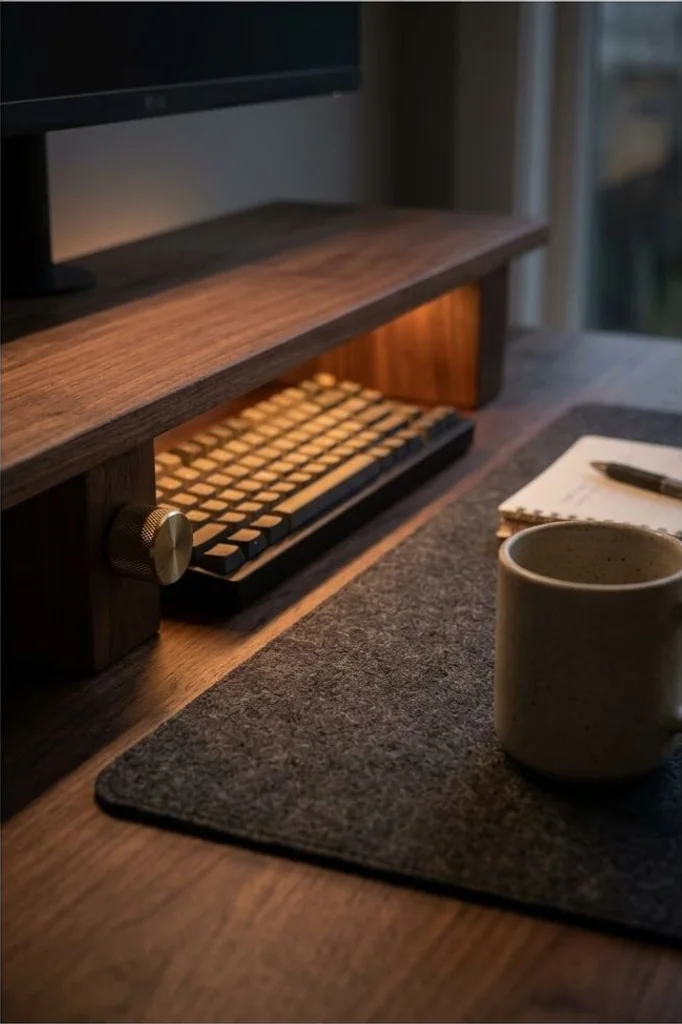
Adhere a high-CRI (Color Rendering Index > 95) warm 2700K LED ribbon into a recessed aluminum channel along the front underside of the desk shelf. This concealed fixture washes the keyboard and desk mat in a soft, downward pool of warm light while remaining completely shielded from your direct line of sight. Combined with a slim monitor light bar on the upper screen, this dual-layered lighting setup eliminates eye strain and wraps the workspace in a warm, welcoming Nordic glow as dusk approaches.
Frequently Asked Questions
What is the ideal height for a desk shelf monitor riser?
A height between 4 and 5 inches (10 to 13 cm) is optimal for most users. This lift aligns computer displays with natural eye level while leaving ample vertical clearance beneath the shelf to park mechanical keyboards and conceal docking hardware.
How much weight can a solid wood desk shelf hold?
A well-constructed solid hardwood desk shelf built with a 0.75-inch thick oak or walnut slab and aluminum or steel legs can comfortably support 40 to 60 pounds, easily bearing heavy 34-inch ultrawide monitors and studio speakers.
Should a desk shelf match the wood of the desktop exactly?
Not necessarily. While matching wood species creates a seamless built-in look, introducing subtle tonal contrast – such as a rich American walnut shelf resting on a pale white oak desk – adds curated architectural depth and visual intrigue.
How do you prevent a desk shelf from scratching a wood desk?
Always inspect the bottom contact points of the riser legs. Premium shelves feature integrated high-density natural cork pads or soft wool felt feet that dampen vibrations and protect hardwood tops from scratches when shifted.
Mastering Scandinavian desk shelf organization bridges functional storage and mindful living, proving that intentional design transforms everyday work surfaces into spaces of quiet inspiration.