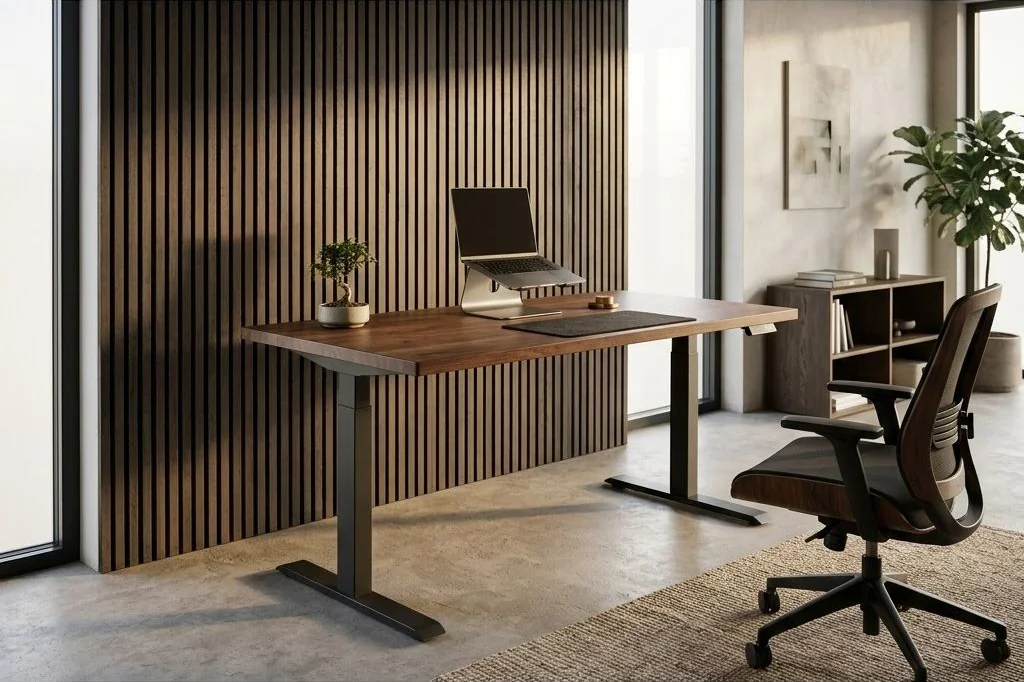
Achieving hidden cable routing for minimalist desk setup is an architectural discipline that bridges functional workspace technology and visual serenity. In Scandinavian interior design, visual clutter directly impairs mental clarity. When power bricks, display cords, and peripheral cables dangle haphazardly beneath a beautiful timber worktop, the intentional tranquility of the space is immediately compromised.
Engineering a zero-visible-wire workstation requires treating cable management as an integrated infrastructure rather than an afterthought. By routing power through concealed pathways, establishing structural umbilical channels, and respecting mechanical bend radiuses, you create an environment where technology supports human focus without dominating spatial aesthetics.
Key Takeaways
Core principles for executing a zero-visible-wire minimalist workspace:
- Consolidating all workstation power into a single heavy-duty surge protector under the desk eliminates redundant floor cords.
- Establishing a single-point fabric umbilical drop preserves architectural sightlines and simplifies floor cleaning.
- Split braided monofilament sleeving provides flexible containment for diverse wire gauges without the rigidity of plastic conduits.
- Magnetic raceways seamlessly guide vertical wiring down steel desk legs without leaving destructive adhesive residue.
- Calculating a calibrated 6-inch cable slack loop at maximum standing height prevents accidental port damage during motor transitions.
The Zero-Visible-Wire Design Philosophy
The zero-visible-wire philosophy does not mean eliminating cables; it means rendering them invisible from standard seated and standing sightlines. In traditional office spaces, wire clutter accumulates haphazardly as new devices are introduced. By contrast, a minimalist Scandinavian setup approaches wiring through systemic zoning: the peripheral zone on the worktop, the aggregation zone beneath the timber surface, and the umbilical transition to the wall. For foundational principles on intentional home aesthetics, study the Ornista design ethos.

When entering an office, the human gaze naturally sweeps across the open air beneath the desk before settling on the work surface. When that space is completely empty, the room feels larger, lighter, and distinctly architectural. To achieve this, every cable originating on the desktop must immediately travel toward a central concealment point rather than dropping vertically down the edges of the furniture.
Establishing a Single-Point Wall Umbilical Drop
The single most transformative rule of clean cable routing is the single-point umbilical drop. Many home setups suffer from a web of cords descending from multiple points: one monitor cable on the left, a laptop charger on the right, and desk motor power in the center. This creates visual chaos and entangles robot vacuums.
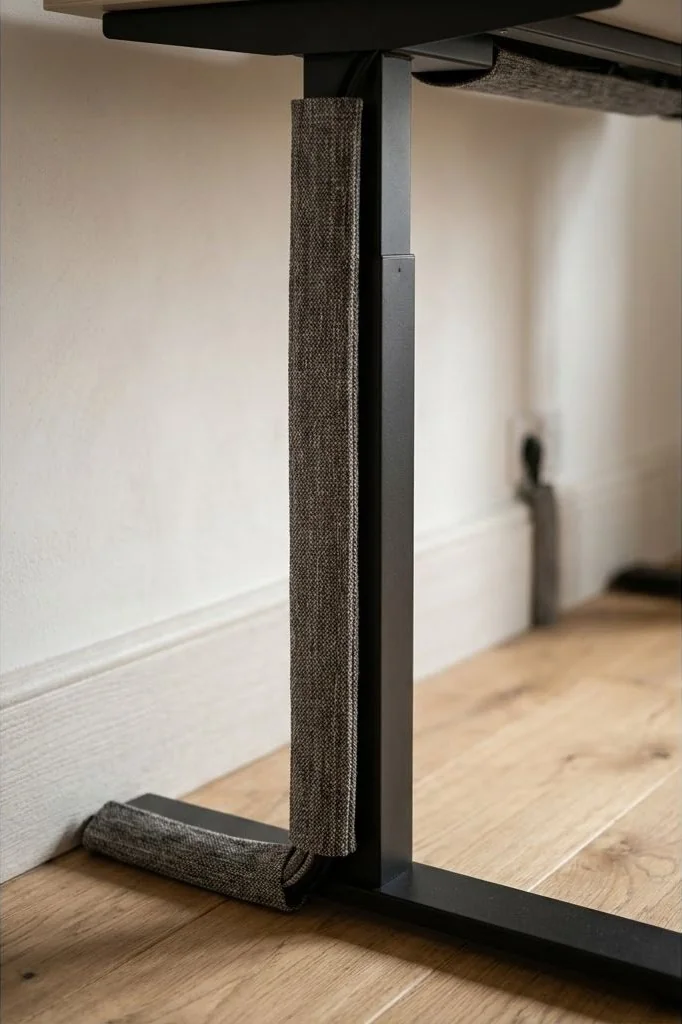
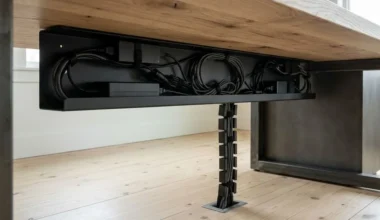
Instead, mount a commercial-grade 8-to-12 outlet surge protector directly beneath the desk inside a dedicated housing. By plugging every display, dock, computer, and lamp into this central hub, only one master power cable leaves the desk assembly to reach the wall outlet. To master the containment of heavy charging bricks and power distributors, pair this strategy with sturdy under-desk cable management trays that keep high-voltage components securely off the floor.
Split Braided Sleeving vs Solid Cable Conduits
When grouping multiple cables together, the material selection of the conduit determines both flexibility and aesthetics. Rigid plastic spiral wrap and hard split-tubing often look industrial and harsh, while collecting dust within their crevices. Solid plastic tracks also resist bending, creating awkward kinks when routed around corners.
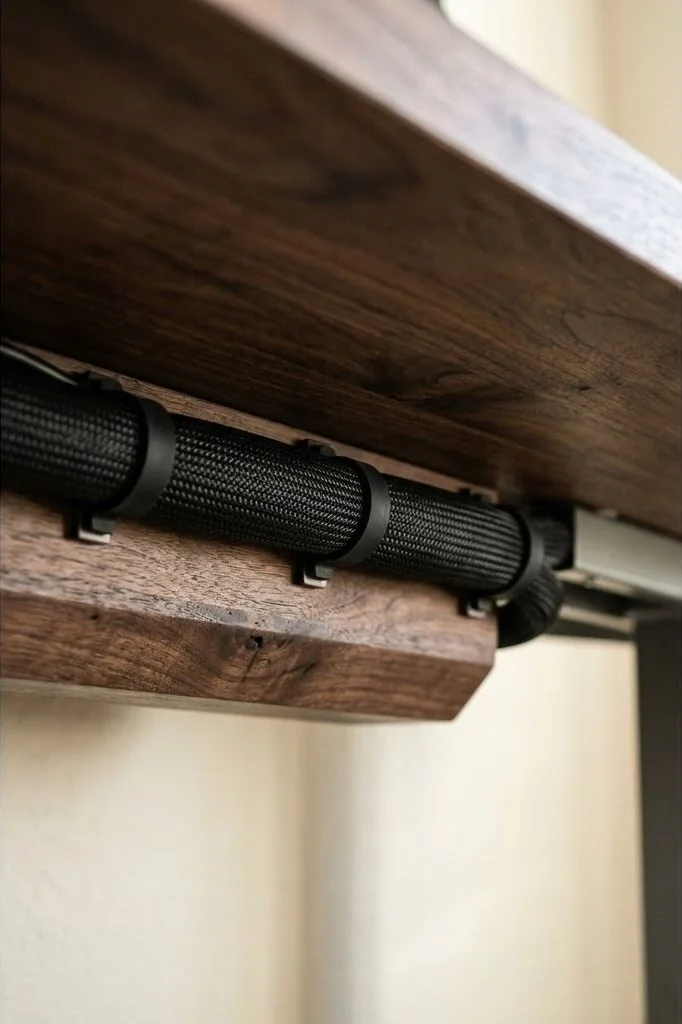
Split braided monofilament sleeving represents the gold standard for refined home offices. Woven from high-density polyethylene terephthalate, braided sleeving features an overlapping 25% seam that allows individual wires to enter or exit anywhere along the bundle without cutting. The woven fabric texture absorbs light rather than reflecting it, blending quietly into the shadows beneath a timber desk while conforming naturally to dynamic movements.
Magnetic Cable Channels for Steel Leg Routing
Guiding the master umbilical cord from the under-desk tray down to the floor outlet requires a discreet vertical pathway. While adhesive cable clips are common, double-sided foam tapes inevitably degrade over time, leaving gummy, destructive residue on fine furniture finishes and drywall.
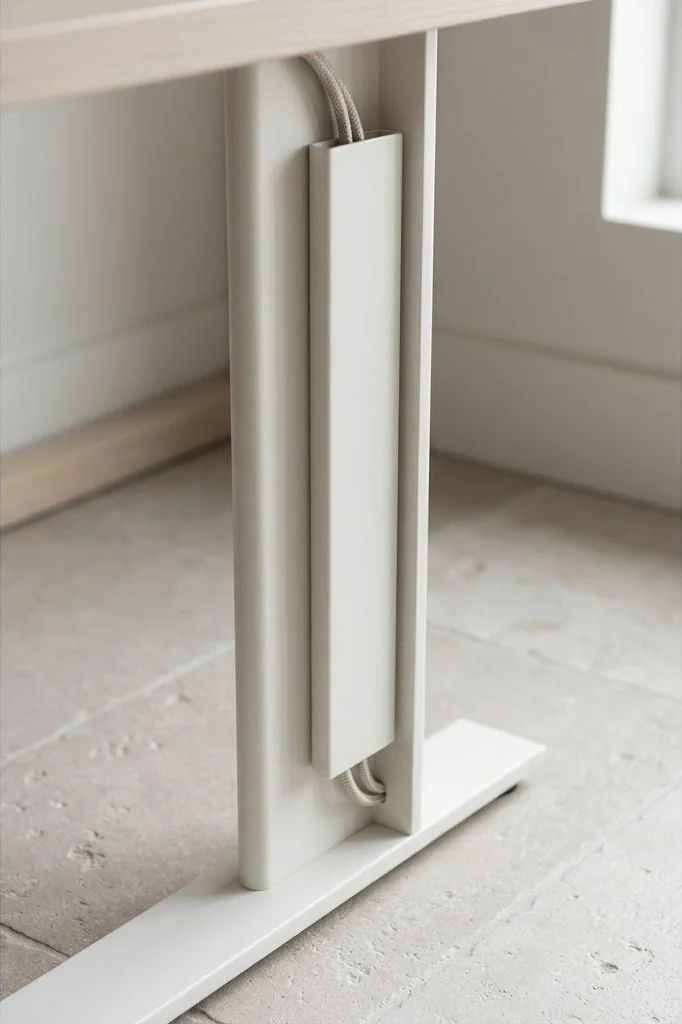
For desks built with steel or cast iron legs, magnetic cable channels offer an elegant solution. Fabricated from powder-coated folded steel equipped with rare-earth neodymium magnets, these channels snap firmly to the inside or rear channel of the desk leg. The master power cable sits inside the channel, completely shielded from view. Whenever hardware adjustments are required, the magnetic channel lifts off effortlessly with zero mechanical wear.
Concealing Desktop Peripherals with Low-Profile Passthroughs
Desktop peripherals such as mechanical keyboards, audio interfaces, and studio microphones present unique routing challenges. Running black USB cords directly across an open wood grain desktop immediately breaks visual cohesion. Minimalist workspaces resolve this by creating intentional micro-passthroughs.
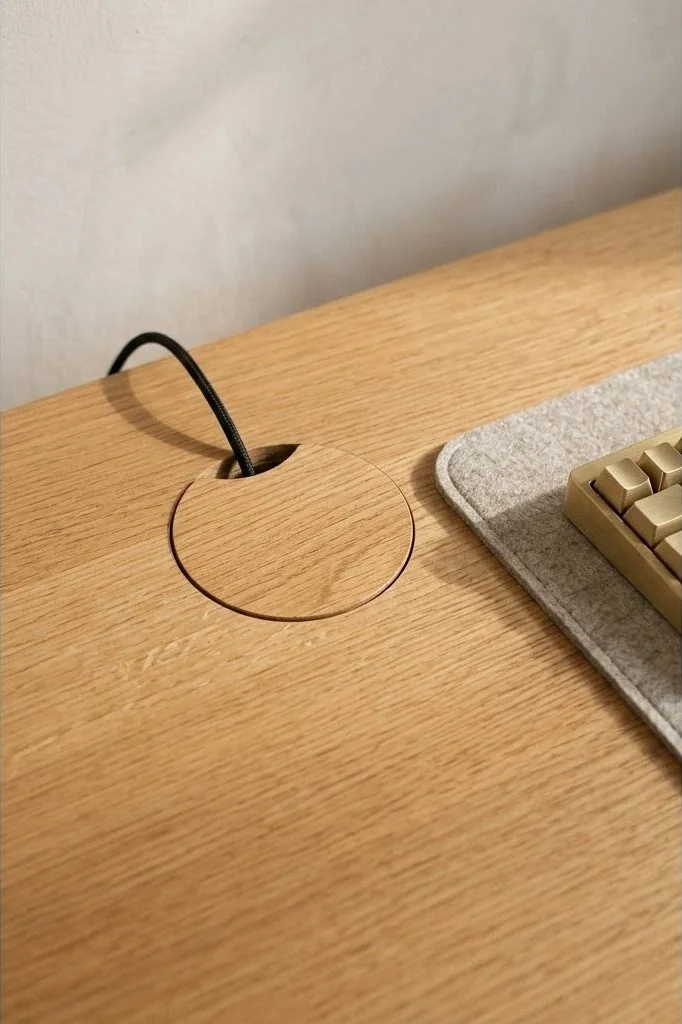
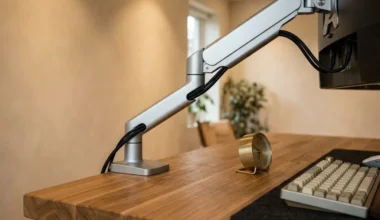
Placing a wide wool felt desk mat across the central work area provides a subtle concealment layer. Slender custom braided cables can travel beneath the felt mat toward a rear cut-out or grain-matched timber grommet. For displays and floating screens, pairing desktop passthroughs with disciplined monitor arm cable management techniques ensures that video signals and display power travel internally through the articulating arm joints rather than sagging into view.
The Sit-Stand Height Transition: Calculating Slack Loops
Motorized adjustable standing desks introduce dynamic mechanical variables into cable management. A cable harness that is tensioned perfectly at sitting height will violently pull ports or shear connectors when the desk ascends to its maximum standing height. Conversely, excessive loose slack pools on the floor at sitting height, creating unsightly loops.
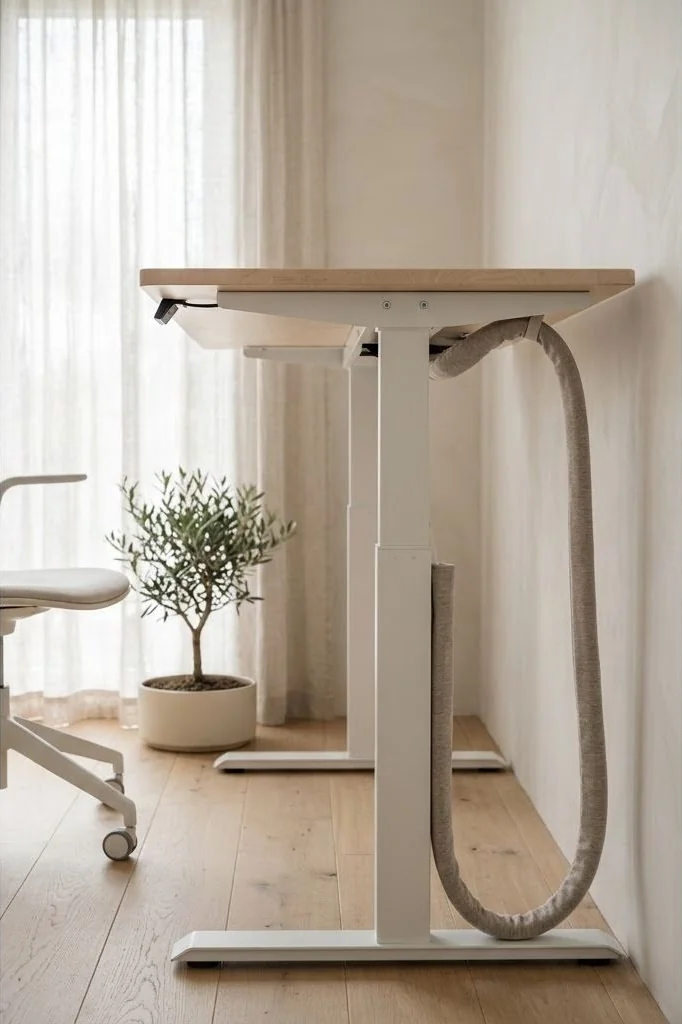
To calibrate the ideal umbilical slack, raise the motorized desk frame to its absolute highest programmed limit. Secure the master cable bundle to the under-desk tray anchor, then connect it to the wall outlet while allowing a gentle 6-inch catenary curve. Lower the desk slowly to its lowest sitting height; the flexible braided umbilical will fold softly behind the leg column without catching on moving brackets. Comprehensive industrial guidelines outlined by the International Organization for Standardization confirm that maintaining proper bend radiuses prevents internal copper strand fatigue during repetitive motorized cycling.
Frequently Asked Questions
How do you hide computer cables on a standing desk?
Mount a dedicated cable tray and master surge protector directly beneath the desktop so all peripheral cables travel with the desk. Route the single main power cord down one leg column using a magnetic raceway or articulated cable spine, leaving enough slack for full height extension.
Is split braided sleeving better than plastic spiral wrap?
Yes. Split braided sleeving is far superior for home workspaces because it features a soft fabric texture that absorbs light, contracts around cables of varying diameters, and allows cables to breakout naturally without sharp plastic edges.
How do you manage cables without drilling into a solid wood desk?
You can utilize clamp-on under-desk cable trays that grip the rear edge of the table without fasteners, combined with magnetic raceways along steel legs and reusable silicone hook-and-loop straps to bundle wires tightly.
How much cable slack is needed for a motorized standing desk?
Calibrate your cables while the desk is raised to its highest standing setting. Ensure there is approximately 4 to 6 inches of relaxed slack between the under-desk anchor point and the wall socket so no connectors experience tensile pull.
By treating hidden cable routing as an essential architectural layer, the modern workspace sheds its visual tension, leaving an uncluttered haven where natural wood grain and mindful thought take center stage.