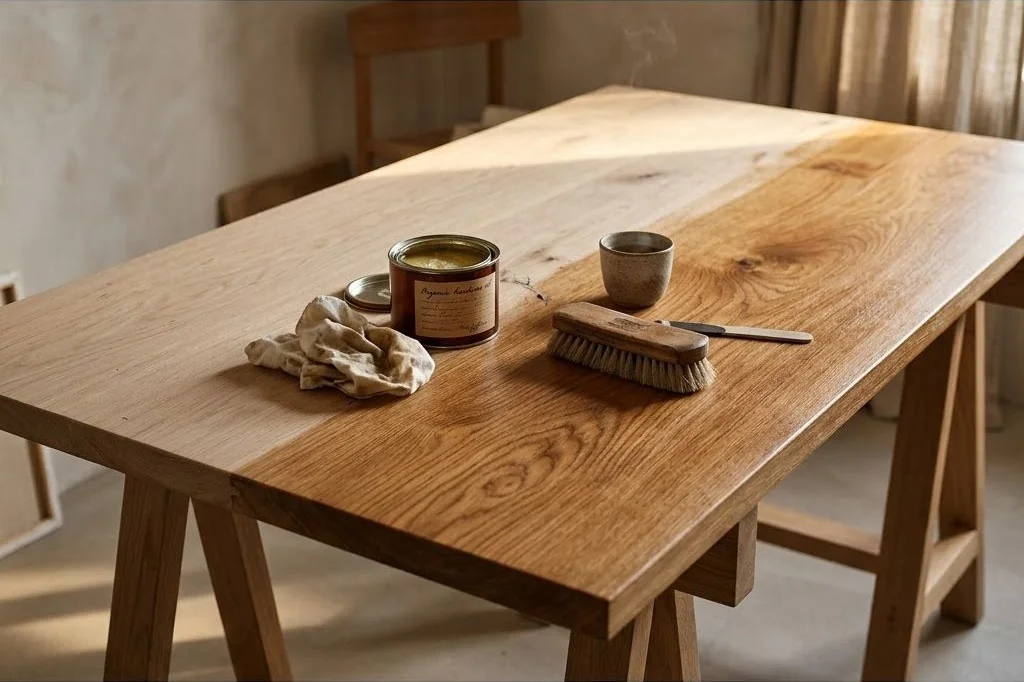
Practicing mindful solid wood desk maintenance and care is an essential ritual for preserving the organic soul of your Scandinavian workspace. Unlike disposable furniture crafted from plastic laminates or veneer-wrapped particleboard, an authentic solid hardwood desk is a living material. It breathes, reacts to atmospheric humidity, and accumulates a rich patina that reflects years of creative focus.
Maintaining a fine oak, walnut, or ash desktop does not require aggressive industrial chemicals or laborious refinishing projects. Instead, it relies on disciplined daily habits, seasonal awareness, and simple oil nourishment. By understanding timber anatomy and respecting natural wood fibers, you ensure your workspace remains a tactile sanctuary that endures across decades.
Key Takeaways
Essential practices for maintaining natural timber workstations:
- Solid timber naturally expands across its width with seasonal humidity; slotted metal fasteners prevent warping and top cupping.
- Daily surface cleaning should use a dry or damp unbleached cotton cloth wiping strictly along the natural grain direction.
- Applying a micro-thin layer of plant-based hardwax oil biannually replenishes essential lipids and restores water-repellent protection.
- Minor water rings and coffee stains can be spot-remediated using 320-grit sandpaper and localized oil buffing without stripping the whole slab.
- Rotating desktop accessories periodically prevents uneven ultraviolet tanning and preserves balanced surface patination.
Understanding Natural Timber Seasonality and Moisture Balance
Solid wood remains hygroscopic throughout its entire life, constantly absorbing and releasing airborne moisture to reach equilibrium with surrounding humidity. During warm summer months with high ambient humidity, wood cells expand across the grain; in cold, dry winter seasons dominated by indoor heating, the timber contracts. For holistic inspiration on balanced home architecture, explore the Ornista architectural design ethos.
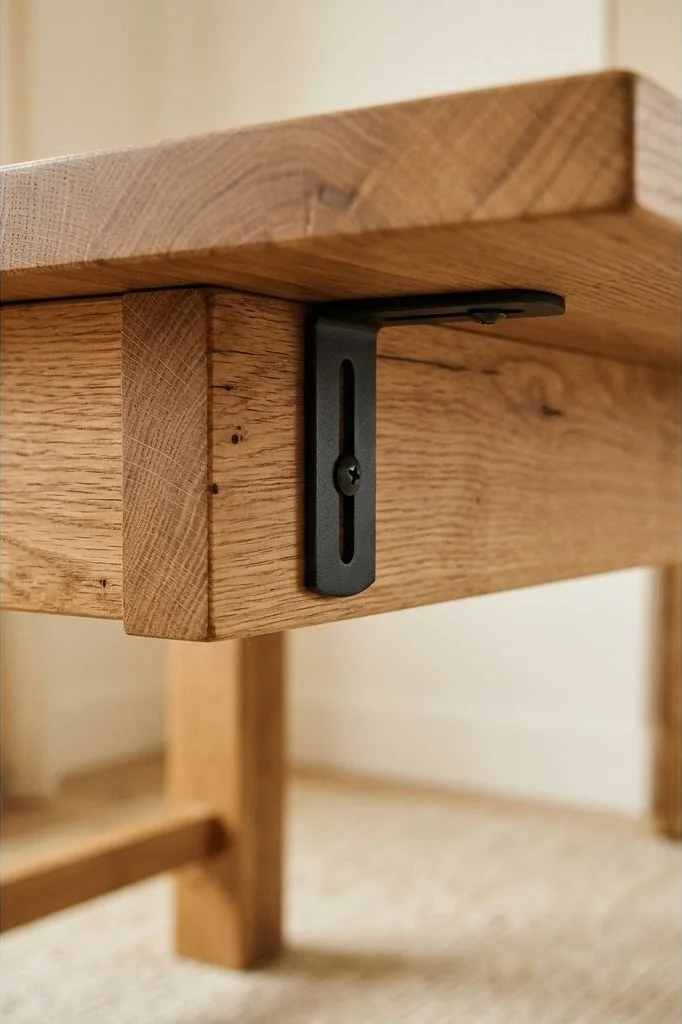
A desktop measuring 30 inches deep can expand or contract by as much as a quarter inch across seasons. Attempting to restrict this natural movement with rigid screws through unyielding metal frame holes forces the wood to split along growth rings. Always verify that your desk frame utilizes oval slotted holes with loose-fitting washers, allowing the slab to slide horizontally while maintaining structural anchoring. Maintaining an indoor relative humidity between 40% and 55% using a quiet ultrasonic humidifier provides the ideal climate for timber stability.
Daily Surface Etiquette: Dusting, Spills, and Microfiber Discipline
Daily surface care sets the foundation for long-term finish resilience. Common household dusting sprays containing silicones, artificial waxes, or aerosol propellants must be strictly avoided. Silicones penetrate deep into open wood capillaries, creating an oily film that repels future maintenance oils and attracts airborne grit.
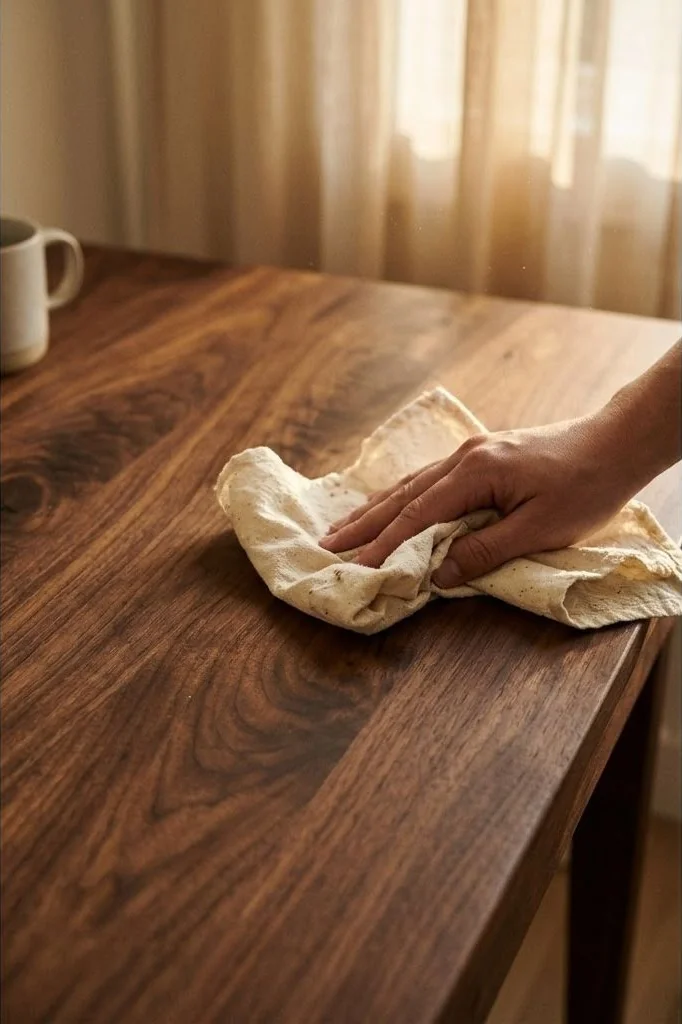
For daily cleaning, use a clean, dry, unbleached cotton or linen cloth. If sticky residue occurs from tea or coffee cups, dampen the cloth with lukewarm water, wring it out until nearly dry, and wipe strictly parallel to the grain. Immediately follow with a dry towel to remove lingering moisture. When paired with high-grade foundational timber such as solid wood desk tops for scandinavian setup, gentle wiping preserves the micro-ridges of natural oak pores without dulling the finish.
The Re-Oiling Protocol: Applying Hardwax Oil for Satin Patina
Hardwax oils formulated from carnauba, candelilla wax, and refined vegetable oils provide breathable nourishment that cures directly inside timber pores. Over 6 to 12 months of daily typing, forearm friction gradually abrades the surface wax layer, particularly along the front working edge. Performing a simple biannual re-oiling restores full hydrophobic protection.
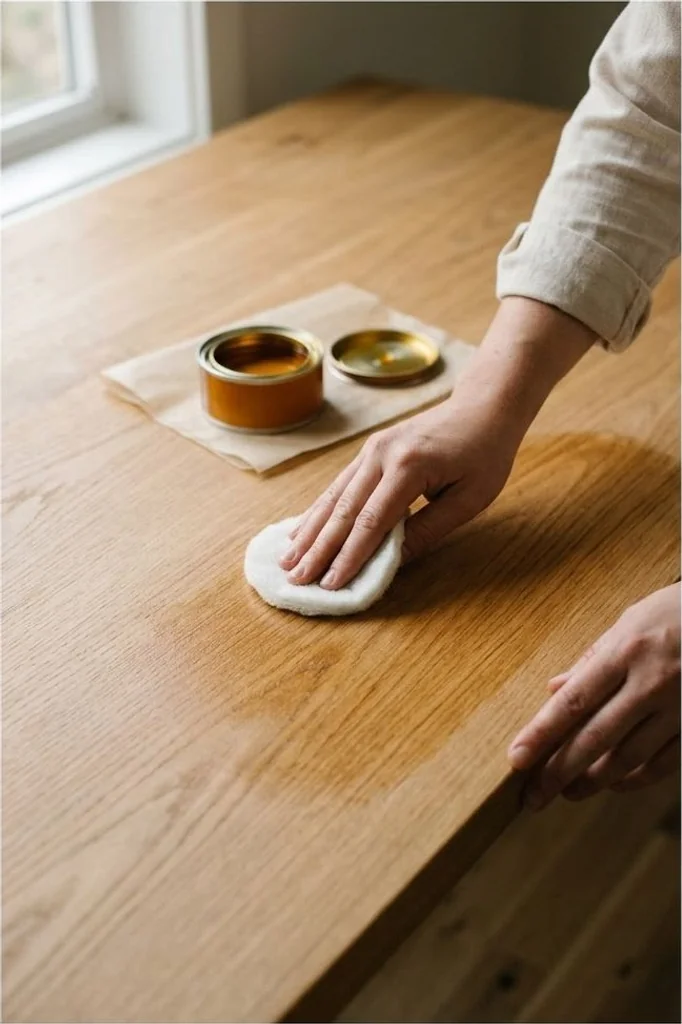
Begin by clearing the desk completely and wiping the surface free of dust. Dispense a small coin-sized pool of hardwax oil onto the timber, spreading it evenly using a non-abrasive white buffing pad or lint-free cotton cloth. Work the oil deep into the grain in overlapping circular motions. Allow the oil to penetrate for 15 minutes, then vigorously buff away 100% of the surface excess using clean cotton cloths until the desktop feels dry to the touch. Let the wax cure overnight before returning desktop organizers. Wood science publications from the USDA Forest Products Laboratory confirm that penetrating oil finishes maintain higher equilibrium moisture stability while permitting localized touch-ups without surface stripping.
Spot-Remediating Surface Ring Marks and Minor Scuffs
One of the greatest advantages of an oiled solid timber worktop over film-coated surfaces is repairability. If a forgotten condensation-heavy water glass leaves a pale ring mark or a metallic laptop chassis causes a shallow scratch, the blemish can be corrected locally within minutes without refinishing the entire piece.
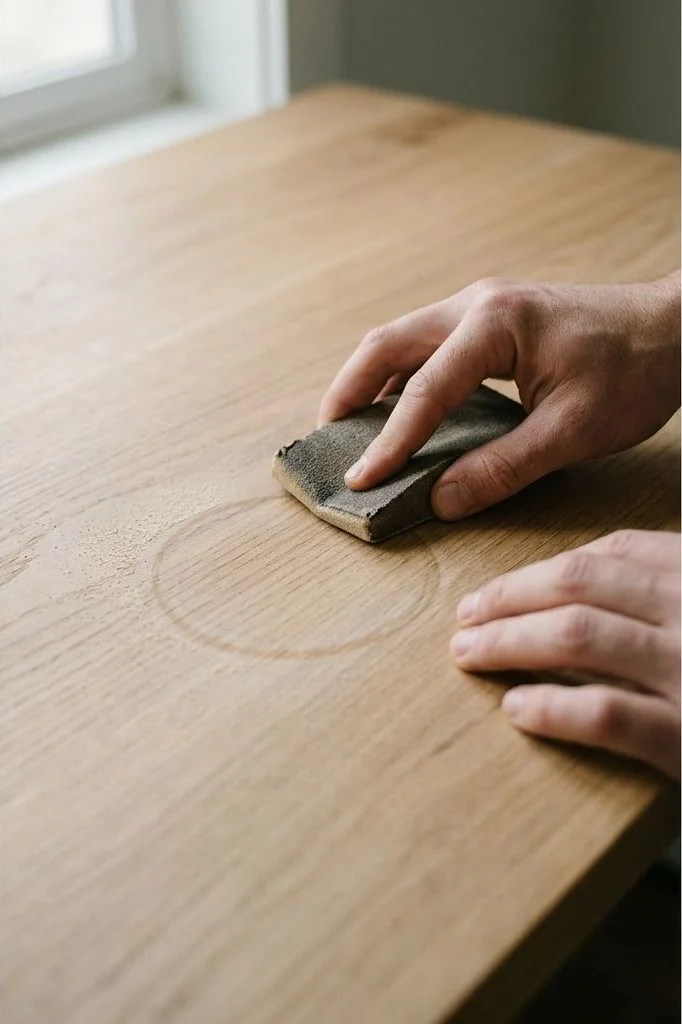
Take a small block of 320-grit or 400-grit silicon carbide sandpaper and gently rub the affected area, moving strictly along the grain lines. Feather the sanding outward slightly to avoid creating a noticeable dip in the surface. Once the mark is buffed away, wipe off the fine sanding dust, apply a drop of hardwax oil directly to the sanded patch with your fingertip, and buff dry with a clean cloth. Within 24 hours, the newly oiled spot will blend invisibly into the surrounding sheen. To minimize future accessory contact marks, organizing peripherals on a dedicated Scandinavian desk shelf organization tier isolates high-friction objects off the main desk plane.
Sunlight Exposure and Natural UV Wood Patination
All natural hardwoods undergo subtle color shifts when exposed to ambient sunlight. European white oak gradually warms from pale blonde into a rich, golden wheat tone, while dark American walnut softens slightly, developing warm caramel and honey undertones over years of daylight exposure.
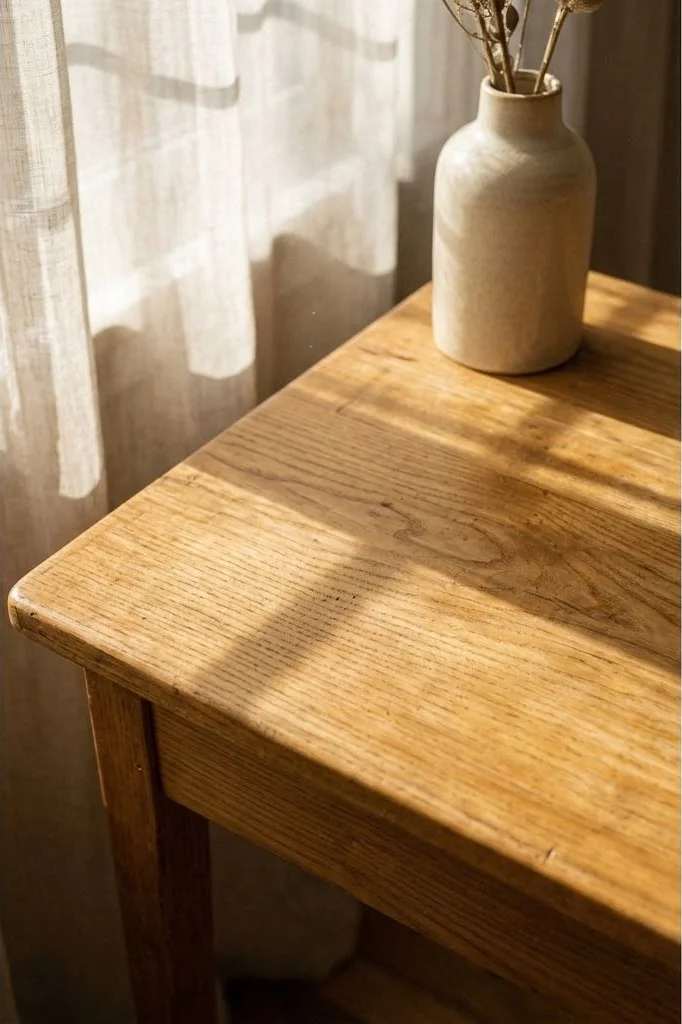
This natural patination process is a hallmark of authentic timber authenticity. However, leaving large items such as oversized felt desk pads, heavy monitor bases, or book stacks in a fixed position for months can result in distinct shadow marks where covered wood remains pale. To maintain uniform aging, shift the position of desk mats, keyboards, and ceramic vessels by a few inches during your monthly deep-cleaning routine, allowing sunlight to kiss all areas of the surface evenly.
Preserving Tactile Warmth: Why Polyurethane Strips Organic Soul
When seeking maximum spill resistance, some owners consider sealing their solid wood desk under multiple thick coats of glossy polyurethane. While plastic polyurethane films provide an impermeable shield against liquids, they eliminate the exact qualities that make solid wood desirable.
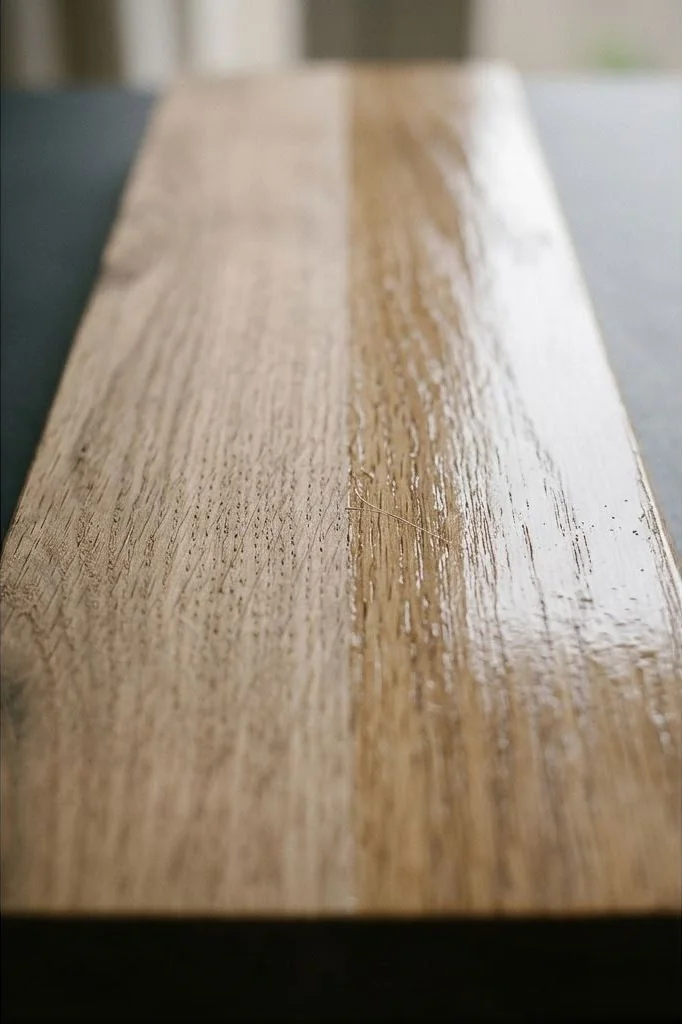
Polyurethane forms a rigid synthetic sheet over the timber, trapping moisture underneath and robbing the wood of its warm, breathable tactile feel. Plastic finishes feel clammy against bare forearms, reflect harsh desk lamp glare, and cannot be spot-repaired when scratched. By honoring breathable oil finishes, you preserve the natural living warmth of the tree, creating a working surface that grows more beautiful with each passing season.
Frequently Asked Questions
How often should a solid wood desk be oiled?
For desks finished with hardwax oil, applying a fresh micro-coat once every 6 to 12 months is sufficient. If the wood begins to look dry or water drops no longer bead on the surface, it is time for a quick replenishment.
What should I do immediately after spilling water or coffee?
Blot the spill immediately with a dry cotton or paper towel rather than rubbing aggressively. If the liquid contains sugar or milk, wipe the spot with a damp cloth wrung out with clean water, then dry thoroughly.
Can I use commercial furniture polish on an oiled desk?
No. Standard aerosol sprays and furniture polishes contain silicones and mineral spirits that damage breathable oil finishes. Use only specialized wood soaps or natural maintenance oils recommended by hardwood craftsmen.
How do I prevent coffee mugs from leaving marks?
Always use dense natural wool felt, leather, or ceramic coasters beneath hot mugs. Intense localized heat from ceramic mugs can soften surface waxes and draw moisture into the wood fibers, creating faint white heat rings.
Embracing the slow ritual of solid wood desk maintenance grounds your daily work in timeless craftsmanship, fostering a durable relationship between human creativity and the enduring wisdom of natural materials.