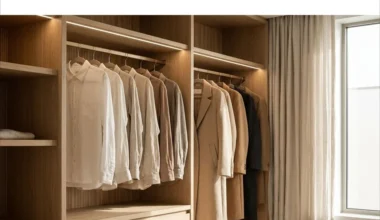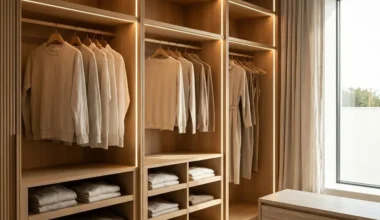
Dressing room drawers often conceal chaos beneath an otherwise pristine exterior. While hanging garments remain neatly aligned on uniform wooden rails, the accessory drawer frequently deteriorates into a jumble of tangled necklaces, uncoiled leather belts, misplaced cufflinks, and scratched watch crystals. Opening a cluttered drawer interrupts morning dressing rituals with unnecessary friction and micro-stress.
Key Takeaways
- Shallow 3 to 4-inch drawer depths maintain single-layer visibility and eliminate hidden bottom clutter.
- Anti-tarnish velvet and micro-suede drawer inserts buffer delicate jewelry and horology from scratches and atmospheric oxidation.
- Modular acrylic partitions establish rigid geometric compartments tailored precisely to belt widths and rolled neckties.
- Slide-out vertical hardware rails capitalize on narrow wardrobe tolerances to display belts and ties without bulk.
- Curved felt-lined channels safeguard delicate sunglasses and optical eyewear from abrasive dust particles.
- Precision compartmentalization accelerates morning dressing routines while preserving heirloom accessories across decades.
True wardrobe architecture treats small-scale accessories with the same rigorous intentionality applied to hanging garments and architectural shelving. By establishing a tailored internal grid system supported by tactile velvet trays, sliding mechanisms, and anti-tarnish textiles, your drawers transform from utilitarian bins into serene, boutique-grade display vitrines that make personal curation effortless.
The Shallow Drawer Architecture: Eliminating Vertical Abyss
The primary reason accessory drawers fail functionally is excessive vertical depth. Standard furniture drawers measure seven to nine inches deep, designed originally for folded knitwear or denim. When small accessories are stored in deep cavities, items naturally stack on top of one another. Retrieving a silver bracelet requires digging through layers of leather watches and scarves, resulting in tangled chains, chipped enamel, and hidden items that fade from daily rotation.
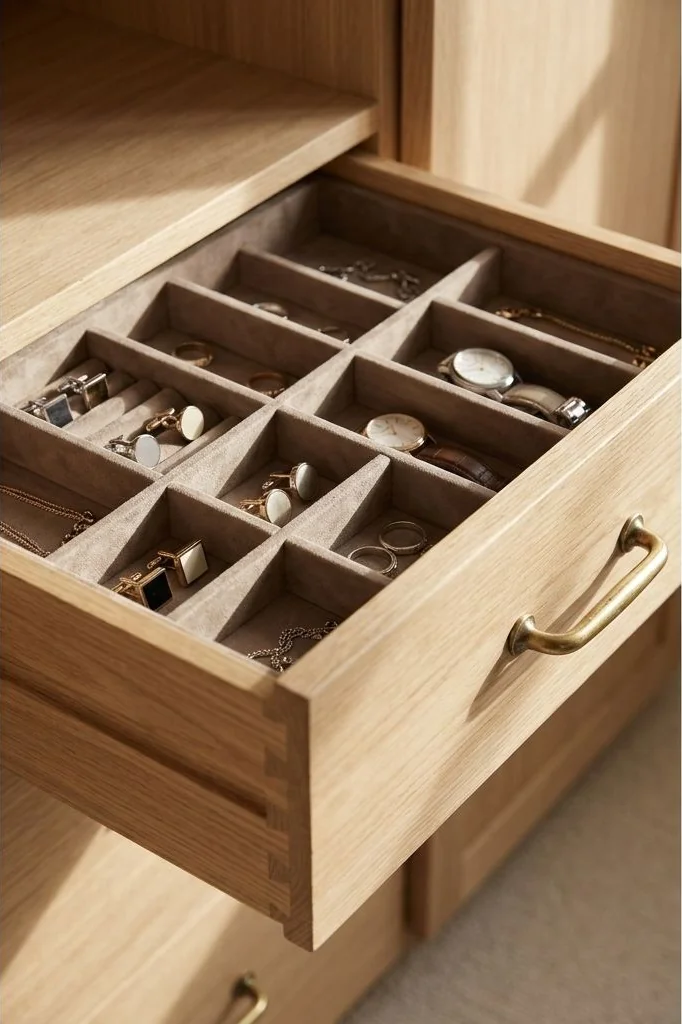
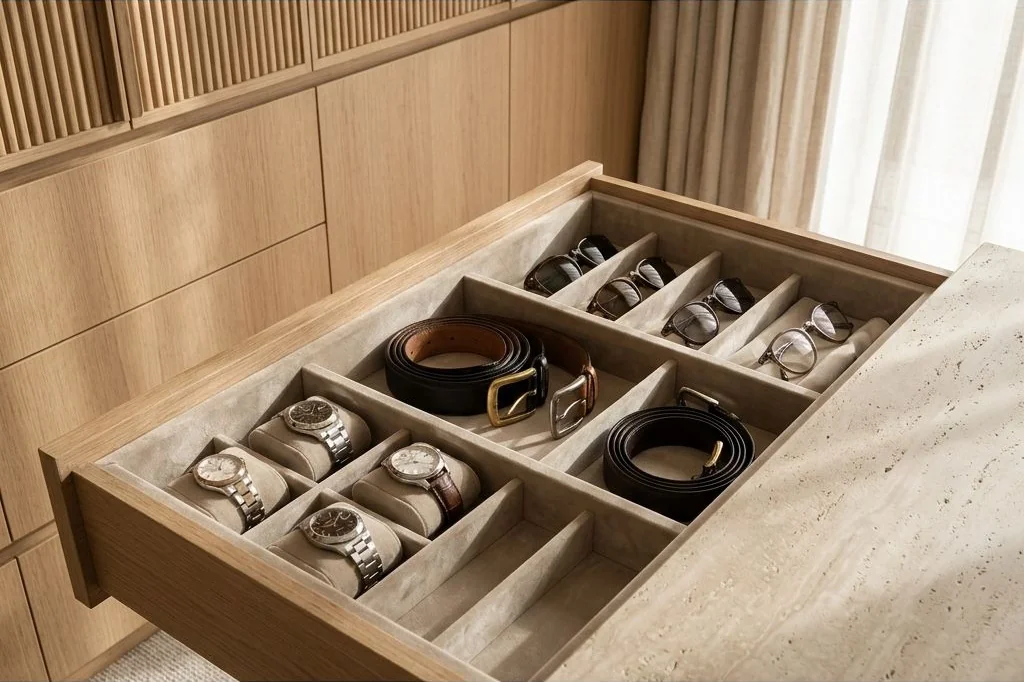
The foundational design principle for jewelry, horology, and accessories is the strict implementation of shallow four-inch interior drawers. A four-inch perimeter profile guarantees that every item remains strictly arranged in a single horizontal layer. Nothing hides beneath anything else; visual appraisal is instantaneous the moment the drawer slides out along its soft-close undermount runners.
If your existing dressing island features deeper drawers, insert secondary tiered acrylic sliding trays that glide effortlessly along the upper drawer rim. This creates a dual-tier organization system that doubles usable floor area without sacrificing immediate visibility. For foundational structural principles, review our guide to closet organization architecture.
Velvet Lining Thermodynamics: Protecting Metals and Stones
Hard surfaces such as unfinished timber, raw plastic, or stamped metal pose continuous risks to delicate accessories. Fine timepieces, polished gold rings, and natural pearls suffer micro-abrasions whenever hard surfaces rub against one another during drawer movement, diminishing their natural luster and structural longevity.
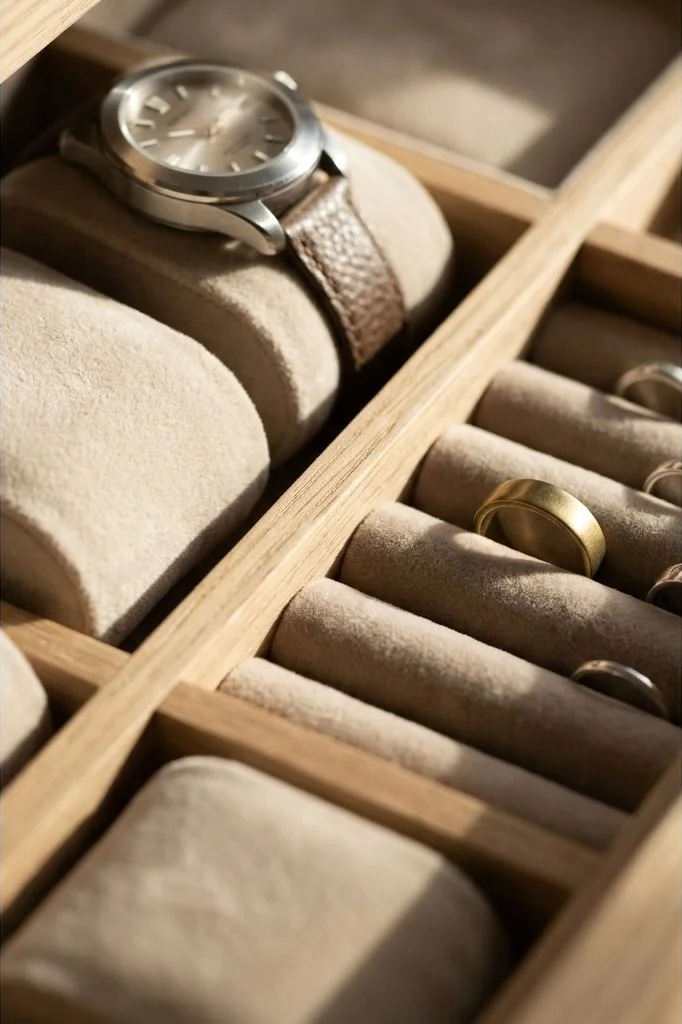
Lining drawer compartments with specialized anti-tarnish micro-suede or jewelry-grade cotton velvet introduces tactile protection and physical cushioning. High-quality velvet inserts incorporate microscopic silver-absorbing polymers woven into the fabric backing. These fibers intercept sulfur molecules present in circulating bedroom air, preventing sterling silver jewelry from oxidizing into dark tarnish.
Select neutral, soothing color tones such as oatmeal, warm taupe, or soft charcoal grey. These muted palettes create high visual contrast against yellow gold, platinum, and polished leather straps without introducing aggressive visual noise that detracts from the innate elegance of the pieces.
Modular Grid Geometry: Custom Acrylic Partitions
Leather belts, silk scarves, and formal neckties possess natural elasticity and tend to uncoil or tangle when left unsecured in open compartments. Establishing modular, adjustable perimeter grids keeps each rolled accessory securely upright and individually framed, protecting delicate edges from snagging.
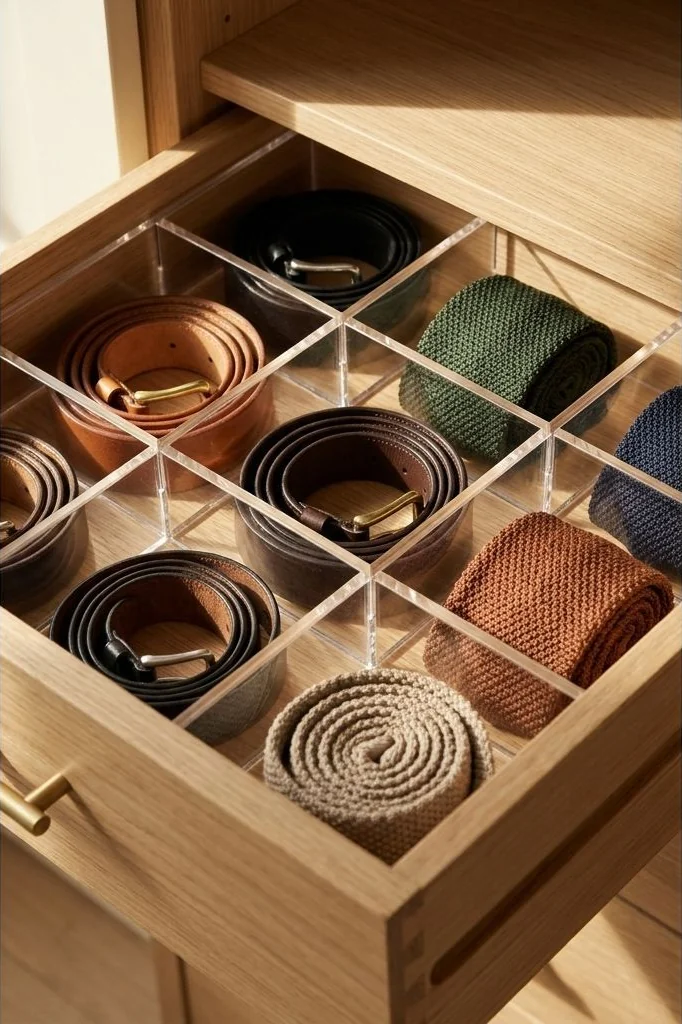
Four-millimeter polished acrylic grid systems offer ideal rigidity while maintaining complete visual transparency. Unlike opaque cardboard or flimsy fabric dividers, transparent acrylic partitions allow light to penetrate the full depth of the drawer, highlighting texture and color nuances. Compare these transparent solutions alongside our evaluation of acrylic shelf dividers for high wardrobes.
Size each compartment strictly to its intended item. A four-inch by four-inch square accommodates a loosely coiled dress belt with gentle radius, preserving leather grain from sharp creases. Three-inch square cells provide the exact volume required for hand-rolled silk or knitted neckties, allowing them to rest tension-free without flattening delicate rolled seams.
Vertical Belt and Tie Pull-Outs: High-Density Clearances
When drawer volume is limited, dedicating horizontal drawer real estate to bulky belts can restrict storage space for fine jewelry. Vertical pull-out racks integrated into narrow vertical partitions provide an elegant architectural alternative that optimizes narrow structural gaps.
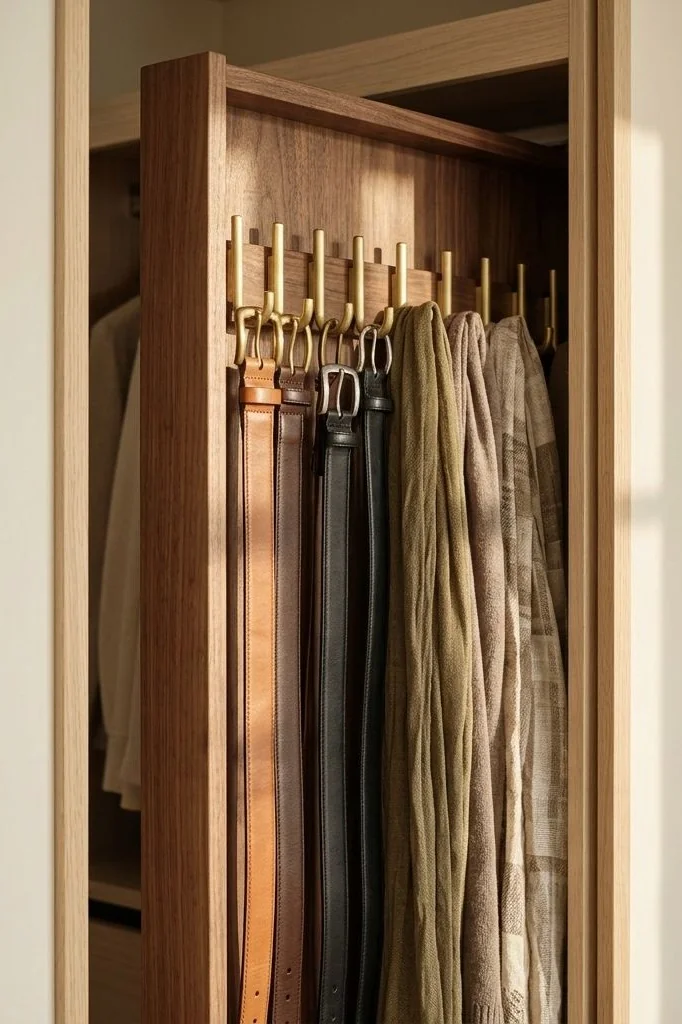
A slender four-inch vertical slide-out partition fitted with full-extension ball-bearing slides and solid brass hooks can hold twenty-four leather belts or forty neckwear pieces. Hanging belts vertically by their buckles allows gravity to naturally relax leather fibers, removing curvature developed from frequent wearing and returning belts to straight, supple form.
When selecting vertical pull-out hardware, specify soft-close dampers and solid metal construction. Flimsy plastic hooks bend under the accumulated weight of solid brass buckles and thick bridle leather, disrupting drawer alignment over time and creating annoying mechanical friction during daily use.
Eyewear Sanctuaries: Felt-Lined Presentation Trays
Designer sunglasses and optical prescription glasses are delicate optical instruments that frequently end up scratched when stored haphazardly inside bedside drawers or on entryway consoles. Standard rigid clamshell cases consume excessive volume, discouraging daily disciplined storage and causing clutter across dressing surfaces.

Incorporate dedicated eyewear presentation trays with scalloped, curved recesses into your primary dressing drawer. Lined with three-millimeter acoustic wool felt or supple micro-velvet, each channel cradles frames securely with lenses oriented upward, shielded completely from surface abrasions and dust accumulation.
Positioning six to eight pairs in a single horizontal tray allows immediate selection based on daily lighting conditions, attire, and formality, completing morning styling without searching through multiple case boxes or risking frame misalignment from accidental knocks.
Ring Rolls and Horology Pillows: Curating Fine Jewelry
Fine jewelry requires specialized micro-architectural elements to maintain organization and preserve structural integrity. Tangled delicate chains represent not only an aesthetic annoyance but also lead to metal fatigue and snapped clasps during hurried untangling attempts before early morning departures.
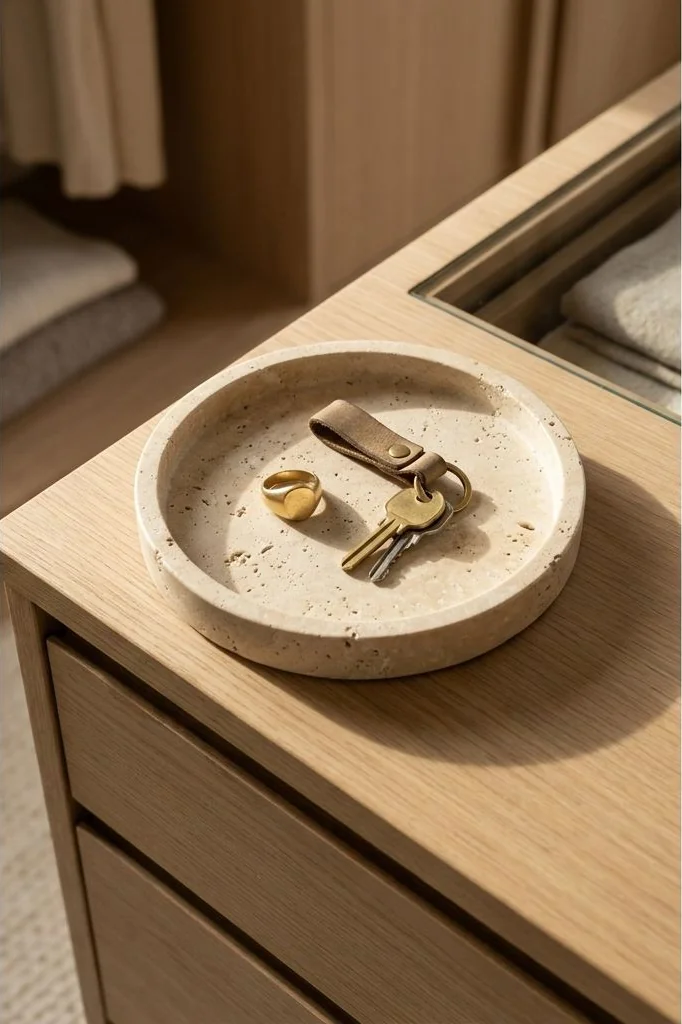
Integrate continuous padded foam ring rolls lined with soft velvet. Sliding ring bands into parallel tension slots holds each piece upright and isolated, preventing diamonds from scratching neighboring precious gemstones. For watches, utilize compressible oval cushions that hold leather straps and metal bracelets in their natural wrist shape without straining deployment buckles or distorting supple exotic leathers.
According to luxury lifestyle and interior design editors at Elle Decor, custom wardrobe detailing turns routine dressing into an artful daily ritual. Find additional inspiration and curated interior ideas across our home collection at ornista.com.
Frequently Asked Questions
How can I prevent sterling silver jewelry from tarnishing inside a closet drawer?
Store silver pieces inside drawers fitted with anti-tarnish micro-suede or velvet liners treated with zinc oxide or active silver-neutralizing compounds. Additionally, place small sealed packets of activated charcoal inside the drawer corners to absorb ambient airborne sulfur gases.
What is the ideal interior height for an accessory drawer organizer?
The ideal interior height ranges between two and two-and-a-half inches for jewelry trays and three to four inches for rolled belts and eyewear channels. This shallow clearance prevents double-stacking and maintains instant single-tier visibility.
Is acrylic or velvet lining better for drawer compartments?
The optimal layout combines both materials. Use transparent acrylic partitions to construct the structural grid walls and line the compartment floors with plush anti-tarnish velvet to cushion delicate surfaces from impact scratches.