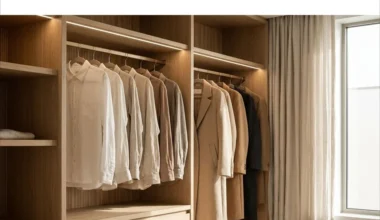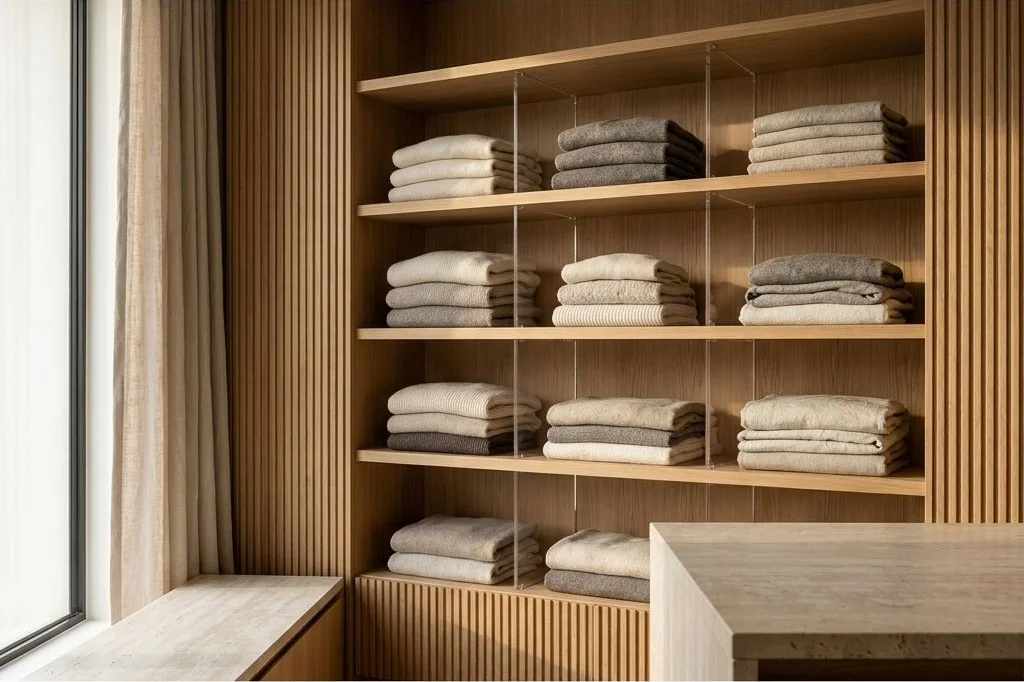
Open wardrobe shelving provides generous storage volume, but without structural partitions, folded textiles inevitably succumb to gravitational disorder. When soft cashmere sweaters, chunky wool cardigans, or crisp linen towels are stacked four or five high on open ledges, minor lateral nudges cause the entire column to lean precariously. Reaching for a garment from the bottom frequently brings down neighboring piles, turning morning routines into frustrating folding chores.
Modern wardrobe engineering resolves this spatial instability through transparent partition systems. Integrating acrylic shelf dividers into your closet organization architecture establishes rigid lateral boundaries without introducing the visual heaviness of solid wooden dividers or the utilitarian harshness of wire organizers. Clear acrylic supports delicate textiles, preserves millwork finishes, and delivers a calm, boutique retail clarity to residential dressing suites.
Key Takeaways
- Heavy-gauge clear cast acrylic provides essential vertical resistance, preventing tall folded knitwear from leaning or collapsing.
- Specifying four-millimeter flame-polished acrylic prevents optical distortion while resisting horizontal deflection under weight.
- Calibrating bay spacing between eleven and fourteen inches creates bespoke compartments that match standard garment folds.
- Discreet clear silicone buffer pads protect lacquered oak and custom millwork finishes from abrasion during adjustments.
- Upright transparent dividers transform open shelves into structured display niches for handbags and soft accessories.
Physics of Stack Instability: Lateral Drift and Shear Forces
The collapse of folded clothing stacks is governed by simple friction mechanics. Unlike rigid hardcover books that maintain right angles independently, folded textiles are compressible and flexible. As garments sit stacked over time, fiber compression decreases frictional resistance between layers. When an individual garment is extracted, shear forces pull adjacent layers horizontally, triggering lateral drift.
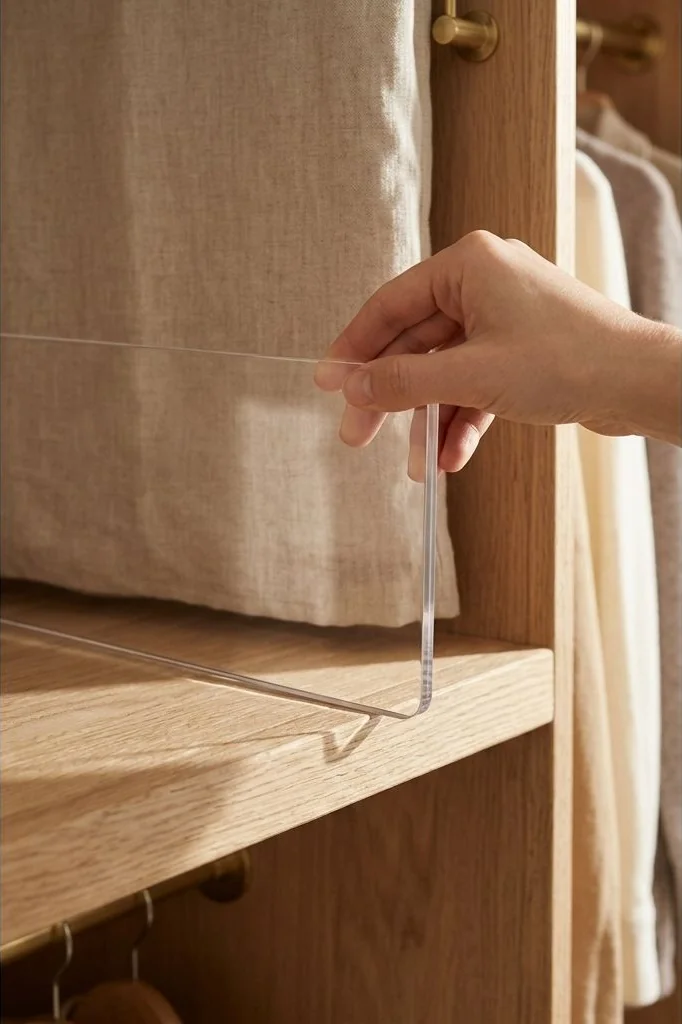
Sliding a rigid vertical divider between stacks absorbs these horizontal shear forces completely. The acrylic barrier acts as an immovable boundary plane, ensuring that taking a sweater from one compartment exerts zero mechanical influence on the adjacent column. Stacks stay perfectly perpendicular to the shelf surface, preserving crisp visual alignment across the entire wardrobe wall.
For additional spatial strategies regarding wardrobe zoning and rail heights, review our foundational guide on closet organization architecture and space planning.
Material Specifications: 4mm Cast Acrylic vs Extruded Plastics
Not all clear plastic organizers deliver equal performance. Budget dividers manufactured from extruded polystyrene or thin polycarbonate often bow outward when subjected to horizontal pressure, developing micro-scratches and yellowing over time under ambient lighting.
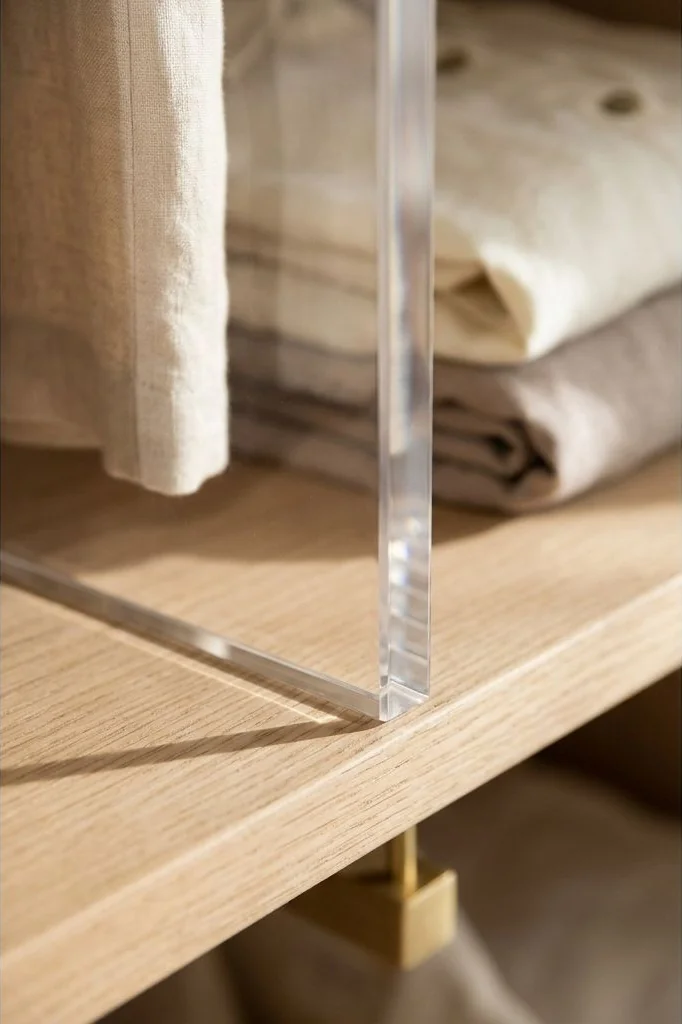
High-end closet design demands four-millimeter cast polymethyl methacrylate (acrylic). Cast acrylic provides exceptional structural rigidity, crystal-clear optical light transmission exceeding ninety-two percent, and flame-polished beveled edges that feel smooth against delicate silk and cashmere threads.
Investing in architectural-grade cast acrylic ensures your organizing hardware remains optically invisible, allowing the natural grain of oak shelves and the rich tactile textures of fine fabrics to command attention.
Calibrating Stack Spacing: Height-to-Width Golden Ratios
A frequent error in wardrobe organization is installing shelf dividers at arbitrary intervals, resulting in awkward gaps that waste precious linear shelf width or squeeze clothing so tightly that extraction becomes difficult.

Bespoke spatial harmony requires calibrating divider spacing to match standardized adult garment folding boards. For standard knitwear and folded denim, set divider intervals at twelve inches. For chunky oversized wool blankets and winter cardigans, expand spacing to fourteen inches. For lightweight tees and linen shirts, ten to eleven inches provides an immaculate, snug boundary.
Maintaining uniform stack heights between eight and ten inches (approximately four folded garments per bay) preserves fabric breathability while preventing lower layers from excessive compaction. For deeper insights on textile care, consult our overview of capsule wardrobe natural fiber quality.
Protecting Millwork Finishes: Silicone Pads and Tension Clamps
Custom wardrobe cabinetry represents a major architectural investment. Standard metal clip-on dividers with sharp bottom edges can gouge delicate wood veneers, lacquered finishes, and edge banding whenever dividers are shifted to accommodate seasonal wardrobing changes.
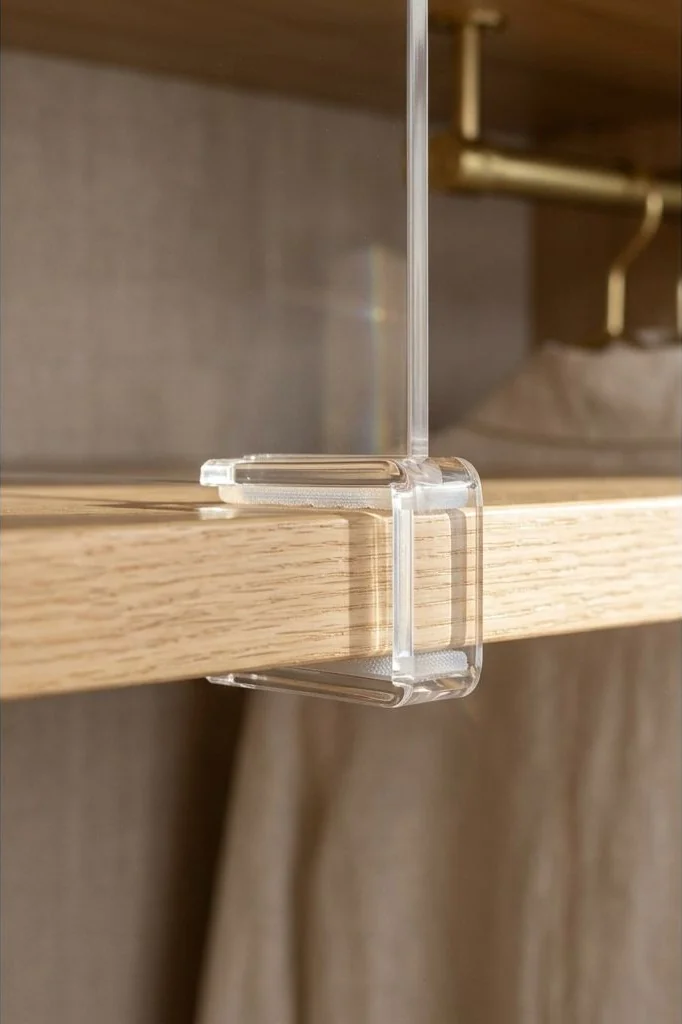
Ensure that all acrylic dividers incorporate integrated transparent micro-silicone pads along both the top and bottom clamp surfaces. These elastomeric cushions serve two essential functions: they distribute clamping tension evenly across the wood, preventing stress fractures, and generate high-friction grip that prevents the divider from sliding out of position when garments brush against it.
Always verify your shelf thickness before purchasing hardware. High-quality acrylic tension brackets accommodate shelves between 0.75 inches and 0.95 inches thick, sliding on securely without exerting destructive bending forces.
Handbag and Purse Sanctuaries: Upright Architectural Displays
Beyond folded knitwear, acrylic shelf dividers solve one of the most persistent luxury storage challenges: maintaining the shape of soft leather handbags, clutches, and structured cross-body bags. When handbags are hung from narrow wall hooks, their shoulder straps stretch and distort under their own weight; when stored loosely on open shelves, they slouch and develop permanent leather wrinkles.

Dividing a mid-level shelf into dedicated six-to-eight-inch acrylic bays creates structured individual sanctuaries for each bag. Leather gussets stay upright, handles drape naturally without tension, and hardware finishes remain shielded from abrasive contact with neighboring buckles.
Pairing structured bag displays with proper hanger selection creates total harmony across the dressing room. Review our comparative study on slim velvet hangers versus contoured wooden hangers to align your hanging rods with your shelf aesthetics.
Optical Weightlessness: Invisible Architecture in Modern Dressing Rooms
Traditional organizing solutions often solve functional problems while creating aesthetic clutter. Opaque plastic storage tubs, labeled cloth boxes, and wire racks insert visual static that fragments continuous architectural sightlines, making dressing rooms feel smaller and congested.

Clear acrylic dividers embody the Japanese principle of invisible functionality (*Kino-bi* – beauty through utility). By remaining completely transparent, they provide absolute structural order while allowing the natural timber shelving and warm neutral garments to define the spatial environment.
As architectural critics at Dezeen often observe, the hallmark of great contemporary interior detailing is achieving flawless organization through elements that refuse to draw attention to themselves. Discover curated architectural decor prints and mindful design prints at ornista.com.
Maintenance Protocols: Preserving Long-Term Optical Transparency
To ensure transparent organizing systems maintain their luminous clarity over years of daily handling, adopt a gentle maintenance routine. Cast acrylic carries an inherent static surface charge that naturally attracts airborne dust, textile lint, and microscopic wool fibers. Wiping dusty acrylic with dry paper towels or abrasive household rags causes microscopic surface scratches that gradually degrade transparency into cloudy haze.
During bi-annual wardrobe changeovers, remove each divider and treat the surfaces with an anti-static acrylic cleaner and an ultra-soft, edgeless microfiber cloth. Anti-static formulations neutralize surface charges, repelling airborne dust for months. Additionally, inspect the silicone foot buffers for dust accumulation; wiping silicone pads with a damp cloth restores their non-slip frictional grip against lacquered timber shelving.
Frequently Asked Questions
Will acrylic shelf dividers damage painted or lacquered shelving?
When fitted with soft silicone buffer pads, acrylic dividers will not damage painted or lacquered finishes. However, never slide a clip divider across a freshly painted shelf; allow latex and oil-based paints to cure fully for at least thirty days before installing tension-based organizers.
How can I clean fingerprints and static dust from acrylic dividers?
Never use standard ammonia-based glass cleaners on acrylic, as ammonia causes clouding and micro-crazing. Use a specialized acrylic cleaner or warm water with a drop of gentle dish soap, wiping softly with an ultra-plush microfiber cloth to remove dust without creating fine scratches.
Can acrylic dividers be used on shelves thicker than one inch?
Standard clip-on tension dividers are engineered for shelves between 0.75 and 0.95 inches thick. For custom two-inch architectural thick-slab shelving, utilize freestanding base-plate acrylic dividers secured with clear removable museum gel.