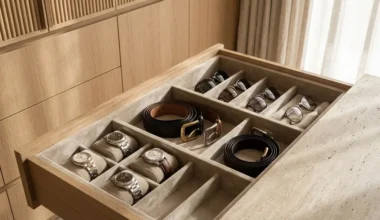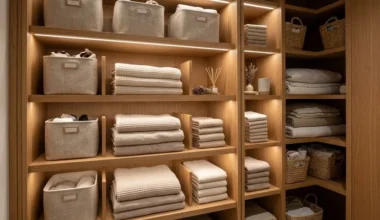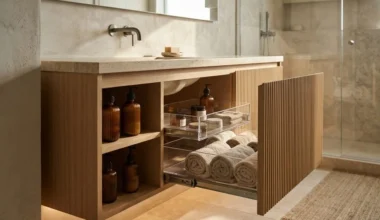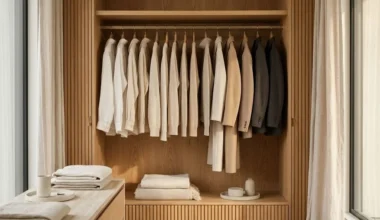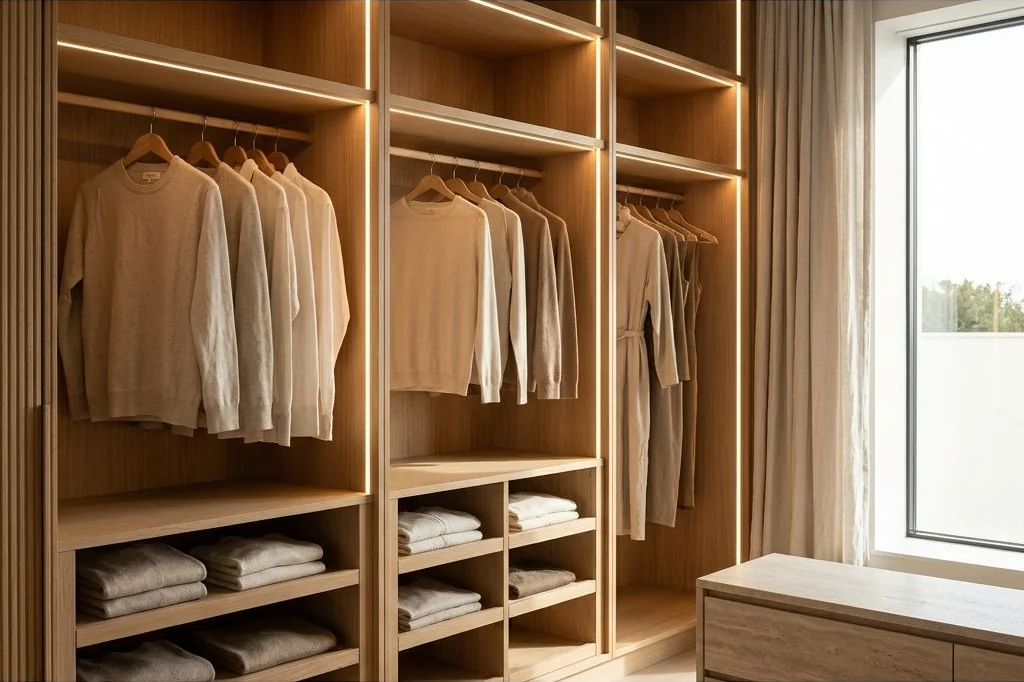
Lighting remains one of the most neglected elements in residential wardrobe design. Even with handcrafted custom millwork and premium organization inserts, inadequate lighting reduces the entire space to dim twilight. Shadows obscure lower shelves, navy blue blazers become indistinguishable from charcoal wool, and the sensory pleasure of entering a well-curated dressing suite is lost.
Key Takeaways
- A 2700K warm white color temperature paired with a 95+ Color Rendering Index (CRI) reveals authentic garment hues without harsh blue glare.
- Recessed aluminum extrusion channels equipped with milky acrylic diffusers eliminate diode hotspots and deliver continuous architectural glow.
- Flush-mounted passive infrared (PIR) sensors automate illumination instantaneously upon opening closet doors or stepping inside.
- Downward under-shelf grazing light casts even task illumination across shoe bays and lower accessory drawers while producing sculptural depth.
- Integrated illuminated hanging tubes direct radiance downward along clothing shoulders without casting obstructive overhead shadows.
- Remote low-voltage DC driver consolidation prevents thermal buildup inside cabinetry while facilitating effortless maintenance access.
Modern architectural illumination transforms a closet from a dark storage enclosure into an inspiring personal sanctuary. By integrating low-profile recessed LED channels, high color fidelity optics, and discreet motion sensors, your wardrobe achieves the curated brilliance of a bespoke luxury atelier.
The Optical Spectrum of Wardrobes: Color Rendering Index (CRI > 95)
Standard household bulbs often emit light with a poor Color Rendering Index (CRI), typically below eighty. Low-CRI illumination distorts subtle fabric dyes, causing deep navy suiting to appear black, or making rich camel cashmere appear washed out and lifeless. Getting dressed in poor light leads to mismatched color coordination discovered only after stepping outdoors into natural daylight.
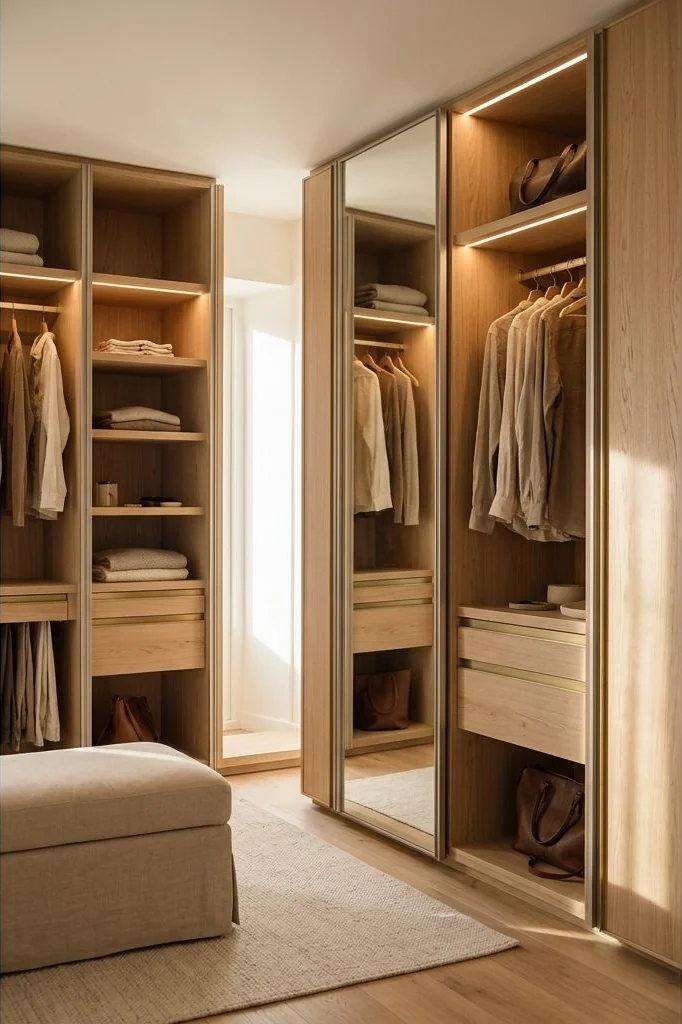
Specifying high-CRI light sources rated at ninety-five or higher ensures authentic color reproduction across every textile in your collection. Pair this exceptional color fidelity with a correlated color temperature of 2700 Kelvin. While harsh 5000K daylight bulbs evoke cold commercial environments, 2700K emits a soft, welcoming warmth that highlights natural timber grains and fine fabrics while flattering human skin tones during morning grooming.
To establish the complete spatial layout supporting this illumination, review our foundational guide to closet organization architecture.
Recessed Channel Architecture: Eliminating Glare and Hotspots
Raw LED adhesive strips mounted directly onto bare wood or shelving create uncomfortable visual glare. Exposed individual light-emitting diodes cast speckled, reflective dots across glossy wardrobe surfaces and distract from the clean lines of architectural joinery.
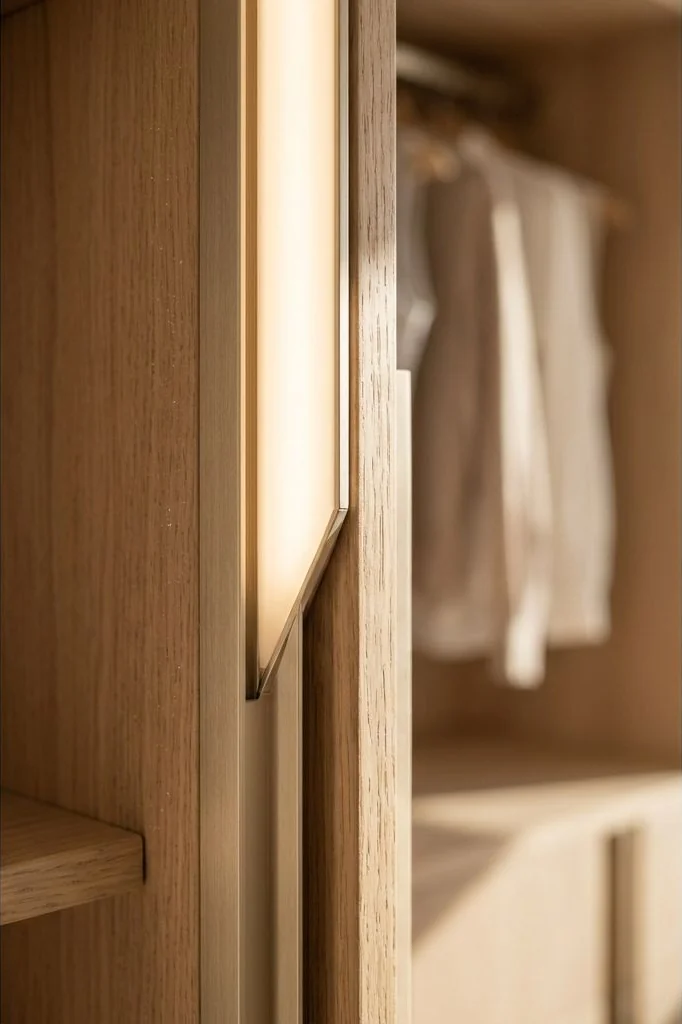
Architectural lighting requires mounting high-density LED ribbons (featuring at least 120 diodes per meter) inside anodized aluminum extrusion profiles. Aluminum serves as an essential thermal heat sink, dissipating diode heat and extending the operational lifespan of the lighting system beyond fifty thousand hours.
Snap a frosted milky acrylic diffuser cover over the extrusion channel. The dense diffusion lens blends discrete points of light into a continuous, seamless neon-like ribbon. For vertical wardrobe uprights, select a forty-five-degree angled corner extrusion that angles the beam backward directly onto the hanging garments while completely shielding the occupant’s eyes from direct glare.
Motion Sensor Automation: Invisible PIR Integration
Fumbling for a manual wall toggle switch in the dark is an unnecessary disruption to a refined morning dressing experience. Traditional mechanical switches also clutter wall surfaces that could otherwise support full-length architectural mirrors or bespoke artwork.
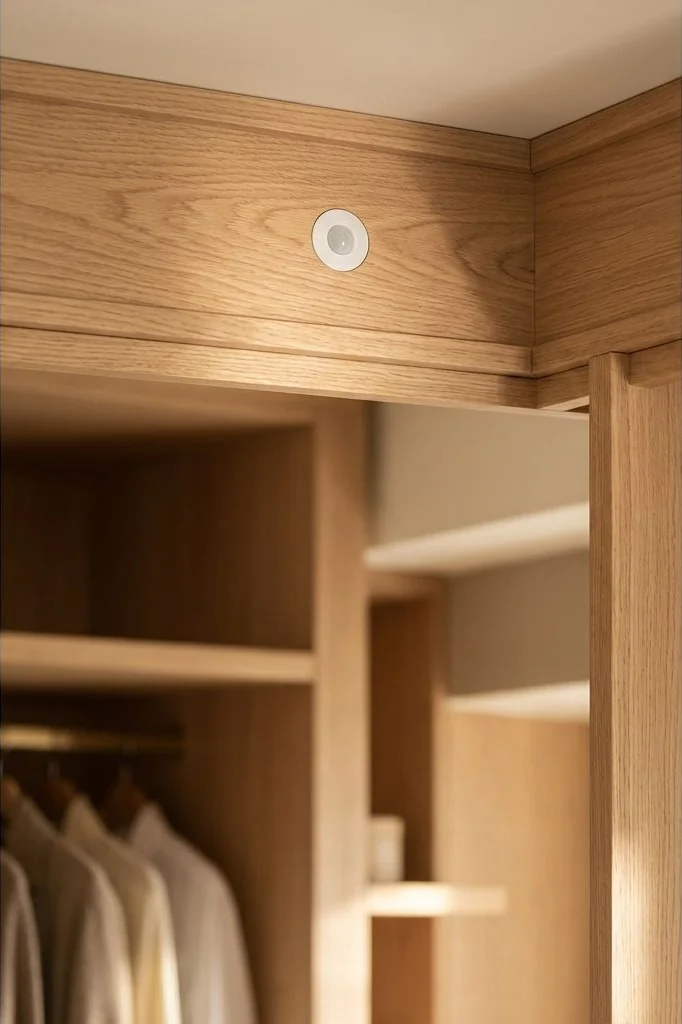
Automate your closet illumination using discreet passive infrared (PIR) sensors or magnetic reed contact switches recessed flush into door jambs. When a wardrobe door swings open, the contact switch triggers the lighting channels instantly with a gentle one-second fade-in transition.
For open walk-in dressing rooms, miniature ceiling-recessed PIR sensors detect human presence within a ninety-degree cone. The system activates silent, continuous illumination while the space is occupied and gently fades to darkness after two minutes of vacancy, conserving electricity without user intervention.
Under-Shelf Task Grazing: Accentuating Lower Drawers and Footwear
Overhead ceiling fixtures inevitably cast shadows beneath protruding shelves, leaving bottom shoe racks and lower dresser drawers in darkness. Attempting to inspect shoe conditions or read drawer organizer contents becomes cumbersome without localized task lighting.
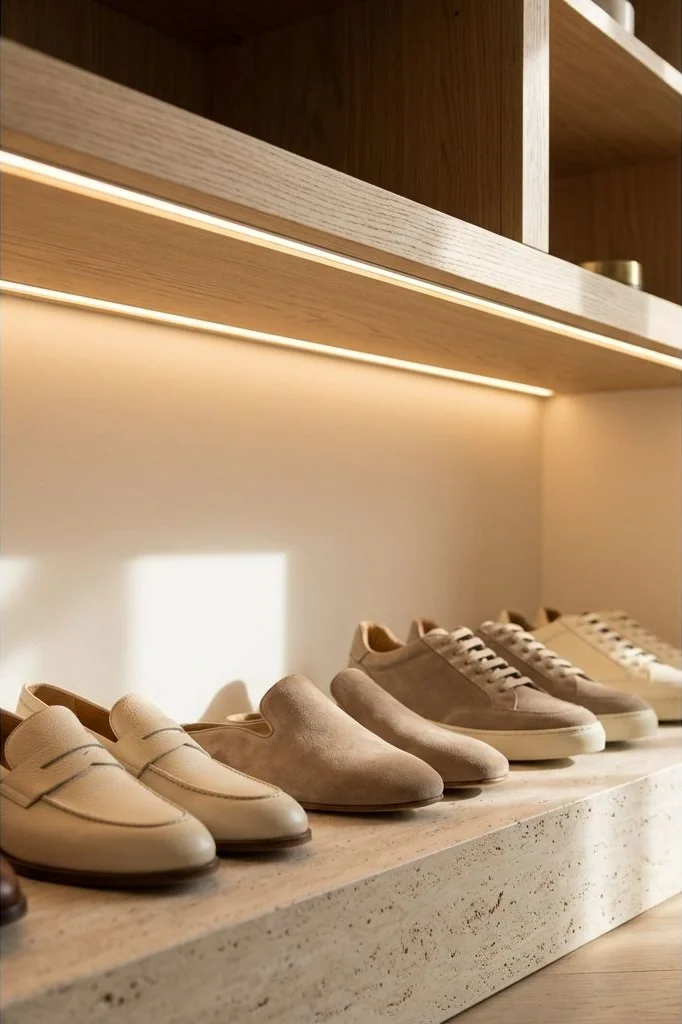
Route a shallow nine-millimeter routed channel along the front underside of every intermediate shelf. Installing downward-facing slim LED extrusions casts a continuous curtain of warm grazing light over the surfaces below. This downward beam illuminates lower drawer fronts and leather footwear displays with museum-like precision.
Pairing downward grazing illumination with angled presentation tiers showcases leather patinas beautifully. For specialized footwear placement strategies, explore our detailed guide to tiered shoe risers.
Vertical Rod Illumination: Integrated Hanging Tube Glow
Conventional wardrobe lighting relies on ceiling cans positioned behind the user’s head. When you step forward to browse shirts or suits, your body casts a dark silhouette directly over the clothes rail, obscuring lapels, collars, and sleeve details.
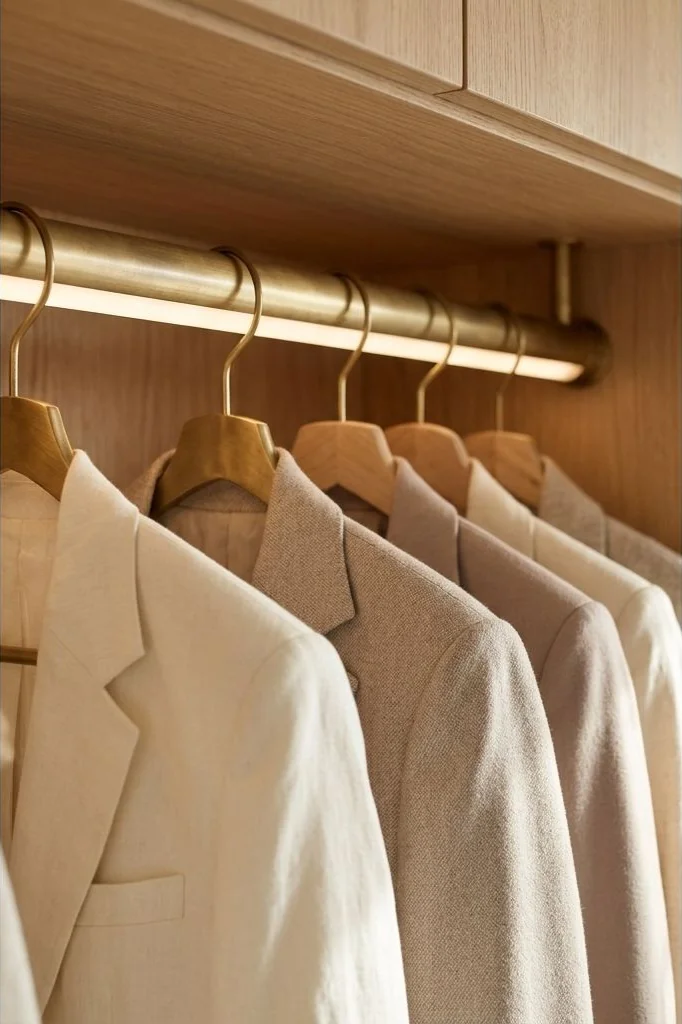
The definitive solution is the architectural illuminated hanging rod. Fabricated from heavy-walled extruded brass or anodized aluminum tubing, these specialized hanging rails feature an integrated continuous channel along their bottom diameter, sealed with a milky diffuser.
As hangers slide along the top surface of the rail, the embedded downward light shines directly onto the shoulders and front panels of every garment. Because the light source travels directly along the hanging axis, shadows are eradicated, presenting each item in clear, flattering luminescence.
Low-Voltage Wiring Integration: Channel Routing and Drivers
The hallmark of professional architectural joinery is the complete concealment of electrical infrastructure. Exposed wiring, bulky plug-in transformers, and surface-mounted conduit immediately ruin the serene aesthetic of a luxury dressing room.
Plan cable pathways during the initial millwork framing phase. Route low-voltage eighteen-gauge two-conductor wire harnesses through hidden routed dados along the rear edges of vertical gable panels. Terminate all branch circuits back to a central remote driver enclosure located in an upper attic bay or service panel.
Consolidating all 24-volt constant-voltage DC drivers into a single ventilated, accessible location prevents heat buildup inside enclosed wooden cabinetry. It also guarantees that if an electrical driver requires replacement after a decade of continuous service, the component can be serviced without dismantling finished millwork.
In their comprehensive architectural profiles, the editors of Dezeen emphasize that lighting integration represents the defining boundary between basic furniture and true interior architecture. Discover our complete collection of curated design resources and architectural advice at ornista.com.
Frequently Asked Questions
Why is 2700K preferred over 4000K or 5000K for closet lighting?
A 2700K color temperature delivers warm, inviting light that enhances wood tones, warms neutral fabrics, and flatters human skin tones. Cooler 4000K and 5000K light often feels sterile, cold, and harsh in intimate residential bedroom environments.
Are 12-volt or 24-volt LED strip systems better for closet installations?
Twenty-four-volt (24V) systems are distinctly superior for architectural millwork. They permit longer continuous runs with significantly less voltage drop, maintaining consistent light brightness from the beginning of the channel to the very end.
How do diffusers protect LED strips inside a wardrobe?
Frosted acrylic diffusers physically seal the diode ribbon against dust, textile lint, and accidental contact with garment hangers, while blending individual light points into a smooth, glare-free optical plane.