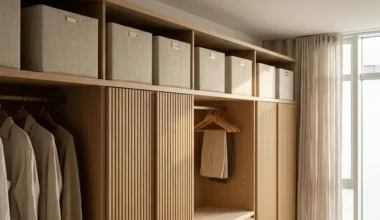
An exquisitely organized closet is an act of thoughtful architecture, but without sustainable daily habits, even the most meticulous storage system inevitably surrenders to entropy. A single hurried morning where a jacket is tossed over a chair rather than returned to its hanger begins a compounding cycle. Within weeks, pristine hanging rails become crowded, drawers overflow, and visual serenity collapses into clutter.
Key Takeaways
- Closet maintenance succeeds through micro-habits requiring less than sixty seconds of effort rather than exhausting seasonal overhaul sessions.
- A dedicated valet stand or wooden branch rail resolves the “in-between clothes” dilemma without cluttering bedroom furniture.
- The one-in-one-out rule establishes a permanent volume ceiling, guaranteeing that wardrobe density remains strictly in equilibrium.
- Reverse hanger audits provide objective, empirical proof of which garments are actively worn versus kept out of guilt or inertia.
- Gentle garment brushing with natural boar bristles removes dust and restores wool fibers, extending longevity without excessive chemical dry cleaning.
- Micro-maintenance rituals protect the investment made in high-quality architectural storage inserts and fine textiles.
Maintaining wardrobe order is not a matter of constant, tedious discipline; it is an architectural problem solved by lowering physical friction. When putting something away is as effortless as dropping it on the floor, immaculate order becomes the default state of your dressing room.
The Entropy Trap: Why Organizing Without Maintenance Fails
Most homeowners approach wardrobe organization as a singular, monumental weekend project. They discard bags of unworn clothes, install matching velvet hangers, arrange shirts by color, and admire the immaculate visual result. Yet without daily behavioral protocols, entropy takes over within weeks.
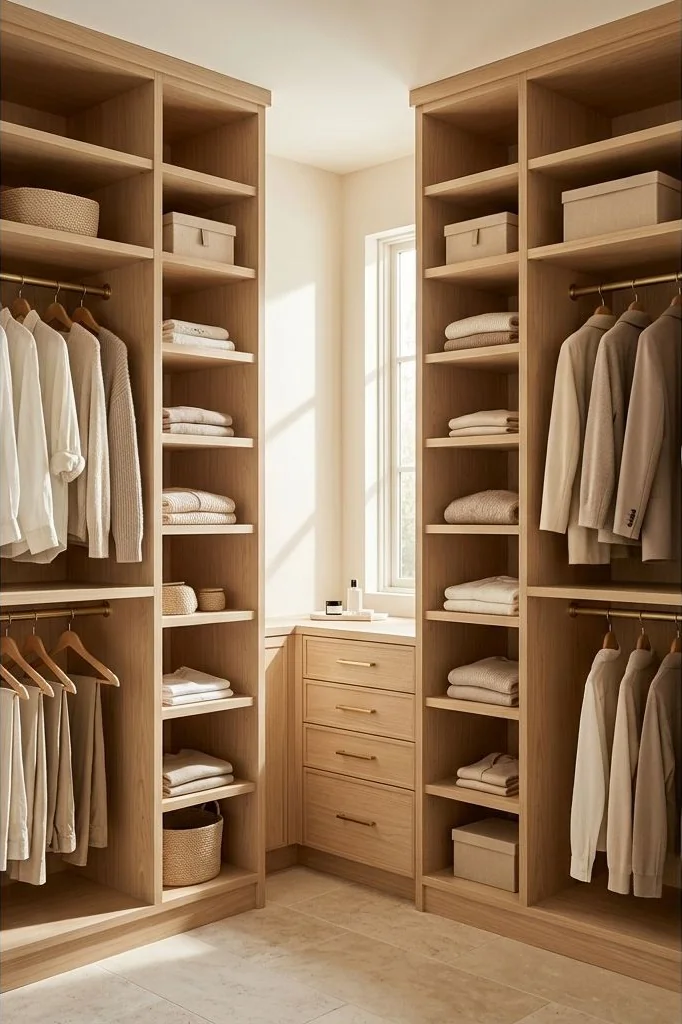
The core issue is that organizing sets up an initial baseline, but maintenance protects that baseline against ongoing lifestyle friction. If returning an item requires navigating tight clearances, sliding stubborn bins, or unclamping complex contraptions, humans naturally defer the task. Designing low-friction systems ensures that items return to their designated homes instantly. For foundational layout strategies that minimize friction, consult our comprehensive guide to closet organization architecture.
By establishing frictionless spatial pathways, returning an item takes no more energy than abandoning it, eliminating the root cause of clutter accumulation.
The 60-Second Return Habit: Eliminating The In-Between Chair
Almost every bedroom harbors the infamous “in-between chair” – a designated accent seat where trousers, tailored blazers, and wool sweaters pile up because they have been worn once, are not soiled enough for the laundry, yet feel too un-aired to return directly into an enclosed wardrobe.
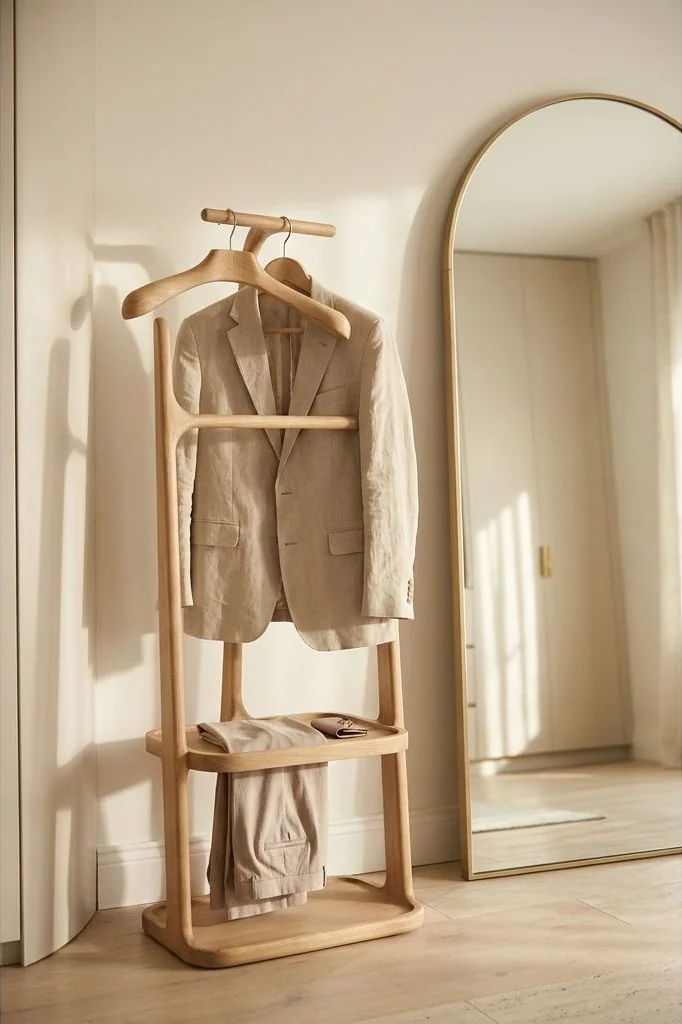
To eliminate this visual blight, integrate an intentional transitional buffer into your dressing suite. A minimalist sculptural valet stand crafted from solid white oak provides dedicated hanging rails for a tailored jacket and trousers to breathe overnight. Alternatively, install a secondary single-garment brass wall hook beside the dressing area.
Allowing garments to air out for twelve hours releases body heat and ambient moisture before they return to the main closet. Committing to a sixty-second nightly reset – returning yesterday’s aired garments to their permanent hangers – completely prevents clothing piles from forming.
The One-In-One-Out Rule: Maintaining Equilibrium Volumes
Wardrobe clutter is fundamentally a mathematical deficit: input exceeds output. Each season brings acquisitions – a new cashmere knit, bespoke trousers, or summer sandals – while existing garments remain untouched on their rails. Over time, spacing between hangers shrinks from a generous two inches to zero, causing friction and wrinkling.

The one-in-one-out rule establishes a strict volume ceiling. For every new item introduced into your dressing room, an existing piece must depart through donation, consignment, or recycling. This discipline compels thoughtful consideration before every new purchase, asking: “Does this new piece justify removing an existing favorite?”
Keep a structured natural canvas donation tote permanently stationed in the base of your closet or laundry area. The moment an item no longer fits your proportions or lifestyle, place it directly into the tote rather than re-hanging it out of hesitation.
Reverse Hanger Audits: Empirical Utilization Tracking
Humans are notoriously biased when estimating how frequently they wear particular clothes. We convince ourselves that a stiff linen shirt or uncomfortable pair of wool trousers is an indispensable wardrobe staple, even when it hasn’t left its hanger in eighteen months.

The reverse hanger audit offers undeniable empirical evidence of actual garment utilization. At the start of a seasonal cycle, turn every hanger on your rails backward, so the hook points toward you rather than toward the wall. Whenever you wear a garment and return it to the closet, hang it normally with the hook facing the wall.
At the end of six months, the visual result is stark: every hanger that remains turned backward represents a piece that went completely unworn. This provides indisputable clarity when deciding what to consign or donate, freeing valuable spatial breathing room. To see how uniform hardware reinforces this clarity, read our analysis on visual uniformity in wardrobe organization.
Garment Care Tools: Cashmere Combs and Boar Bristle Brushes
Daily maintenance extends beyond spatial organization to the physical preservation of textile surfaces. Delicate wools, tweeds, and fine knitwear accumulate airborne dust, dead skin cells, and surface pilling during regular wear. Sending garments to commercial dry cleaners after every outing exposes fibers to harsh chemical solvents that prematurely degrade wool luster.
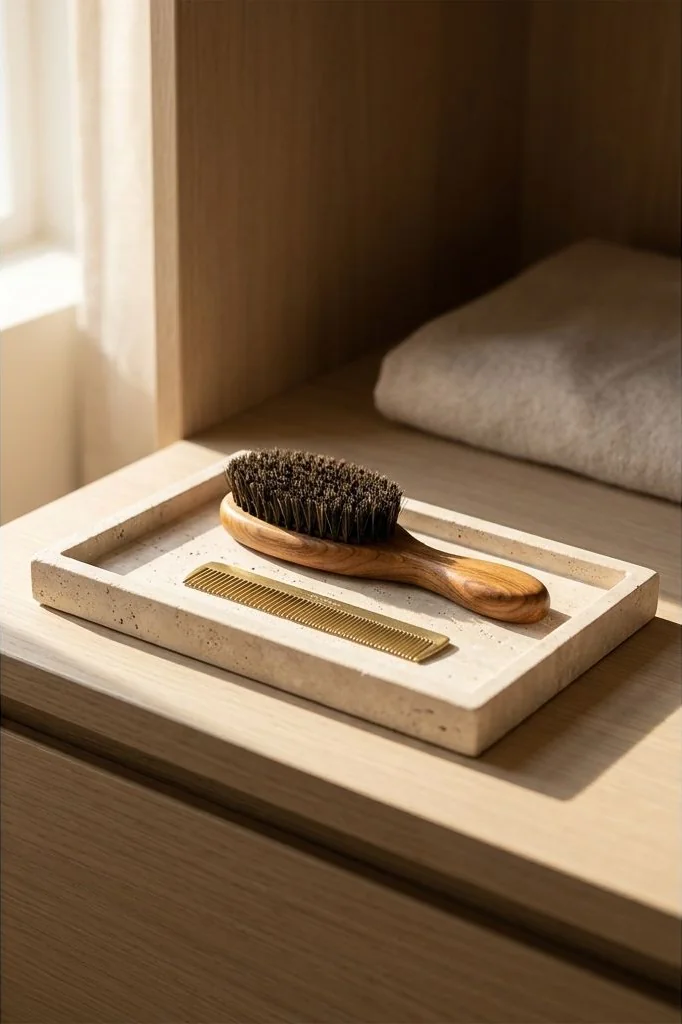
Incorporate traditional garment care tools into your daily dressing area. A handcrafted pearwood clothes brush with natural boar or horsehair bristles gently lifts micro-dust particles and realigns textile nap with several downward strokes. A brass wire cashmere comb swiftly removes surface fuzz without shearing base fibers.
Taking thirty seconds to brush a suit jacket before placing it onto its contoured wooden hanger preserves textile vitality across decades, turning everyday maintenance into a quiet, meditative ritual of craftsmanship appreciation.
Seasonal Calibration: The Semi-Annual Shift
Attempting to house an entire four-season wardrobe in active hanging zones causes severe spatial crowding. Storing heavy shearling coats alongside featherweight linen shirts clutters visual focus and complicates daily outfit selection.

Implement a disciplined semi-annual shift in mid-spring and mid-autumn. Transition out-of-season items to high overhead storage boxes or breathable under-bed chests, leaving only climate-appropriate garments in prime eye-level hanging bays. This seasonal recalibration cuts daily decision fatigue in half, keeping your closet light, focused, and aligned with your daily lifestyle.
As home organization specialists at The Spruce observe, sustainable order is not achieved through rigid minimalism, but through mindful systems that adapt to daily living rhythms. Find additional lifestyle resources and interior inspiration across our design collection at ornista.com.
Frequently Asked Questions
How much time should daily closet maintenance take?
Daily closet maintenance should take no more than sixty to ninety seconds. By establishing clear homes for every item and using an airing valet stand, hanging clothes and setting shoes in place happens immediately without friction.
What should I do with garments that are worn but not dirty?
Hang them on an airing valet stand, a dedicated wall hook, or a ventilated secondary rail for twelve hours. Once aired out, return them to their designated closet hanger rather than letting them accumulate on chairs or dressers.
How strictly should the one-in-one-out rule be followed?
The rule should be followed strictly for high-density categories like hanging coats, shoes, and folded knitwear to prevent closet overfilling. For seasonal basics like undershirts or socks, replace them on a scheduled refresh cycle instead.