In the rhythm of domestic life, the kitchen pantry serves as the operational command center of nourishment and gathering. Yet opening many residential pantries delivers a chaotic sensory bombardment: crinkled cardboard cereal boxes, half-opened bags of flour leaking fine white dust over shelves, and expired specialty sauces lingering in dark corners. When ingredients are buried beneath commercial packaging, cooking dinner shifts from an enjoyable, sensory craft into an irritating logistical struggle. Refining pantry storage through intentional architecture restores culinary joy.
Key Takeaways
Architectural strategies for designing an organized, boutique-caliber pantry larder:
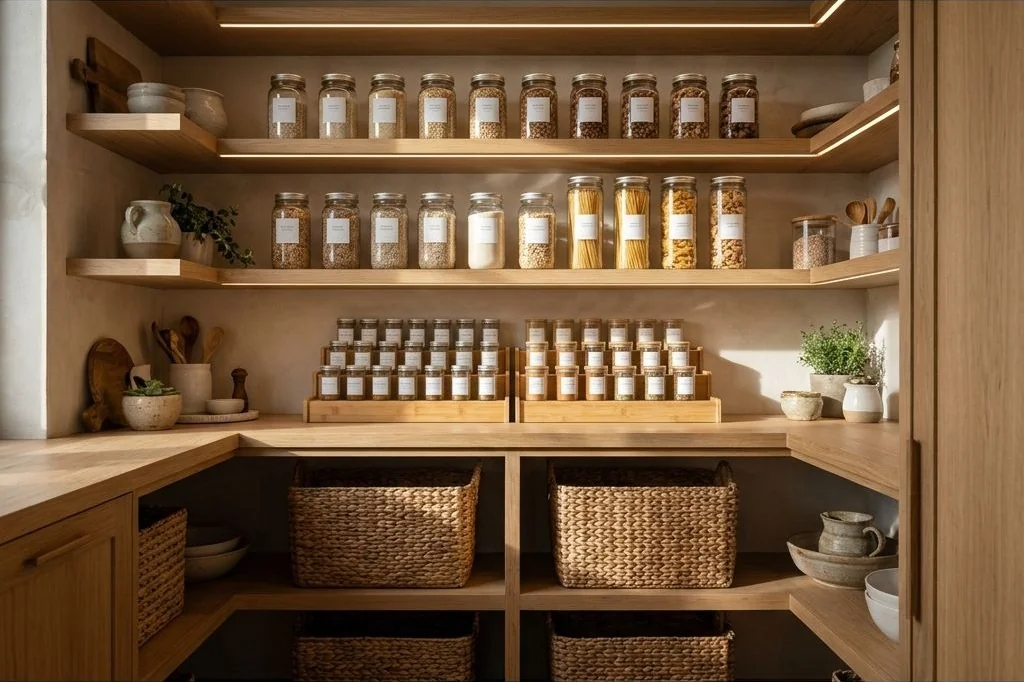
- Decanting dry bulk goods into uniform borosilicate glass canisters creates optical harmony while preserving food freshness.
- Tiered bamboo risers raise rear canned goods, ensuring complete label visibility across deep shelves.
- High-lipped timber turntables prevent condiment bottles and oils from getting lost in corner dead zones.
- Grouping ingredients into thematic culinary stations – such as baking or breakfast – cuts meal prep time significantly.
- Understated waterproof typography labels establish clear inventory discipline without visual clutter.
An exceptional pantry does not require commercial grocery warehouse volume; it requires clear sightlines, airtight material preservation, and purposeful zoning. When whole grains, legumes, and spices are decanted into natural glass and acacia containers, the natural textures of food become an organic design feature. To discover how custom compartmentalization extends into kitchen drawers, review our guide on drawer division engineering and custom grid systems.
The Architectural Larder: Moving Past Visual Clutter in the Kitchen
Commercial food packaging is engineered to compete for buyer attention on bright supermarket shelves using saturated fluorescent tones, massive branding logos, and contrasting marketing claims. When dozens of branded packages sit together on open pantry shelving, their competing graphics generate immense visual tension.

The architectural larder replaces commercial packaging with quiet, natural materials. Solid white oak floating shelves, textured seagrass baskets for root vegetables, and clear glass jars form a serene palette that celebrates the earthy beauty of whole grains, brown lentils, and golden pastas. Explore our broader interior design philosophy at the Ornista architectural design studio.
The Decanting Protocol: Borosilicate Glass and Acacia Wood Seals
Decanting dry bulk goods is often dismissed as pure aesthetic indulgence, but it serves critical functional and economic purposes. Paper bags and thin plastic pouches tear easily, leaving pantry shelves dusted in flour and attracting pantry moths. Furthermore, flexible packaging hides actual volume, leading to emergency grocery runs when a half-cup of rice is mistaken for a full box.

High borosilicate glass canisters equipped with natural acacia wood lids and airtight silicone gaskets provide superior food security. Borosilicate glass is chemically inert, non-porous, and crystal-clear, allowing you to gauge remaining inventory at a glance. The airtight seal keeps whole grains, rolled oats, and artisanal pastas crisp and pest-free for months, as recommended in Architectural Digest kitchen pantry design and spatial layouts.
When selecting glass canister collections, maintain uniform diameter footprints while varying vertical heights. Using jars with consistent four-inch or five-inch circular bases allows you to arrange containers in disciplined, architectural grid patterns across your shelves. Taller jars house high-volume staples like spaghetti and brown rice, while shorter cylinders hold specialty seeds and dried currants, preserving horizontal alignment without visual chaos.
Tiered Bamboo Risers: Tiered Sightlines for Canned Goods
Standard pantry shelves measure twelve to sixteen inches deep. When canned tomatoes, beans, and coconut milks are arranged flat on a deep shelf, the front row obscures everything behind it. Over time, rear cans get pushed into shadows, expiring silently until discovered years later during an overdue cleaning.

Tiered bamboo shelf risers solve this line-of-sight challenge through tiered stadium seating geometry. An expandable three-step bamboo riser raises the second and third rows by two inches each, ensuring that every can label remains fully legible from standing height. This visual clarity eliminates accidental duplicate purchases and speeds up dinner preparation.
Lazy Susan Turntables: Activating Corner Shelf Dead Zones
In L-shaped or corner pantries, corner shelves represent notorious spatial dead zones. Items placed in deep ninety-degree corners are difficult to reach without knocking over adjacent bottles, causing homeowners to avoid using the space entirely.

Rotating lazy susan turntables convert awkward corner cavities into dynamic storage hubs. Select a turntable crafted from solid acacia wood or heavy acrylic with a two-inch raised perimeter rim. The raised lip prevents tall glass vinegar cruets, olive oil bottles, and honey jars from tipping off during spinning. A simple quarter-turn brings whatever condiment you need directly to your fingertips.
Zonal Food Grouping: Creating Culinary Frictionless Stations
Organizing pantry items by supermarket category (e.g., all cans together, all boxes together) fails during practical cooking because preparing a specific meal requires pulling items from four disparate shelves.

Instead, group items into functional culinary zones based on usage workflows. Establish a dedicated Baking Station containing flours, sugars, leaveners, and extracts in one unified tier. Create a Breakfast Station grouping whole grain oats, chia seeds, raw nuts, and maple syrups. This workflow zoning cuts meal preparation steps in half, mirroring the professional efficiency of commercial kitchen prep lines. For foundational decluttering protocols, consult our guide on intentional decluttering principles for modern residences.
Minimalist Typography Labeling and Inventory Discipline
White flours, arrowroot starches, and powdered sugars look remarkably similar when decanted into identical glass jars. Without clear labeling, accidental culinary errors – such as baking with cornstarch instead of confectioners sugar – are inevitable.

Apply matte, waterproof labels featuring understated sans-serif typography across the middle front of each canister. Keep label text concise and uniform: “Rolled Oats,” “Jasmine Rice,” “Golden Flaxseed.” On the underside of the container lid or base, affix a discreet chalk marker tab indicating expiration dates and cooking ratios (such as water-to-grain proportions), keeping essential culinary data handy without cluttering the primary viewing facade.
Frequently Asked Questions
Common questions regarding kitchen pantry organization, glass decanting, and shelf maintenance:
How do you manage bulk dry goods that do not fit inside a single glass canister?
Designate an opaque fabric or wicker storage bin on the lowest floor shelf as your bulk overflow depot. Store remaining bagged staples inside the bin, using them to refill countertop glass canisters as volume depletes.
What is the best way to clean and maintain acacia wood canister lids?
Wipe acacia timber lids with a damp microfiber cloth and dry them immediately. Never submerge wooden lids in water or wash them in a dishwasher. Reapply a food-grade mineral oil or beeswax salve once a year to maintain the rich natural grain luster.
How do you prevent onions and potatoes from spoiling in a pantry?
Store onions and potatoes in separate well-ventilated wire or open-weave hyacinth baskets in a cool, dark bottom zone. Never store them in the same container, as onions release ethylene gas that causes potatoes to sprout and rot prematurely.