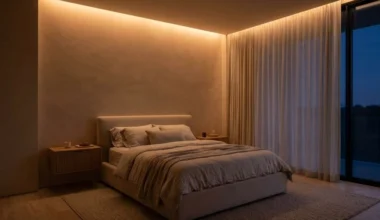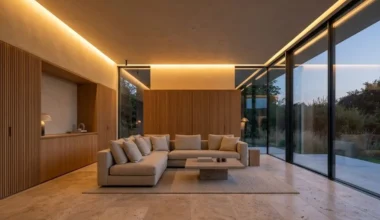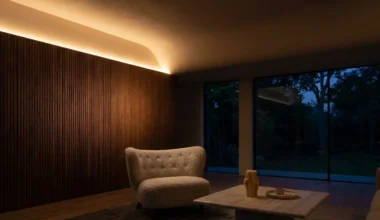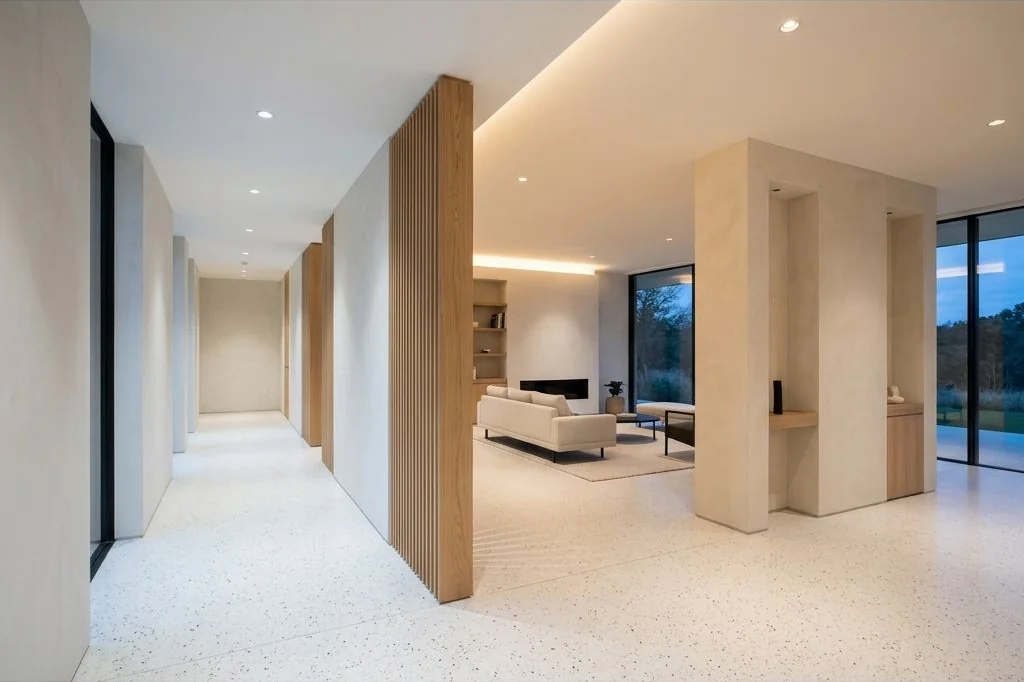
Modern architectural lighting automation requires robust, responsive digital infrastructure. While consumer smart lighting frequently relies on fragmented Wi-Fi apps and cloud-dependent ecosystems that introduce noticeable delays, executing subtle whole-home circadian transitions demands instant local coordination. When dozens of fixtures across multiple living zones shift their color temperature simultaneously, network bottlenecks can create awkward stepping artifacts and asynchronous flashes. Evaluating dedicated smart home lighting protocols – specifically Zigbee 3.0, Thread, and the unifying Matter standard – provides the technical backbone necessary for frictionless ambient living. Discover refined architectural principles at the Ornista curated living spaces studio.
Key Takeaways
Fundamental architectural guidelines for choosing and deploying local lighting communication protocols:
- Local wireless mesh architectures eliminate cloud server latency, guaranteeing instantaneous multi-fixture synchronization.
- Zigbee 3.0 offers a mature, battle-tested ecosystem with extensive hardware availability for recessed downlights and micro-controllers.
- Thread provides an IP-addressable, self-healing low-power mesh protocol purpose-built for the unified Matter interoperability standard.
- Centralized local controllers calculate solar position and Kelvin fades entirely offline, protecting system autonomy during internet outages.
- Hardwired low-voltage DIN-rail modules in central equipment panels alleviate radio frequency congestion in large luxury residences.
The Limitations of Consumer Wi-Fi Lighting Networks
Many homeowners begin their smart lighting experience with off-the-shelf Wi-Fi bulbs. While straightforward for a single reading lamp, scaling Wi-Fi lighting across an entire residence introduces severe networking bottlenecks. Standard residential Wi-Fi access points are optimized for high-bandwidth, point-to-point data transmission – streaming video and file downloads – rather than maintaining simultaneous low-latency connections to dozens of small microcontroller devices.
When an automated circadian schedule issues a whole-house color temperature transition, a Wi-Fi router must address each bulb individually. This results in the popcorn effect: fixtures pop to new brightness or Kelvin levels at staggered fractions of a second rather than transitioning in unison. Furthermore, most consumer Wi-Fi fixtures rely on remote cloud servers to process automation schedules. If the home internet connection experiences downtime, the circadian curve freezes completely, leaving occupants stranded with whatever color spectrum was active when the connection dropped.
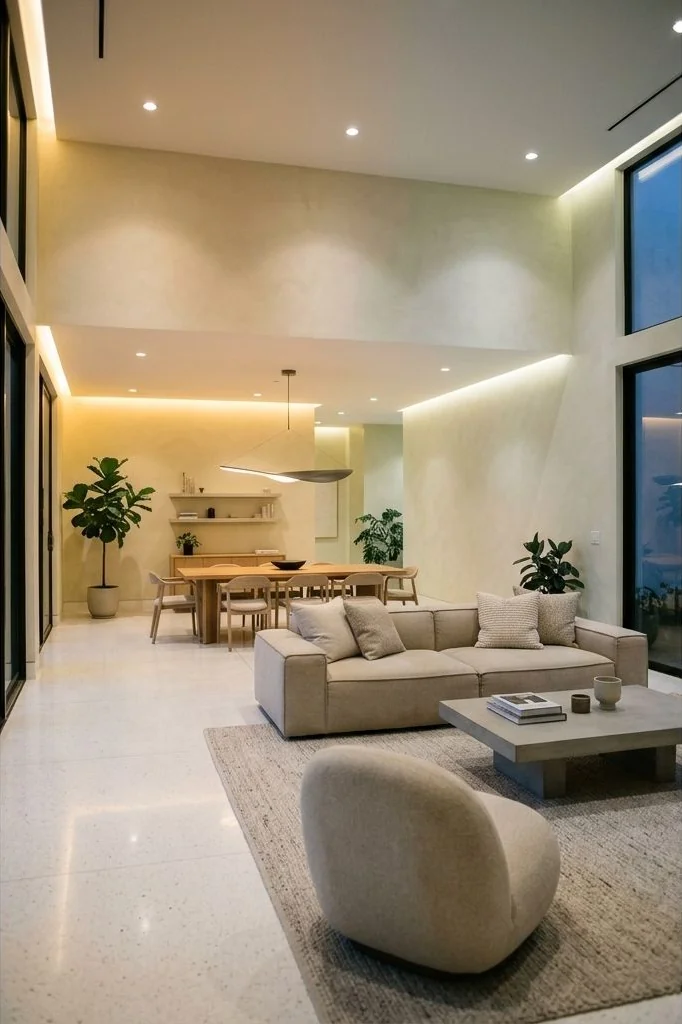
Zigbee 3.0: The Proven Mesh Standard for Architectural Lighting
For more than two decades, Zigbee mesh networking protocols have served as the benchmark for reliable commercial and high-end residential automation. Operating on the 2.4 GHz industrial, scientific, and medical radio band, Zigbee utilizes a self-healing mesh topology where mains-powered devices – such as recessed downlights, in-wall dimmers, and LED drivers – act as signal repeaters.
In a Zigbee mesh, commands radiate outward from a central local coordinator through neighboring nodes. If a particular fixture or repeater fails, signals automatically re-route around the obstruction within milliseconds. Zigbee 3.0 standardizes device profiles, allowing controllers from different manufacturers to interact seamlessly. For circadian lighting, Zigbee includes native support for color temperature clusters, enabling smooth transitions across defined duration parameters without flooding the network with micro-step packets.
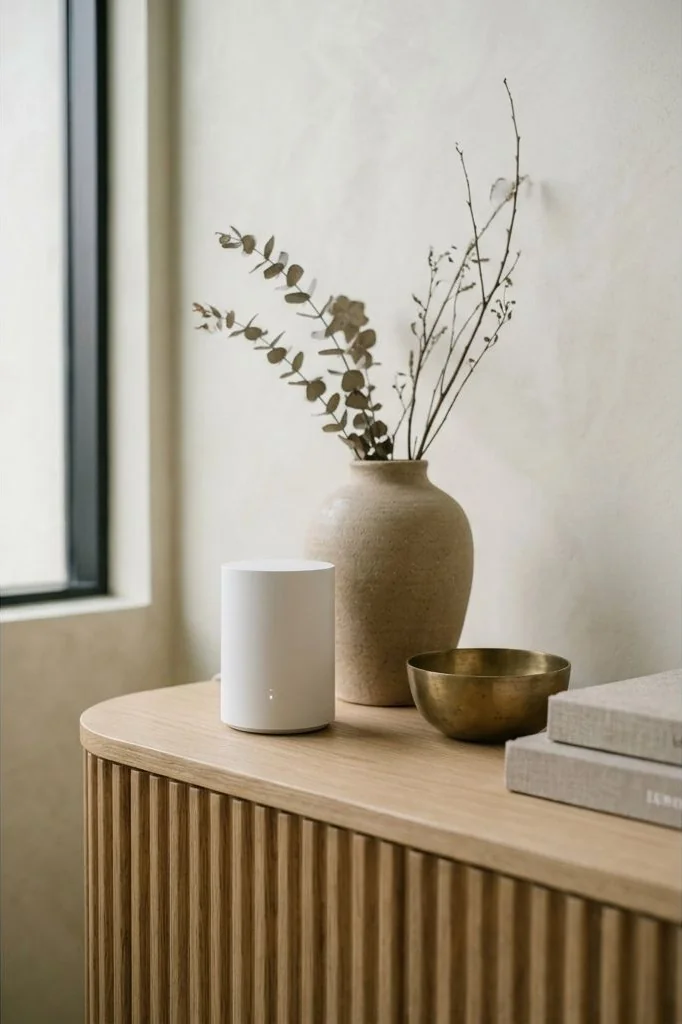
Thread and Matter: The Future of Unified IP Mesh Networks
While Zigbee remains exceptionally stable, Thread represents the next evolutionary leap in smart home infrastructure. Developed by a consortium of leading technology leaders, Thread is an IPv6-based low-power wireless mesh protocol. Unlike Zigbee, which requires a specialized translation bridge to communicate with home networks, Thread devices communicate natively using standard internet protocol addressing.
Matter operates as the universal application layer directly on top of Thread and Wi-Fi. A Matter-over-Thread lighting ecosystem allows fixtures from diverse architectural lighting brands to bind directly into unified local control platforms without proprietary manufacturer cloud hubs. If a primary Thread Border Router loses power, any other mains-powered Thread device automatically assumes router responsibilities, ensuring that scheduled circadian transitions execute without interruption. For a foundational exploration of circadian scheduling logic, examine our guide to circadian rhythm lighting automation and Kelvin schedules.
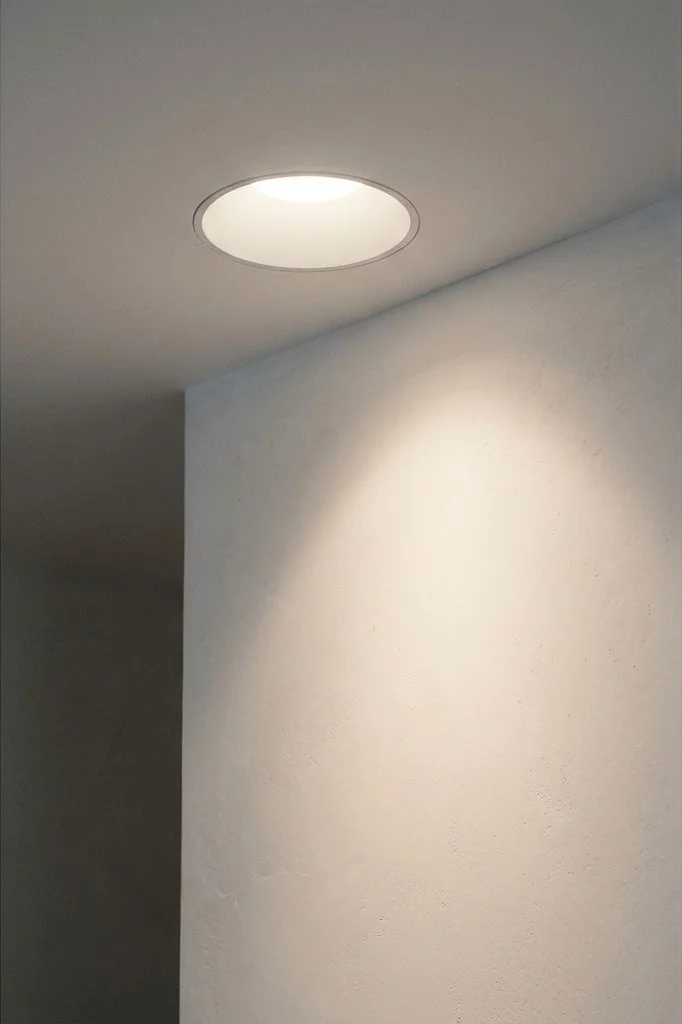
Centralized Equipment Panels and Low-Voltage Infrastructure
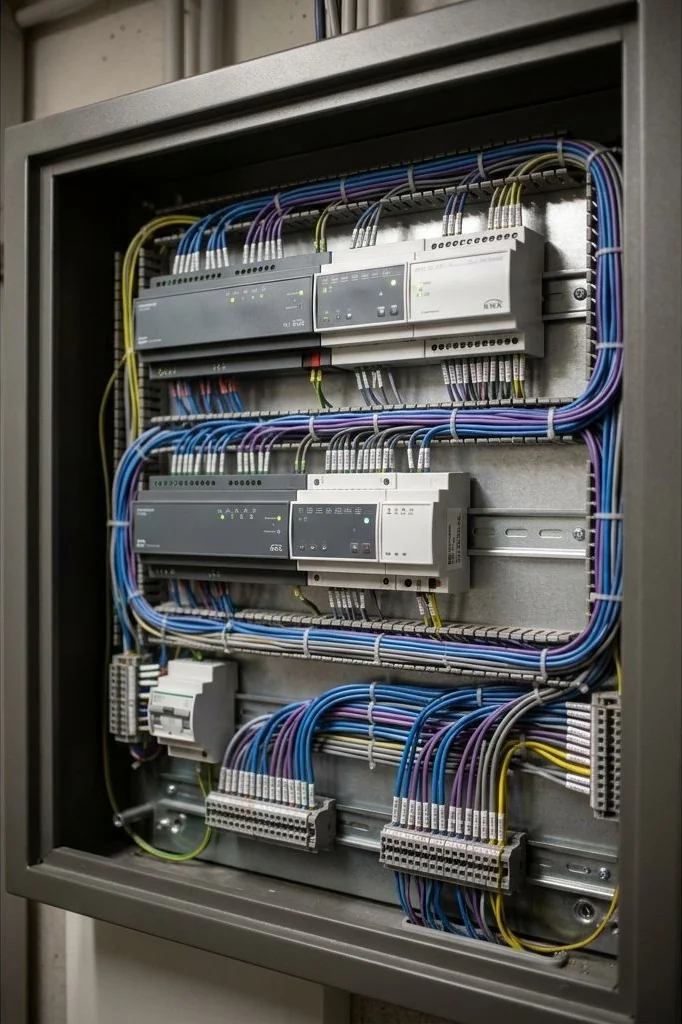
In extensive luxury residences spanning thousands of square feet, relying solely on individual wireless devices in every ceiling cavity can create radio clutter and maintenance headaches. High-end architectural implementations frequently utilize centralized low-voltage panels housing DIN-rail modules.
In this centralized architecture, mains high-voltage wiring terminates inside a dedicated utility closet. Low-voltage constant-current or constant-voltage drivers power LED channels throughout the home over discrete class-two wiring runs. These central drivers interface with local automation systems via industrial fieldbus protocols like DALI-2 (Digital Addressable Lighting Interface) or wired KNX systems, bridging seamlessly into Zigbee or Matter networks. This topology keeps electronics cool, extends hardware longevity, and leaves ceiling planes clean of bulky individual power supplies.
Designing Intuitive Wall Interfaces and Physical Overrides
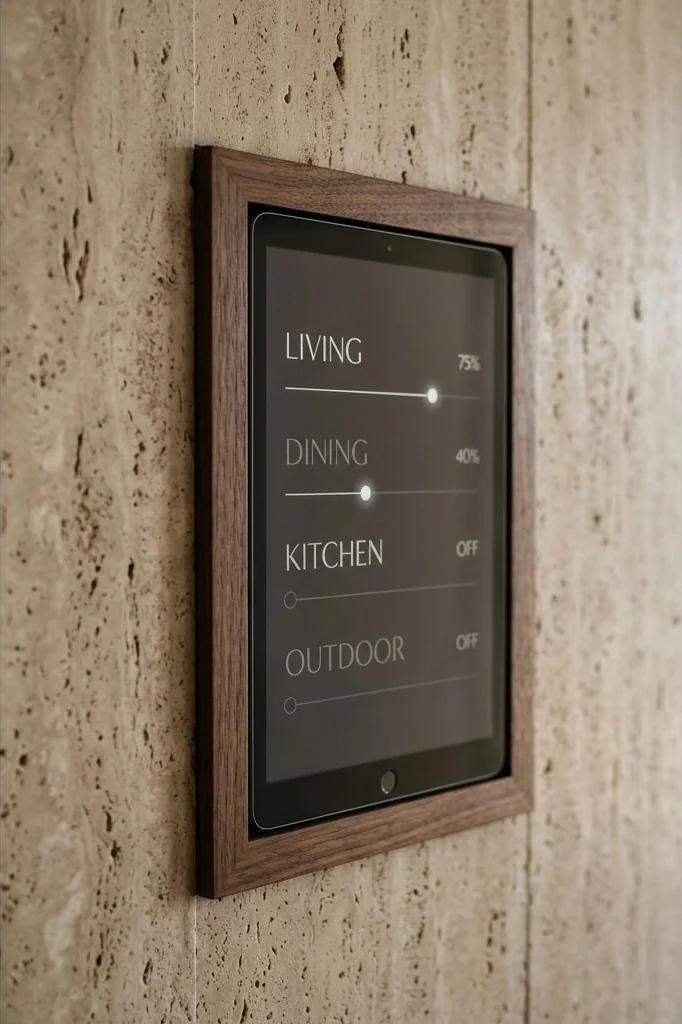
A smart lighting installation is only as successful as its physical usability. While automated circadian algorithms should manage daily color shifts invisibly in the background, occupants must always retain intuitive, immediate tactile control for spontaneous activities.
Replace complex multi-gang light switches with minimalist flush-mounted architectural keypads. Engrave buttons with clear functional scenes: Morning, Focus, Relax, and Off. Pressing a scene button applies immediate brightness adjustments while allowing the local controller to keep tracking the solar circadian clock. When occupants leave the room or activate automatic mode, the fixtures gently slide back onto the circadian curve over a five-minute fade. For complementary workspace ergonomics, explore our guide to Scandinavian solid timber workstation setups.
Network Redundancy and Offline Resilience
True luxury is defined by reliability. Domestic lighting is a mission-critical utility that must never depend on remote cloud connectivity or external internet service providers. Building on local protocols guarantees that every schedule, automation routine, and wall switch command remains operational under all conditions.
Select home controllers that compute solar ephemeris equations locally based on programmed coordinates. Pair critical lighting controllers with an uninterruptible power supply in the central equipment enclosure. By prioritizing local execution and proven mesh architectures, the home provides seamless circadian wellness day after day, insulated from digital instability and obsolescence.
Frequently Asked Questions
Can Matter and Zigbee devices coexist on the same home automation controller?
Yes. Many modern smart home hubs and software controllers feature multiprotocol radios capable of communicating with both Zigbee and Matter-over-Thread networks simultaneously, unifying them under a single circadian automation schedule.
What happens if a Thread Border Router device is unplugged accidentally?
Thread mesh networks feature self-healing redundancy. If the primary border router goes offline, another eligible mains-powered Thread device on the network automatically steps into the routing role within seconds, maintaining network integrity.
Is wired DALI lighting superior to wireless mesh for large custom homes?
For large estate residences with hundreds of lighting channels, hardwired DALI-2 systems offer zero radio frequency interference and instantaneous response. However, modern Matter-over-Thread and Zigbee 3.0 mesh systems provide comparable performance at significantly lower installation labor costs.
Do smart lighting mesh networks interfere with residential 5 GHz Wi-Fi?
No. Zigbee and Thread operate on specific channels within the 2.4 GHz spectrum. By configuring your 2.4 GHz Wi-Fi router to channel 1 or 6 and assigning Zigbee to channel 25, you prevent radio co-channel interference entirely.
Engineering Frictionless Environments for Modern Living
By anchoring smart lighting automation in robust, local protocols like Matter, Thread, and Zigbee, architectural spaces achieve perfect harmony between technological sophistication and organic biological needs. Lighting ceases to be a disparate collection of gadgets and becomes a cohesive, responsive extension of the home architecture itself, enhancing human focus by day and nurturing restorative peace by night. For complementary insights into establishing structured daily systems, review our framework for time blocking architecture and ultradian focus cycles.
Disclaimer: Network protocols, technical architectures, and electrical infrastructure guidelines detailed in this article are provided for educational purposes. Complex low-voltage residential lighting and automation installations should be designed and commissioned in accordance with local building codes.