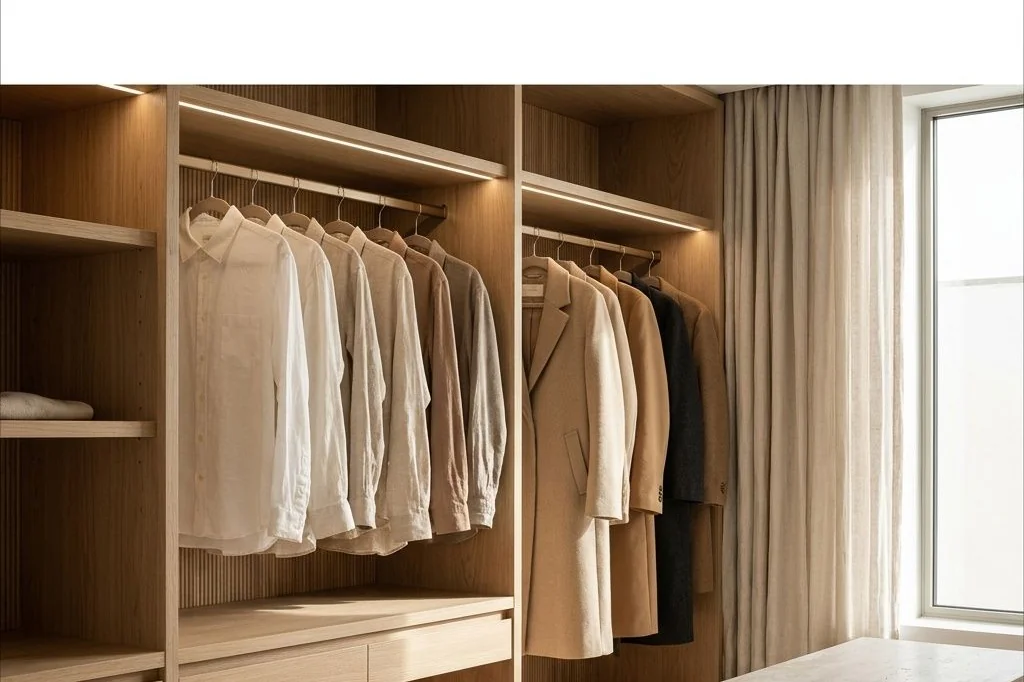
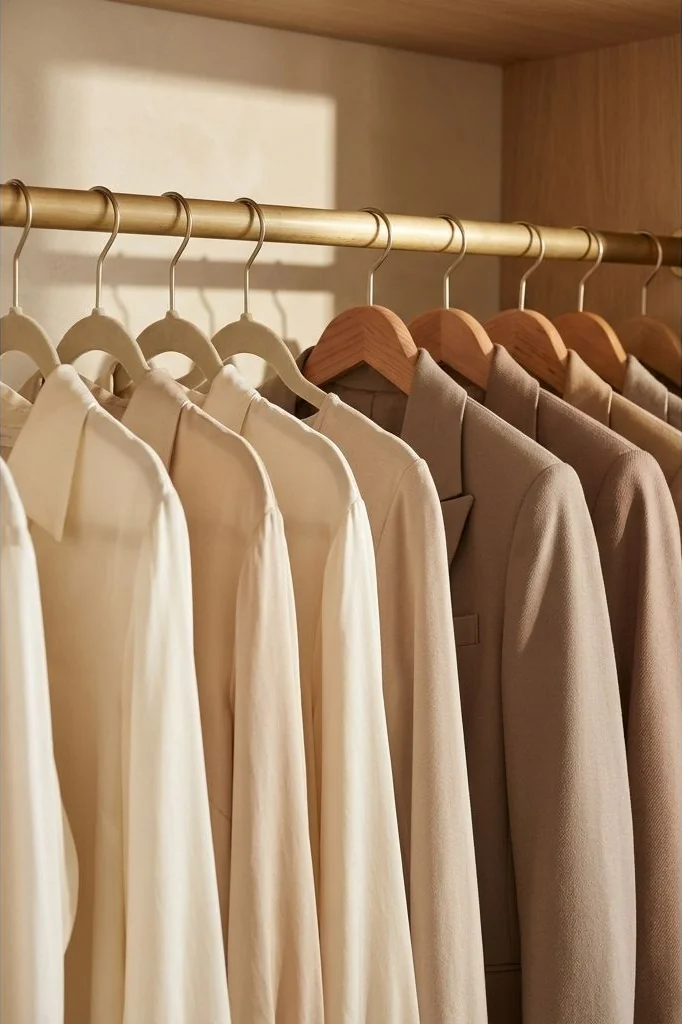
Every curated wardrobe depends upon an often overlooked architectural foundation: the hanger. While textiles, silhouettes, and color palettes command our aesthetic attention, the physical device supporting each garment dictates whether fabrics maintain their tailored drape or suffer structural deformation over time. Upgrading wardrobe hardware frequently leads homeowners and minimalist creators to a classic design debate: slim velvet hangers versus traditional contoured wooden hangers.
Both options represent a substantial leap forward from disposable wire frames and slippery plastic hooks. However, they operate on contrasting physical and spatial principles. Comparing friction mechanics, shoulder seam ergonomics, vertical rail density, and long-term textile preservation reveals that the most effective closet systems do not choose one exclusively. Instead, they deploy a calibrated hybrid strategy.
Key Takeaways
- Slim velvet hangers excel in high-friction grip and rail density, doubling available hanging capacity for lightweight clothing.
- Contoured wooden hangers offer essential broad shoulder support that preserves the structural chest drape of heavy wool coats.
- Matching hanger hook metal finishes to existing closet rods creates an understated, cohesive architectural line.
- A strategic hybrid wardrobe allocates eighty percent of rail space to velvet frames and reserves premium wood for tailoring.
- Proper hanger selection prevents permanent shoulder puckers and minimizes fabric stress across seasonal storage cycles.
Material Physics: Grip Friction and Structural Rigidity
The primary functional distinction between velvet and wood lies in surface friction. Velvet hangers utilize nylon micro-flocking electrostatically bonded to an ABS polymer core. This microscopic fuzzy texture generates high coefficient friction against slippery textiles such as silk, modal, cupro, and open-weave linen. Wide-neck blouses and delicate camisoles remain firmly seated on the shoulders without slipping off into the wardrobe abyss.
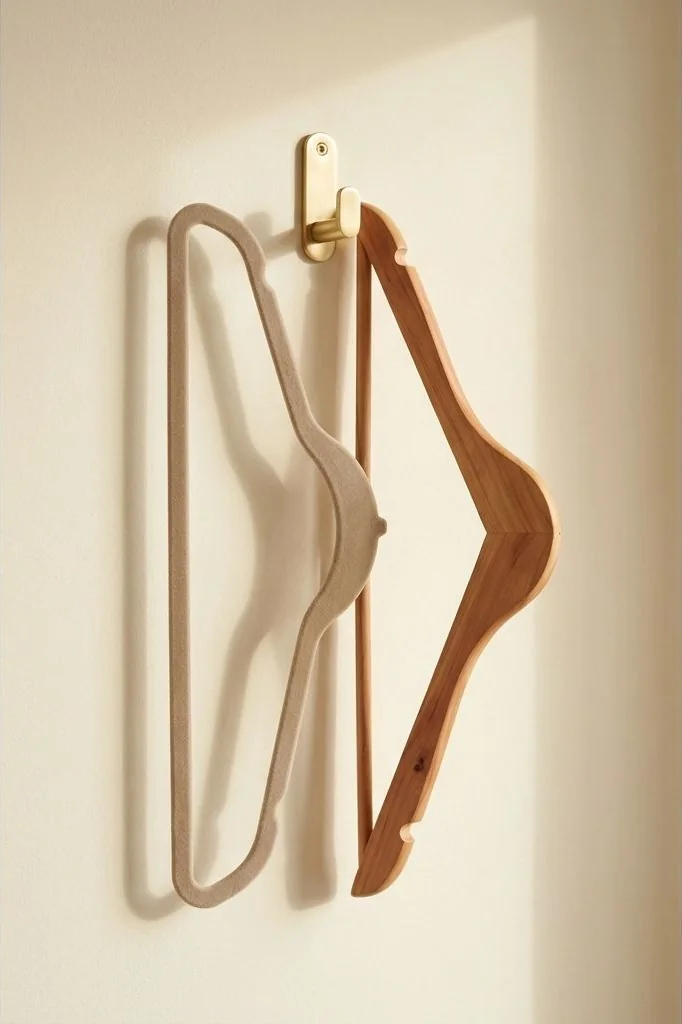
Conversely, solid hardwood hangers – typically carved from lotus, ash, or aromatic cedar – feature a smooth, satin-lacquered or natural sanded surface. This low-friction surface allows tailored coats and heavy knitwear to slide on and off effortlessly without catching delicate lining fabrics. While smooth wood cannot grip slippery silk straps without grooved notches, its inherent structural rigidity resists deflection under heavy downward loads.
Selecting the right material requires assessing the specific requirements of each textile category. For a deeper analysis of garment zoning, review our cornerstone guide on closet organization architecture and space optimization.
Spatial Density Metrics: 50% Rail Capacity Multipliers
For city apartments, historic homes, and compact dressing rooms, linear rail capacity represents a finite constraint. The physical cross-section of your hangers dictates how many garments can hang concurrently without producing severe compression wrinkling.
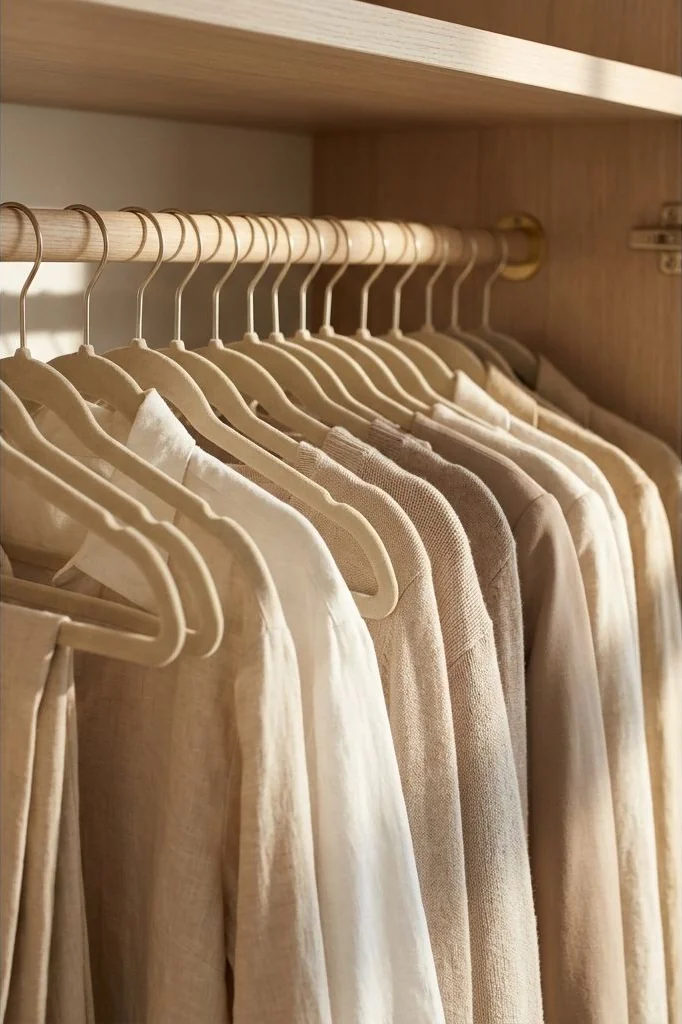
Slim velvet hangers average a thickness of approximately five millimeters (0.2 inches). In contrast, standard flat wooden hangers measure roughly twelve millimeters (0.5 inches), while contoured suit hangers with wide flared shoulders can span forty-five to fifty-five millimeters (nearly two inches) at their extremities.
On a standard thirty-six-inch wardrobe rod, transitioning from mixed wooden hangers to uniform slim velvet models increases hanging capacity by forty to fifty percent while maintaining healthy air circulation. Garments hang straight downward rather than flaring outwards, preserving clean negative space along the lower shelf perimeter.
Shoulder Bump Prevention: Weight Distribution Dynamics
While slim velvet frames dominate in spatial efficiency, they possess a crucial structural limitation: minimal contact surface area along the shoulder plane. When a tailored wool blazer weighing three to four pounds rests on a five-millimeter-wide frame, gravity concentrates the garment’s entire mass onto a razor-thin strip of fabric.
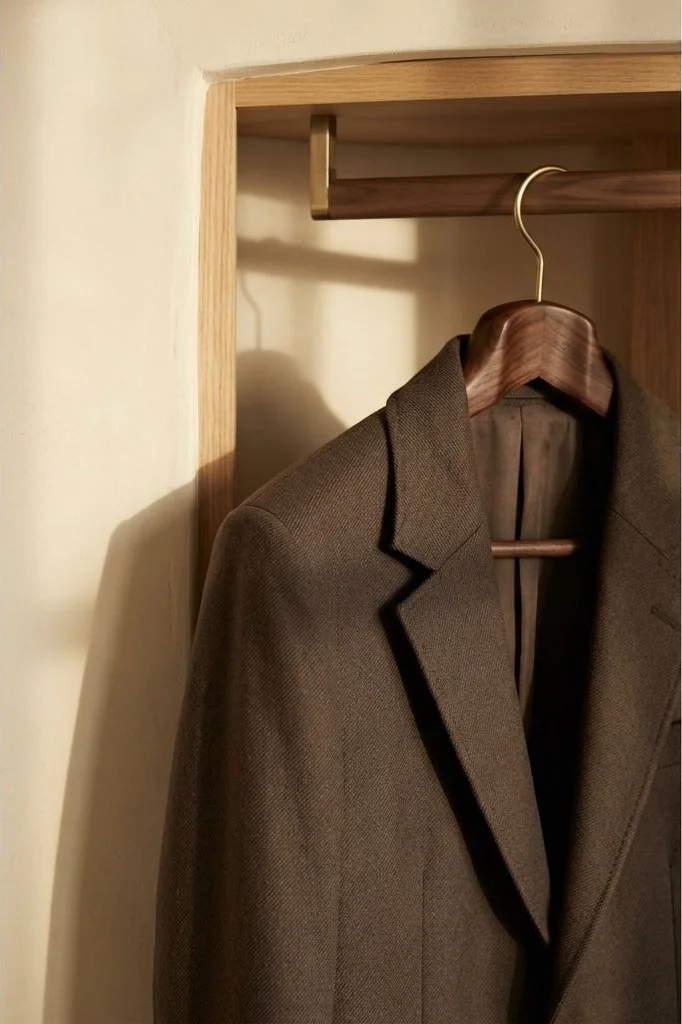
Over several weeks, this concentrated pressure causes the canvas internal chest piece to buckle and produces unsightly shoulder puckers – dimples along the armhole seam where the hanger edge stretched the weave. To preserve bespoke tailoring, contoured wooden hangers provide two-inch flared end caps that mimic human anatomy, distributing weight evenly across the entire shoulder curve.
Understanding these weight distribution dynamics is essential when curating quality garments. For recommendations on selecting enduring wardrobe fabrics, explore our comprehensive guide to capsule wardrobe natural fiber selection.
Garment Classification Matrix: Which Fabric Belongs Where
To establish a functional wardrobe without compromise, apply a methodical classification protocol across your clothing collection:
| Garment Category | Recommended Hanger Type | Primary Functional Rationale |
|---|---|---|
| Silk, Satin, & Rayon Blouses | Slim Velvet Hangers | Micro-flocking prevents slippery fabrics from dropping into floor zones. |
| Tailored Wool Overcoats | Contoured Wooden Hangers | Flared two-inch shoulder pads distribute heavy coat weight without puckering. |
| Casual Cotton Shirts & Tees | Slim Velvet Hangers | Maximizes rail capacity and maintains uniform collar heights across casual wear. |
| Structured Suit Jackets | Contoured Wooden with Trouser Bar | Preserves chest canvas and internal shoulder pads while holding matching trousers. |
| Linen Trousers & Chinos | Slim Velvet with Bottom Crossbar | Velvet friction on horizontal bar keeps folded trousers from sliding sideways. |
| Heavy Chunky Knitwear | Folded on Shelves (No Hanger) | Gravity stretches knitted loops regardless of hanger construction; always fold. |
Following this objective allocation prevents costly garment damage while capitalizing on vertical density where it matters most.
Visual Harmony: Color Matching Hanger Hooks and Rods
Achieving architectural cohesion inside a closet requires attending to secondary metallic accents. Low-cost velvet hangers frequently pair bright chrome-plated swivel hooks with stark black plastic bodies, producing a harsh optical contrast that clashes with warm interior tones.
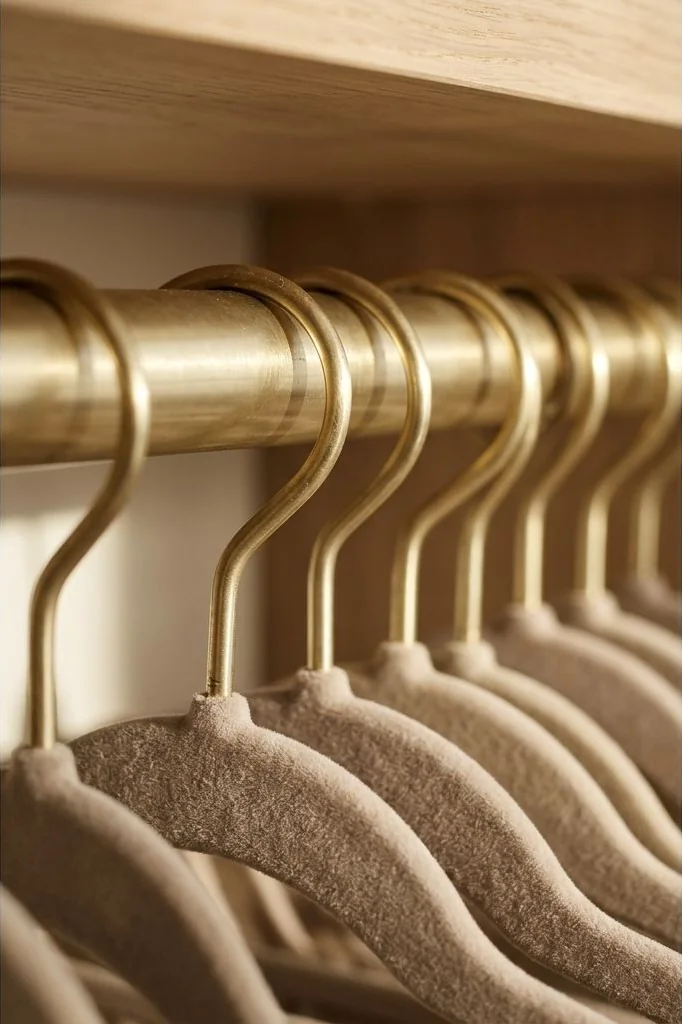
For warm Scandinavian and Japandi spaces, specify slim velvet hangers in soft oatmeal, sand, or warm taupe paired with brushed brass or matte champagne swivel hooks. Aligning this hardware with your closet hanging rod and cabinet handles creates a refined, continuous metal finish throughout the dressing room.
When swivel hooks rotate 360 degrees smoothly, returning clothing to the rail requires minimal physical repositioning, supporting daily maintenance habits effortlessly.
Durability and Replacement Cycles: Long-Term Longevity
The lifespan of organizing hardware influences both long-term financial expenditure and material sustainability. Solid hardwood hangers carved from kiln-dried timber represent multi-decade investments. Their brass rivets and thick crossbars rarely snap under normal residential use, developing an attractive warm patina over decades.
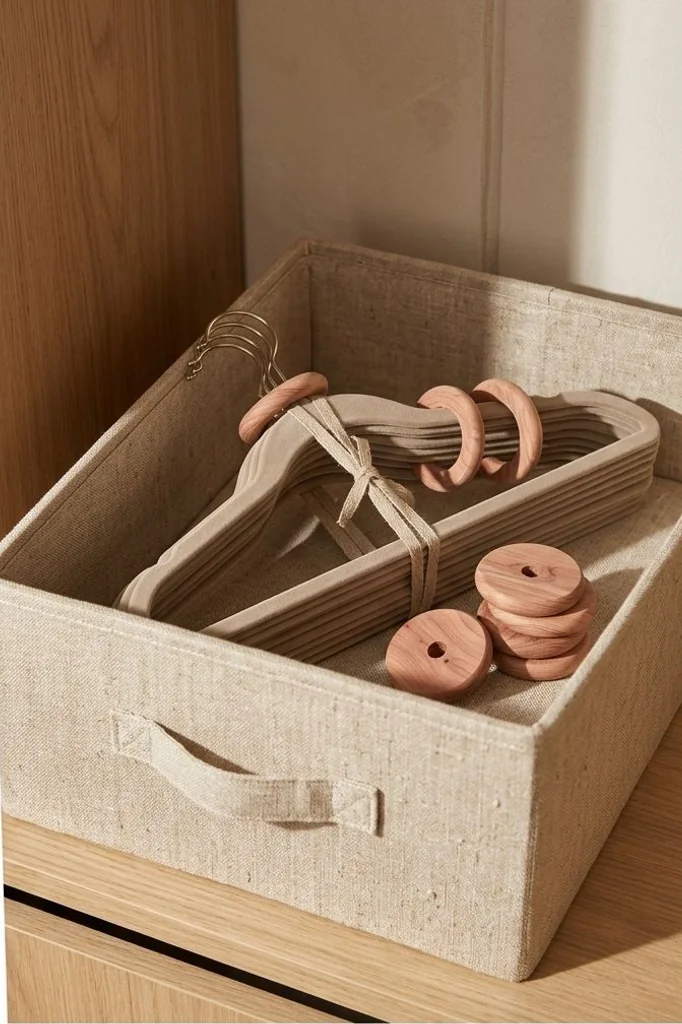
Slim velvet hangers, while remarkably practical, operate on shorter functional cycles. The internal polymer neck can snap if subjected to severe twisting or heavy winter coats, and damp garments hung directly from the wash can cause the flocking dye to bleed onto pale textiles. Storing twenty spare matching velvet units in a lower utility crate ensures immediate replacement without disrupting visual uniformity when accidents occur.
As documented in interior styling essays by Kinfolk Magazine, thoughtful material stewardship emphasizes using objects designed for their specific functional purpose rather than imposing universal solutions. Discover intentional spatial living prints and minimalist frameworks at ornista.com.
Frequently Asked Questions
Can wet or damp clothing be hung on velvet hangers to dry?
No. Hanging wet or damp laundry on velvet hangers can loosen the water-soluble adhesive holding the flocking fibers, causing dye transfer onto light-colored fabrics. Always air-dry wet garments on a dedicated stainless steel drying rack or unfinished wooden frame before transferring them to velvet hangers.
How do you clean dust and lint off velvet hangers over time?
Velvet naturally attracts dust and stray fibers. To refresh your hangers, wipe them gently with a damp microfiber cloth or run a slightly sticky lint roller across the flocked shoulders every six months during seasonal wardrobe rotations.
What wood species is best for contoured wardrobe hangers?
Natural aromatic cedar is the premier choice for wooden hangers due to its natural moisture-absorbing properties and organic pest-repelling scent. High-grade ash, lotus, and European beech wood also provide exceptional structural rigidity and smooth finishes for tailored clothing.