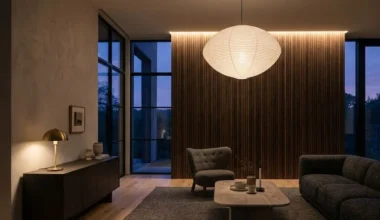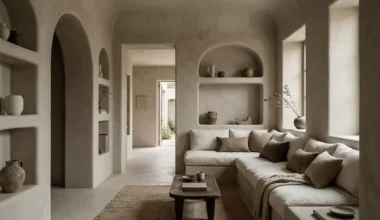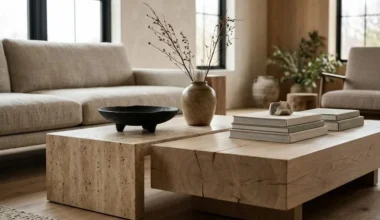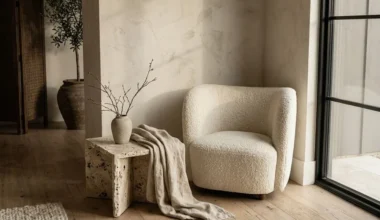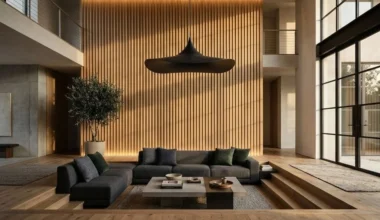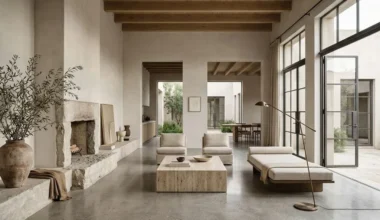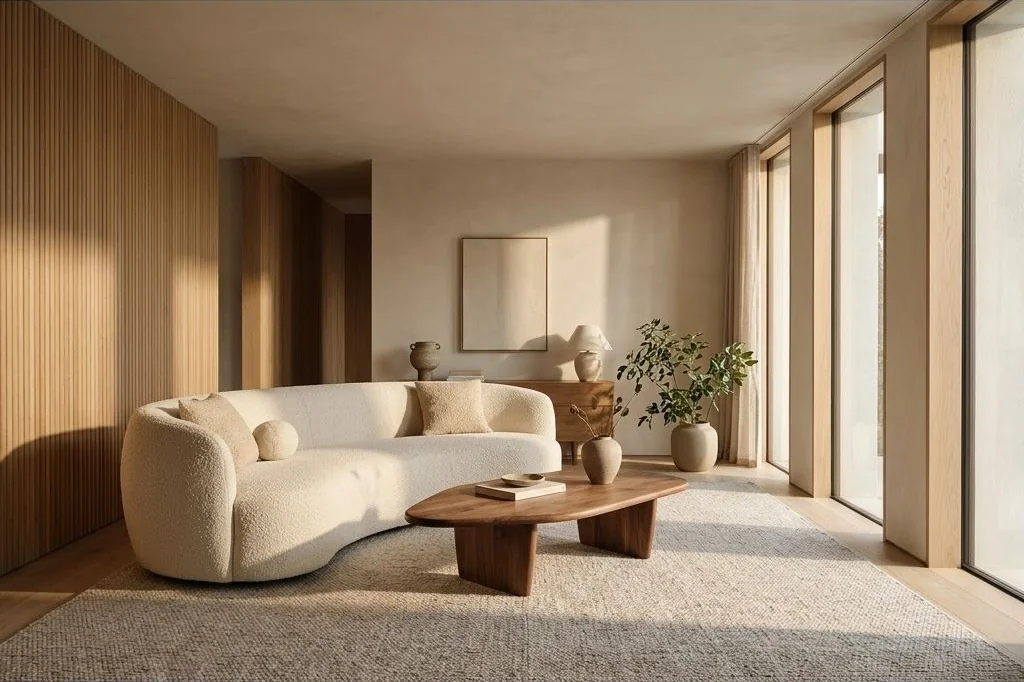
Modern residential architecture has long been anchored by the purity of the right angle. From structural steel beams and perimeter glass curtain walls to rectangular floor tiles, modern homes celebrate linear discipline. However, when an interior living space is composed exclusively of rigid geometric lines, the atmosphere can easily feel clinical and unyielding. Incorporating curved furniture living room architecture serves as an essential counterweight to this rectilinear rigidity, introducing soft organic rhythm, intuitive circulation, and human-scaled warmth to contemporary dwellings.
In warm minimalist design, curves are never added as whimsical ornamentation or retro novelty. Instead, they operate as functional architectural gestures that choreograph light, guide human movement, and transform vast open floor plans into serene sanctuaries. By softening hard edges and mirroring forms found in the natural landscape, curved furniture establishes a harmonious dialogue between strict architectural envelopes and the organic rhythms of daily life. For a comprehensive overview of intentional spatial planning, explore our philosophy on the Ornista home design archive.
Key Takeaways
Crucial spatial principles for integrating curved furniture into modern living room architecture:
- Curved seating silhouettes counterbalance harsh ninety-degree architectural angles, cultivating organic ease and visual stillness.
- Eliminating rigid corner protrusions opens sweeping walking corridors, ensuring seamless circulation through open floor plans.
- Inward-facing radial furniture arrangements establish intuitive conversational zones that foster intimate human connection.
- Pairing curved profiles with rich textural fabrics like looped bouclé and slubbed linen highlights directional light and sculptural shadows.
- Maintaining thirty-six inches of perimeter clearance guarantees that sculptural contours can be appreciated from every vantage point.
The Neuroaesthetics of Curved Architectural Silhouettes
The human affinity for rounded forms is rooted deeply in cognitive science and neuroaesthetics. Decades of perceptual research indicate that visual exposure to sharp corners triggers subtle micro-activation in the brain’s amygdala, which processes perceived physical threats. Right angles in nature are exceptionally scarce; they represent jagged rocks, thorns, or abrupt drops. In contrast, undulating contours signify gentle hills, weathered pebbles, and soft botanical canopies.
When placed at the center of a living pavilion, a curved sofa disrupts the predictability of boxy drywall construction. It acts as a sculptural anchor that draws the eye inward, encouraging occupants to gather naturally. Rather than facing a blank flat wall or television in a stiff linear row, individuals seated along a curved sofa automatically turn toward one another at gentle, organic angles. This subtle ergonomic shift makes dialogue feel unforced, intimate, and deeply grounded.
Optimizing Fluid Circulation Pathways
One of the most persistent frustrations in contemporary open-plan homes is visual and physical congestion. Traditional rectangular sectionals often function like fortress walls, projecting sharp corner points into high-traffic walkways and forcing family members to make awkward detours around rigid edges.
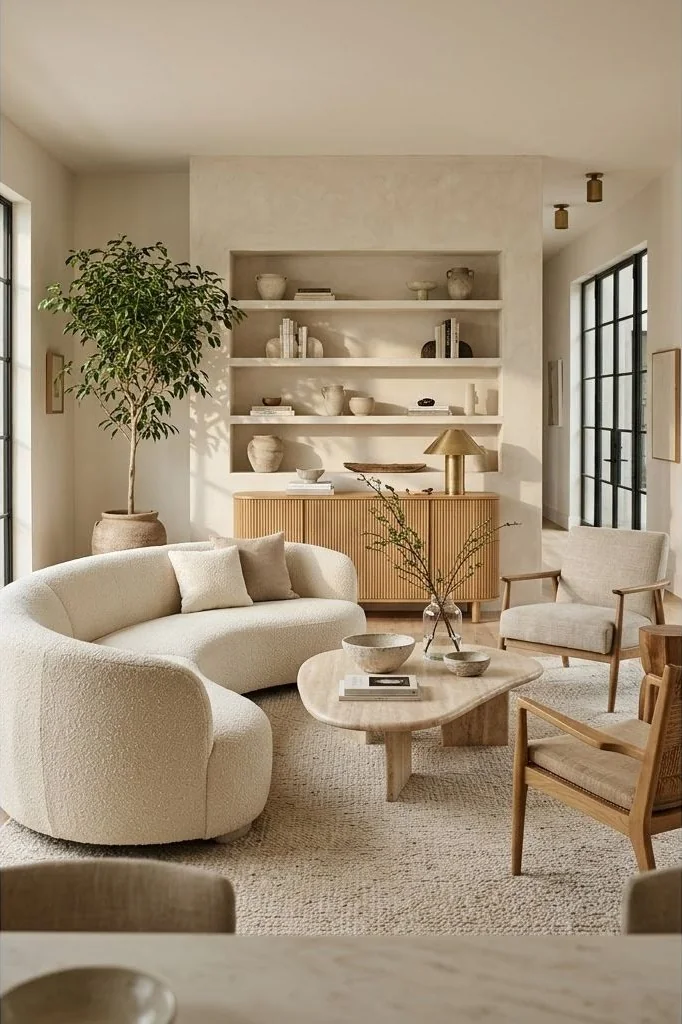
Curved furniture fundamentally restructures spatial navigation. Because the perimeter of a curved sofa or barrel armchair arcs inward, it guides footsteps along smooth, sweeping trajectories. In architectural circulation theory, unobstructed movement between functional zones is vital for maintaining tranquility. For readers exploring complete spatial blueprints, our guide on organic modern living room layout principles details how to calibrate ideal walking clearances across open living areas.
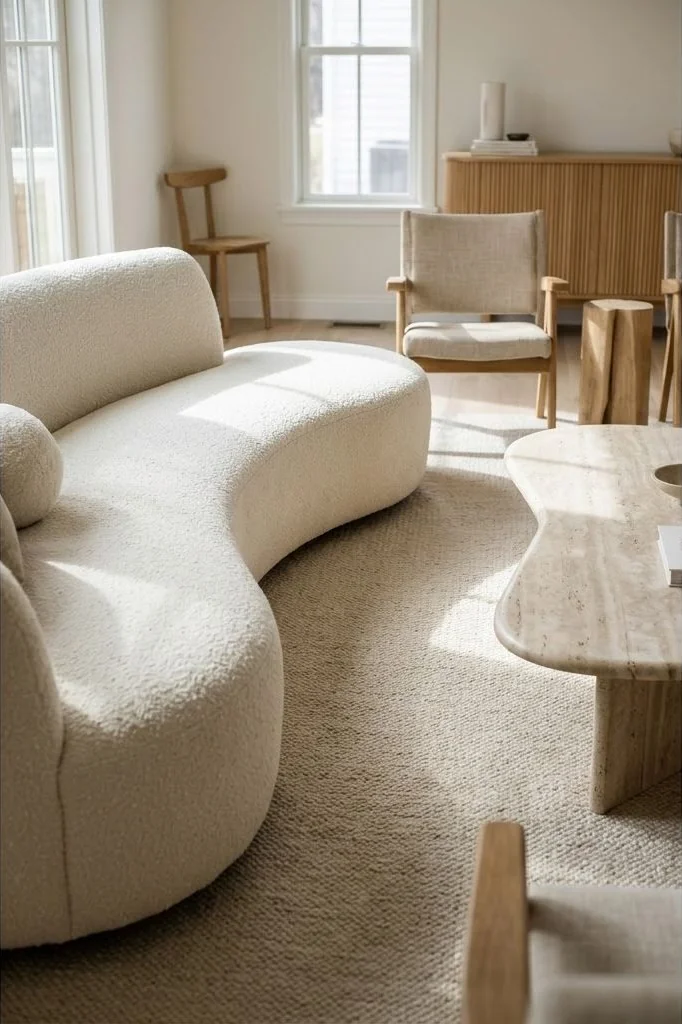
To preserve this spatial ease, always maintain at least thirty-six inches of continuous clearance around the outer arc of curved seating pieces. This generous breathing room allows the sculptural contour of the furniture to be admired from all angles while ensuring effortless passage between the living lounge, dining zone, and outdoor terraces.
Pairing Tactile Materials with Sculptural Contours
A curved silhouette demands upholstery with exceptional tactile integrity. When fabric stretches across an undulating frame, every seam, fold, and shadow becomes visible under ambient lighting. Flat, synthetic fabrics can appear industrial or artificial when stretched over round forms. In contrast, rich natural textiles celebrate dimensional craftsmanship.
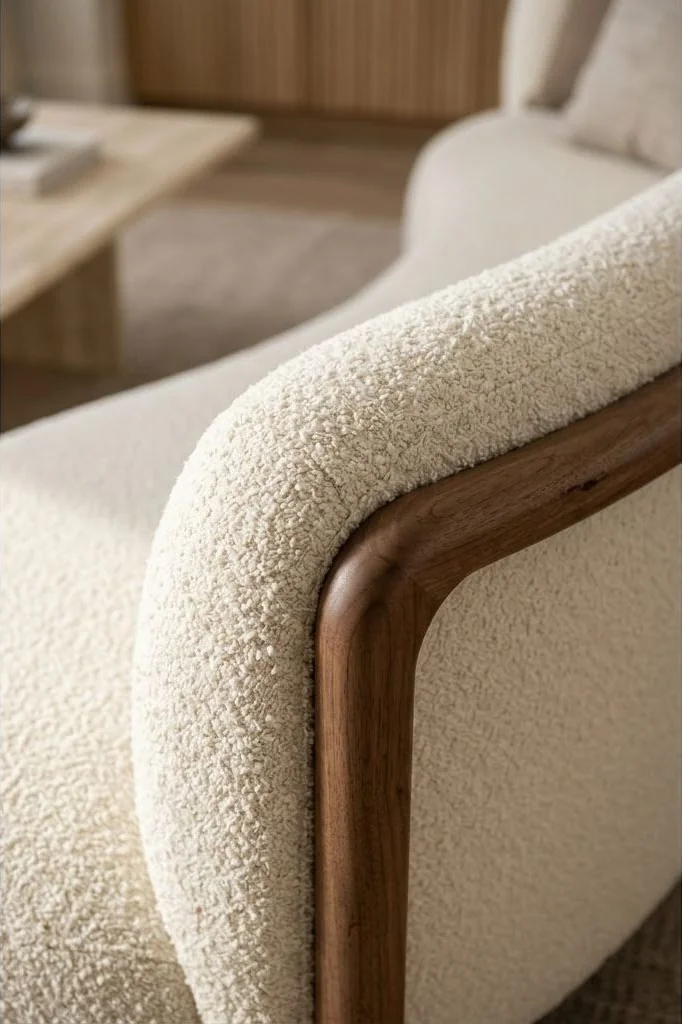
Dense wool bouclé, slubbed Belgian linen, and brushed alpaca are the premier materials for curved living room architecture. The looped pile of bouclé catches raking natural light from high clerestory windows, creating subtle micro-shadows that emphasize the three-dimensional curve. When paired with solid timber plinth bases or honed travertine occasional tables, these soft textiles establish the tactile foundation of warm minimalism. To understand how to complement organic forms with stone, review our architectural breakdown of travertine and natural stone living room accents.
Calibrating Rug Proportions Beneath Curved Seating Geometry
Positioning an area rug beneath non-linear seating requires careful geometric calibration. A frequent error in residential interiors is selecting an undersized rectangular rug that leaves the sweeping back curve of a sofa stranded on bare floorboards. This jarring truncation shatters the visual continuity of the conversation island.
To achieve architectural balance, the area rug should act as an expansive foundational plane. If utilizing an oversized rectangular rug, ensure the dimensions extend at least eighteen inches beyond the furthest point of the sofa’s arc, allowing all front and rear support legs to rest securely on the pile. Alternatively, custom organic or elliptical wool rugs can be fabricated to mirror the gentle curvature of the seating frame, creating a cohesive dialogue between floor covering and sculptural upholstery.
Echoing Curves Across the Architectural Envelope
Curved furniture makes the greatest aesthetic impact when it dialogues with the surrounding architecture. A solitary curved sofa in an otherwise aggressively sharp, boxy room can occasionally feel isolated. To achieve true spatial cohesion, echo the rounded geometry across structural and decorative elements throughout the home.
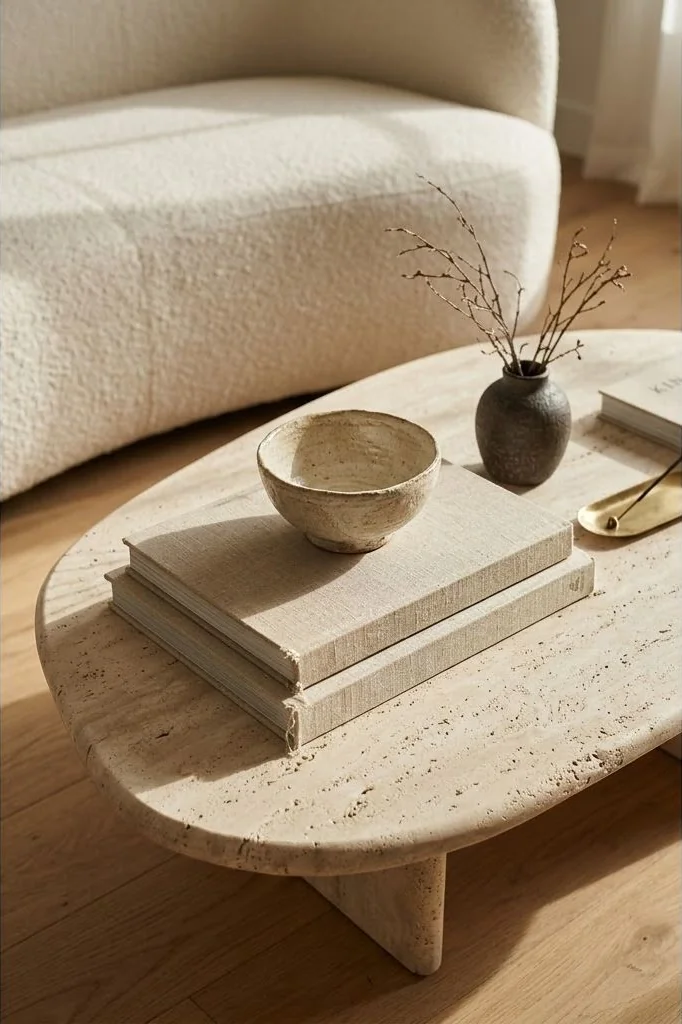
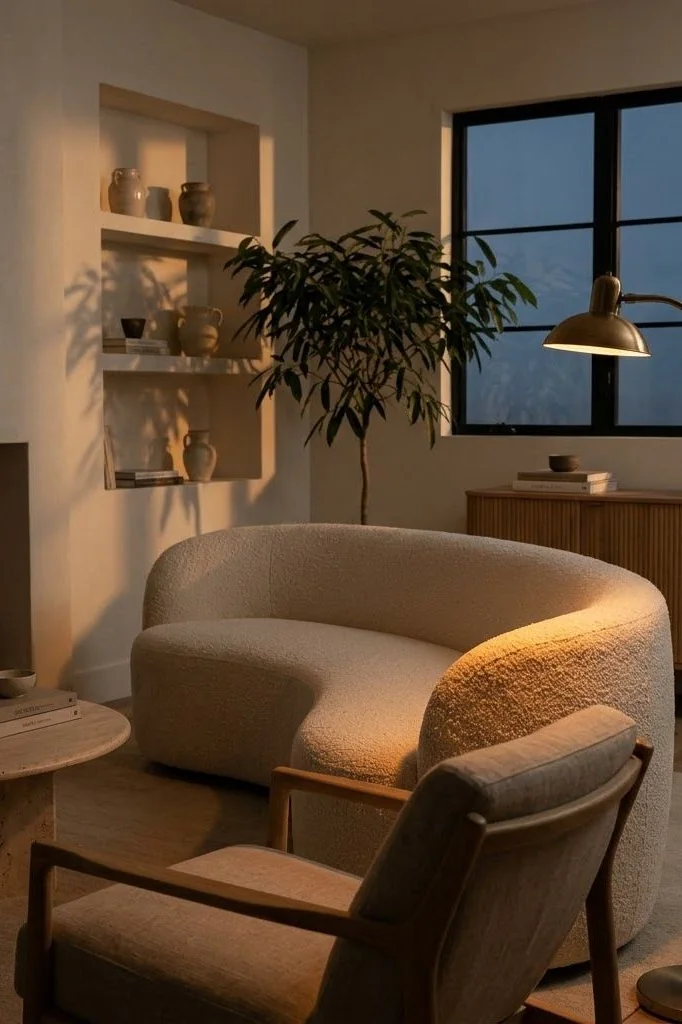
Incorporate curved arched doorways, bullnose wall corners, or recessed plaster wall niches designed to display hand-built stoneware. Extend the vocabulary downward through circular travertine cocktail tables, kidney-shaped nesting consoles, and rounded drum stools. When the human eye registers these recurring organic contours, the living room feels intentionally composed rather than randomly assembled. For deeper architectural insights on lighting these sculptural vignettes, consult our study on organic modern living room lighting principles.
The Functional Poetry of Radial Seating Arrangements
Beyond visual harmony, curved furniture introduces profound conversational utility. In traditional living rooms with two long sofas placed parallel to each other, occupants sit directly opposite one another in a confrontational, boardroom-style orientation. Radial arrangements, made possible by curved furniture living room architecture, dismantle this formality.
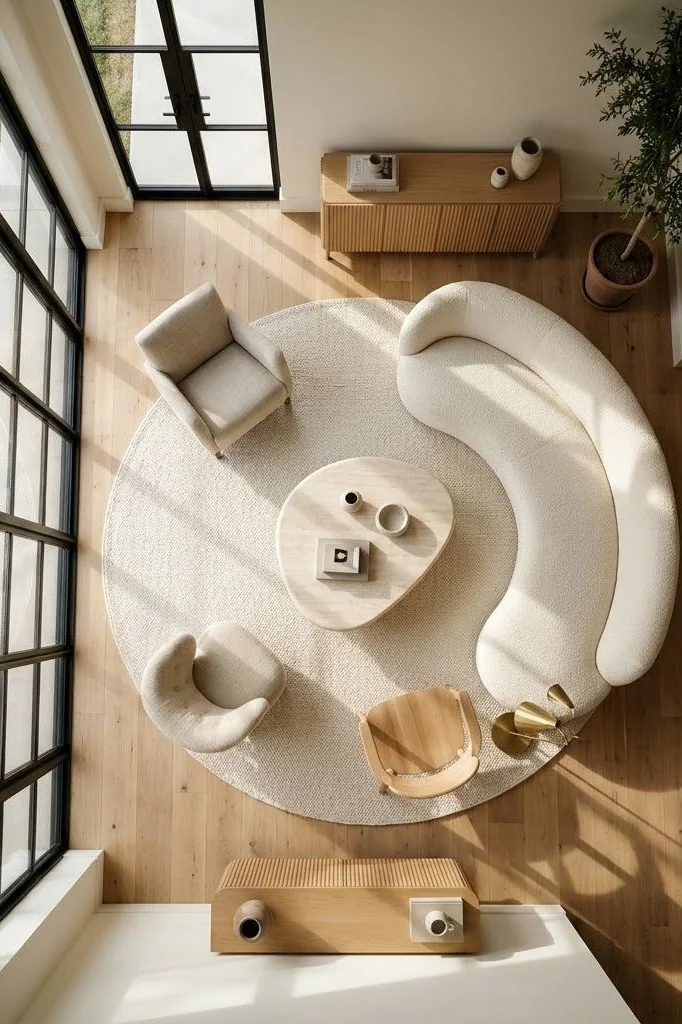
By pairing a gently curving sofa with two sculptural swivel armchairs and a central organic coffee table, you form an encompassing conversational circle. Guests can look at each other naturally without craning their necks, while the open outer arc invites new arrivals to enter the circle effortlessly. As highlighted in design retrospectives published by Architectural Digest, this radial orientation reconnects residential living with primal human gathering traditions, reminiscent of sitting around a central hearth.
Embracing curved furniture in living room architecture is ultimately an exercise in softening the boundaries of daily domestic life. By prioritizing fluid circulation, tactile materiality, and organic geometry, you create a living room that honors modern architectural precision while providing an enduring sanctuary of physical and emotional ease.
Frequently Asked Questions
Why is curved furniture so prevalent in organic modern living room architecture?
Curved furniture mirrors undulating forms found in nature, softening the harsh right angles of modern residential construction and promoting psychological relaxation.
Does a curved sofa take up more floor space than a traditional sectional?
While curved sofas require wider clearance around their perimeter arcs, they eliminate sharp dead corners, allowing smoother walking pathways through open living zones.
How should an area rug be positioned beneath curved seating?
Use an oversized rectangular or circular rug that allows all legs of the curved piece to rest fully on the pile, anchoring the seating zone without cutting across the arc.
What fabric textures best complement curved seating silhouettes?
Dense, tactile textiles like textured bouclé, heavy slubbed linen, and tight-weave wool accentuate soft geometry while catching ambient light smoothly.