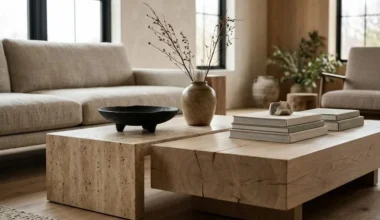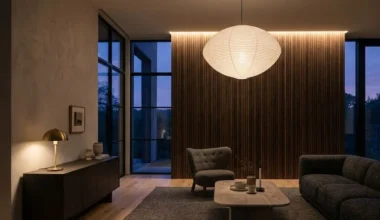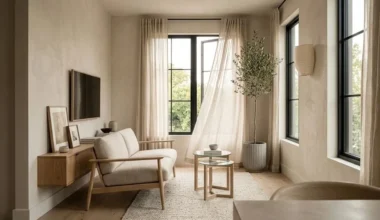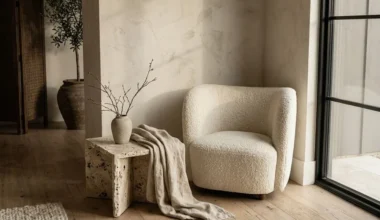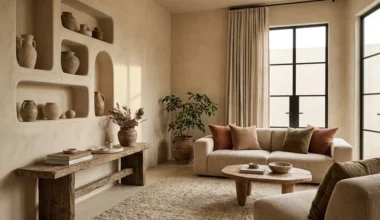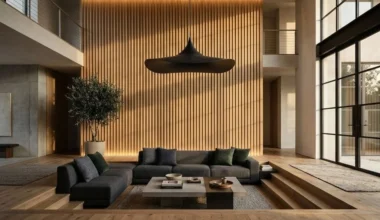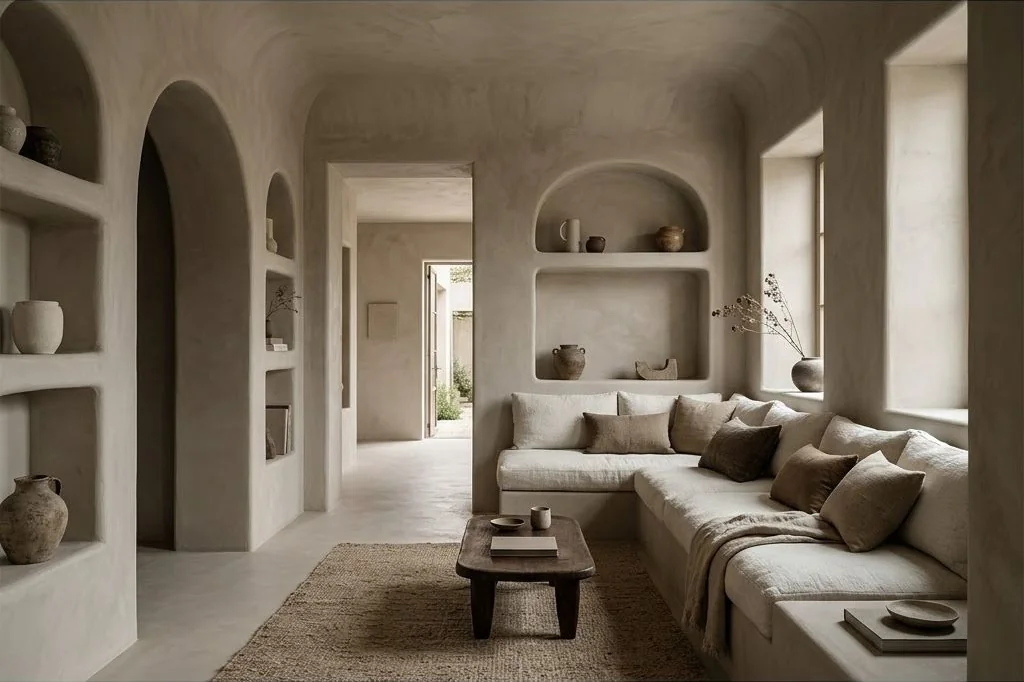
Modern architectural design increasingly seeks refuge from flat, synthetic surfaces. Standard drywall coated in uniform acrylic latex paint, while convenient for mass construction, often feels sterile and emotionally detached within residential interiors. Lime plaster walls living room treatments counter this synthetic flatness by introducing authentic mineral tactility, acoustic softness, and subtle light-refracting depth that anchors the spirit of warm minimalism. Discover our collection of intentional mineral living concepts on the Ornista homepage.
Key Takeaways
Essential architectural considerations for specifying lime plaster finishes:
- Natural lime plaster cures into solid limestone, creating an authentic mineral skin that outlasts latex paint by decades.
- Microscopic calcite crystals scatter raking daylight, producing velvety, non-reflective wall surfaces that shift softly through the day.
- Seamless application glides across bullnose returns, curved archways, and vaulted ceilings without unsightly corner bead joints.
- Inherently vapor-permeable and antimicrobial (pH 12), lime plaster regulates indoor humidity and naturally inhibits mold growth.
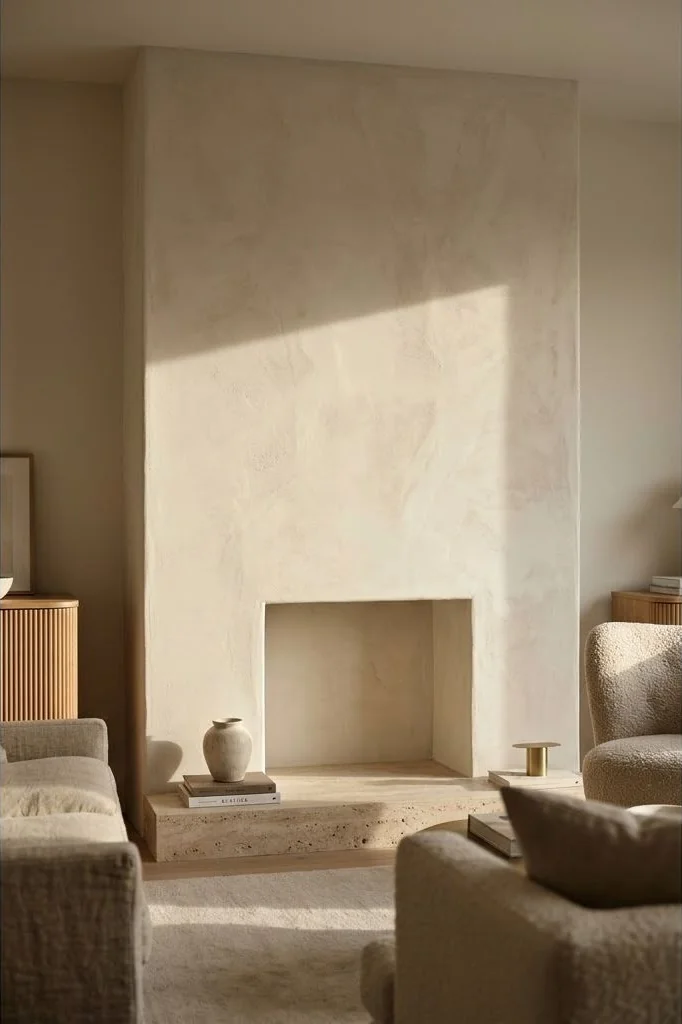
- Monolithic plastered fireplace surrounds introduce sculptural, heat-resistant architectural anchors to minimalist layouts.
The Elemental Alchemy of Natural Lime Plaster
Lime plaster is one of humanity’s most ancient and resilient building materials, refined across millennia from ancient Roman architecture to Moroccan riads and Venetian palazzos. According to architectural reviews on Dezeen, lime-based mineral plasters are seeing an extraordinary renaissance as architects prioritize raw, non-toxic materiality over petroleum-based synthetic paints. Composed of slaked lime (calcium hydroxide), fine aggregate like crushed marble or quartz sand, and natural mineral pigments, the material undergoes a fascinating chemical process known as the lime cycle.
As lime plaster cures upon an interior wall, it gradually absorbs carbon dioxide from ambient room air, slowly turning back into solid limestone through carbonation. This metamorphic cure means lime plaster walls living room surfaces do not simply sit upon drywall like a coat of paint; they become an authentic, durable stone skin integrated into the architectural framework of the dwelling.
Luminous Light Diffusion and Raking Shadows
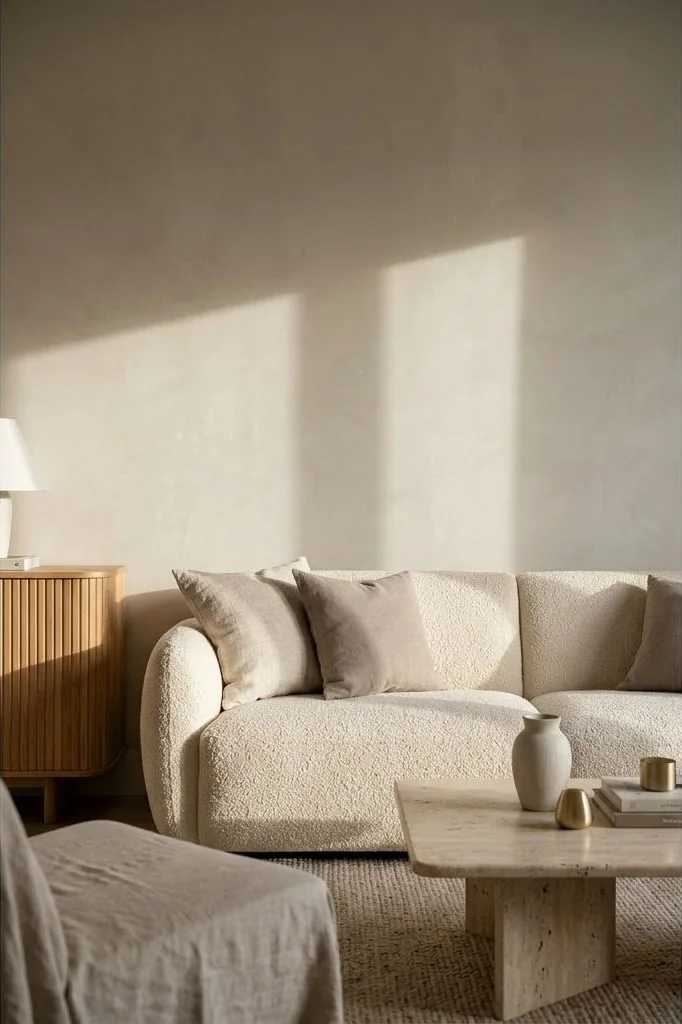
The defining visual magic of lime plaster in an organic modern living room lies in its exceptional relationship with natural daylight. Conventional interior paints create either a chalky flat sheen or a plastic-like reflective glaze. In contrast, lime plaster contains microscopic crystalline structures formed during the curing process that scatter and refract photons irregularly.
When low raking sunlight streams through floor-to-ceiling windows or clerestory apertures, lime plaster captures the light with velvety warmth. Subtle variations in artisan trowel strokes produce delicate tonal shifts, moving from soft ecru in high-intensity light to deep oatmeal in gentle shade. Throughout the progression of the day, the walls appear alive, quietly mirroring the celestial rhythms of morning dawn, mid-afternoon brightness, and twilight dusk.
Artisanal Trowel Finishes and Surface Variations
Achieving the precise tonal balance of lime plaster requires the hand of a skilled artisan. Unlike sprayed or rolled coatings, lime plaster is applied in multiple thin layers using flexible Japanese stainless steel trowels. Depending on the desired architectural personality, finishes range from rustic coarse textures to silky, stone-like burnishes.
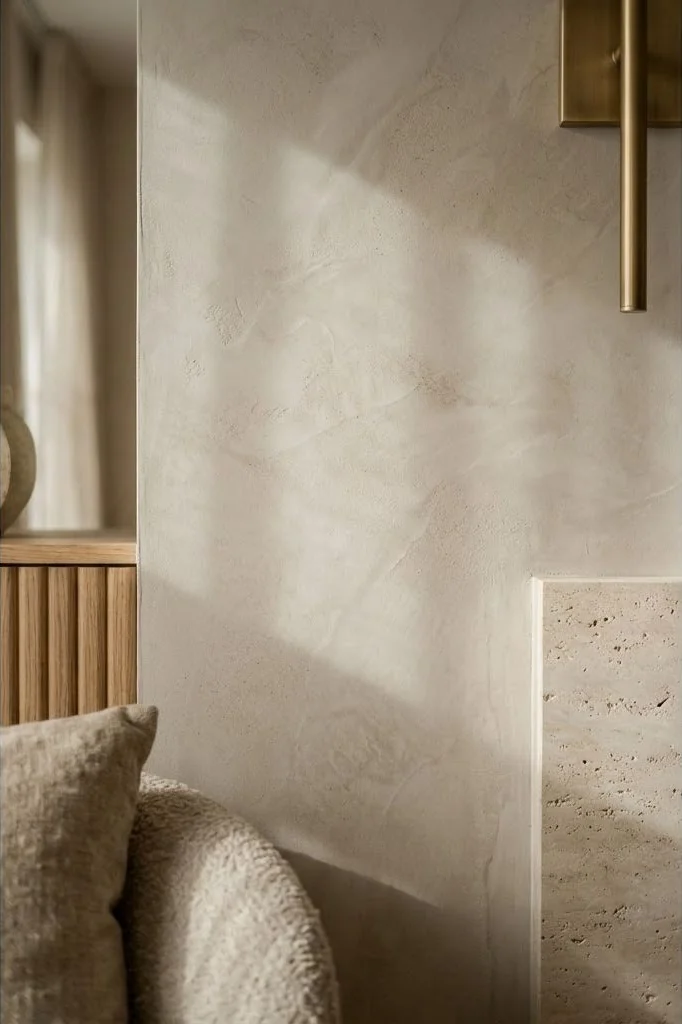
In organic modern living rooms, architects typically favor a marmorino or velvety matte finish. This texture avoids extreme high-gloss reflections while offering subtle clouds of mineral color variation, celebrating the honest imperfections of human craftsmanship over machine-made uniformity.
Seamless Spatial Envelopes and Rounded Transitions
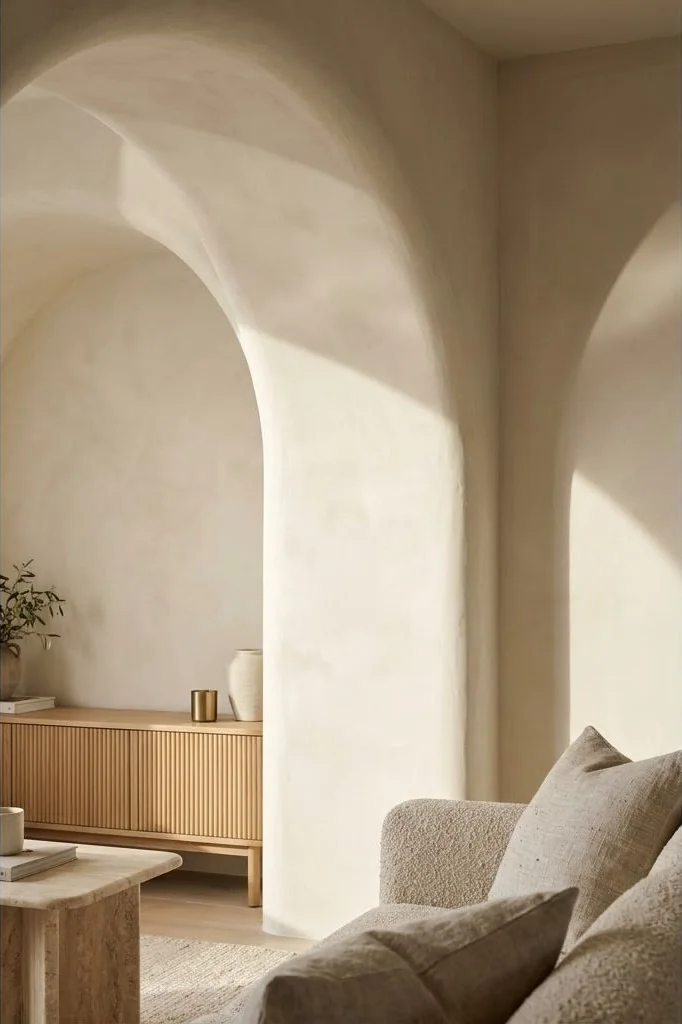
Standard drywall construction is structurally bound to straight lines, taped butt joints, and metal corner beads. Over time, building settlement inevitably reveals micro-cracks along these seams. Lime plaster offers an entirely seamless spatial application, capable of gliding over flat walls, fluid curved archways, and vaulted ceilings without a single visible seam.
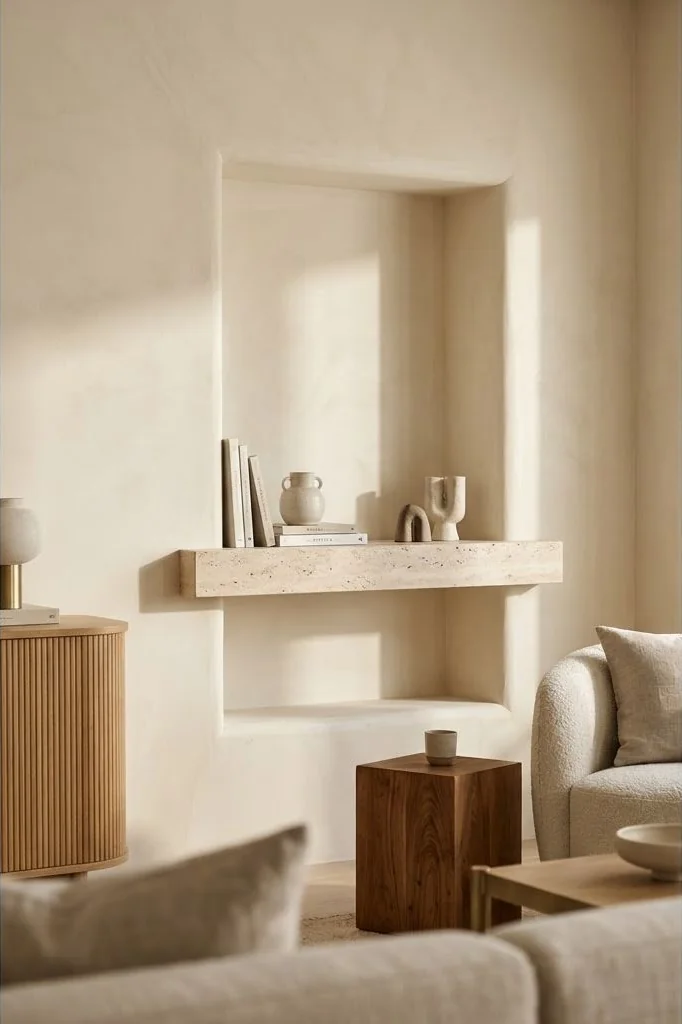
This seamless capability makes lime plaster the ideal finish for organic modern architectural features such as bullnose window returns, curved niches, and arched hallways. By rounding off the ninety-degree right angles of conventional wall corners and enveloping them in continuous plaster, light transitions around perimeter boundaries with gentle gradient softness rather than abrupt shadow breaks.
Material Dialogues: Wood, Stone, and Textiles
In warm minimalist interior design, finishes must engage in quiet, harmonious conversations rather than competing for dominance. Lime plaster walls living room applications provide a sympathetic textural ground that enriches neighboring organic materials.
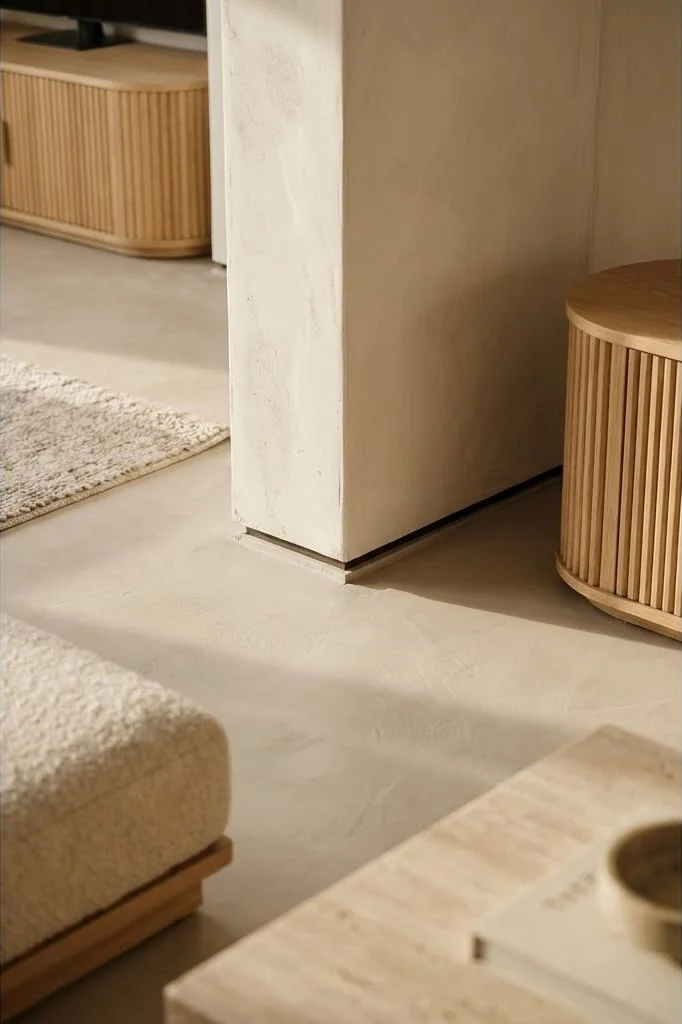
When placed adjacent to wire-brushed white oak cabinetry or slatted wall installations detailed in our analysis of fluted wood slatted panel living room accents, the matte chalky surface of plaster accentuates the rich grain and warmth of the wood. When juxtaposed against honed stone surfaces explored in our guide on travertine and natural stone living room accents, plaster softens the cold density of stone, weaving varied mineral elements into a unified, grounding environment.
Monolithic Architectural Fireplace Elements
The living room hearth serves as the traditional anchor of domestic comfort. In organic modern residences, ornate traditional mantels and heavy stone cladding are frequently replaced with clean, monolithic plastered fireplace volumes. Because lime plaster is inherently non-combustible and heat-resistant, it can wrap seamlessly around firebox openings and flue shafts.
A floor-to-ceiling lime plaster chimney breast creates a commanding yet quiet focal presence. The softness of the plaster contrasts beautifully with the dancing glow of natural flames, while integrated plaster hearth benches invite occupants to sit directly beside the radiating warmth.
Indoor Air Quality and Acoustic Serenity
Beyond its visual and tactile poetry, lime plaster walls living room installations offer extraordinary functional benefits that directly enhance human well-being. Modern residential building codes prioritize airtight envelopes, which can inadvertently trap indoor air pollutants, volatile organic compounds (VOCs), and airborne moisture.
- Zero VOC Emissions: Formulated from completely natural earth minerals without petroleum binders, chemical solvents, or synthetic plasticizers.
- Natural Vapor Permeability: Highly breathable porous structure naturally absorbs excess humidity during damp conditions and releases it as air dries.
- Antimicrobial and Hypoallergenic: The naturally high alkaline pH (approximately pH 12) prevents mold, mildew, and bacterial colonies from forming.
- Acoustic Softening: The micro-textured open pore matrix dampens ambient reverberation, eliminating harsh echoes in large open living spaces.
Investing in lime plaster walls transforms a living room from an assemblage of decorated drywall into an enduring architectural sanctuary. By uniting ancient geological materials, artisan craftsmanship, and sophisticated light modulation, lime plaster instills modern homes with tactile depth, organic warmth, and permanent domestic serenity.
Frequently Asked Questions
What makes lime plaster superior to standard drywall paint for living rooms?
Lime plaster creates a natural mineral surface that breathes, absorbs ambient humidity, resists mold, and diffuses light with multidimensional tactile depth that flat paint cannot replicate.
Can lime plaster walls be wiped down or cleaned easily in high-traffic zones?
When finished with natural olive oil soap or beeswax sealers, lime plaster forms an easily maintained, water-resistant surface that withstands daily living beautifully.
How does lime plaster interact with varying natural lighting throughout the day?
Microscopic calcite crystals within the cured lime reflect and refract light in multiple directions, shifting subtly from warm morning radiance to soft matte evening glow.
Is lime plaster suitable for dry climates and humid climates alike?
Yes. Lime plaster is inherently vapor-permeable, allowing moisture to transfer naturally without bubbling, peeling, or degrading substrate layers.