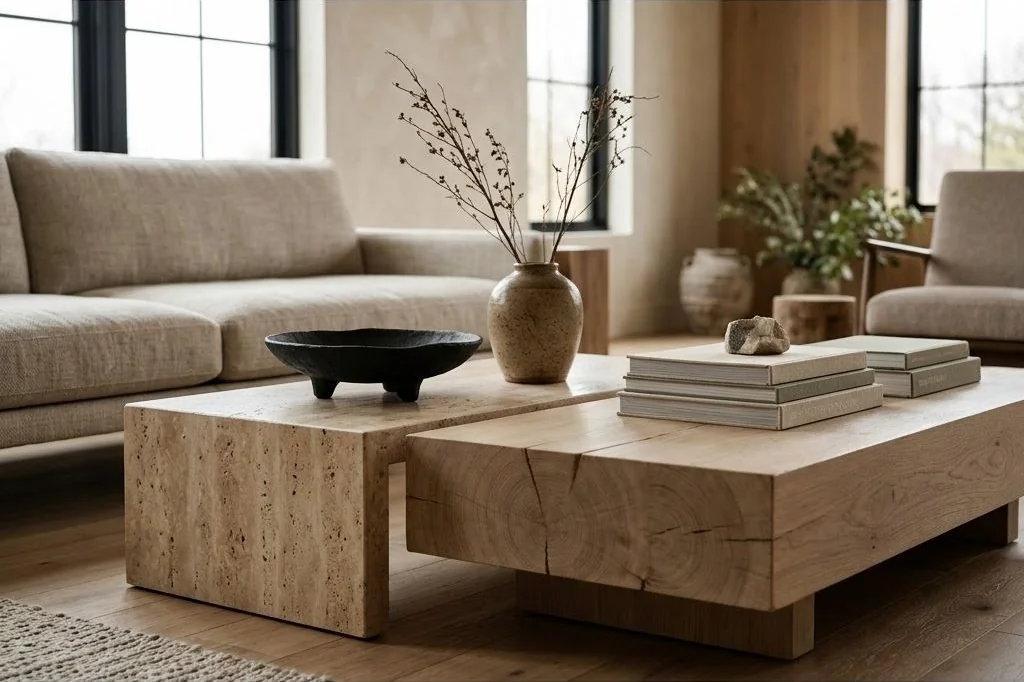
Organic modern coffee table styling centers around the harmonious balance of scale, raw geological materials, and restrained curation. As the physical and visual nucleus of a seating arrangement, the coffee table anchors daily living rituals – from morning pour-over coffees to evening conversation. Rather than cluttering tabletop surfaces with excessive trinkets, organic modern styling emphasizes intentional negative space, architectural silhouettes, and tactile pairings that celebrate the natural world.
Key Takeaways
Essential guidelines for styling an organic modern coffee table:
- Sizing the coffee table to approximately two-thirds of the sofa length guarantees balanced visual weight.
- Applying the rule of thirds divides the tabletop into intentional functional and sculptural zones.
- Juxtaposing porous travertine with warm fluted white oak adds sensory depth to monochrome rooms.
- Maintaining an 18-inch clearance between the sofa edge and tabletop perimeter ensures effortless legroom.
- Incorporating tall architectural botanical stems draws the eye upward and breaks horizontal lines.
Proportion and Scale: The Two-Thirds Sofa Length Principle
Before styling a single decorative object, the table itself must respect the fundamental spatial proportions of the surrounding room. An undersized coffee table looks stranded and unsubstantial in front of a deep modular sofa, while an oversized piece obstructs circulation and creates visual heaviness. To establish architectural balance, the golden rule states that your coffee table should measure approximately two-thirds of the total length of your primary sofa. For broader spatial harmony and foundational layout standards, explore our design principles on the Ornista homepage.
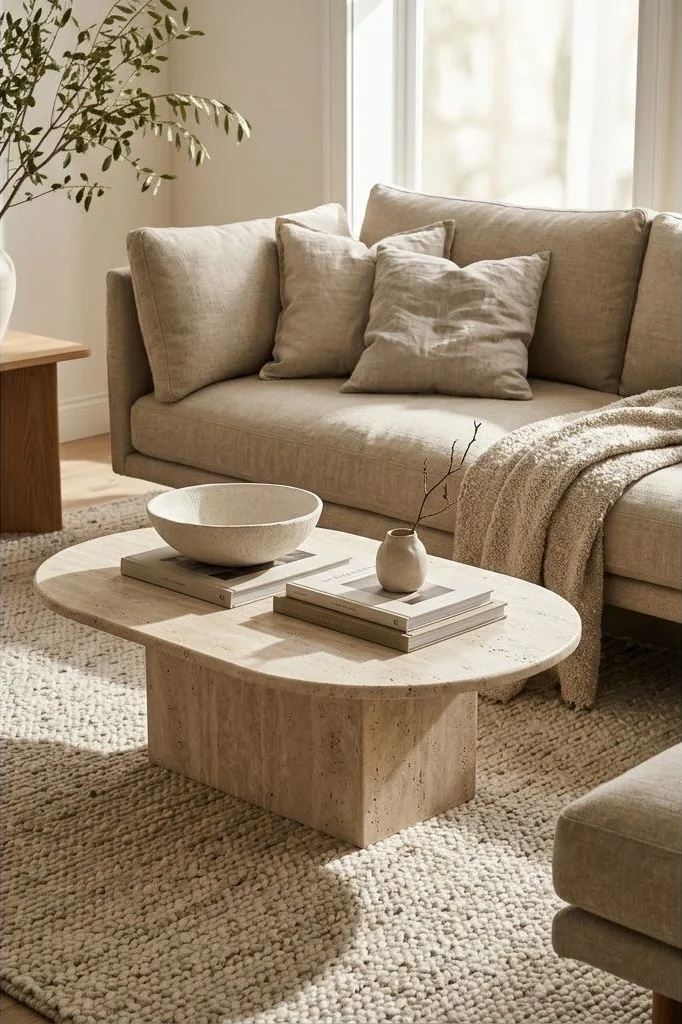
Height is equally critical to ergonomic comfort. In organic modern spaces featuring low-profile seating, the coffee table surface should sit level with or one to two inches lower than the top of the sofa seat cushions – typically between 14 and 16 inches from the floor. Low-slung plinth tables ground the seating vignette, preserving uninterrupted sightlines across the living space and reinforcing an atmosphere of grounded tranquility.
The Rule of Thirds in Surface Styling: Books, Vessels, and Objects
A cluttered tabletop creates visual agitation, while an empty slab can feel sterile. The rule of thirds provides an intuitive framework for organizing tabletop items without introducing symmetry stiffness. Visually divide the tabletop surface into three distinct sections: one for architectural literature, one for sculptural ceramics, and one reserved entirely for breathing room and daily utility.
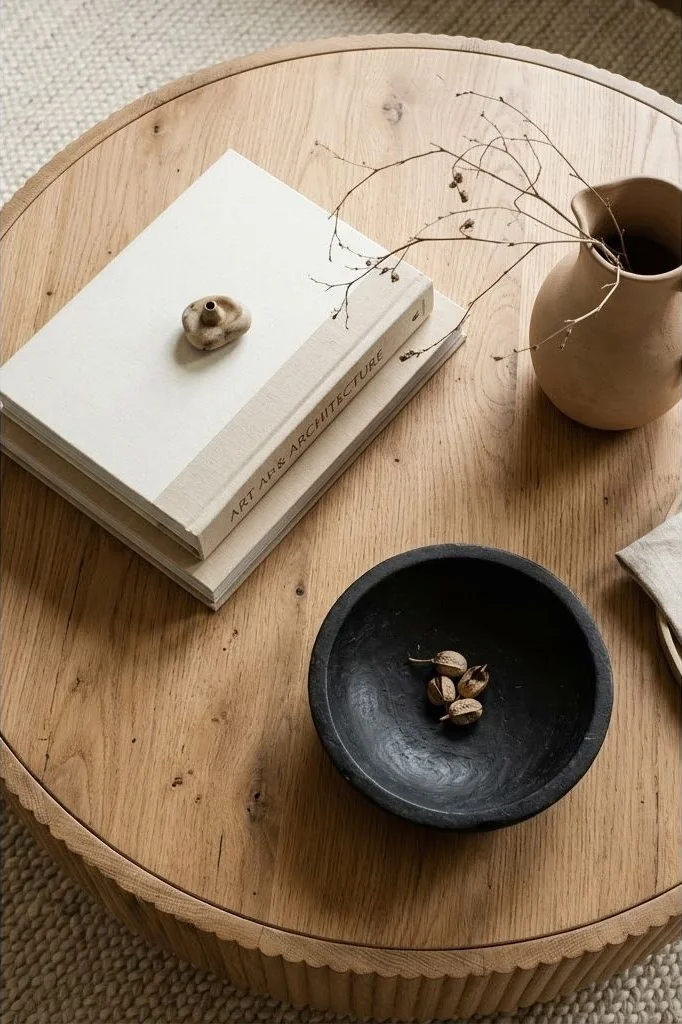
In the first quadrant, stack two or three large-format monographs bound in unbleached linen or heavy cloth covers featuring architecture, photography, or slow living. In the second quadrant, position a sculptural vessel or a shallow footed stone tray to hold small everyday items like brass match strikers or wooden beads. Leave the final third open. Leaving intentional negative space allows the natural grain of oak or the veining of travertine to shine as the primary artwork. To understand how these surfaces interact with seating circulation, review our blueprint on how to design an organic modern living room layout with natural spatial flow.
Material Pairing: Honed Travertine Versus White Oak
The materials you select for your coffee table set the tone for the entire room. In organic modern aesthetics, the two dominant material titans are honed travertine stone and quartersawn white oak. Choosing between them – or artfully combining both – depends on the existing textural balance of your living space.
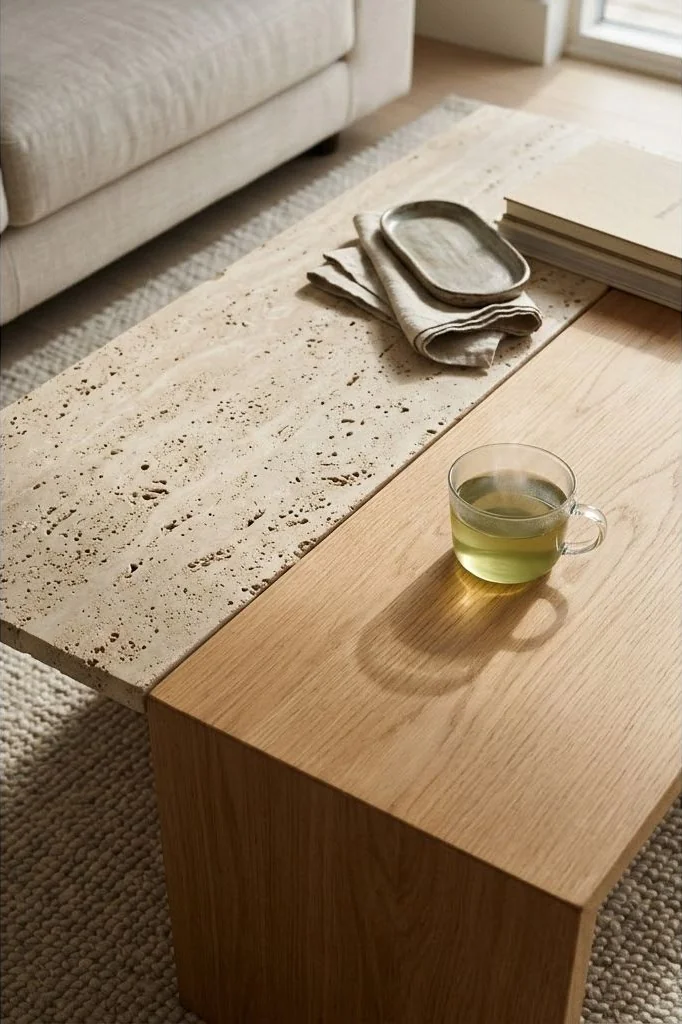
Honed travertine, with its subtle beige pitting and chalky matte surface, introduces geological permanence and cool tactile weight. It pairs exceptionally well with plush bouclé or linen seating that needs grounding. Conversely, solid bleached white oak introduces organic warmth, fine linear grain, and acoustic softness. For an exhaustive breakdown of how to pair stone slabs with woven textiles, study our comprehensive analysis on the art of texture layering in organic modern living rooms.
Clearance and Ergonomics: The 18-Inch Golden Perimeter
A beautifully styled coffee table is useless if sitting down or navigating around it feels awkward. Ergonomic clearance standards dictate that the distance between the front edge of the sofa seat cushion and the outer edge of the coffee table should measure between 14 and 18 inches.
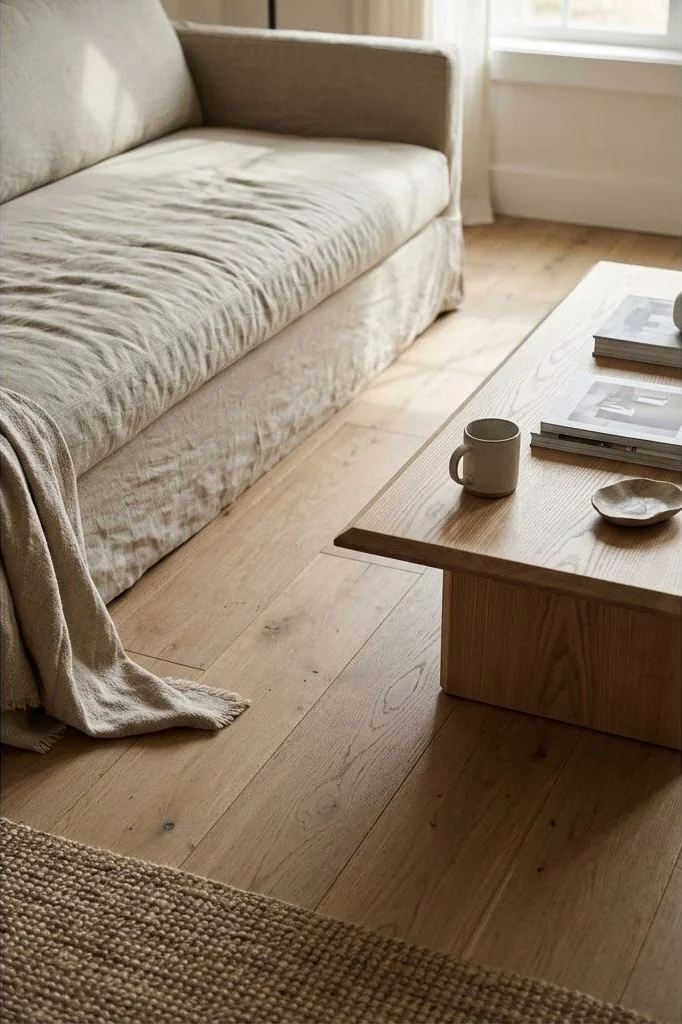
This 18-inch buffer provides sufficient legroom for comfortable lounging while keeping mugs, books, and remote accessories within natural arm’s reach without needing to bend forward. Furthermore, preserve at least 30 inches of clearance between the coffee table and any opposing entertainment credenza or fireplace hearth to ensure smooth pedestrian flow through the seating zone, as noted in design standards documented by Architectural Digest.
Height Variation: Architectural Stems and Wild Branches
A common mistake in surface styling is keeping all objects at a uniform, flat height. A low coffee table topped only with flat books and low coasters creates a monotonous horizontal plane. Introducing vertical elements breaks this flatness and directs the eye upward toward the ceiling architecture.
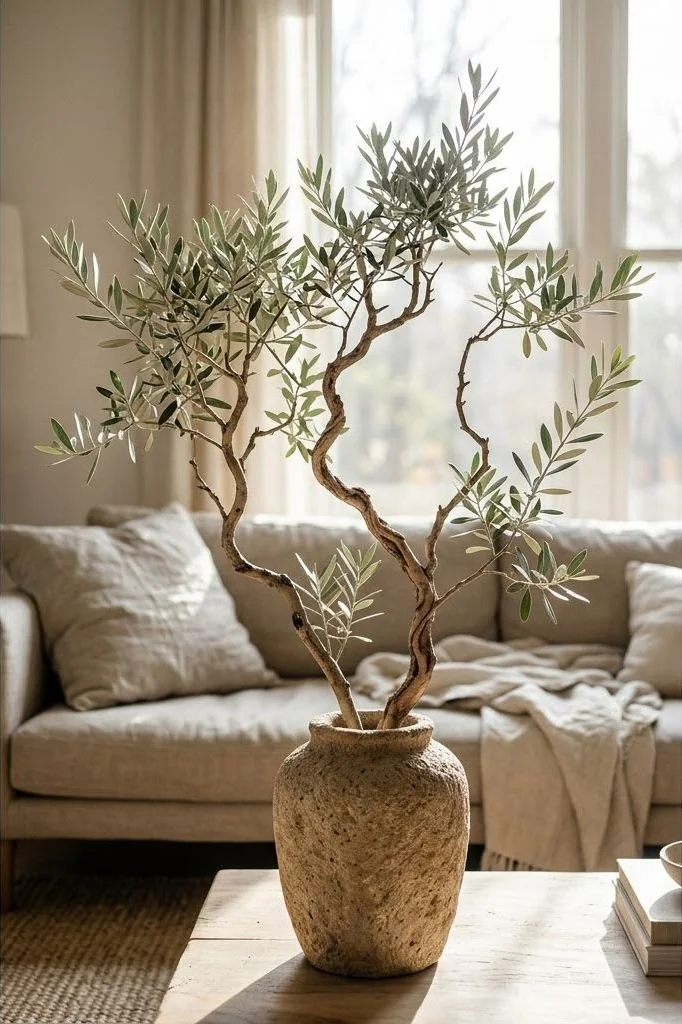
Use a heavy, textured ceramic vase to anchor one or two tall, sculptural botanical branches. Foraged olive branches, flowering quince stems, or dried eucalyptus provide natural asymmetry and delicate leaf silhouettes. Ensure that the branches are airy rather than dense so they do not block face-to-face eye contact between occupants seated across from one another.
Nested and Asymmetrical Tables: Dynamic Living Room Flexibility
For modular living rooms and modern entertaining, a single monolithic slab is not the only solution. Nested coffee table pairs – combining two organic shapes at staggered heights – offer functional adaptability and sculptural allure.
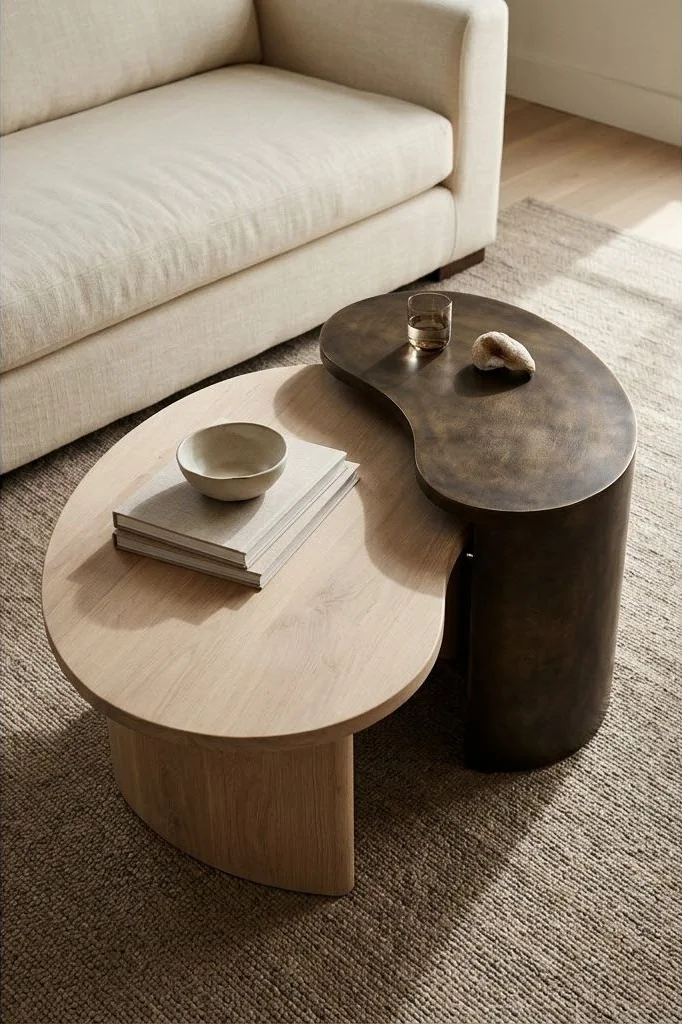
Pair a large, low kidney-shaped white oak table with a slightly taller, circular dark bronze or blackened steel accent table that tucks partially underneath. During daily life, the tables remain condensed to preserve open circulation. When hosting friends, the secondary table can be effortlessly pulled toward an accent chair to hold drinks. This organic duality combines sculptural elegance with everyday practical utility.
Frequently Asked Questions
How do I protect an unsealed travertine coffee table from drink stains?
To safeguard porous travertine without altering its natural matte appearance, apply a high-grade penetrating stone impregnator sealer. Always use absorbent stone or felt-backed wooden coasters beneath warm beverages, and wipe away liquid spills immediately with a damp microfiber cloth.
What shape coffee table works best with an L-shaped sectional?
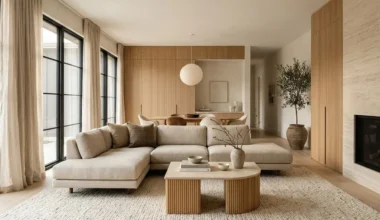
Round, oval, or organically curved kidney coffee tables are best suited for L-shaped sectionals. Their rounded profiles soften the rigid 90-degree inner corner of the sectional, making it easier to walk in and out of the seating nook without bumping into sharp edges.
How many decorative items should be placed on a coffee table?
Aim for no more than three distinct groupings or clusters: for instance, a stack of art books, a single branch in a ceramic vase, and a small decorative catch-all tray. Keeping at least one-third of the surface completely bare preserves essential negative space.
Can a bench or ottoman be used as an organic coffee table?
Yes, a low wooden slat bench or a firm bouclé upholstered ottoman makes an excellent alternative to a traditional coffee table. Simply place a sturdy flat oak or travertine tray on top to provide a solid, level surface for drinks and decor.
Coffee table styling in an organic modern home is an ongoing practice of editing and refinement. By honoring natural materials, keeping negative space open, and curating items with personal resonance, your living room centerstage becomes a quiet testament to intentional living.