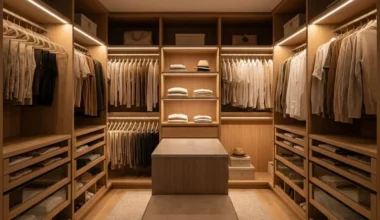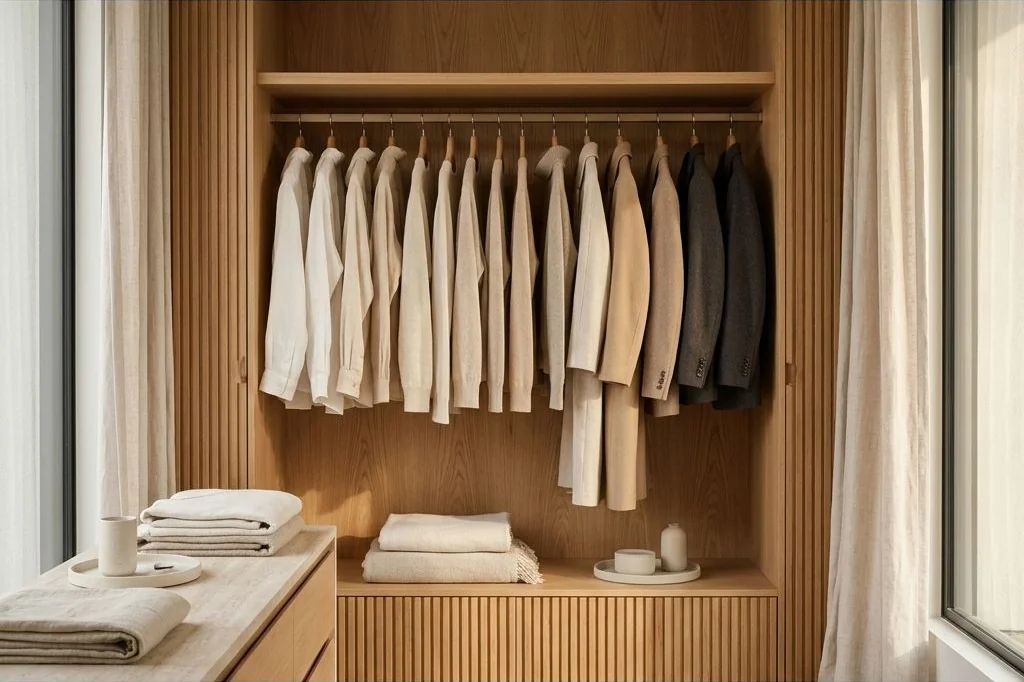
Opening an unorganized wardrobe in the morning bombards the human visual cortex with chaotic sensory inputs. When high-contrast colors clash randomly, garments are jammed together into an impenetrable textile mass, and varying collar heights produce jagged horizons, the brain experiences subconscious cognitive strain. In contrast, stepping before a wardrobe curated with visual uniformity produces an immediate sense of stillness and focus, turning dressing into a grounded daily ritual.
Achieving visual uniformity in wardrobe organization requires far more than superficial tidy habits. It demands applying core architectural principles: disciplined chromatic gradients, strictly enforced negative spacing, stair-stepped vertical hemlines, and structural millwork balance. When physical order reflects intentional aesthetic principles, wardrobe management becomes intuitive and sustainable.
Key Takeaways
- Visual uniformity reduces morning decision fatigue by transforming clothing rails into calm, predictable gradients.
- Arranging garments from light neutrals to dark tones creates an intuitive chromatic continuum that flatters open sightlines.
- Enforcing a strict two-inch air gap between hangers preserves textile fibers and prevents compression wrinkling.
- Stair-stepping garment hemlines from short blouses to long coats recovers valuable negative space above lower shelves.
- Architectural symmetry in wardrobe millwork frames dressing suites with enduring equilibrium and visual peace.
The Visual Noise Threshold: Cognitive Relief in Organized Spaces
Cognitive psychology demonstrates that human working memory operates within strict bandwidth limits. Physical clutter within our immediate visual field constantly competes for neural resources, elevating cortisol levels and inducing low-grade chronic stress. In residential dressing spaces, this phenomenon manifests as outfit paralysis: standing before fifty items of clothing while feeling completely unable to select a coherent combination.
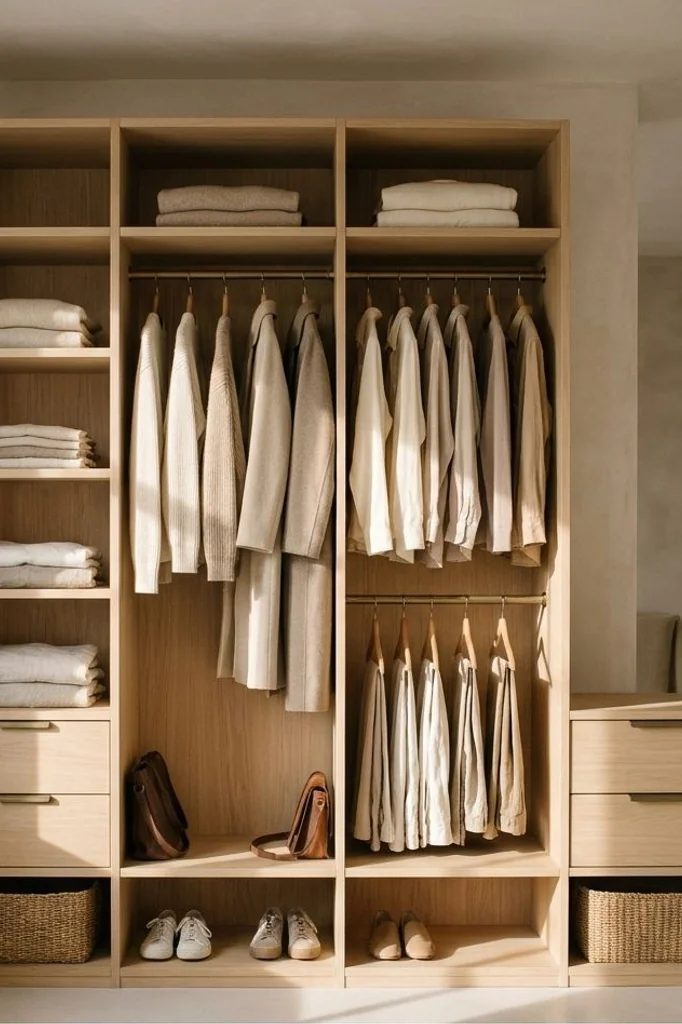
Visual uniformity lowers sensory friction below the threshold of irritation. When garments share identical spacing intervals, harmonious palettes, and uniform hanging heights, the brain perceives the wardrobe as a singular, unified design composition rather than fifty disconnected problems demanding sorting. You assess silhouettes and textures instantly, accelerating morning preparation with unhurried clarity.
For foundational perspectives on structural closet planning, explore our cornerstone guide to closet organization architecture and space optimization.
The Chromatic Gradient Protocol: Organizing from Light to Shadow
One of the most transformative organizational methodologies is the chromatic gradient protocol. Rather than grouping garments purely by category (which often produces jarring color blocks scattered across the rail), organize clothing along an intentional spectrum moving from left to right, light to dark.
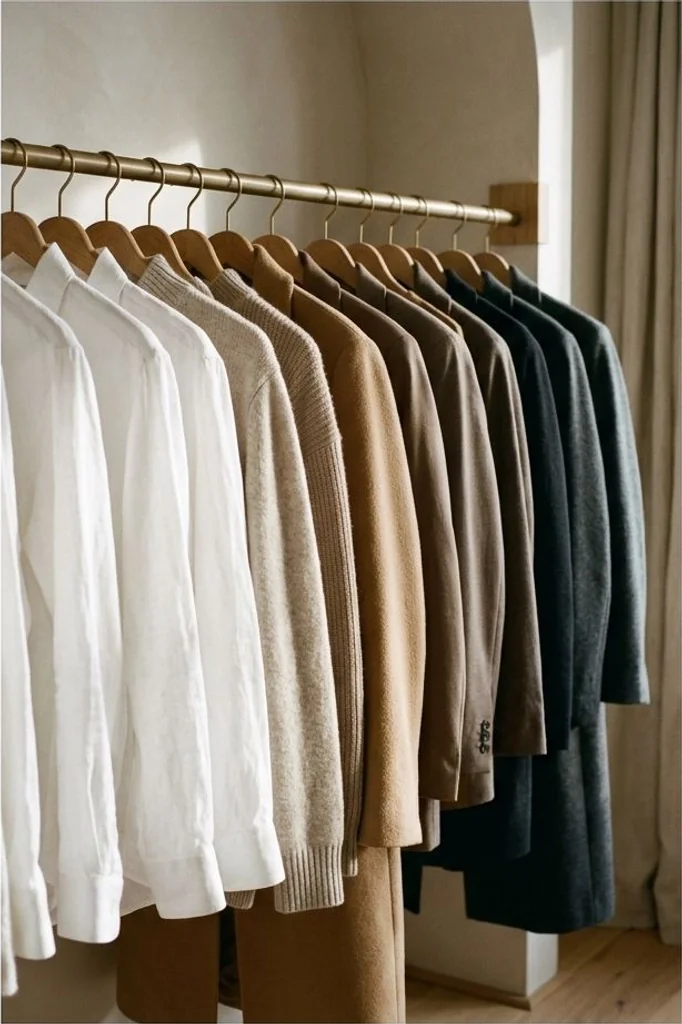
Begin on the far left with crisp optic whites, transitioning through soft creams, oatmeal, warm sand, and camel tones. From there, move into richer mid-tones like olive sage, slate gray, deep navy, and finally dense charcoal and black on the far right. Within each color family, arrange pieces by weight: sleeveless tops, short-sleeve shirts, long-sleeve button-downs, and finally layered jackets.
This tonal sequence aligns with natural optical flow. The eye reads the lighter left-hand garments as open and airy, while the heavier dark coats anchor the right boundary with grounding visual mass.
The 2-Inch Spacing Mandate: Breathability and Fabric Preservation
The single greatest obstacle to visual elegance in closets is overcrowding. When clothing is forced onto a rail until hangers can barely slide, garments compress against one another. This compression crushes delicate linen collars, flattens wool knits, and produces permanent horizontal wrinkles along button plackets.

Implementing a strict two-inch spacing mandate between hangers guarantees structural breathability. Two inches of negative space allows ambient air to circulate freely between natural fibers, dissipating residual body heat and preventing stale closet odor retention. Furthermore, it gives each garment distinct visual autonomy, allowing you to appreciate the tailored lines of every piece.
To maintain consistent hanger spacing without slipping, pair this protocol with high-grip hardware. Review our comparative analysis of slim velvet hangers vs wooden contoured hangers to select the proper hardware for your wardrobe.
Hemline Alignment Dynamics: Structuring Vertical Drops
In addition to horizontal chromatic flow, wardrobe architecture requires disciplined vertical geometry. When short cropped shirts, mid-length dresses, and full-length trench coats are hung haphazardly along a single rod, hemlines create a jagged zigzag that disrupts the lower sightlines.
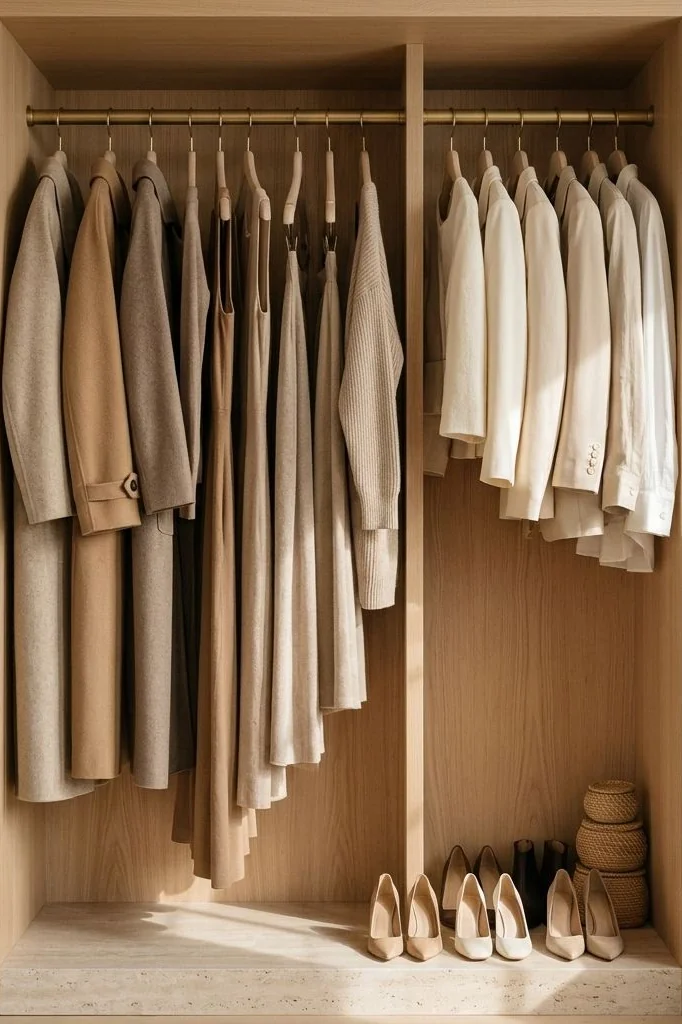
Arrange your garments so hemlines produce a clean, ascending stair-step progression. Hang shorter cropped items and blouses together on one side of the bay, followed by standard shirts, knee-length skirts, and long duster coats. This vertical discipline creates a large, unobstructed triangular void of negative space beneath the shorter clothing.
You can then repurpose this newly liberated space for low-profile shoe risers, structured accessory crates, or open display platforms without crowding garment bottoms.
Symmetric Millwork Architecture: Harmonizing Built-In Elements
True visual equilibrium is deeply reinforced by the physical envelope of the closet itself. In custom walk-in dressing suites and renovated reach-in wardrobes, architectural symmetry establishes enduring harmony that transcends seasonal clothing updates.
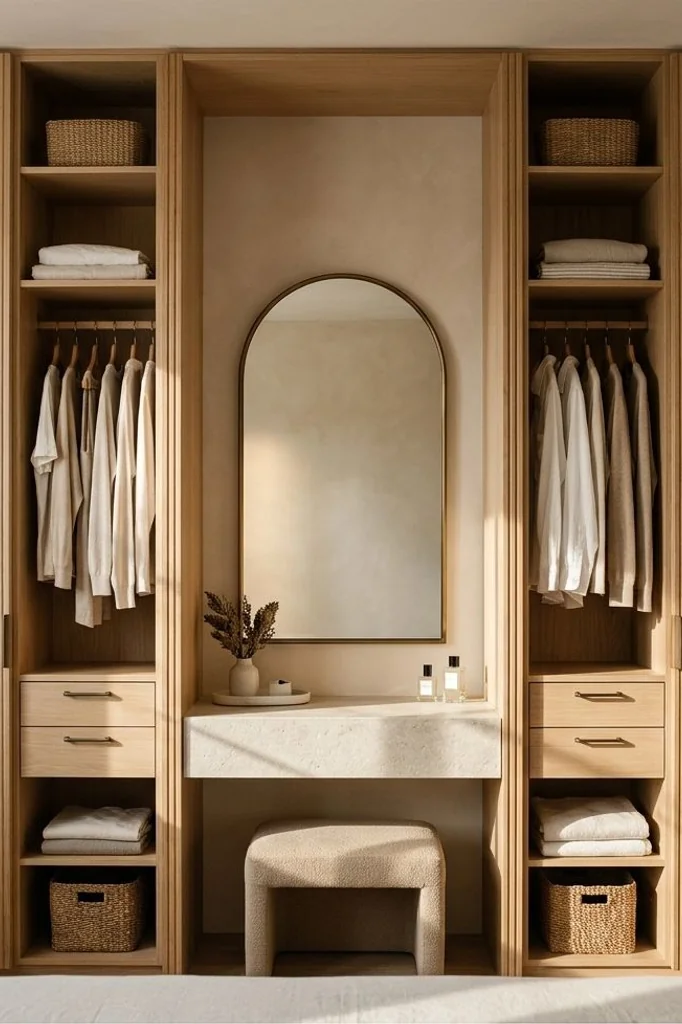
Flanking a central architectural feature – such as an arched vanity mirror, open shoe alcove, or low seating bench – with mirrored left and right hanging columns balances spatial proportions. Matching oak veneer grains, aligning shelf reveal lines at identical horizontal datums, and utilizing matching brushed brass hardware across all bays anchors the space in architectural permanence.
When the built-in millwork exhibits structural balance, your clothing collection rests within a timeless framework that withstands changing trends effortlessly.
The Sensory Reset: Morning Rituals in a Harmonious Closet
The ultimate test of visual uniformity is the subjective emotional state it cultivates. Dressing in an intentional environment ceases to be a rushed race against the clock; it transforms into an empowering morning reset that sets the tone for professional focus.
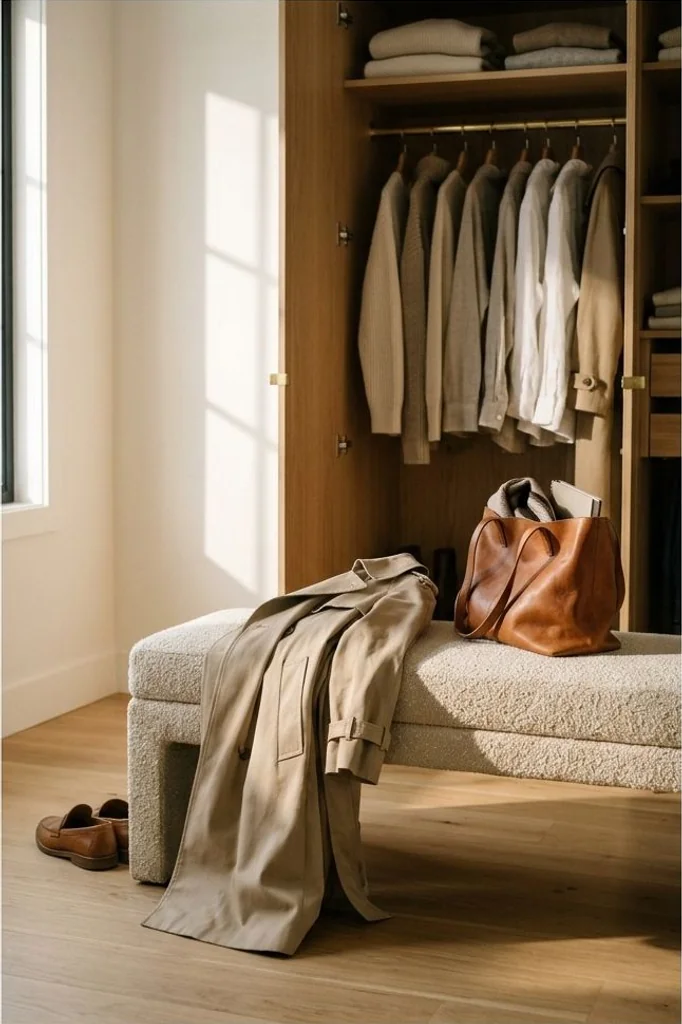
When selecting an outfit requires zero searching, zero ironing out compressed wrinkles, and zero frustration, mental energy remains focused on creative thinking, strategic planning, and genuine presence. Simplicity in your physical environment directly supports clarity in your mental life. A well-ordered wardrobe acts as an anchor that stabilizes your mindset before you encounter the unpredictable demands of the outside world.
Dedicating fifteen minutes on Sunday evening to restore chromatic order and uniform spacing guarantees that the upcoming workweek begins with effortless poise. When your immediate surroundings exude balance and calm intention, you naturally carry that same quiet confidence into your professional meetings and personal projects.
Writing on mindful domestic rituals, the editors of Kinfolk Magazine frequently note that visual quietness in the home acts as a sanctuary from the frantic pace of modern urban living. Cultivating intentional spatial order remains a lasting gift to your daily peace of mind. Browse our curated collection of architectural prints and intentional living resources at ornista.com.
Frequently Asked Questions
Should patterned or printed clothing be separated in a chromatic gradient?
In a minimalist wardrobe, integrate patterned pieces into the gradient based on their dominant base background color. For example, a navy-and-cream Breton stripe shirt belongs in the navy section, whereas an ivory silk blouse with subtle taupe dots rests comfortably in the cream section.
How do you maintain two-inch hanger spacing in a small closet?
If your closet rail is too small to permit two-inch spacing across your entire collection, perform a rigorous seasonal audit. Remove out-of-season clothing, winter parkas, and formal eveningwear into upper storage bins or vacuum compression bags, leaving only thirty to forty active in-season garments on the main rail.
What is the best way to handle clothing that has been worn once but is not dirty?
Never return once-worn garments directly to the main rail alongside freshly laundered pieces. Install a freestanding valet stand or three brushed brass wall hooks in an adjacent corner to let once-worn blazers and trousers air out for twenty-four hours before deciding whether to launder or re-hang them.