Footwear represents one of the most demanding spatial puzzles in residential interior architecture. Unlike shirts or trousers that conform obediently to uniform hanging rods, shoes arrive in irregular silhouettes, diverse heel dimensions, and rigid physical forms. When left unmanaged, shoes spread horizontally across wardrobe baseboards, encroaching on circulation paths, collecting dust bunnies, and producing instant visual chaos.
Transforming lower wardrobe zones requires shifting from horizontal sprawl toward disciplined vertical architecture. Implementing tiered shoe risers closet storage systems and vertical organizing fixtures doubles usable capacity within existing footprints while protecting fine leather goods from scuffing. When footwear is stored with architectural clarity, choosing the right pair in the morning becomes an effortless ritual.
Key Takeaways
- Staggered two-tier risers double linear shelf capacity by elevating rear footwear above foreground pairs.
- Double-decker shoe slots store pairs vertically within the footprint of a single shoe, saving fifty percent of horizontal shelf space.
- Dedicated cedar boot shapers prevent tall leather shafts from creasing and collapsing under gravity.
- Angled twenty-degree presentation shelves with brushed brass heel stops create boutique-level visibility in dressing suites.
- Limiting prime closet shelving to an active eight-pair seasonal rotation prevents chronic clutter and daily decision fatigue.
The Footwear Floor Clearance Dilemma: Why Horizontal Sprawl Fails
The primary flaw in standard closet design is treating the floor as an acceptable primary storage plane. Placing footwear directly on carpeting or hardwood floors creates severe ergonomic friction. You must bend double to inspect dark corners, shoes get kicked and misaligned during daily dressing, and vacuuming baseboards becomes an arduous obstacle course.
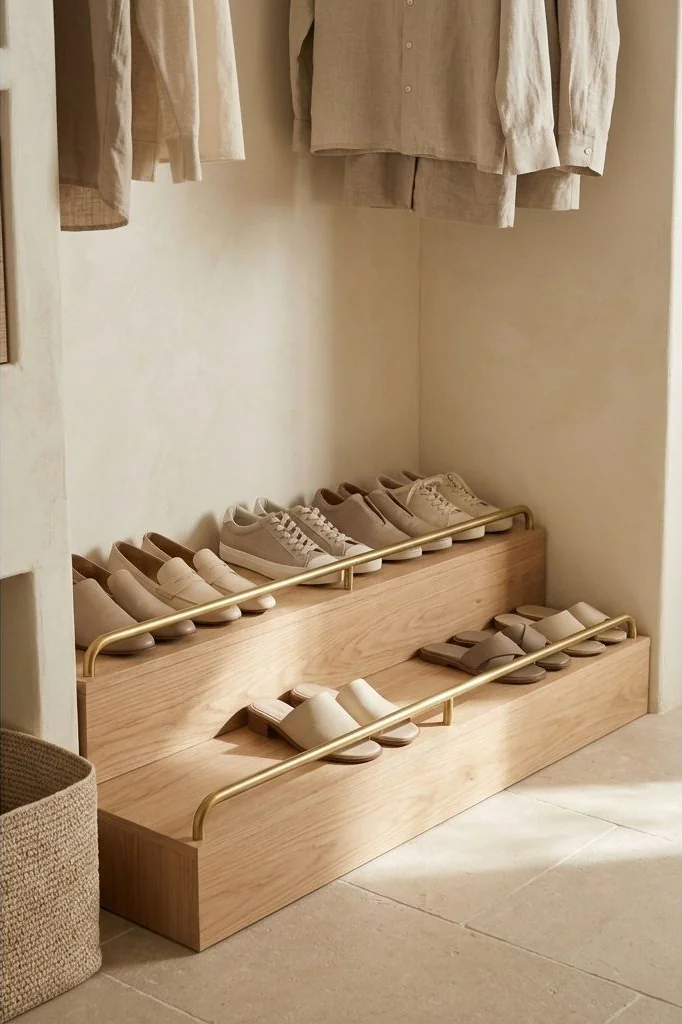
Elevating footwear off the floor onto dedicated architectural platforms solves this spatial dilemma immediately. A raised timber plinth or floating lower shelf maintains clear negative space below, allowing sightlines to flow uninterrupted to the baseboards. This visual clearance makes dressing rooms feel broader and dramatically simplifies daily dust maintenance.
For holistic spatial strategies that coordinate lower storage with hanging rails, review our core framework on closet organization architecture and space planning.
Double-Decker Shoe Slots: Spatial Halving Dynamics
For flat footwear, casual sneakers, and low-profile loafers, individual shoe slots provide extraordinary density gains. These compact units utilize a cantilevered upper ramp that suspends one shoe directly above its mate, oriented in opposite directions.
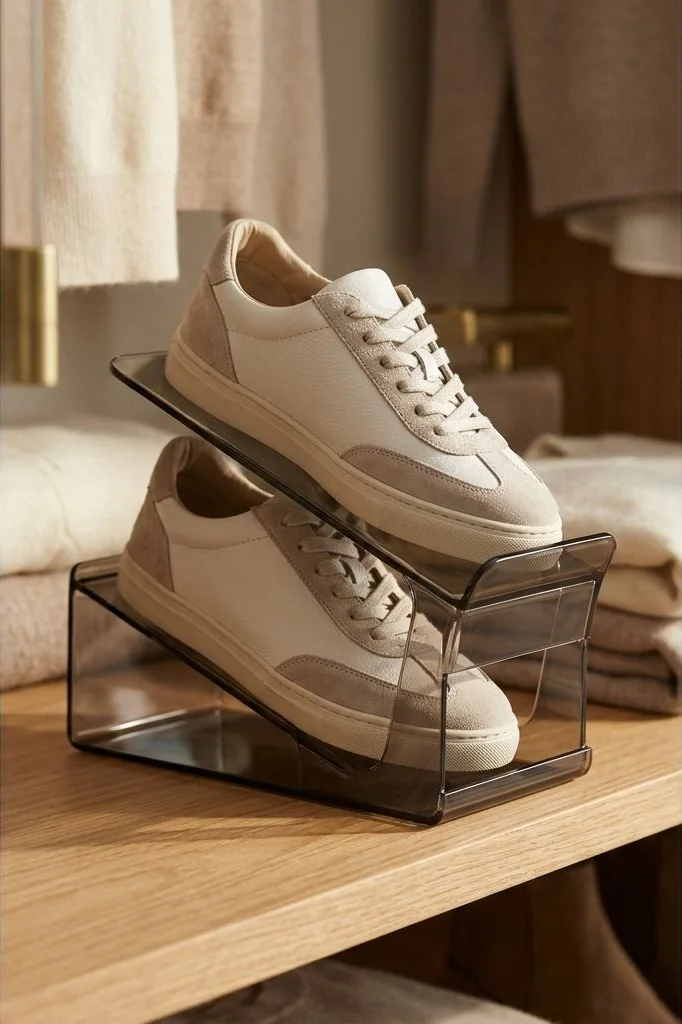
A standard adult shoe measures approximately four to five inches in width. By stacking the pair vertically, horizontal shelf requirement drops to just four inches total – an immediate fifty percent reduction in required shelf length. Specify stackers manufactured from matte taupe ABS resin or transparent smoke acrylic to avoid jarring visual contrasts on natural wood shelves.
Quality stackers incorporate non-slip ridged ramps and adjustable height locking pegs, ensuring that low canvas sneakers and chunkier athletic outsoles fit securely without rubbing against the shelf above.
Boot Shaft Preservation: Inverted Shapers and Acrylic Towers
Tall leather boots and equestrian footwear present distinct structural challenges. When stored unsupported, the upper leather shaft inevitably sags to one side under gravity. Over weeks of warm weather downtime, this crease becomes permanent, weakening delicate stitching and producing cracks across supple calfskin.
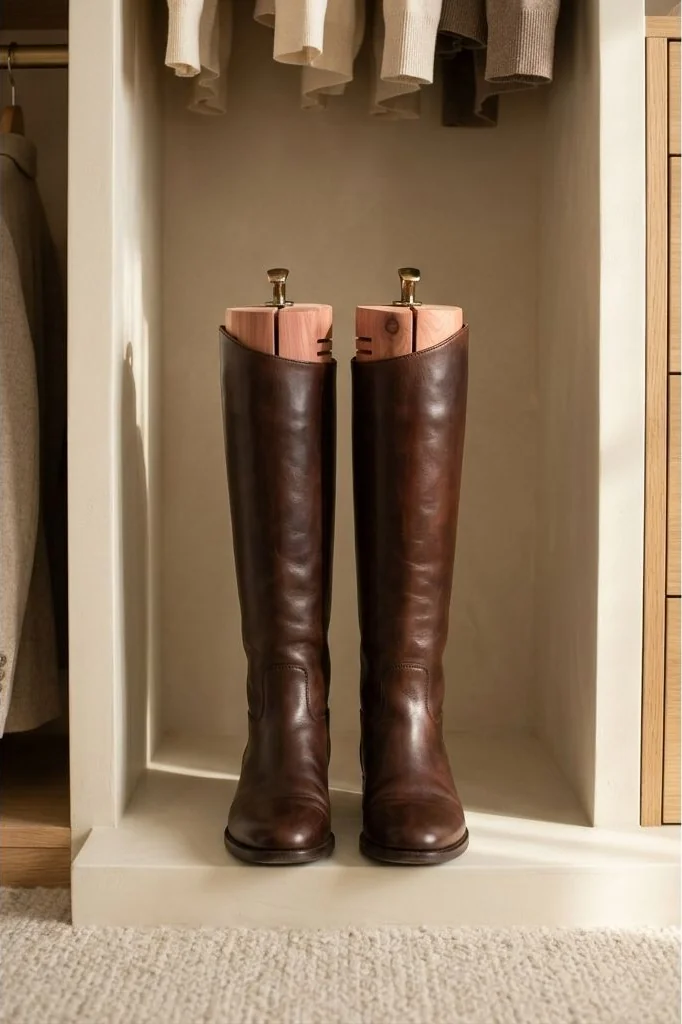
Internal boot shapers – crafted from unfinished aromatic cedar or flexible acrylic inserts – provide the gentle outward tension required to keep shafts standing tall and upright. Cedar shapers offer added biological benefits by naturally absorbing ambient humidity and exuding an organic scent that repels textile pests.
Store tall boots on a designated bottom shelf with a minimum vertical clearance of nineteen to twenty-two inches to prevent shaft tops from colliding with upper drawer boxes. For comprehensive footwear styling guidelines, explore our reference on curating a modular shoe capsule for year-round versatility.
Slanted Display Shelves with Heel Catch Rails
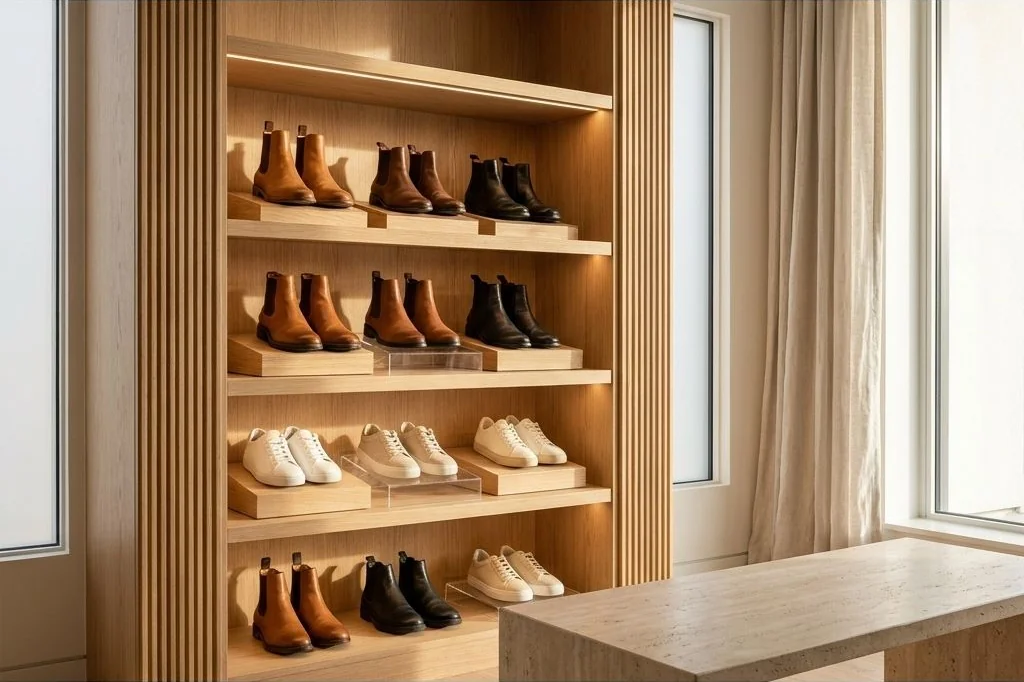
In high-end architectural walk-in wardrobes, fixed horizontal shelves can obscure footwear silhouettes, particularly on shelves located above waist height. Designing shelves with an intentional fifteen to twenty-degree forward incline showcases the complete profile of the shoe.
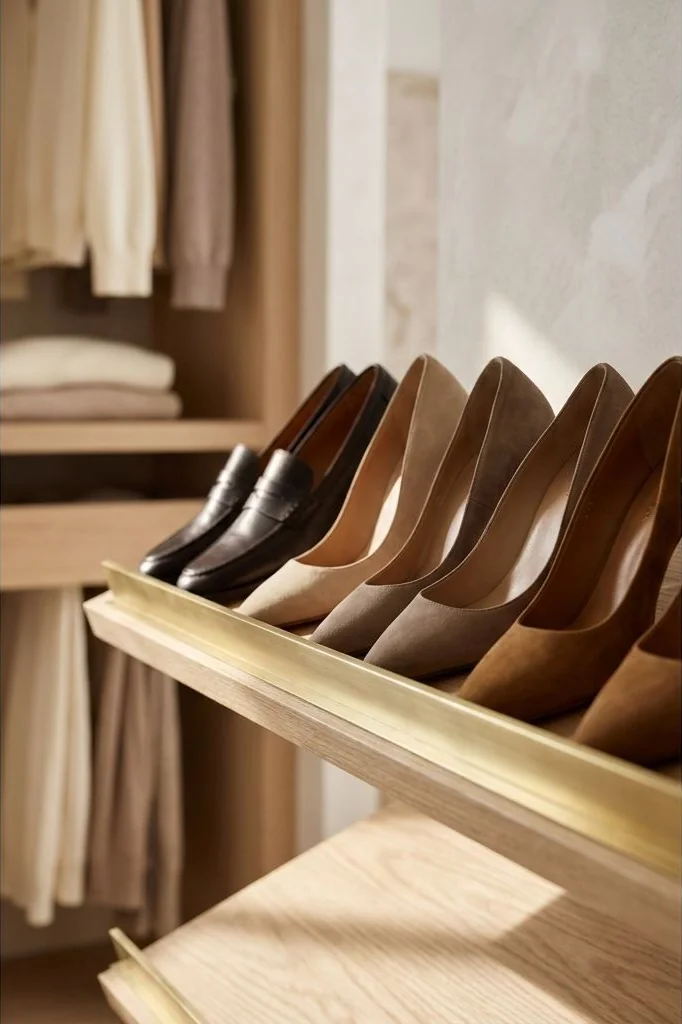
To prevent angled footwear from sliding off the ledge, install a continuous front lip engineered from solid brushed brass or powder-coated steel. The lip should rise approximately 0.75 inches, catching heels and outsoles securely while acting as a refined metallic accent that echoes your wardrobe hanging rails.
Lining angled oak shelves with textured ribbed vinyl or bonded wool felt dampens placement noise and shields wooden finishes from abrasive grit tracked in on outsoles.
Drop-Front Clear Magnetic Boxes for Collector Footwear
For collector sneakers, delicate suede pumps, and archival footwear worn infrequently, open-air storage poses an ongoing dust risk. Fine suede fibers act like microscopic sponges for settling dust, requiring frequent brushing that accelerates textile wear.
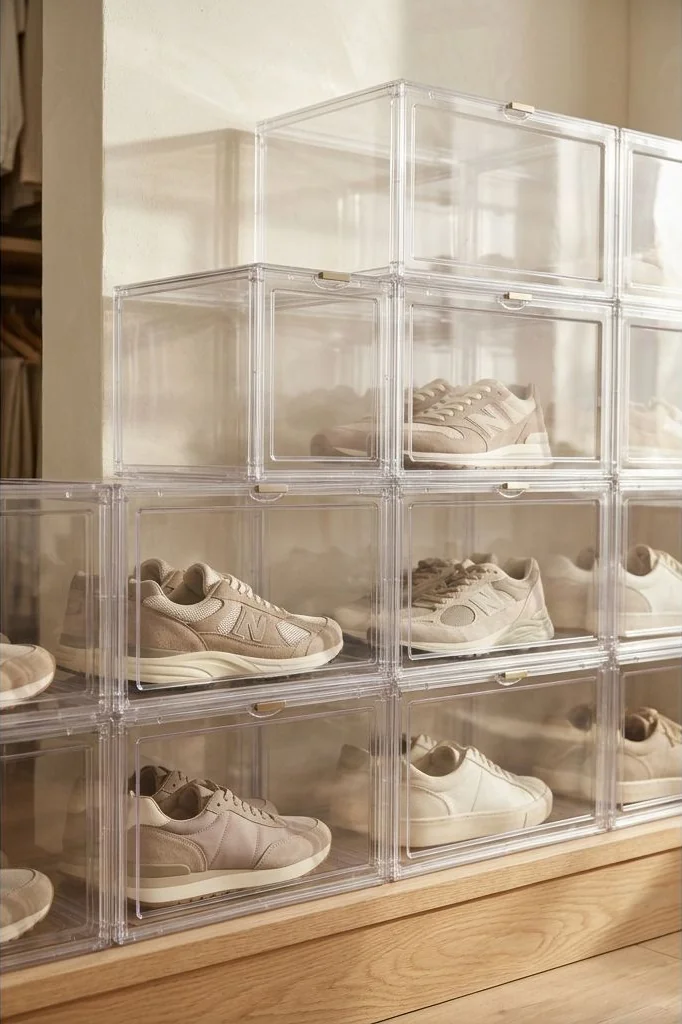
Modular drop-front acrylic storage boxes provide full environmental protection while maintaining complete visual transparency. The front door drops open smoothly via concealed magnetic catches, allowing you to extract any pair without unstacking the entire tower.
Interlocking tongue-and-groove channels molded into the tops and bottoms of these cases ensure multi-tier towers remain perfectly stable, transforming an awkward corner alcove into an intentional gallery showcase.
Footwear Rotation Architecture: Curating an Active 8-Pair Bay
Even the most sophisticated storage hardware fails when overwhelmed by sheer numerical volume. The secret to maintaining a serene dressing space is editing your primary wardrobe down to an active seasonal rotation of six to eight essential pairs.
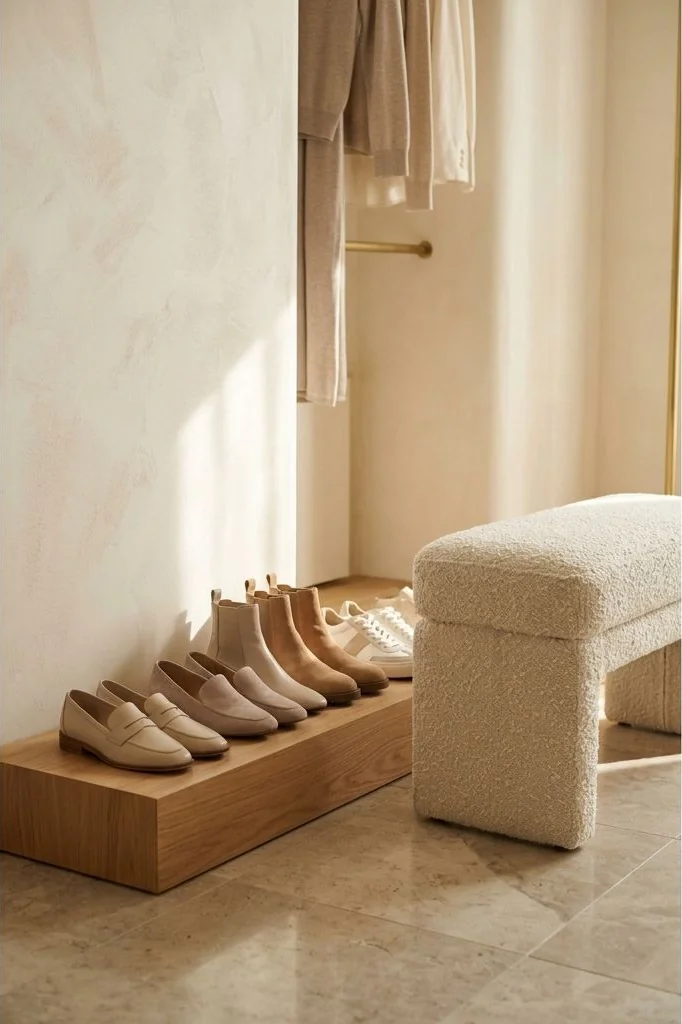
An intentional eight-pair capsule accommodates every lifestyle demand: one pair of tailored leather oxfords or loafers, versatile white leather sneakers, casual Chelsea boots, warm-weather sandals, rugged outdoor boots, athletic trainers, and two seasonal alternates. Out-of-season footwear should be cleaned, conditioned with leather balm, and archived inside upper shelf bins.
As documented in modern architectural studies by Architectural Digest, purposeful spatial boundaries protect homes from clutter by creating natural limits. Explore our full gallery of architectural prints and minimalist living guides at ornista.com.
Integrating a Footwear Maintenance Station
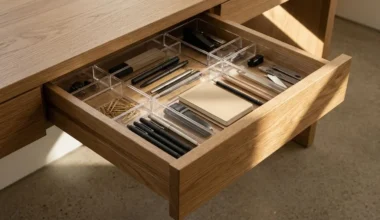
A high-functioning footwear zone extends beyond static display ledges; it accommodates routine maintenance tools that preserve leather longevity. Dedicating a small lower drawer or lined utility basket adjacent to your shoe shelves creates an intuitive care ritual. Keep an oiled horsehair buffing brush, neutral beeswax leather conditioner, and a natural crepe suede eraser within arm’s reach.
Taking thirty seconds to brush off street dust before placing shoes onto tiered risers prevents particulate accumulation across your closet shelves. This small proactive habit safeguards expensive leather finishes and ensures your footwear collection remains in pristine, ready-to-wear condition every morning.
Frequently Asked Questions
What is the optimal vertical shelf spacing for storing footwear?
For standard flats, sneakers, and low-heel shoes, allocate seven to eight inches of vertical clearance between shelves. For ankle boots, expand spacing to ten to twelve inches. For knee-high boots, reserve dedicated lower bays with eighteen to twenty-two inches of clear height.
How do you prevent shoe storage areas from developing stale odors?
Never place shoes into enclosed boxes immediately after wearing; allow them to air out on an open tray for at least two hours so internal moisture evaporates. Incorporate unfinished cedar shoe trees or natural activated bamboo charcoal bags to neutralize odors and absorb residual dampness organically.
Are metal wire shoe racks acceptable for quality leather footwear?
Metal wire racks are not recommended for soft-soled leather footwear. Over time, narrow metal wires leave indentations on soft leather outsoles and cause high heels to slip through gaps. Solid wood shelves or flat acrylic platforms provide continuous support that preserves footwear geometry.