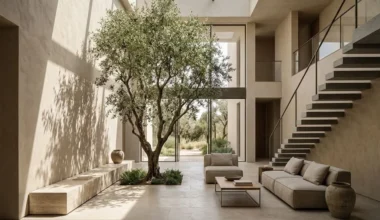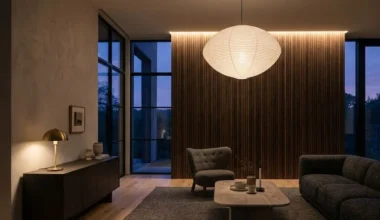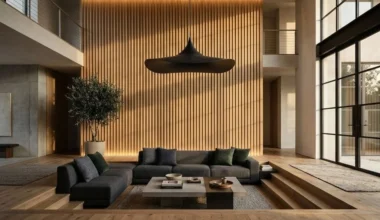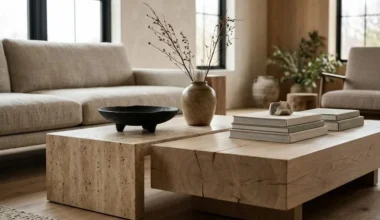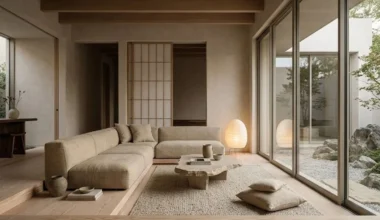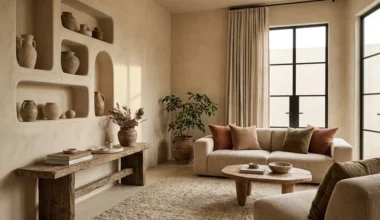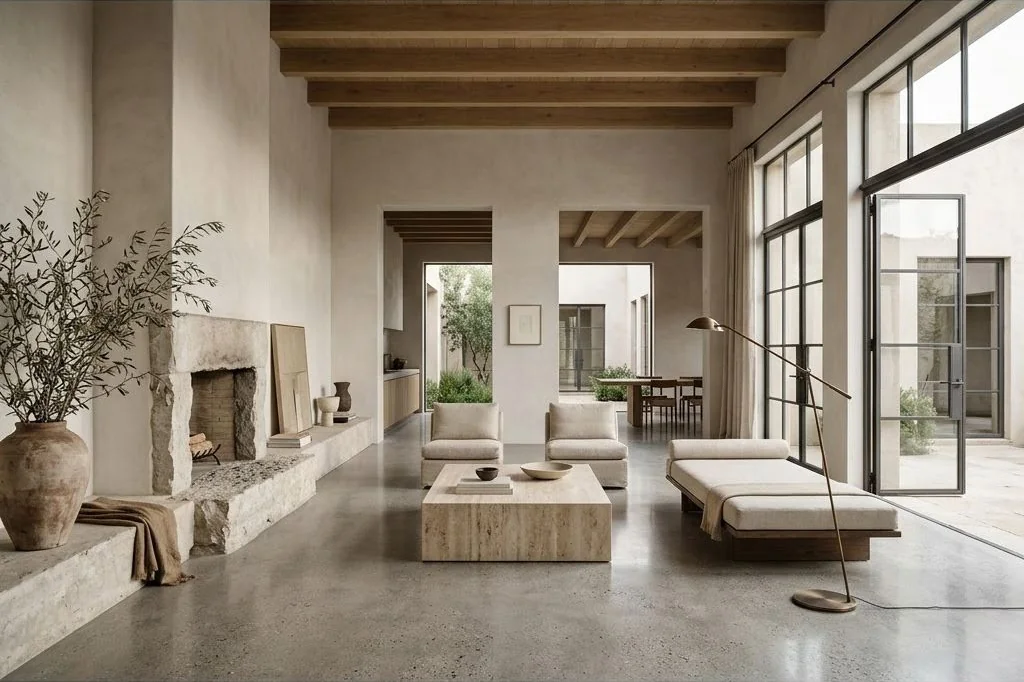
In a design landscape saturated with mass-produced composite boards and synthetic laminates, authentic natural stone provides an essential architectural anchor. For centuries, civilisations have turned to limestone, marble, and travertine to construct enduring monuments. Today, incorporating travertine and natural stone living room accents into the home is not about gaudy luxury or classical ostentation; it is an intentional commitment to permanence, geological authenticity, and grounding mineral tactility.
Natural stone speaks directly to our primal need for connection with the natural earth. Its cool surface, irregular vein patterns, and microscopic porous cavities introduce honest physical weight to contemporary minimalist architecture. When balanced against warm timber, raw plaster, and slubbed textiles, stone anchors the living room with quiet authority. For guidance on styling complete organic interiors, browse our curated resources on the Ornista design library.
Key Takeaways
Fundamental architectural guidelines for integrating natural stone accents:
- Unfilled, honed travertine introduces authentic mineral texture that counters synthetic flatness in modern rooms.
- Monolithic stone coffee tables establish a profound architectural center of gravity for floating furniture layouts.
- Juxtaposing cool, porous stone against warm oak and plush wool prevents minimalist rooms from feeling austere.
- Annual sealing with penetrating silane impregnators preserves stone breathability while protecting against household stains.
- Floor-to-ceiling stone fireplace surrounds provide an enduring, flame-resistant focal point for relaxation.
Geological Provenance and Distinct Veining Characteristics
Travertine is a terrestrial sedimentary rock formed by the precipitation of carbonate minerals from geothermal mineral springs and limestone caves. As subterranean water rich in calcium carbonate emerges into open-air hot springs, rapid gas decompression releases carbon dioxide, leaving behind crystalline calcite deposits. Tiny pockets of geothermal gas become trapped during this metamorphic calcification, creating the distinctive cellular cavities and horizontal strata that define travertine.
In high-end architectural design, provenance plays a crucial role in character. Italian Travertino Romano, quarried in Tivoli since ancient Roman times, exhibits dense linear stratification in warm ivory and honey tones. By comparison, French Dordogne limestone offers creamy, fossiliferous surfaces speckled with ancient marine sediment, while Persian silver travertine introduces dramatic slate-grey and ash ribbons. Selecting the appropriate stone provenance allows homeowners to dial in precise mineral undertones that match their architectural timber and wall finishes.
Unfilled vs. Filled Travertine: Embracing Honest Imperfection
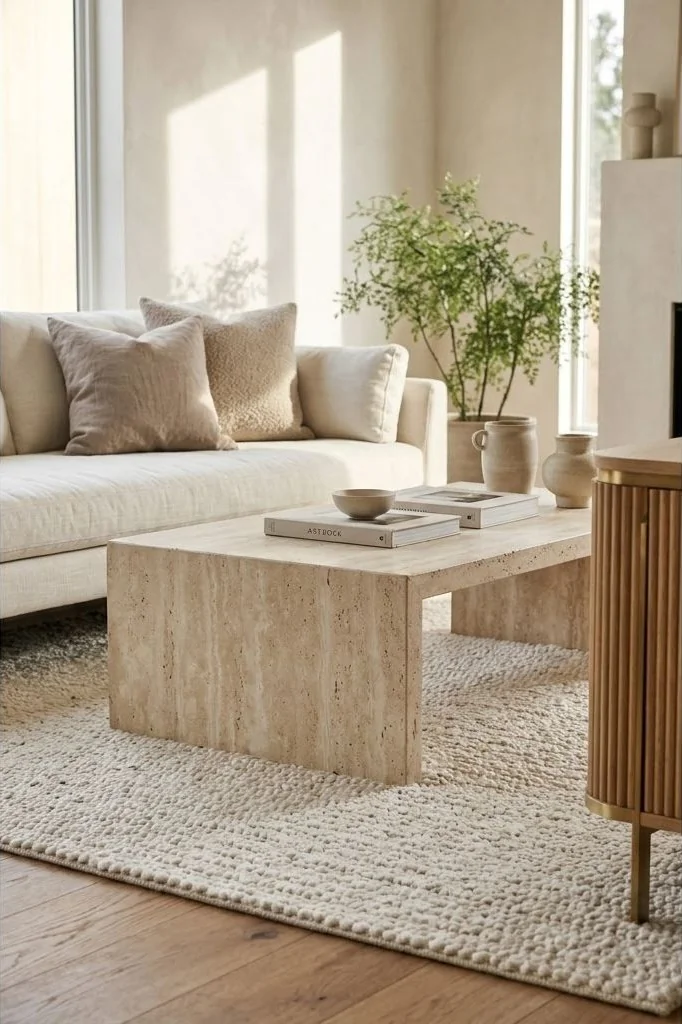
One of the most consequential decisions when specifying travertine accents is choosing between filled and unfilled variations. In standard commercial construction, stone fabricators routinely fill all surface crevices with color-matched polymer epoxy before buffing the stone to a smooth, uniform plane. While practical for culinary counters, this filling process strips away the very tactile honesty that defines organic modern design.
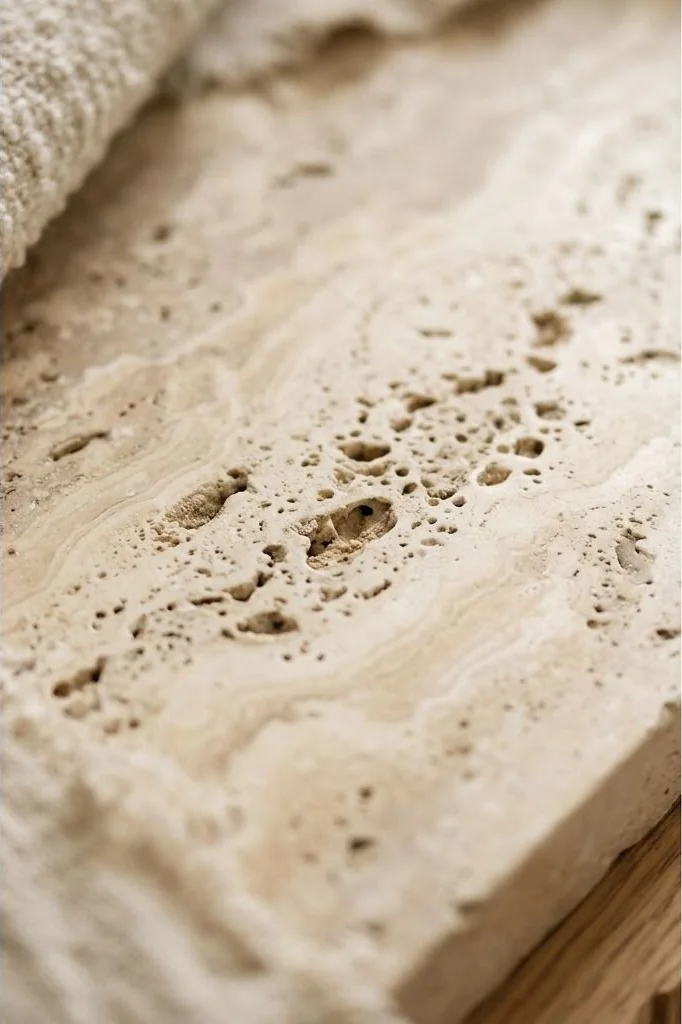
Unfilled travertine, by contrast, embraces the Japanese philosophy of wabi-sabi – finding profound beauty in natural imperfection. Its rugged fissures, pitted surface, and textural variations invite human touch, serving as a visceral reminder of geological epochs. For living room coffee tables, architectural plinths, and side consoles, unfilled honed stone delivers an artisanal, gallery-worthy presence that synthetic composites cannot achieve.
The Monolithic Focal Point: Stone Fireplace Surrounds
A living room requires a dominant focal anchor around which daily life circulates. While media consoles often command this role in contemporary households, organic modern architecture revitalizes the primal hearth through monolithic stone installations. A floor-to-ceiling fireplace surround crafted from honed limestone or split-face travertine establishes enduring architectural grandeur.
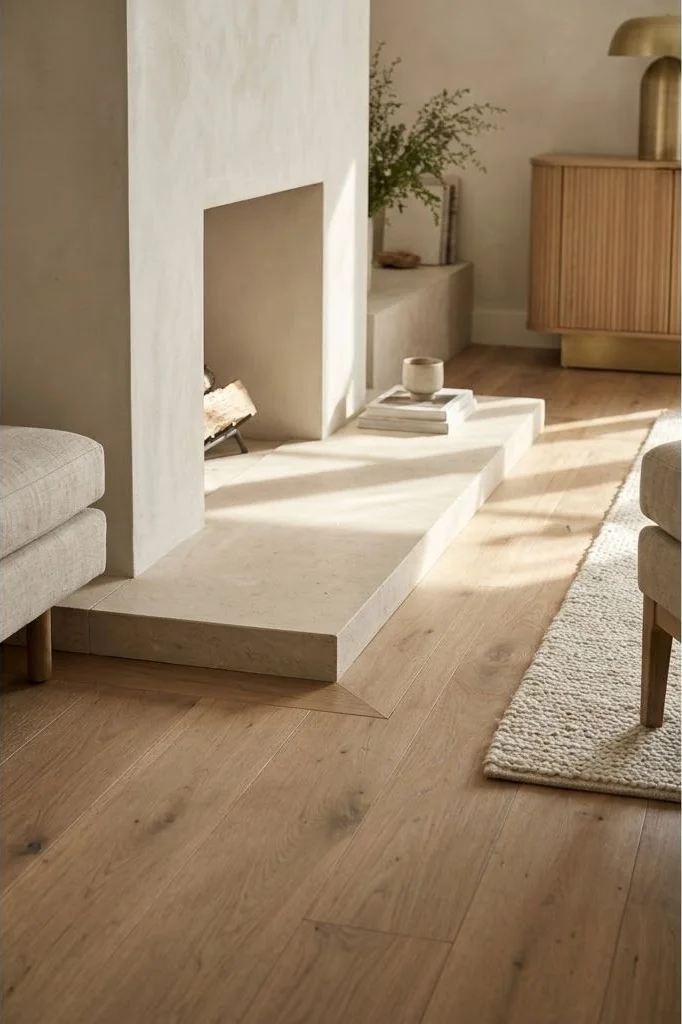
Because natural stone is inherently non-combustible and thermally dense, it absorbs radiant warmth from the fire and gently dissipates heat into the living volume long after the embers fade. Pair this monolithic hearth with low-slung seating and tactile wool floor coverings to create an encompassing atmosphere of residential refuge. For complementary seating strategies that honor these architectural sightlines, read our guide on curved furniture in living room architecture.
Material Dialogues: Pairing Stone with Timber and Textiles
A living room furnished exclusively in natural stone risks feeling cavernous and cold. The art of warm minimalism lies in orchestrating intentional material dialogues. Stone represents density, mineral coolness, and rigid structure; therefore, it requires soft, warm counterpoints to achieve equilibrium.
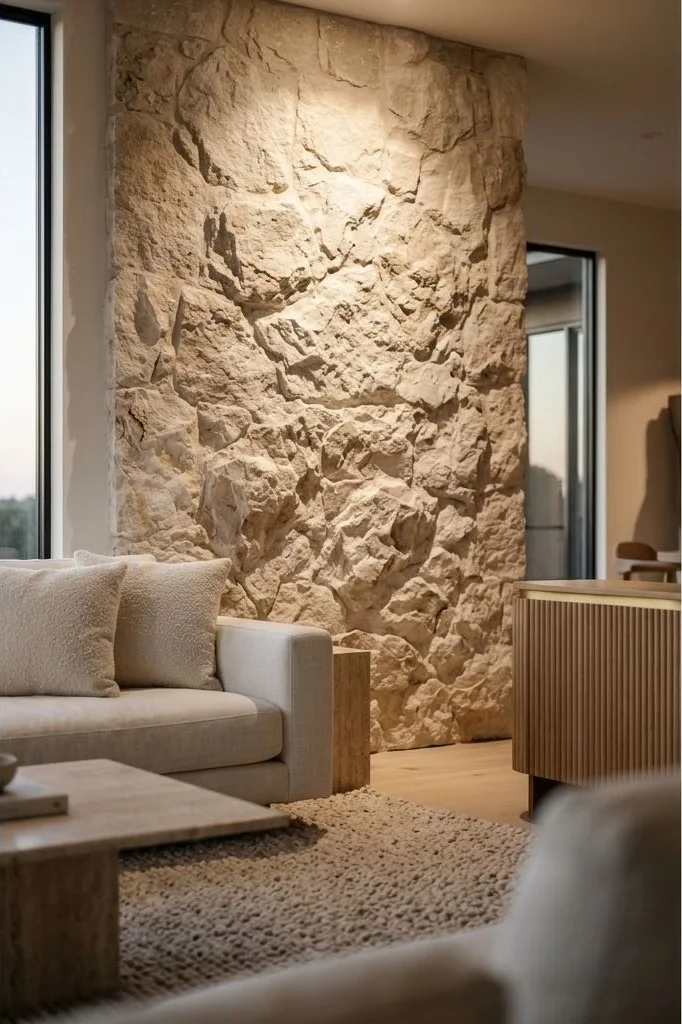
Position a low-slung travertine cocktail table atop a plush, un-dyed New Zealand wool rug. Back the stone centerpiece with a sofa draped in textured bouclé or slubbed Belgian linen, and frame the arrangement against wire-brushed white oak cabinetry or slatted timber walls. To master the art of architectural paneling, see our detailed examination of fluted wood slatted panel living room accents. This interplay of hard and soft, cool and warm, prevents visual fatigue and produces sensory richness.
Sculptural Pedestals and Architectural Plinths
Beyond functional tables, natural stone excels as an architectural display medium. Solid stone plinths – honed into clean cuboids, fluted columns, or stepped pedestals – introduce gallery-level curation into the domestic sphere. These monolithic bases provide a solemn, grounding platform for displaying hand-thrown ceramic urns, raw bronze vessels, or dry botanical branches.
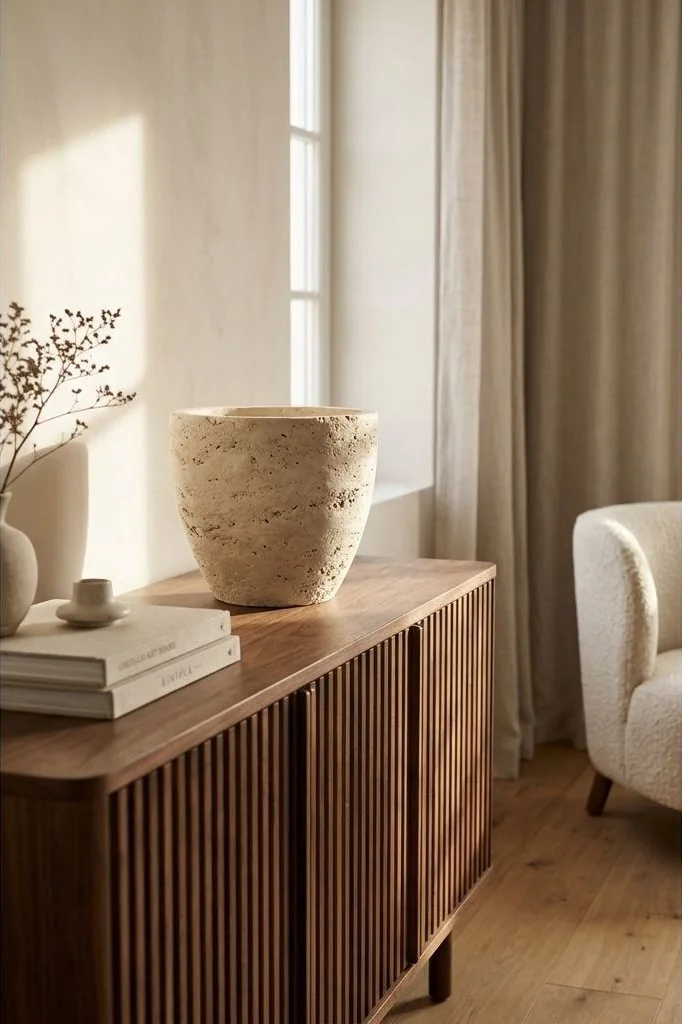
By keeping decorative vignettes minimal and letting the stone’s inherent vein movement take center stage, the living room avoids superficial clutter. According to design essays in Dezeen, stone pedestals anchor the spatial hierarchy of modern living rooms, offering moments of contemplation and visual rest.
Tactile Maintenance and Long-Term Mineral Breathability
Caring for natural sedimentary stone requires an understanding of its mineral chemistry. Calcium carbonate stones are sensitive to acidic substances like red wine, citrus, and harsh chemical detergents, which cause chemical etching. However, applying thick polyurethane or synthetic topical coatings ruins the matte, velvety touch of honed travertine.
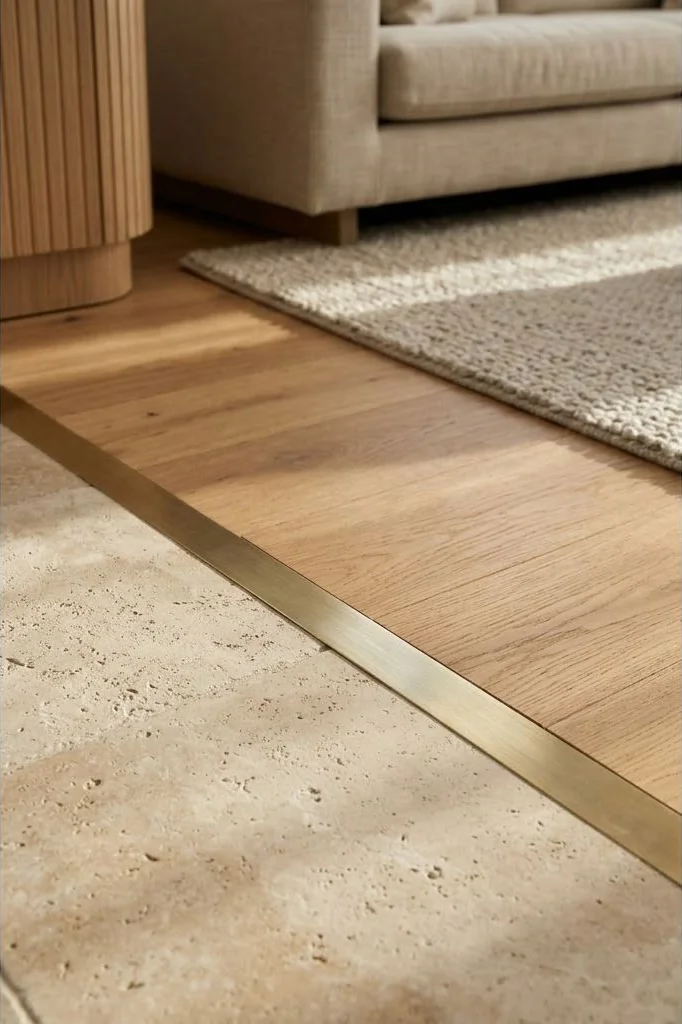
The optimal preservation protocol involves using water-based, breathable penetrating sealers formulated with silane or siloxane micro-polymers. These sub-surface sealers bond with the interior mineral pore walls without creating a glossy exterior film, repelling water and oils while permitting the stone to breathe vapor naturally. For daily upkeep, a simple microfiber cloth dampened with pH-neutral stone soap maintains the stone’s luminous natural patina over decades.
Travertine and natural stone living room accents embody the spirit of intentional, grounded architecture. By welcoming raw geological weight, nuanced mineral veining, and enduring tactile honesty into your home, you cultivate a living space that feels anchored, calming, and deeply connected to the natural world.
Frequently Asked Questions
What is the difference between filled and unfilled travertine in living room furniture?
Unfilled travertine retains its natural porous voids, offering raw organic texture, while filled travertine seals the holes with matching resin or cement for an easier-to-clean surface.
How do you protect natural stone coffee tables from etching and staining?
Apply a high-quality penetrating silane-siloxane stone sealer annually and wipe up acidic liquids like wine or citrus immediately with a pH-neutral damp cloth.
Can natural stone accents be used in smaller living rooms without feeling heavy?
Yes. Choose low-profile, floating stone plinths or open-pedestal side tables in pale travertine or French limestone to reflect light without overwhelming room proportions.
Which stone finishes best reflect the organic modern aesthetic?
Honed, matte, tumbled, or brushed finishes are preferred over high-gloss polish because they emphasize natural mineral texture without artificial glare.