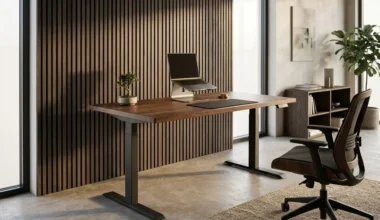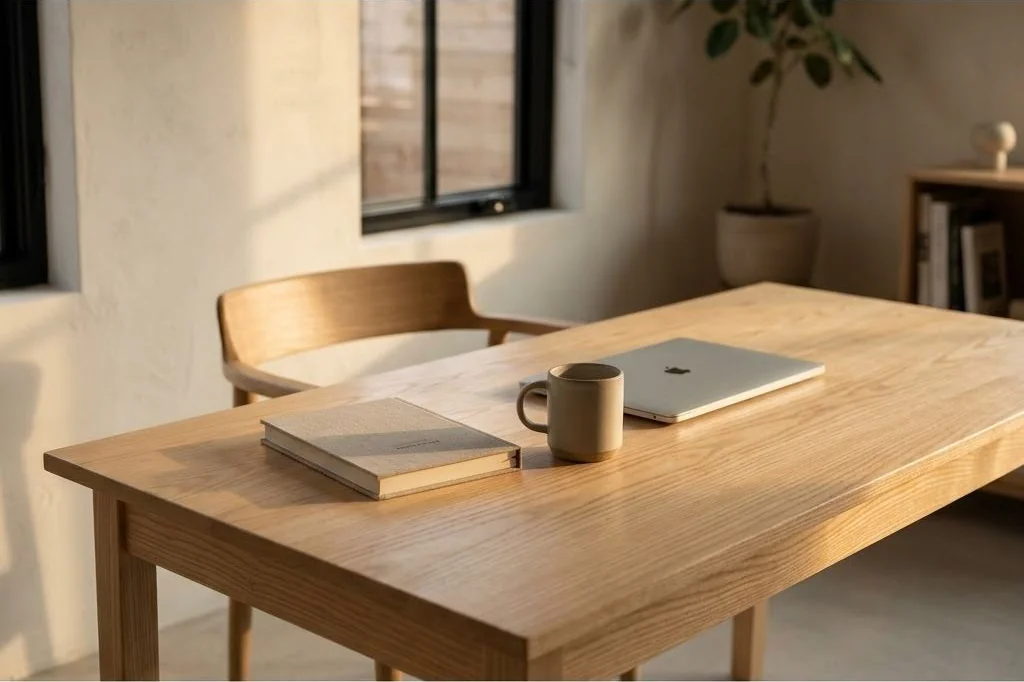
In Japanese and Scandinavian architectural philosophy, empty space – referred to as ma in Japan – is not an absence of purpose, but an active, breathing presence. When a wooden work desk is crowded with scattered sticky notes, half-empty coffee cups, stray cables, and stacks of unread mail, the mind experiences continuous sensory demands. Each object silently reminds you of unfinished tasks, eroding the peace necessary for deep, focused work.
Maintaining a minimalist Scandinavian workspace is not a one-time cleaning event; it is an ongoing spiritual practice of daily spatial editing. By instituting mindful daily rituals, you protect the serene boundary between professional production and domestic tranquility. To learn more about intentional living principles that shape peaceful homes, explore our core philosophy on the Ornista mindful living home archive.
Key Takeaways
- Physical desk clutter directly mirrors and compounds mental cognitive fatigue.
- A five-minute end-of-day shutdown ritual restores visual stillness for the following morning.
- The ‘one in, one out’ curation rule prevents gradual desk accessory accumulation.
- Digitizing incoming paper documents preserves clear, unencumbered wooden horizons.
- Intentional negative space allows fine natural timber grain to command visual focus.
The Five-Minute Evening Shutdown Ritual
The single most transformative habit for workspace tranquility is the End-of-Day Shutdown Ritual. Too often, when the workday ends, knowledge workers abruptly step away from their desks, leaving open notebooks, coffee rings, and strewn charging cords in their wake. Returning to this chaotic scene the following morning immediately induces low-grade stress before work even begins.
Dedicating just five minutes at the end of every workday to perform a shutdown sequence resets the spatial horizon:
1. Clear Organic Debris: Return coffee cups, water glasses, and snack plates directly to the kitchen. 2. Wipe the Timber: Run a dry micro-fiber cloth across the oiled wood top to lift dust and skin oils. 3. Return Tools to Anchors: Rest your primary pen in its dedicated brass groove, tuck notebooks into the desk drawer, and coil temporary charging cords into under-desk trays. 4. Close the Digital Window: Close all browser tabs, jot down tomorrow’s primary priority on a single index card, and close the laptop lid.
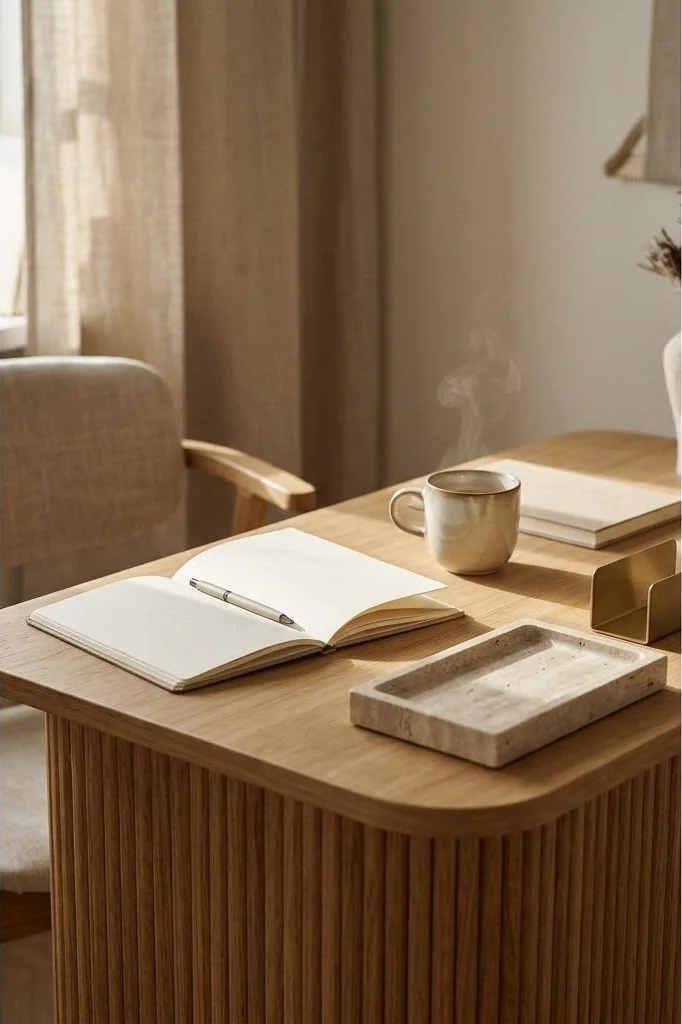
Paperless Hygiene and the Single In-Box Rule
Physical paperwork is the primary destroyer of minimalist desktops. Bills, receipts, tax notices, and scribbled meeting notes accumulate with astonishing speed, turning pristine timber slabs into paper recycling depots.
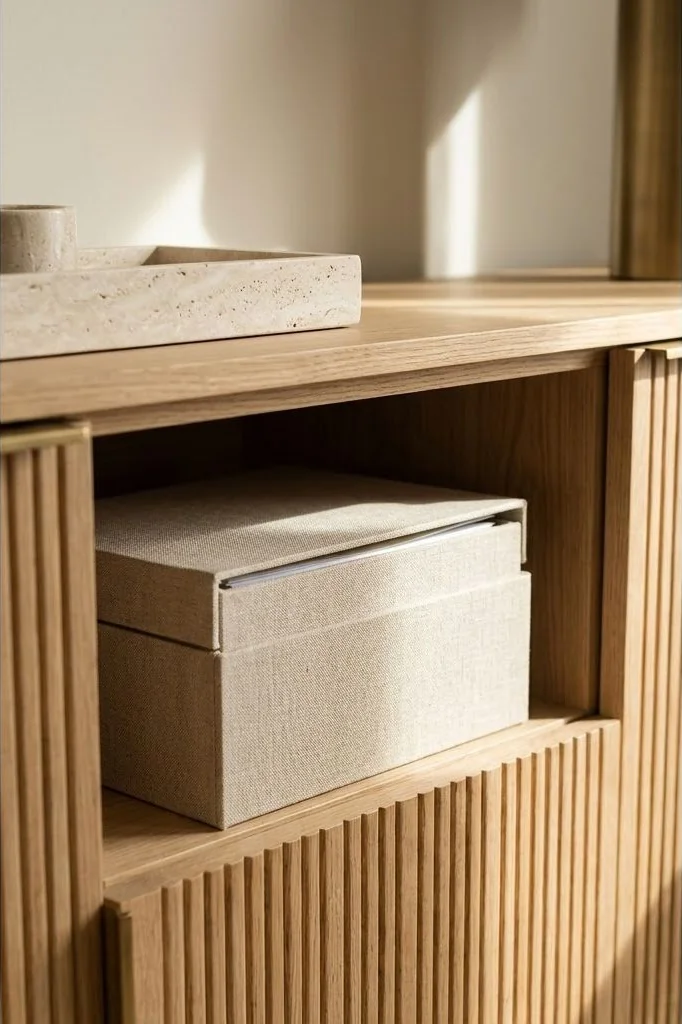
Enforce a strict digital-first document policy. Immediately scan incoming physical papers using a mobile document scanner app, filing the PDF into a secure cloud storage system. Shred or recycle the physical original immediately unless legal custody is mandatory. For the small handful of essential paper documents, maintain exactly one lidded linen storage box tucked inside a credenza. Never allow loose paper to rest uncontained on the main desk surface. For complementary storage ideas, consult our guide on Scandinavian desk shelf organization.
Practicing Spatial Editing and Negative Space
Human nature leans toward accumulation. Over months, we add a decorative succulent, a second fountain pen, a souvenir pebble, and an extra charging pad. Gradually, the tranquil negative space that once defined the desk vanishes.
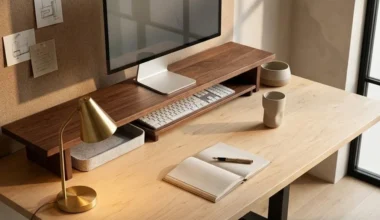
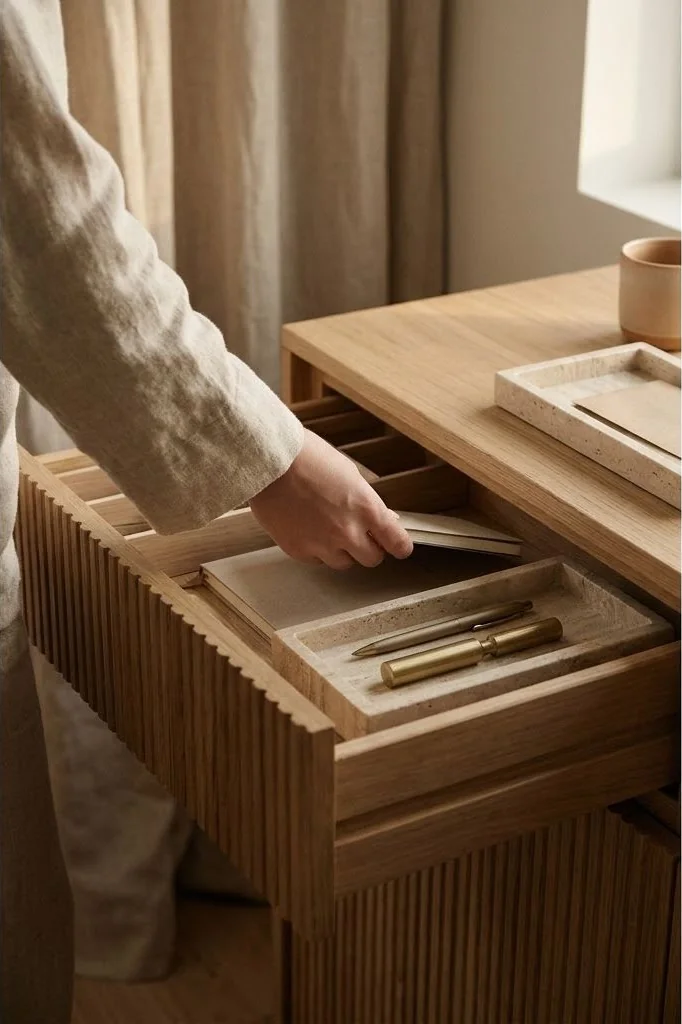
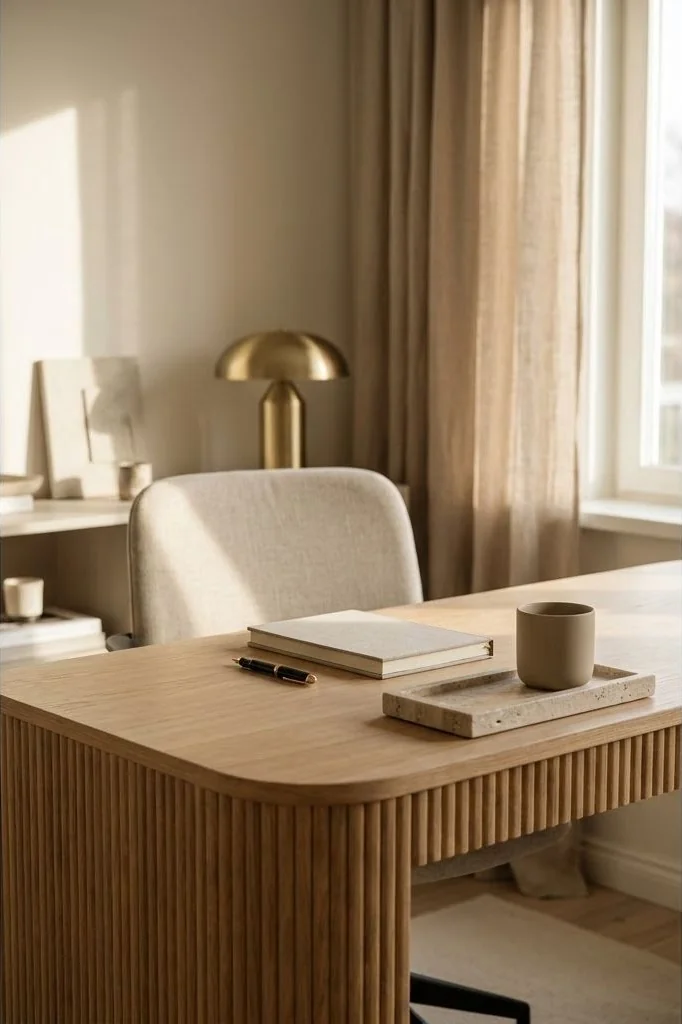
Practice regular spatial editing using the ‘one in, one out’ principle. If you acquire a new tactile ceramic mug or brass desk sculpture, an existing item must be relocated to another room or gifted. Strive to keep at least sixty percent of the desktop surface completely uncovered. This generous negative space allows the natural grain of your solid timber slab to take center stage, serving as a restful visual horizon for tired eyes. For timber care advice that keeps bare wood glowing, review our article on solid wood desk maintenance care.
Concealing Micro-Clutter Within Specialized Storage
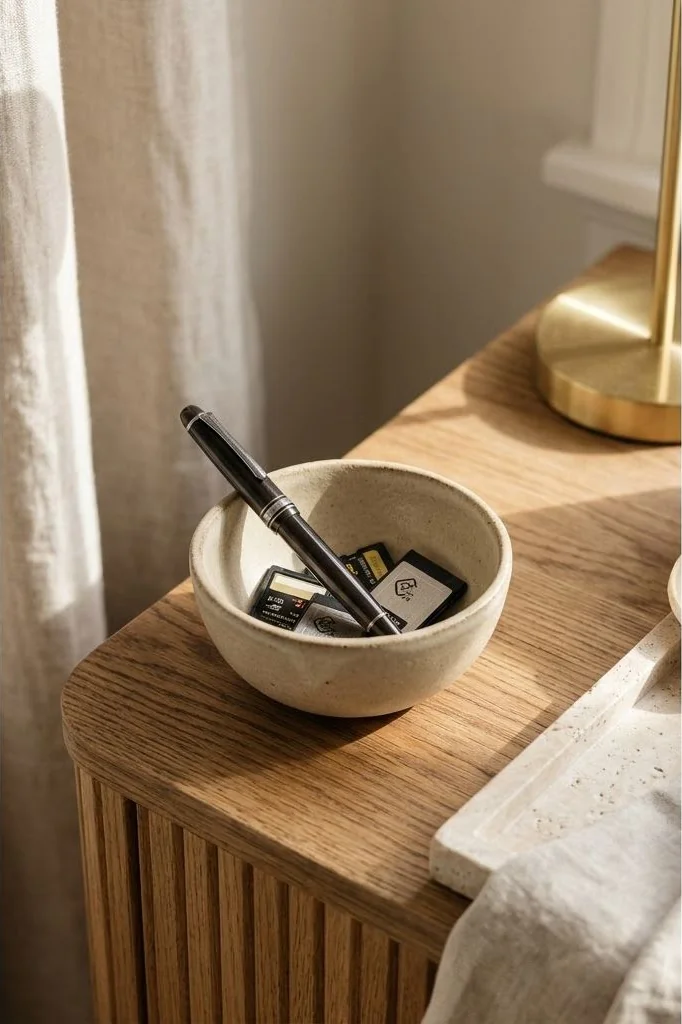
Minimalism does not mean living without essential physical tools; it means being intentional about where those tools live when not actively in your hands. Small desktop necessities – memory cards, lip balm, lens cloths, and spare lead – create visual chaos if left scattered.
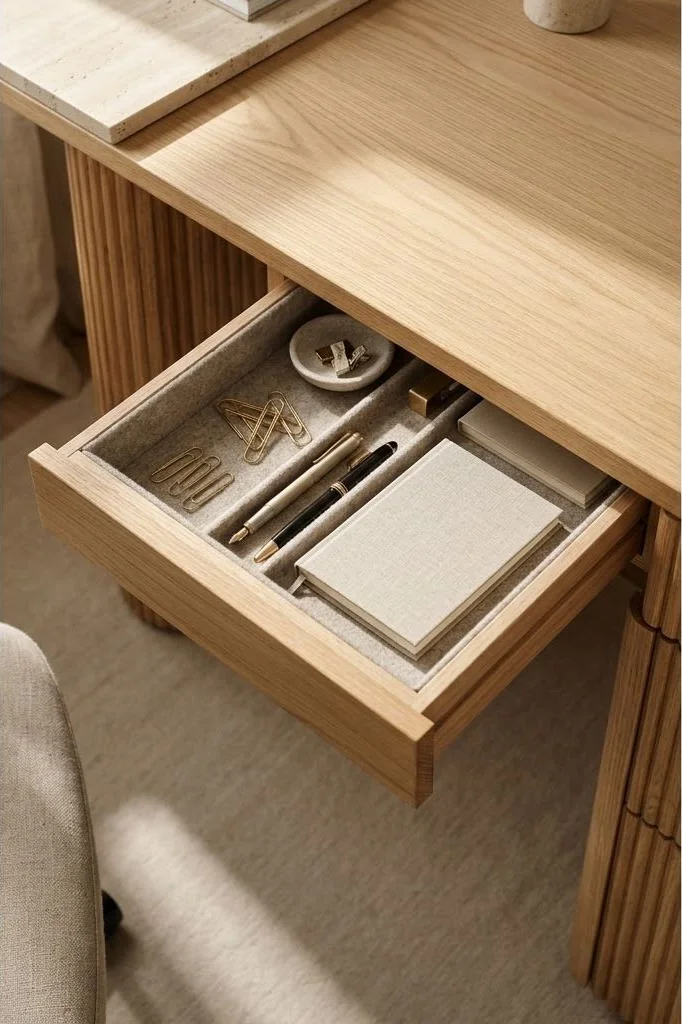
Incorporate specialized secondary storage solutions that honor your material palette. A shallow felt-lined under-desk drawer conceals everyday tools while keeping them within arm’s reach. Hand-carved wooden boxes with snug lids or matte stoneware vessels on a desk shelf provide elegant homes for micro-clutter, maintaining a calm, monolithic exterior.
Cultivating Mental Clarity Through Environmental Harmony
Ultimately, the state of your desk reflects and shapes your mental state. When you treat your physical workspace with respect, reverence, and intentional discipline, that care flows naturally into the quality of your thoughts, decisions, and creative output.
As celebrated in design essays by Dwell, simplifying our material surroundings removes friction from daily life. Step into your home office each morning not as a space of chaotic overwhelm, but as a tranquil temple of focused, intentional creation.
Core Spatial Principles for Nordic Workspaces
To ensure your workspace layout retains its serene balance through evolving seasons and technology updates, anchor your setup around three timeless architectural guidelines:
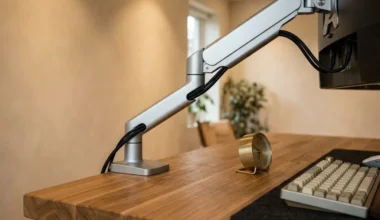
First, maintain visual lightness by preserving negative space. Resist the urge to fill every square inch of your desktop with gadgets or decorative items; bare wood surface is itself a restorative visual rest for tired eyes. Second, establish consistent material dialogue throughout the room. If your desk features white oak, echo that pale grain in picture frames, floating bookshelves, or flooring trims. Third, hide technical friction completely: ensure that all power distribution, charging cables, and peripheral transformers remain entirely invisible from normal standing and seated sightlines.
Cultivating Enduring Harmony in Intentional Workspaces
Creating an inspiring Scandinavian workspace is not a fleeting weekend project or an exercise in surface styling. It represents a deeper architectural dialogue between physical form, natural textures, and the mental rhythms of daily work. When you eliminate chaotic cable nests and replace synthetic surfaces with honest, living timber, the entire emotional resonance of the room transforms.
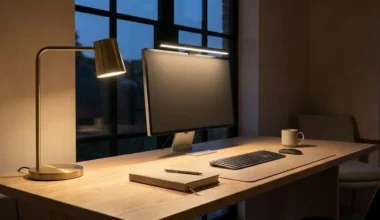
Each morning becomes an opportunity to step into an environment specifically engineered to protect mental clarity and nurture deep creative immersion. By investing care into fine details – from tactile wood grains and recessed cable trays to balanced 2700K ambient illumination – you build an enduring sanctuary that honors both personal wellbeing and professional craft.
Frequently Asked Questions
How do I maintain a minimalist desk when my work requires physical papers?
Utilize a single lidded linen archival box or an under-desk slim drawer to conceal active folders, keeping the primary desktop completely clear.
What is an end-of-day desk shutdown ritual?
A deliberate five-minute routine at the conclusion of work where coffee mugs are cleared, pens returned to trays, and open tasks noted before closing the laptop.
How much open space should remain visible on a Scandinavian desk?
As a rule of thumb, at least 60 to 70 percent of the solid wood surface should remain completely uncovered by peripherals or accessories.
How do I prevent family members from using my desk as a clutter drop-zone?
Establish clear spatial boundaries by placing an attractive entryway console with a catchall tray near the door to intercept everyday household items.