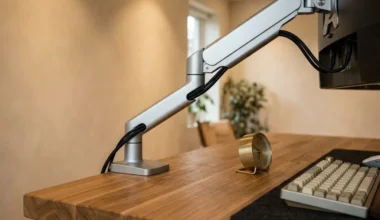
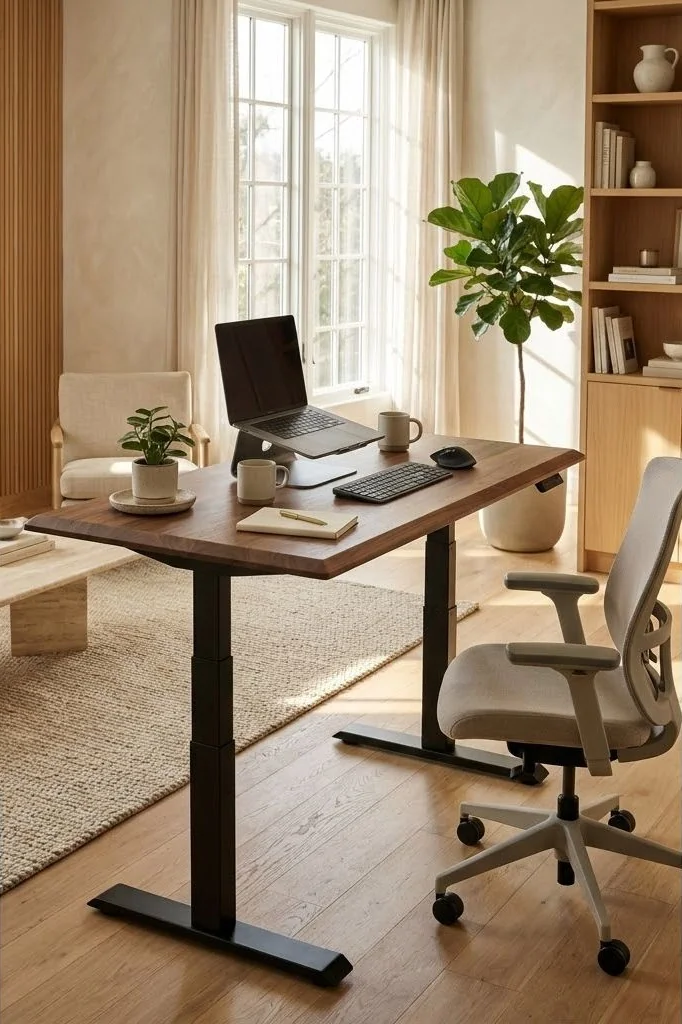
Motorized standing desks have transformed home office ergonomics, empowering knowledge workers to alternate between sitting and standing throughout the day. However, the vast majority of commercial standing desks ship with generic laminated chipboard tops with synthetic edge banding. While mechanically functional, these commercial surfaces lack tactile warmth and soul.
Integrating an authentic, custom-crafted solid timber slab with a high-performance motorized frame achieves the perfect synthesis: the kinetic versatility of modern engineering married to the timeless majesty of natural hardwood. The result is an heirloom-quality centerpiece that enriches your home’s architectural harmony. To understand how intentional materiality shapes modern residences, explore our curated articles on the Ornista architectural design index.
Key Takeaways
- Pairing custom solid timber with motorized lifting columns creates an heirloom sit-stand workstation.
- Dual-motor three-stage lifting frames provide superior stability and wider height adjustment ranges.
- Threaded brass inserts installed into the underside of the wood prevent stripped screw holes during moves.
- An articulated cable spine maintains seamless wire tension across the full height travel range.
- Accounting for the substantial weight of a 1.5-inch hardwood slab ensures motor safety and longevity.
Selecting the Motorized Lifting Frame Architecture
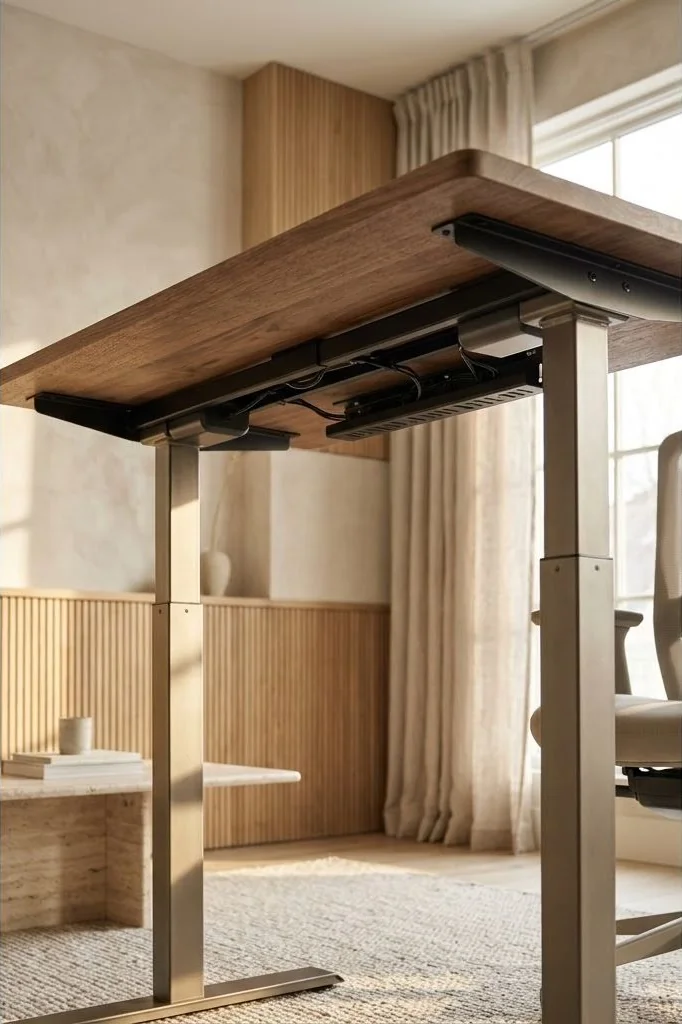
The motorized base must provide rock-solid mechanical stability, particularly when raised to standing heights where lateral leverage increases:
1. Dual-Motor Versus Single-Motor: Avoid budget single-motor frames that use a rotating hex drive rod. Dual-motor systems house a dedicated synchronized motor inside each leg column, delivering smooth, whisper-quiet travel, higher weight capacities (typically 275 to 350 lbs), and automatic anti-collision safety sensors.
2. Two-Stage Versus Three-Stage Leg Columns: Three-stage lifting columns offer a significantly wider height adjustment range (typically 24 to 50 inches), accommodating users of varying statures comfortably. Furthermore, the nested three-stage steel sleeves provide greater overlap at full extension, dramatically reducing monitor wobble during active typing.
3. Integrated Crossbars: Choose a frame with an expandable telescopic steel crossbar that bridges the two leg columns directly beneath the timber top, bracing against lateral racking forces.
Engineering the Mechanical Connection: Threaded Inserts
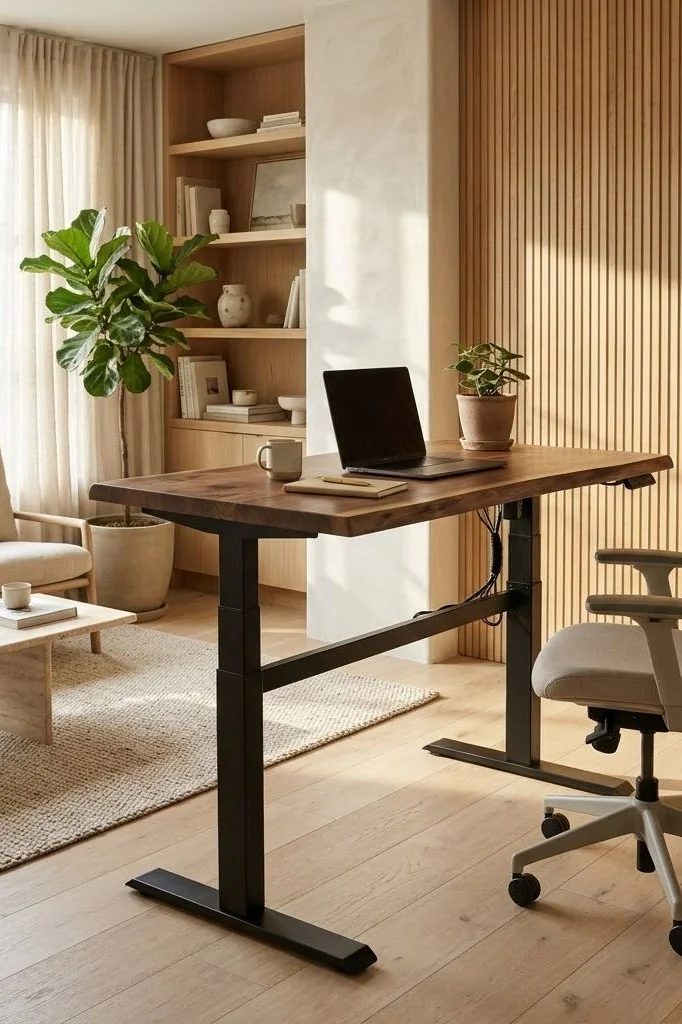
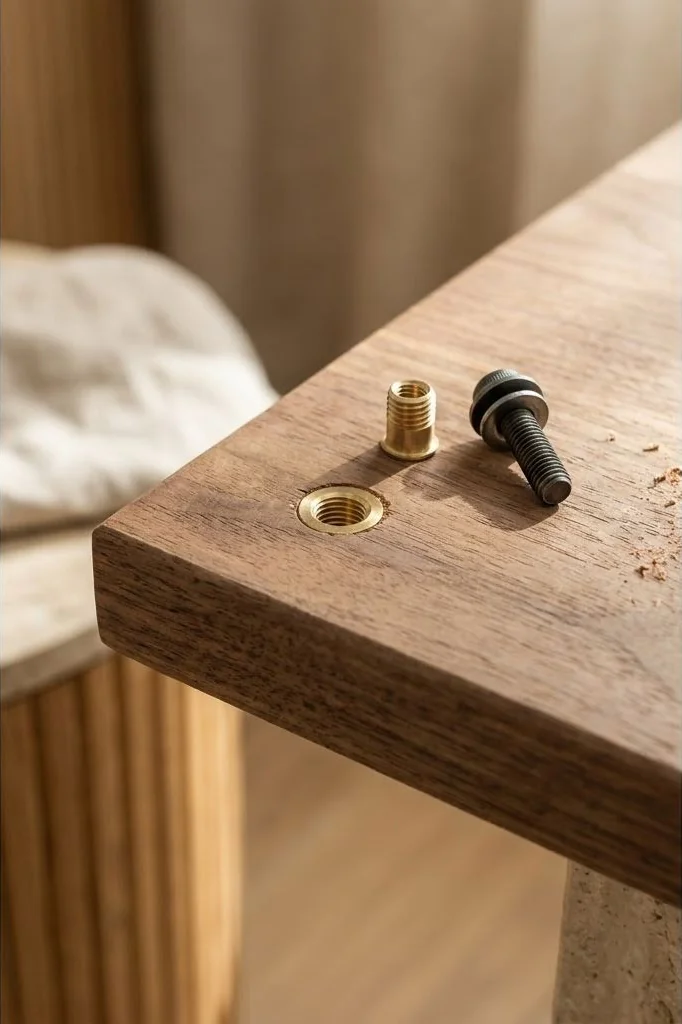
Mounting a heavy, valuable hardwood desktop to a steel lifting frame requires specialized joinery. Driving ordinary wood screws directly into the underside of the wood creates weak, permanent holes. If you ever need to move homes or replace the frame, backing out wood screws strips the wood fibers, compromising future stability.
Professional furniture makers utilize threaded brass or zinc alloy inserts (M6 or 1/4-20 internal machine threads). Drill precise pilot holes into the underside of the slab using a depth-stop drill bit. Thread the exterior coarse threads of the insert into the wood using a hex key. Now, the frame bolts securely to the top with high-strength machine bolts. For complementary advice on maintaining the wood surface around metal hardware, review our guide on solid wood desk maintenance care.
Weight Capacity Calculations and Center of Gravity
Before assembling your workstation, verify your total payload against the frame’s rated lifting capacity:
– Solid White Oak Desktop (60x30x1.5 inches): ~70 lbs – Large Ultrawide Monitor with Arm: ~25 lbs – Audio Monitors and Desktop Gear: ~15 lbs – Under-Desk Power Distribution and Cabling: ~10 lbs
This basic configuration totals approximately 120 pounds of static payload. On a quality 300-pound capacity frame, the motors operate comfortably within their optimal torque envelope, ensuring smooth acceleration and long-term motor longevity. Distribute heavy equipment evenly between the left and right legs to keep the center of gravity balanced.
Dynamic Cable Management: Articulated Spines
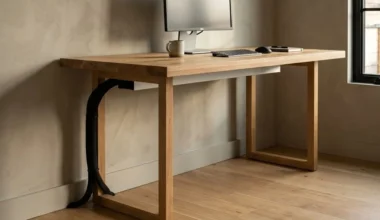
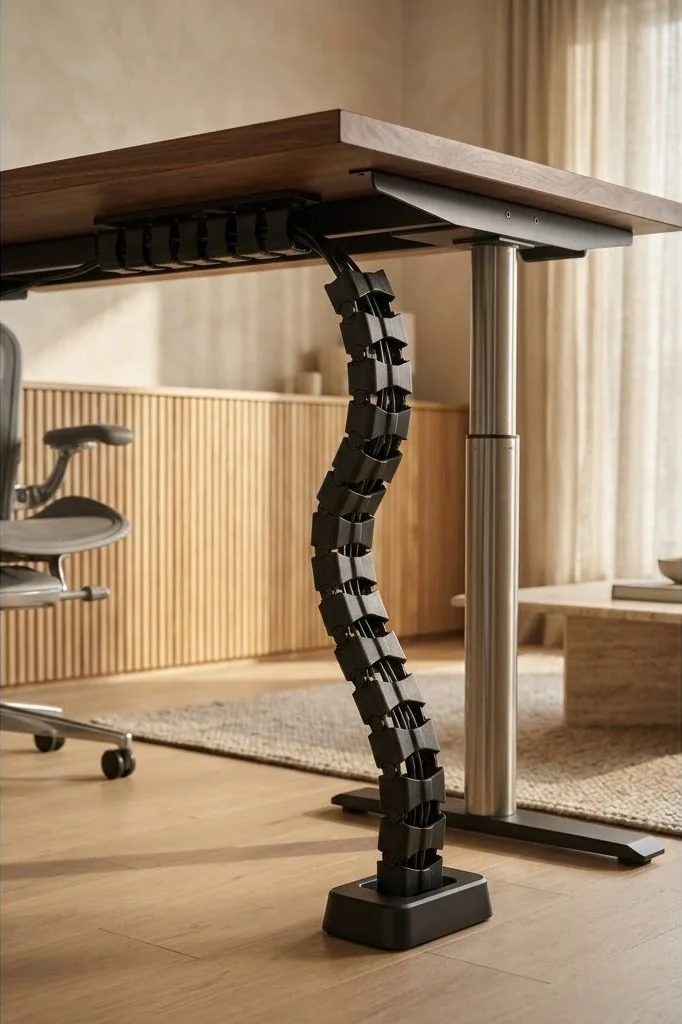
Cable management on a sit-stand desk introduces dynamic physical movement. When the desk rises twenty inches into the air, any cord running from the desk to a wall outlet will be pulled taut unless proper slack is engineered into the system.
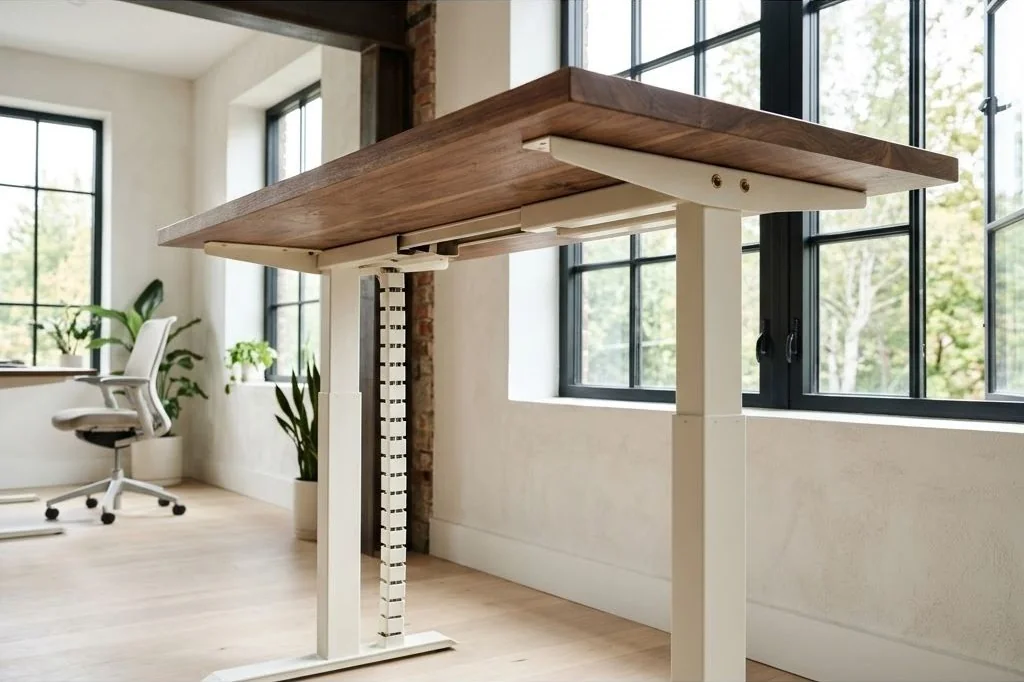
The most elegant architectural solution is an articulated plastic cable spine or magnetic vertebrae conduit. The spine anchors to the underside of the desk near the cable tray and rests securely on the floor plate. As the desk ascends, the interlocking segments lift gracefully in a fluid vertical column, keeping power and data cords completely contained. For routing cables from accessories on top, review our breakdown of Scandinavian desk shelf organization.
Calibrating Memory Presets for Mindful Transitions
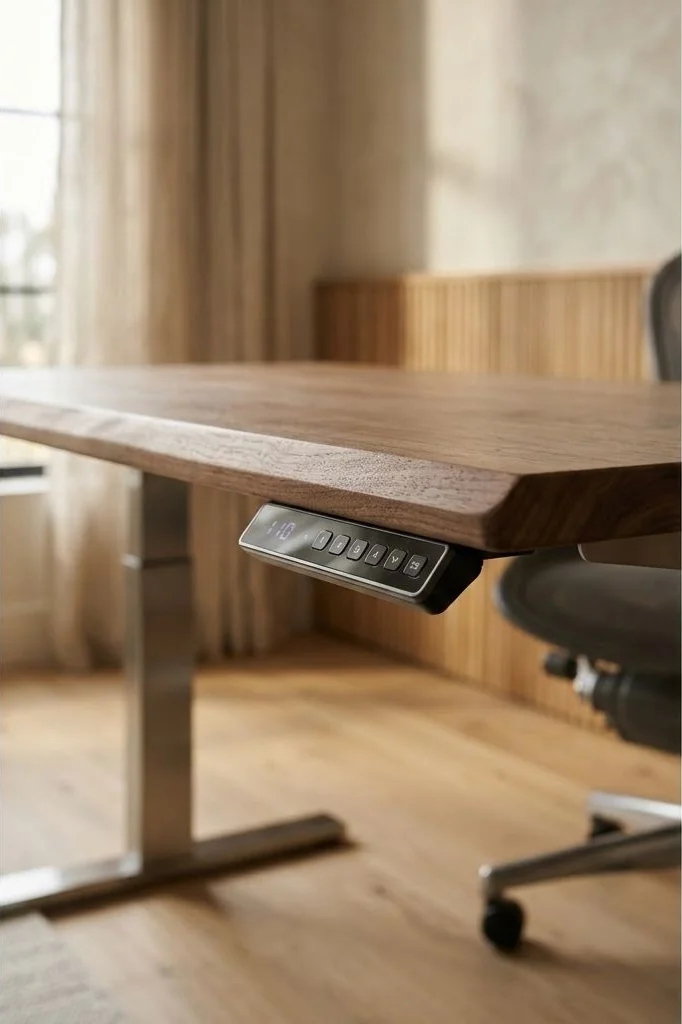
Most digital handset controllers include programmable memory presets. Program your seated height first, ensuring your feet rest flat and elbows hang relaxed at ninety degrees. Next, calibrate your standing height so your forearms rest naturally on the timber surface without raising your shoulders.
Establish a mindful transition habit: raise the desk for afternoon collaborative meetings or focus sprints, then return to seated position for reflective writing. As documented by design editors at Architectural Digest, pairing kinetic versatility with honest, natural materials cultivates both bodily vitality and mental focus throughout long creative endeavors.
Core Spatial Principles for Nordic Workspaces
To ensure your workspace layout retains its serene balance through evolving seasons and technology updates, anchor your setup around three timeless architectural guidelines:
First, maintain visual lightness by preserving negative space. Resist the urge to fill every square inch of your desktop with gadgets or decorative items; bare wood surface is itself a restorative visual rest for tired eyes. Second, establish consistent material dialogue throughout the room. If your desk features white oak, echo that pale grain in picture frames, floating bookshelves, or flooring trims. Third, hide technical friction completely: ensure that all power distribution, charging cables, and peripheral transformers remain entirely invisible from normal standing and seated sightlines.
Cultivating Enduring Harmony in Intentional Workspaces
Creating an inspiring Scandinavian workspace is not a fleeting weekend project or an exercise in surface styling. It represents a deeper architectural dialogue between physical form, natural textures, and the mental rhythms of daily work. When you eliminate chaotic cable nests and replace synthetic surfaces with honest, living timber, the entire emotional resonance of the room transforms.
Each morning becomes an opportunity to step into an environment specifically engineered to protect mental clarity and nurture deep creative immersion. By investing care into fine details – from tactile wood grains and recessed cable trays to balanced 2700K ambient illumination – you build an enduring sanctuary that honors both personal wellbeing and professional craft.
Frequently Asked Questions
How much does a typical 60×30 inch solid oak desktop weigh?
A 1.5-inch thick solid white oak top of these dimensions weighs approximately 60 to 75 pounds; ensure your motorized frame has a total lifting capacity of at least 250 to 300 pounds.
Why are threaded inserts better than standard wood screws for standing desk frames?
Threaded brass or steel inserts create machine-threaded sockets in the wood, allowing you to disassemble and reassemble the desk dozens of times without weakening the timber.
How do I eliminate monitor wobble when typing at full standing height?
Choose a motorized frame featuring dual crossbars, three-stage leg columns with wide rectangular profiles, and heavy steel footings.
Does a motorized desk require specialized cable management?
Yes; all cables running to wall outlets must incorporate a flexible articulated spine or extra slack loop so they never stretch or snag when raising the desk.