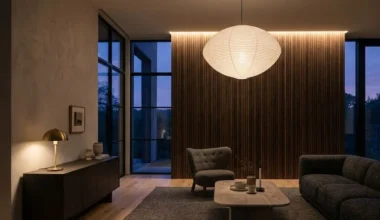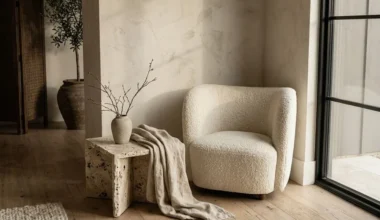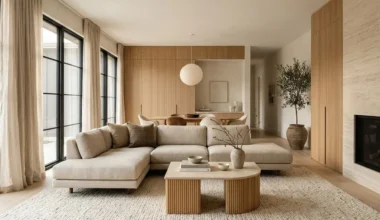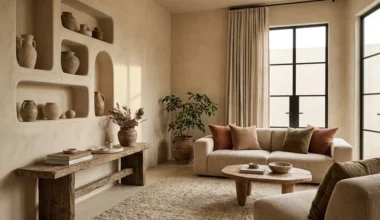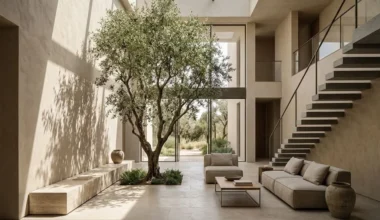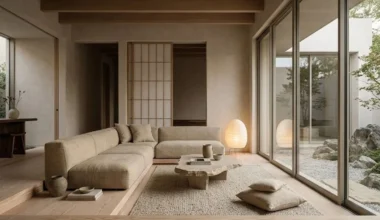
In standard interior decorating, color is frequently used as a blunt instrument to create visual interest. Bold feature walls, vibrant throw pillows, and patterned rugs are applied to inject energy into a space. However, in warm minimalist and organic modern architecture, visual calm is paramount. Saturated color palettes can easily overstimulate the senses and disrupt feelings of serenity. Tactile neutral fabric layering living room strategies offer a sophisticated alternative, demonstrating that a monochromatic palette can feel deeply inviting, luxurious, and layered when grounded in physical texture.
When you strip away distracting bright pigments, human perception shifts from analyzing hue to feeling texture and light. The organic slub of raw linen, the curly warmth of wool bouclé, and the dry hand of un-dyed sheep’s fleece engage our sense of touch, transforming the living room from a purely visual composition into an intimate sensory sanctuary. For architectural insights on crafting grounding domestic retreats, visit our curated design archive on Ornista.
Key Takeaways
Core principles for executing flawless tactile neutral fabric layering:
- Texture replaces color as the primary medium for dimensional depth, light play, and visual comfort.
- Combine a minimum of three distinct fiber structures – such as bouclé, linen, and chunky wool – for rich tactile contrast.
- Floor-to-ceiling sheer Belgian linen curtains soften architectural window framing and diffuse direct sunlight into velvety radiance.
- Ground seating arrangements with substantial un-dyed wool area rugs that provide thermal warmth and sound dampening.
- Integrate matte patinated leathers and raw suede to introduce subtle tonal grounding within pale neutral palettes.
The Science of Texture: Why Natural Fibers Soothe the Senses
The human tactile system is remarkably nuanced. Our fingertips and skin contain mechanoreceptors that register micro-variations in friction, thermal conductivity, and pile elasticity. Synthetic fabrics – such as polyester microfiber or nylon blends – tend to feel uniform, static, and plasticky. Because machine-made synthetics lack organic variation, they fail to evoke emotional warmth.
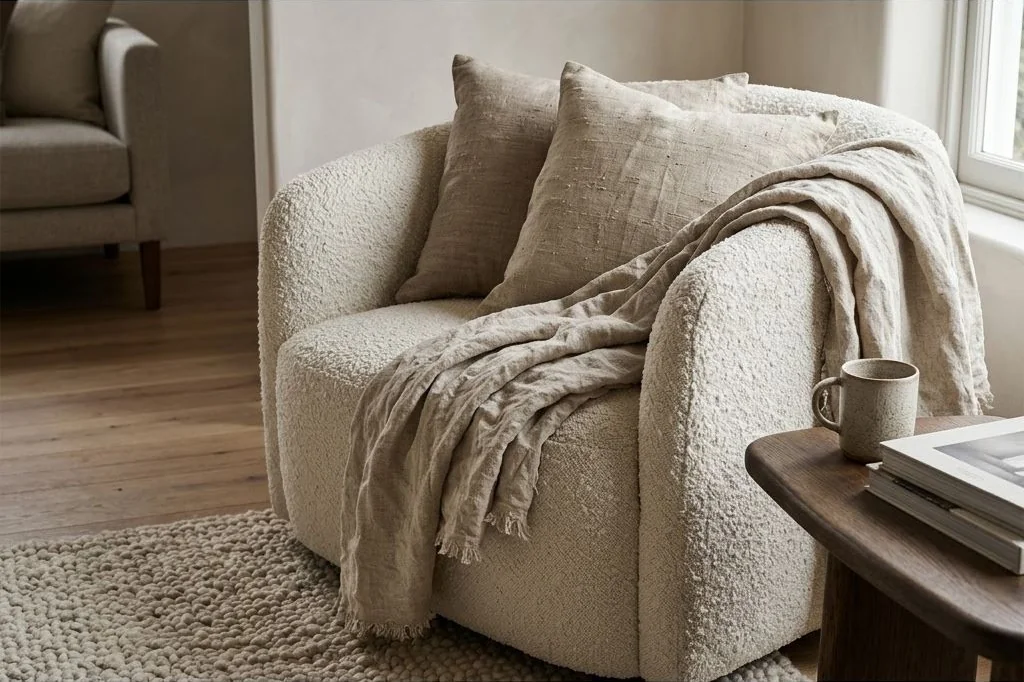
Natural fibers, by contrast, possess inherent biological irregularities. The uneven slub of flax fibers, the natural lanolin within sheep’s wool, and the soft down of cashmere communicate authenticity. When incorporated into furniture upholstery and accent throws, these tactile surfaces signal security and physical comfort, triggering parasympathetic relaxation throughout the nervous system.
Bouclé: Sculptural Depth and Micro-Shadows
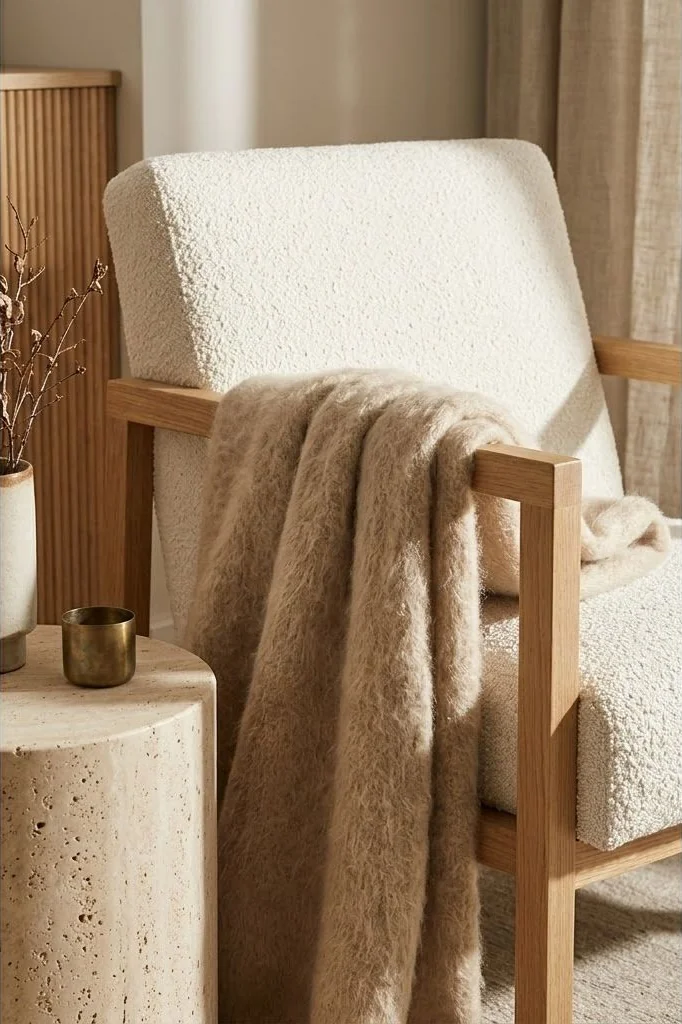
Bouclé – derived from the French word for “looped” or “curled” – has become the defining textile of contemporary organic modern architecture. Created by twisting loops of yarn to form an irregular knotted surface, bouclé transforms upholstery into a three-dimensional landscape of light and shadow.
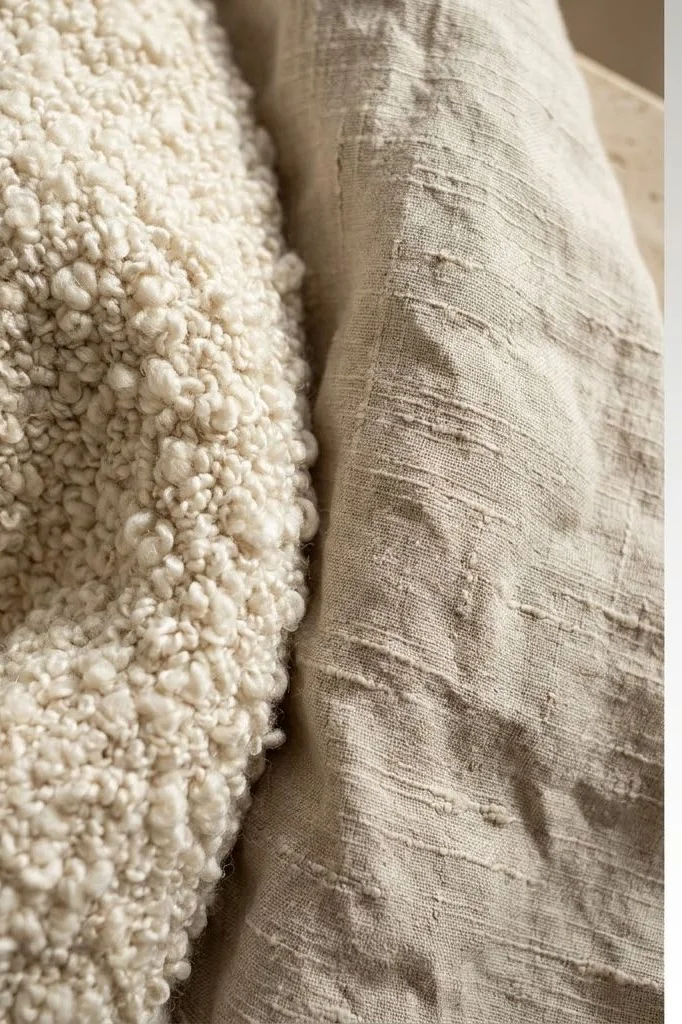
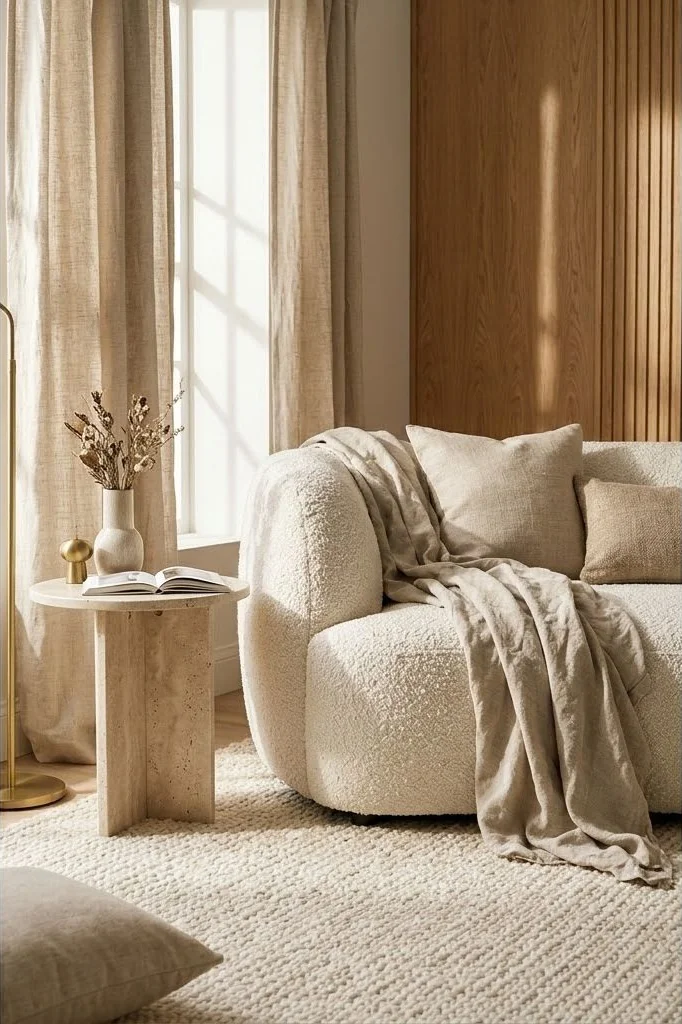
Because bouclé is heavily textured, it interacts exquisitely with curved furniture silhouettes. When raking natural daylight washes across a curved bouclé sofa, each tiny loop of yarn casts a minuscule shadow, imparting a velvety, stone-like appearance. For inspiration on pairing bouclé with rounded silhouettes, review our guide on curved furniture in living room architecture. Choose heavyweight wool-blend bouclé in bone, oatmeal, or soft alabaster for exceptional durability and timeless elegance.
Belgian Linen: Relaxed Drape and Light Filtration
If bouclé provides dense structural comfort, washed Belgian linen introduces airy breathability and fluid grace. Harvested from the flax plant, linen is celebrated for its natural tensile strength, distinctive slub texture, and relaxed drape.
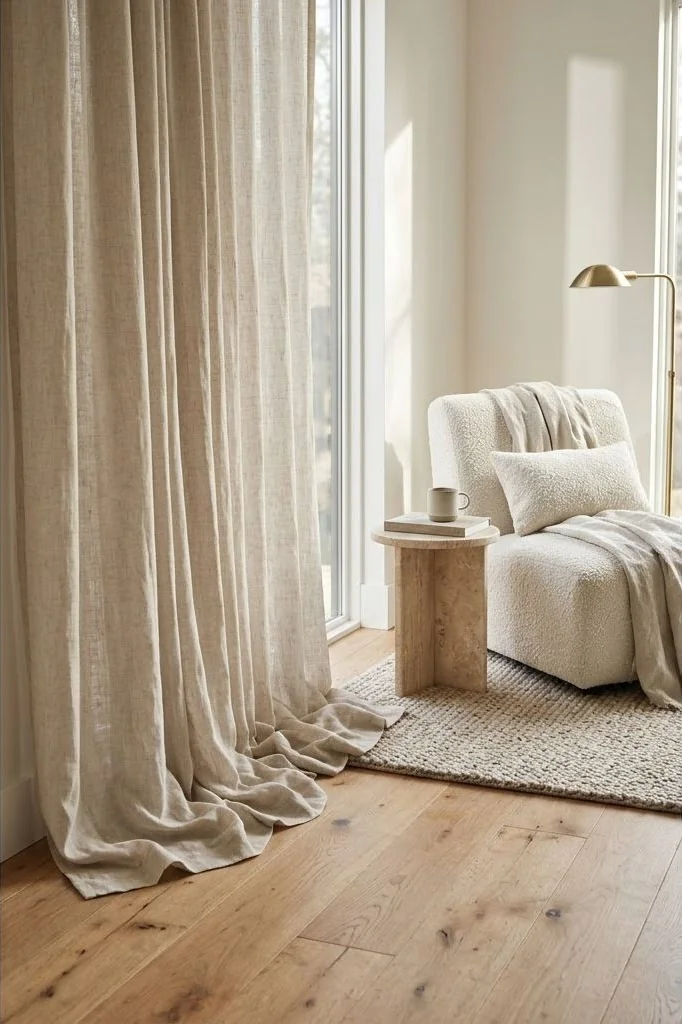
In the living room, floor-to-ceiling sheer linen drapery serves an indispensable architectural role. Suspended from recessed ceiling tracks, unlined linen curtains soften harsh aluminium or steel window mullions while filtering blinding midday sun into a warm, diffused luminescence. When a gentle breeze catches the fabric, the billowing movement injects dynamic life into the calm interior. Linen slipcovers on deep armchairs further enhance the atmosphere of unhurried relaxation.
Un-Dyed Raw Wool: Grounding Barefoot Luxury
The foundation of any successful fabric layering scheme is the area rug. In an organic modern living room, the rug should not feature dizzying geometric patterns or saturated dye lots. Instead, celebrate the honest beauty of un-dyed sheep’s wool.
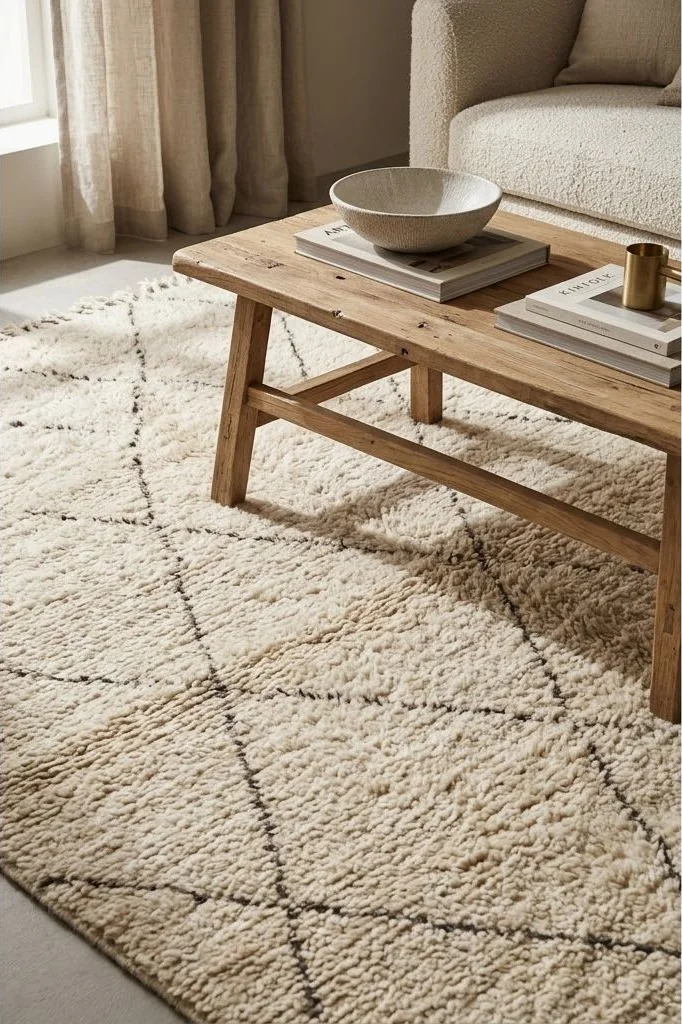
Hand-knotted or flat-woven rugs crafted from untreated New Zealand or Tibetan wool showcase natural fleece variations ranging from pale cream and heather grey to deep warm taupe. The natural lanolin in untreated wool repels stains while delivering exceptional barefoot cushioning. A substantial wool rug also acts as a powerful acoustic absorber, deadening reverberations across stone or timber floors. For pairing ideas with stone accents, explore our analysis of travertine and natural stone living room accents.
The Color Temperature Matrix of Natural Whites and Oatmeals
A frequent error in neutral decorating is treating all light shades as interchangeable. In reality, whites and off-whites possess distinct undertones that can either harmonize beautifully or clash uncomfortably. A stark blue-based pure white placed next to a warm flax linen will make the linen appear dirty, while the pure white feels clinical and frigid.
In organic modern design, curate a tight spectrum of warm-undertone neutrals. Base tones should lean into ecru, bone, parchment, and unbleached oatmeal. Secondary accents can incorporate deeper mineral tones like greige, fossil, and raw umber. By keeping all textiles within the same warm color temperature family, disparate fiber weaves unite into a harmonious, comforting tapestry that soothes the eye.
The Formula: Balancing Pile Heights on the Sofa
To style a living room sofa that feels curated rather than generic, apply the rule of contrasting pile heights. Avoid buying matching pillow sets made from the same fabric as the sofa upholstery; this results in a flat, lifeless composition.
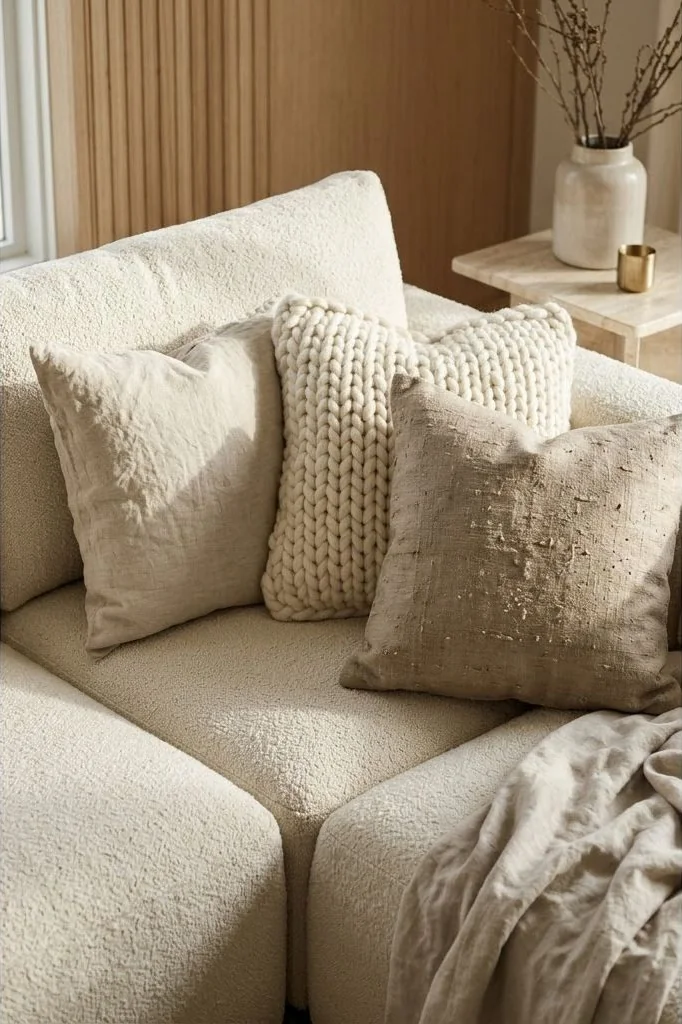
Start with a smooth, heavy-linen sofa base. Layer on two oversized lumbar pillows upholstered in tight-loop bouclé to introduce structural texture. Add a medium cushion finished in washed raw silk or matte nubuck leather to catch light differently, and casually drape a chunky ribbed baby alpaca throw over the backrest. As textile curators observe in Architectural Digest, this tactile contrast creates inviting depth that welcomes long hours of restorative leisure.
Tactile Maintenance and Fiber Longevity
Caring for natural, un-dyed textiles requires gentle maintenance that respects fiber integrity. Aggressive chemical cleaners and excessive heat can strip away natural lanolin from wool and weaken flax fibers. Vacuum wool rugs and bouclé seating weekly using a brushless suction head to prevent dirt particles from settling deep into the pile.
For Belgian linen cushion covers, professional eco-dry cleaning or gentle hand-washing in cold water preserves the distinctive relaxed slub. Embracing minor wrinkles in linen and the natural patina of raw wool is part of living authentically with natural materials. Over time, these fibers soften and tell the story of a home lived in with care and intention.
Tactile neutral fabric layering is the sensory heart of warm minimalism. By pairing rich natural fibers, celebrating biological textures, and maintaining disciplined tonal harmony, you craft a living room that offers profound physical comfort, enduring elegance, and lasting peace.
Frequently Asked Questions
Why is texture more important than color in organic modern design?
Without strong colors to stimulate the eye, texture provides the dimensional depth and shadow relief needed to keep monochromatic rooms feeling inviting and dynamic.
How many different fabric textures should be layered in a single living room?
Aim for three to five distinct fiber textures – such as looped bouclé, slubbed linen, un-dyed wool, and brushed alpaca – to create tactile richness without visual chaos.
Is bouclé fabric durable enough for high-traffic living room sofas?
High-grade wool or performance-blend bouclé is exceptionally durable, resisting pilling while offering dense dimensional cushioning that softens over years of use.
How do you keep an all-neutral living room from looking flat and sterile?
Vary texture pile heights dramatically – pairing flat slubbed linen drapery with deep-looped wool rugs and nubuck leather accents to create rich micro-shadows.