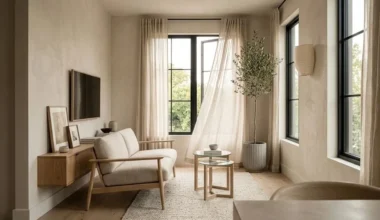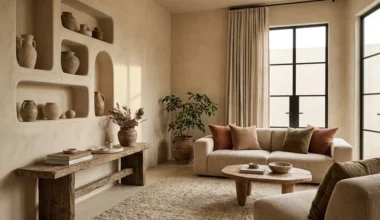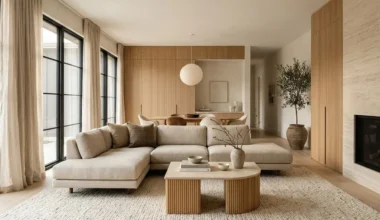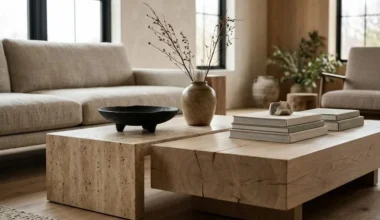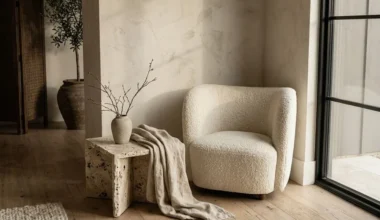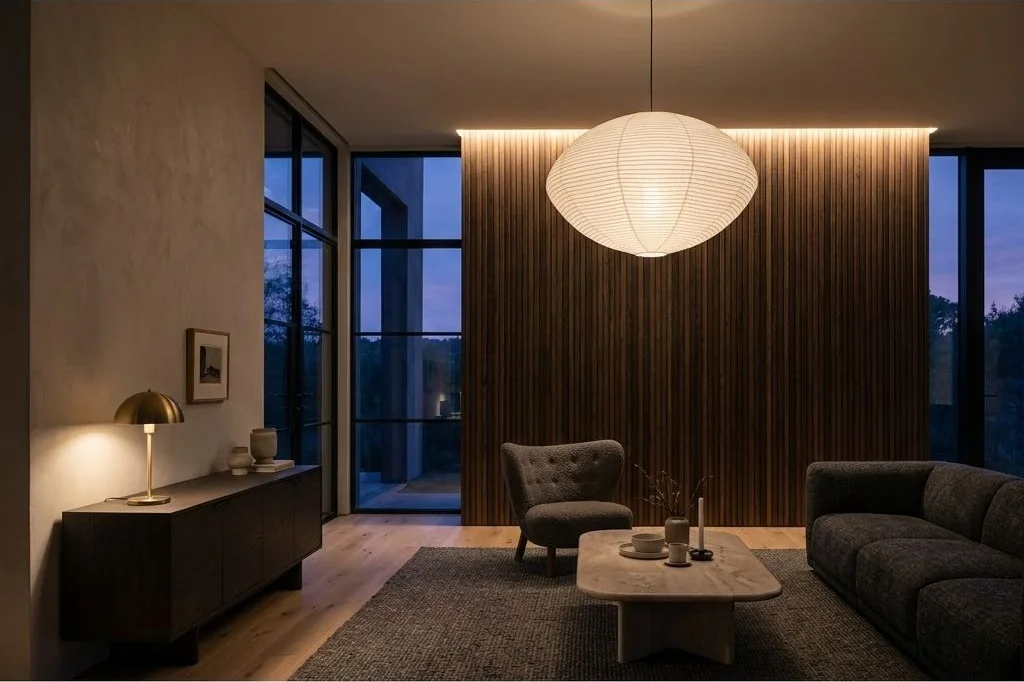
Lighting is the invisible medium that animates organic modern architecture. Without careful illumination design, even the most exquisitely curated living room filled with honed travertine and white oak can appear cold, flat, and uninviting once twilight arrives. Organic modern living room lighting rejects the harsh interrogation glare of centralized ceiling recessed cans, replacing it with a nuanced symphony of low-level ambient glow, indirect architectural grazing, and tactile sculptural luminaires that invite calm relaxation.
Key Takeaways
Essential lighting design principles for organic modern living spaces:
- Banishing central overhead downlights in favor of layered perimeter fixtures eliminates unflattering shadows.
- Specifying a strict 2700K Kelvin color temperature ensures consistent golden-hour warmth across all light sources.
- Sculptural washi paper lanterns diffuse ambient illumination evenly while serving as floating aerial art.
- Concealed linear LED coves cast gentle indirect grazing across textured lime-plaster and fluted timber walls.
- Rechargeable cordless accent lamps introduce intimate, cord-free illumination to credenzas and open shelving.
The Three Layers of Illumination: Ambient, Task, and Accent
Mastering illumination begins with understanding the tripartite lighting hierarchy established by architectural lighting designers: ambient, task, and accent lighting. In conventional interiors, homeowners rely almost exclusively on a single grid of overhead ceiling pot lights. In organic modern sanctuaries, overhead fixtures are subdued or placed on independent dimmers, while the visual heavy lifting is distributed around the room at varying eye and seated levels. For broader spatial balance principles, review our architectural approach on the Ornista homepage.
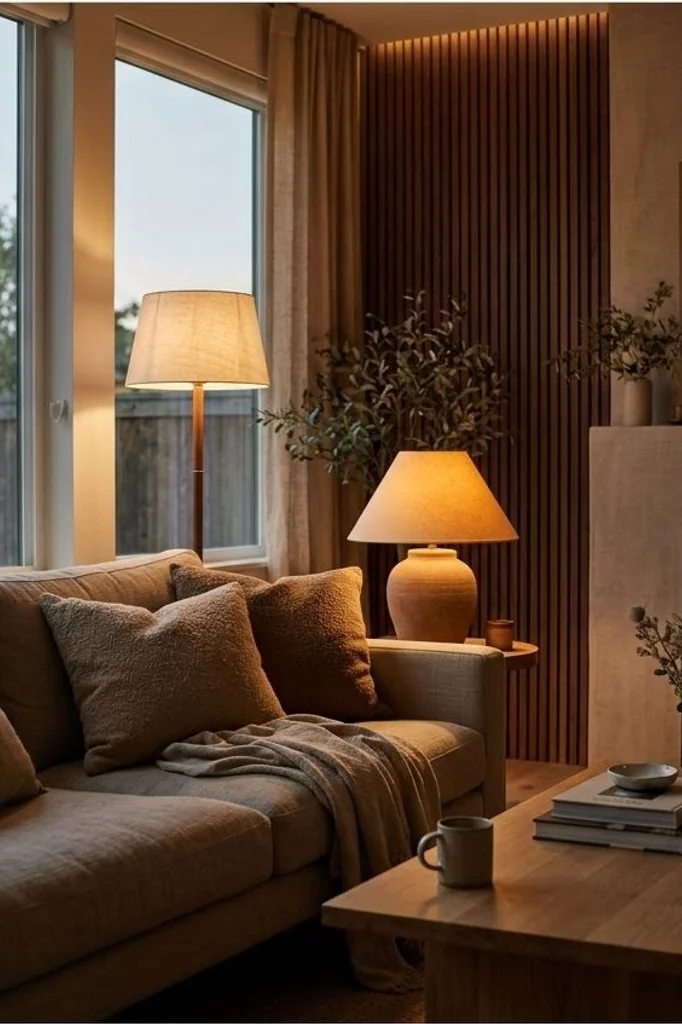
Ambient lighting provides the baseline glow that allows safe movement without overpowering the senses. Task lighting delivers focused illumination where activities occur – such as a focused reading lamp positioned beside a linen settee or a discreet picture light illuminating an art niche. Accent lighting highlights architectural details, skimming across rough stone or silhouetting an indoor tree. By distributing fixtures across multiple heights, from floor plinths to eye-level sconces, you eliminate dark corners and create an enveloping cocoon of serenity.
Sculptural Ambient Anchors: Washi Paper and Linen Pendants
When selecting a central ceiling luminaire, avoid rigid crystal chandeliers or industrial iron cages. Organic modern living calls for ethereal fixtures crafted from natural, light-filtering fibers. Sculptural paper pendants – pioneered by mid-century masters like Isamu Noguchi and reinterpreted by modern Scandinavian artisans – serve as poetic centerpieces.
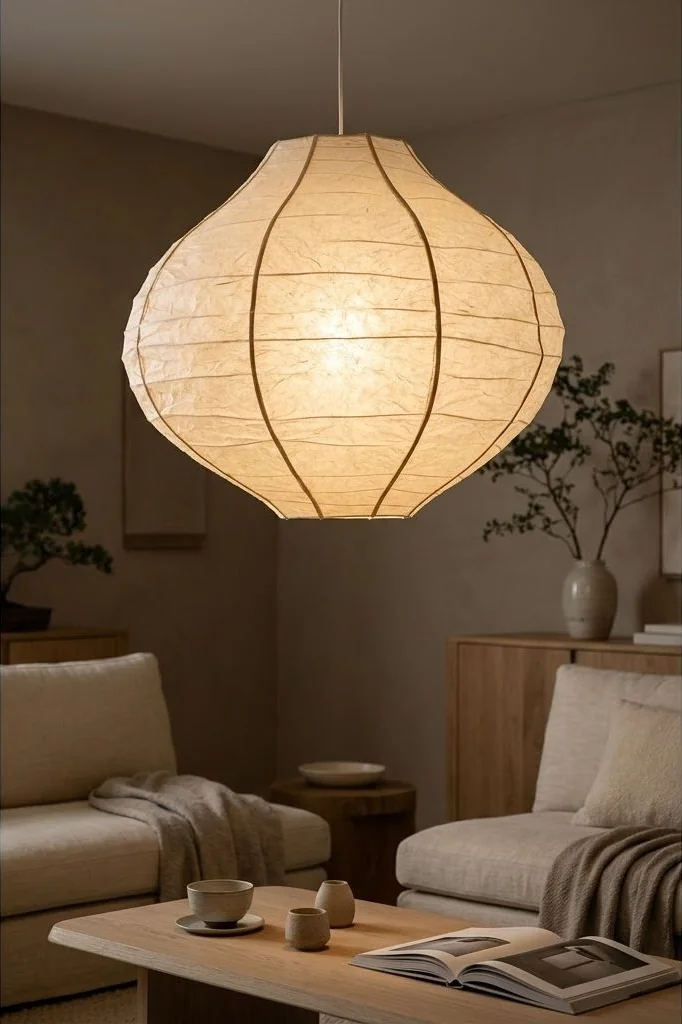
Handmade Japanese washi paper, constructed from mulberry bark fibers, scatters light in all directions, turning an intense electric filament into a soft, cloudy orb. Similarly, drum pendants upholstered in loosely woven raw linen lend textural softness to high-ceiling living spaces. Hang these fixtures low over the central seating zone – typically 78 to 84 inches above the finished floor – so they visually anchor conversational groupings without interrupting sightlines to adjacent zones.
Architectural Grazing: Concealed LED Coves and Indirect Glow
Direct light shines openly into the room; indirect light bounces off architectural surfaces before reaching the eye. Indirect illumination is inherently softer, gentler, and more flattering. Concealed cove lighting – where continuous LED strip channels are recessed into ceiling drops, curtain valances, or floating wall plinths – produces subtle wall grazing that highlights natural material textures.
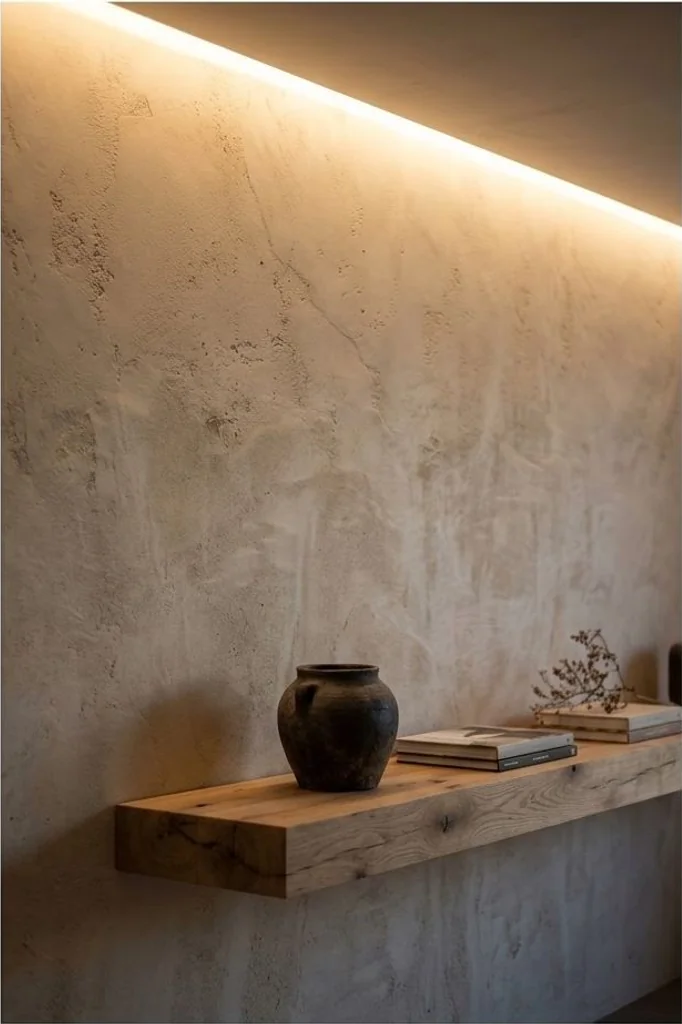
When grazing light flows across hand-troweled lime-wash plaster, fluted timber cladding, or dry-stacked limestone, micro-shadows pool behind every ridge and crevice. This transforms structural walls into dynamic textural tapestries. To ensure your walls possess sufficient tactile tooth to capture grazing light effectively, explore our in-depth study on the art of texture layering in organic modern living rooms.
Focused Task Illumination: Tactile Ceramic Table Lamps
Table lamps in an organic modern setting are as much about their sculptural physical form when turned off during the day as their illumination quality at night. Replace skinny metallic stems with substantial, wheel-thrown ceramic bases featuring coarse grit, unglazed chalky finishes, or ribbed terracotta details.
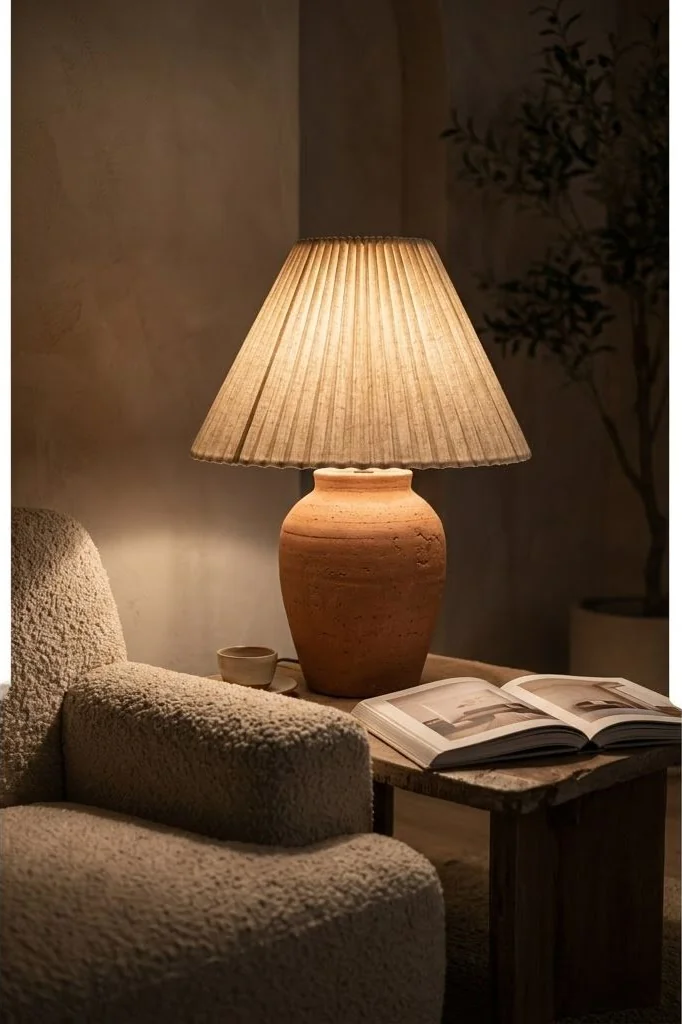
Pair substantial ceramic bases with pleated paper or natural unbleached linen shades. The slight taper of a conical shade directs focused light downward onto side table surfaces, ideal for reading an art monograph or enjoying evening herbal tea, while softly diffusing light upward through the open rim. Position table lamps at seated eye level – typically with the bottom of the lampshade resting between 38 and 42 inches from the floor – to prevent glare from exposed bulbs.
Flexible Cordless Lighting: Portability for Evolving Corners
Modern residential design values flexibility and clean architectural lines. Traditional lamps often present an aesthetic challenge: trailing black cords that snake across timber floorboards or dangle off open credenzas, breaking the visual calm of minimal interiors. Rechargeable cordless LED accent lamps solve this friction completely.
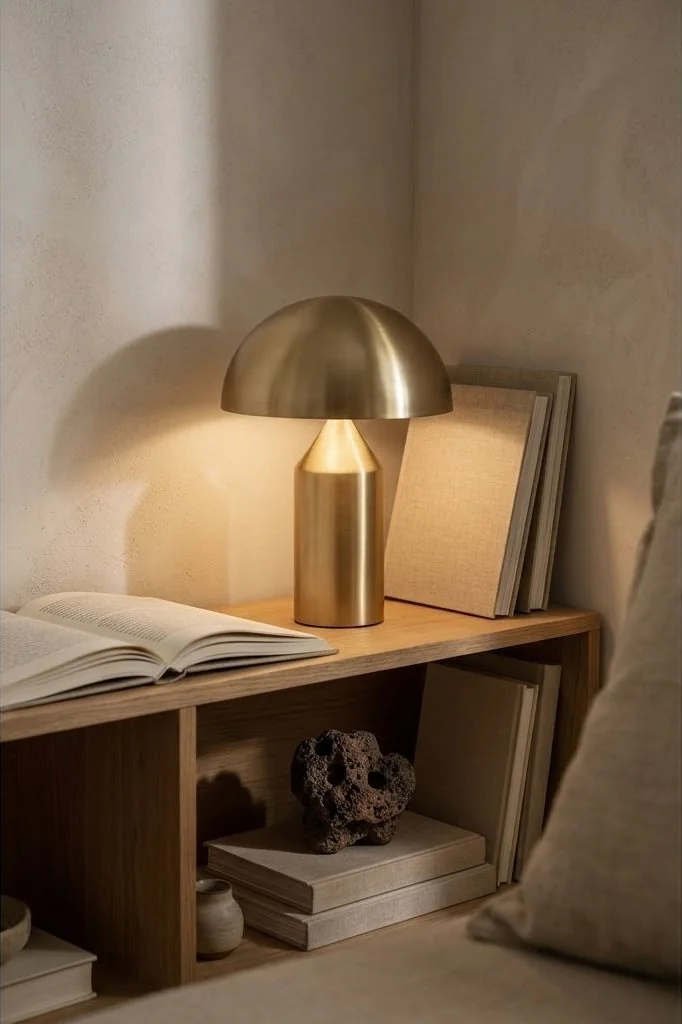
Crafted from matte powder-coated metals, turned hardwood, or spun brass, these portable luminaires can be positioned effortlessly on coffee tables, nested bookshelves, or windowsill ledges without electrical outlet constraints. During dinner gatherings, bring a cordless lamp to the center of a low travertine plinth table to provide an intimate alternative to candlelight. For coffee table styling formulas and clearances, consult our guide on organic modern coffee table styling: material pairing and proportion guide.
Kelvin Temperature Discipline: Choosing Between 2400K and 3000K
Color temperature is measured on the Kelvin scale, and maintaining strict Kelvin discipline is crucial for visual harmony. Cold white light (4000K to 5000K) produces a clinical, hospital-like atmosphere that drains the life out of warm oak and oatmeal linen. Conversely, light that is excessively orange (below 2200K) can discolor neutral finishes, imparting a muddy tint.
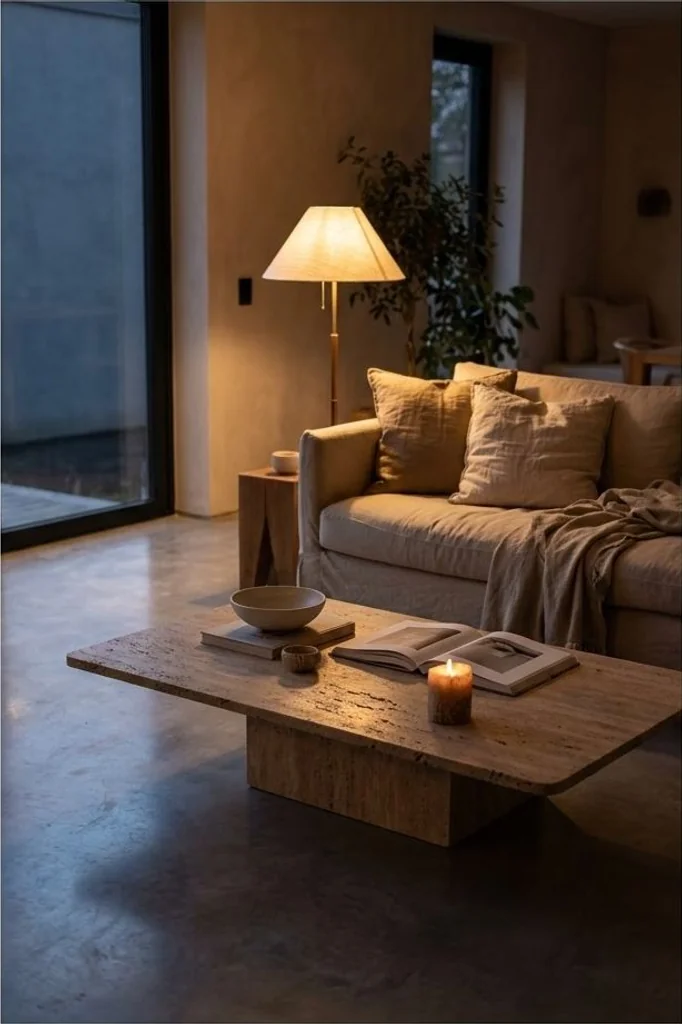
The golden standard for residential living spaces is 2700K (warm white). It replicates the comforting glow of late afternoon sun. For evening relaxation, dim-to-warm LED drivers allow illumination to transition seamlessly from 2700K down to 2200K as light levels drop, mimicking the natural spectral shift of sunset. As recommended by the Illuminating Engineering Society, always check the Color Rendering Index (CRI) of LED emitters, choosing bulbs with a CRI of 90 or higher to render timber grains and earthy textiles with lifelike fidelity.
Frequently Asked Questions
Should I install ceiling recessed downlights in an organic modern living room?
If recessed cans are installed, use them sparingly and strategically rather than in a grid across the entire ceiling. Place small-aperture (2-inch or 3-inch) deep-regressed architectural downlights close to walls to graze plaster finishes or highlight art, and always connect them to dedicated dimmers.
What is the difference between 2700K and 3000K lighting in a living room?
A 2700K bulb provides a warm, golden ambiance reminiscent of incandescent bulbs and candlelight, making it ideal for relaxing living rooms and bedrooms. A 3000K bulb emits a slightly crisper, neutral warm light that works well in modern kitchens and task-oriented work areas.
How can I hide cords from table lamps placed on a floating sofa console?
To eliminate visible wires, install flush floor electrical receptacles directly beneath the sofa or rug, or opt for contemporary rechargeable cordless LED lamps that offer 12 to 24 hours of warm illumination between USB-C charges.
Why is high CRI important when choosing LED light bulbs?
The Color Rendering Index measures how accurately a light source reveals the true colors of objects compared to natural daylight. Bulbs with a CRI rating of 90 or above prevent neutral fabrics, lime-wash walls, and natural wood grains from appearing dull or sickly grey.
Lighting is not merely a utility; it is the emotional heartbeat of the home. By balancing warm temperatures, tactile materials, and indirect shadows, you create an evening sanctuary that nourishes the spirit and invites mindful presence.