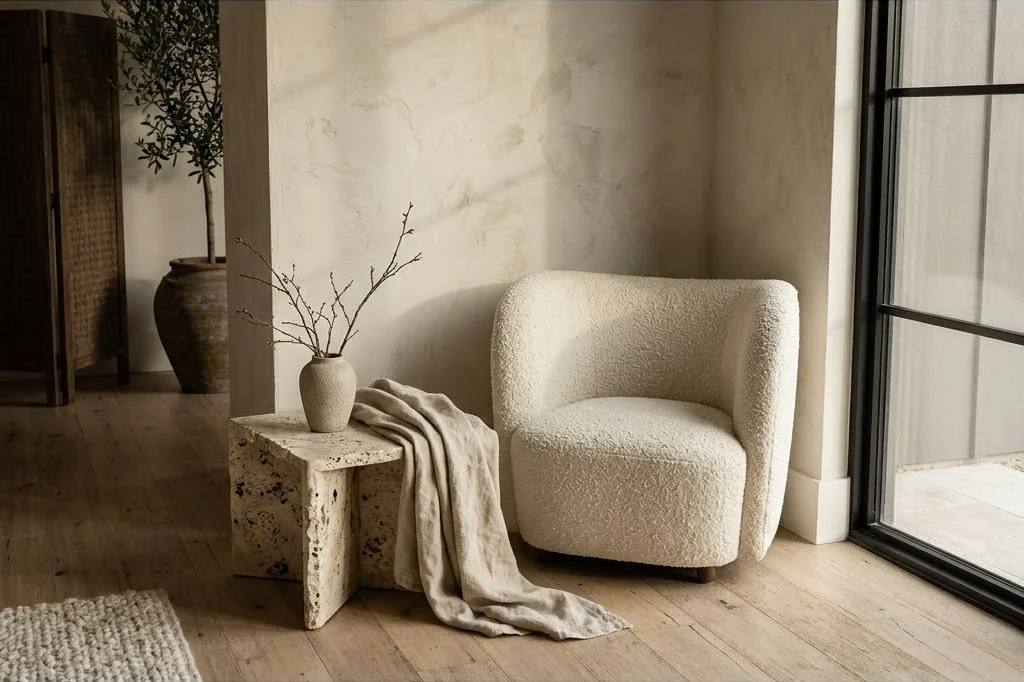
Organic modern living room texture layering is the secret behind spaces that feel simultaneously refined, peaceful, and tactilely inviting. While traditional minimalism often risks feeling stark or clinical due to an overreliance on smooth surfaces and sharp angles, organic modernism introduces depth through tactile contrast rather than color saturation. By layering raw stone, unbleached textiles, textured plaster, and living timber, an interior achieves quiet architectural richness without visual noise.
Key Takeaways
Core guidelines for balancing tactile finishes in modern living spaces:
- Adhering to the rule of three textures per room creates visual interest without triggering sensory fatigue.
- Hand-troweled lime-wash plaster walls react dynamically to shifting natural daylight, adding soft ambient depth.
- Pairing heavy nubby bouclé upholstery with washed Belgian linen drapes creates a balanced interplay of weight.
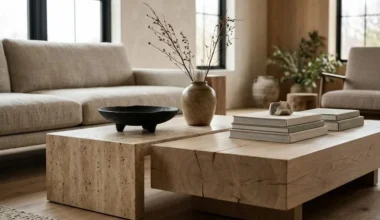
- Porous honed travertine and unglazed stoneware introduce earthy wabi-sabi textures to smooth tabletops.
- Unlacquered brass and blackened bronze hardware age gracefully, contributing subtle living patina over time.
The Rule of Three: Balancing Hard, Soft, and Porous Surfaces
Achieving cohesive textural harmony requires deliberate material calibration. Interior architects apply the rule of three: within any focal zone, pair one hard surface, one soft textile, and one porous or organic element. When these three material archetypes interact, they create visual tension that prevents a monochrome room from appearing flat. For foundational space planning and architectural proportion principles, review our spatial design overview on the Ornista homepage.
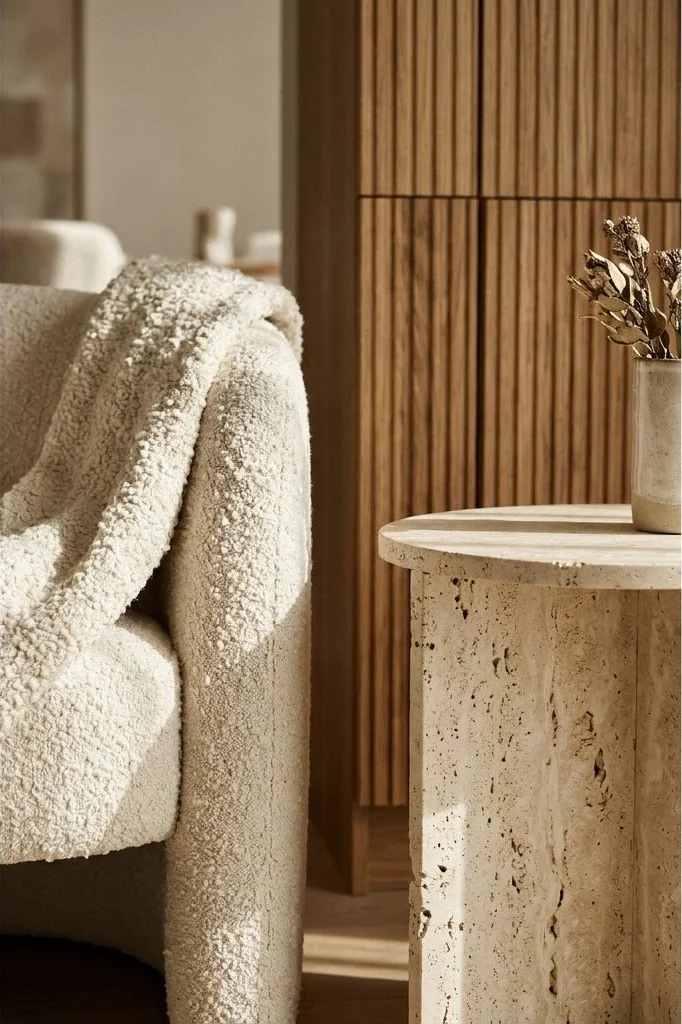
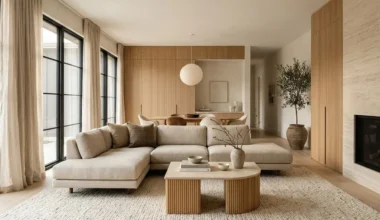
Consider a seating arrangement composed of a heavy cream bouclé sofa (soft textile), a honed travertine plinth table (porous stone), and quartersawn white oak lounge chairs (hard, warm grain). Each element reflects ambient light at a different frequency. The pitted surface of travertine absorbs harsh highlights, the looped bouclé fibers diffuse morning rays, and the oak grain directs sightlines across the room. This multidimensional tactile balance eliminates the need for bold wall art or loud chromatic contrasts.
Textured Wall Finishes: Lime-Wash and Hand-Troweled Plaster
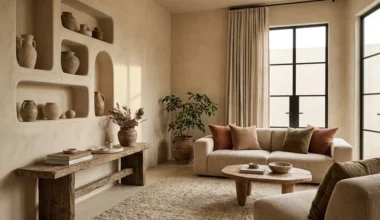
Standard flat latex paint creates a uniform, synthetic boundary that reflects light flatly. In organic modern design, walls are treated as living, breathable canvases. Roman clay, Moroccan tadelakt, and traditional lime-wash finishes impart a velvety, suede-like texture that responds organically to the sun’s trajectory throughout the day.
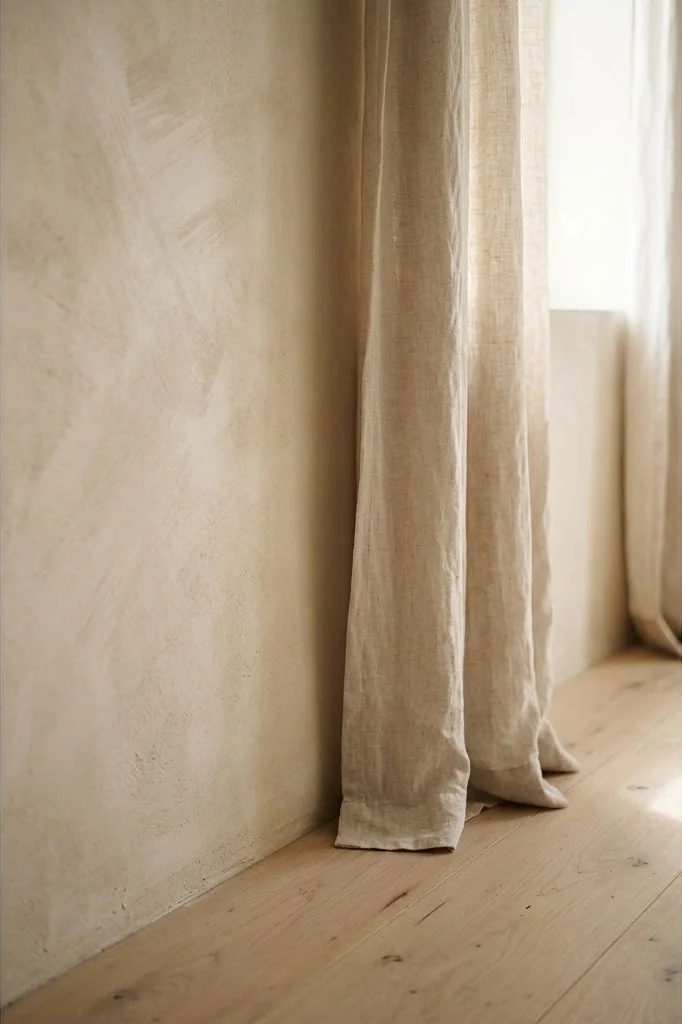
Because lime-wash is applied with broad, cross-hatch brushstrokes using natural slaked lime and earth pigments, it forms subtle tonal blooming and organic mottling. In the morning, raking sunlight emphasizes the micro-ridges of the plaster; during twilight hours, the wall softens into a powdery cocoon. For seamless circulation and room planning that complements textured plaster, discover our guide on how to design an organic modern living room layout with natural spatial flow.
Window Architecture: Heavy Belgian Linen and Sheer Diffusers
Window treatments are an essential tactile bridge between hard architectural glass and soft interior furnishings. Synthetic polyester drapes produce an unnatural sheen that undermines organic aesthetics. Instead, opt for pure unbleached Belgian linen with visible natural slubs and substantial fiber density.
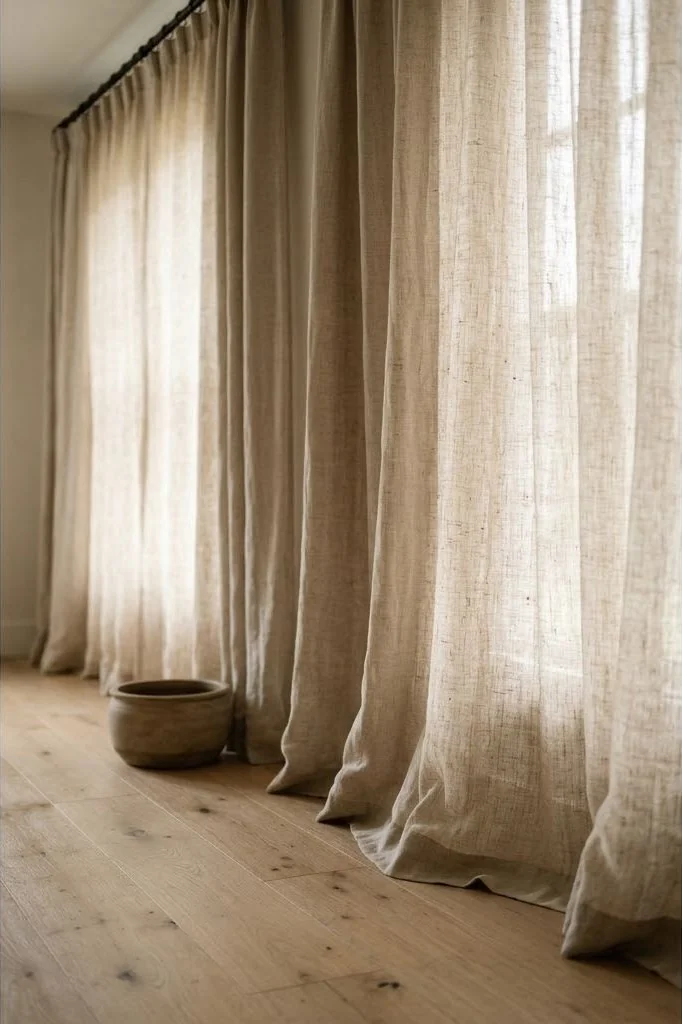
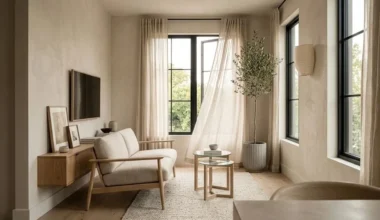
A dual-track drapery system provides both functional light diffusion and rich physical presence. Hang sheer flax drapes close to the window glass to soften direct solar glare without darkening the room. Layer heavier, lined linen panels on an outer track that can be drawn in the evening for acoustic containment and thermal comfort. Allow the bottom hem to puddle between one and two inches on the floor, relaxing formal tailored lines into an effortless wabi-sabi silhouette.
Sculptural Ceramics: Raw Terracotta and Unglazed Stoneware
Styling accents in an organic space should prioritize tactile honesty over glossy ornamentation. Mass-produced glass and polished chrome often feel cold and detached. In contrast, handmade ceramics celebrate the touch of the artisan’s hand, embodying the Japanese concept of wabi-sabi, which finds beauty in natural asymmetry and imperfection.
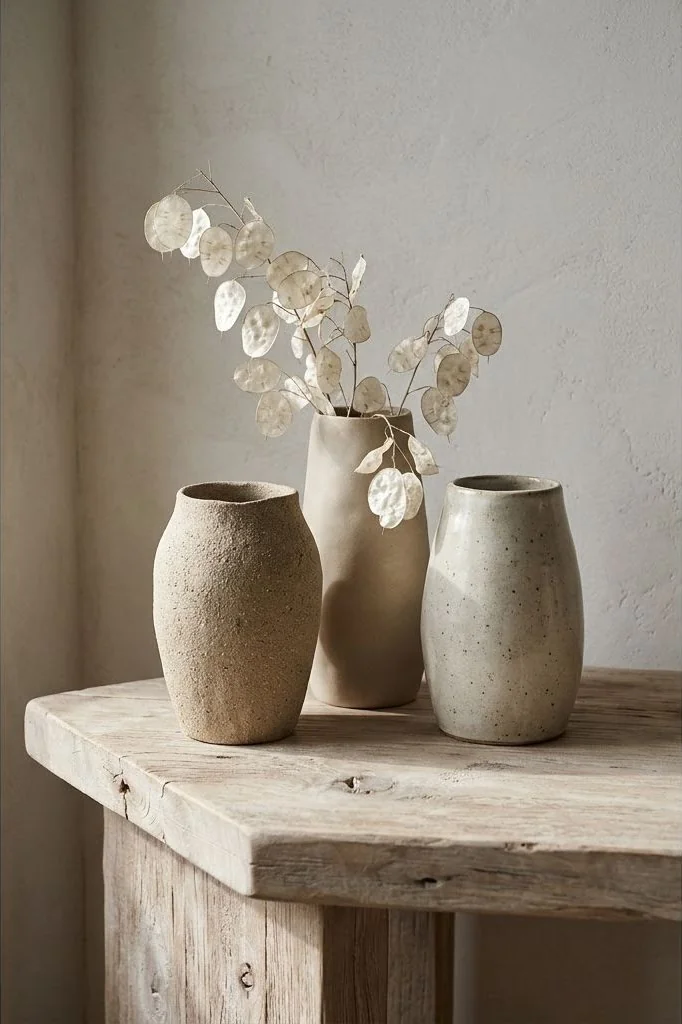
Select vessels crafted from coarse grogged stoneware, unglazed terracotta, or wood-fired earthenware. Display them in small, asymmetrical groupings on low credenzas or coffee tables. Rather than filling every vase with colorful fresh floral bouquets, insert a single sculptural dried olive branch, honesty seed pod, or bleached lunaria stem. The juxtaposition of rough clay grit against delicate botanical forms creates an enduring focal vignette.
Underfoot Comfort: High-Low Wool Piles and Chunky Jute Weaves
Flooring is the largest continuous plane in a living room, making rug texture foundational to spatial comfort. Hardwood flooring, while beautiful, requires softening to prevent hollow sound reflection and foot fatigue. High-low pile wool rugs, featuring carved geometric contours or plush Berber loops, offer sumptuous cushioning while maintaining a subtle monochromatic palette.
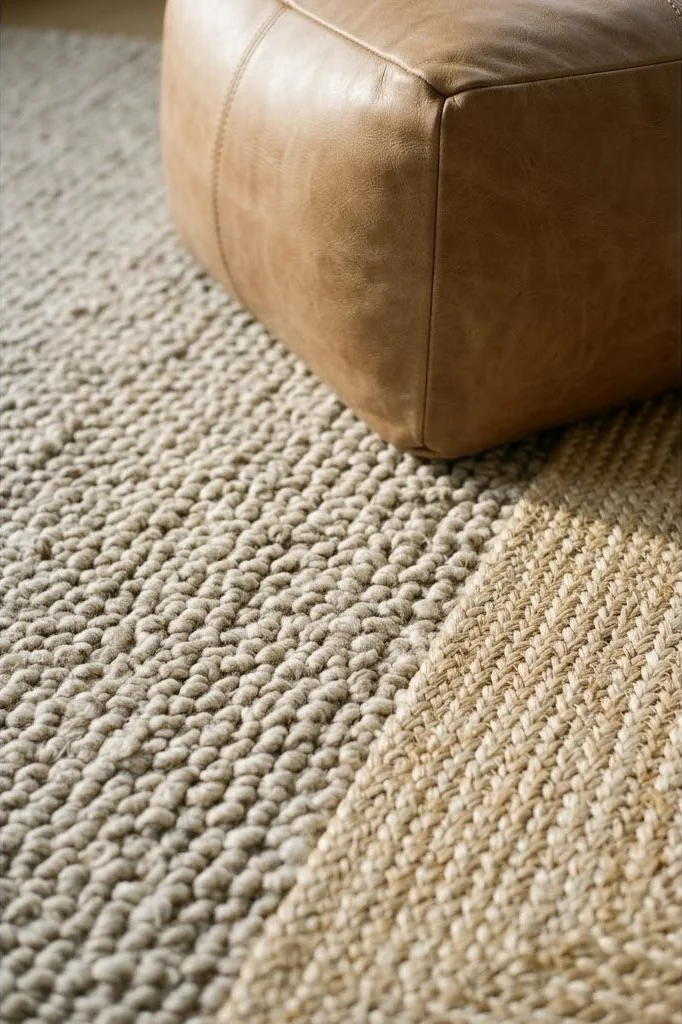
For spaces with active lifestyle demands, consider layering rugs for added depth. Lay a flatwoven, natural bleached jute or sisal rug as a durable base border, and center a smaller, plush hand-knotted Moroccan wool rug over the seating core. This technique delineates conversational perimeters while offering distinct sensory experiences as one moves from walkway to seating lounge. Contemporary architectural platforms like Dezeen consistently emphasize the role of layered organic textiles in grounding modern residential interiors.
Subtle Metal Contrast: Aged Bronze and Brushed Brass Details
While organic modern design celebrates timber, stone, and wool, incorporating metallic accents is essential to prevent a room from feeling overly rustic or dated. The choice of metal finish dictates whether the space feels cohesive or jarring. High-gloss polished chrome or bright yellow brass can disrupt natural warmth; instead, seek out living metals that age and patinate over time.
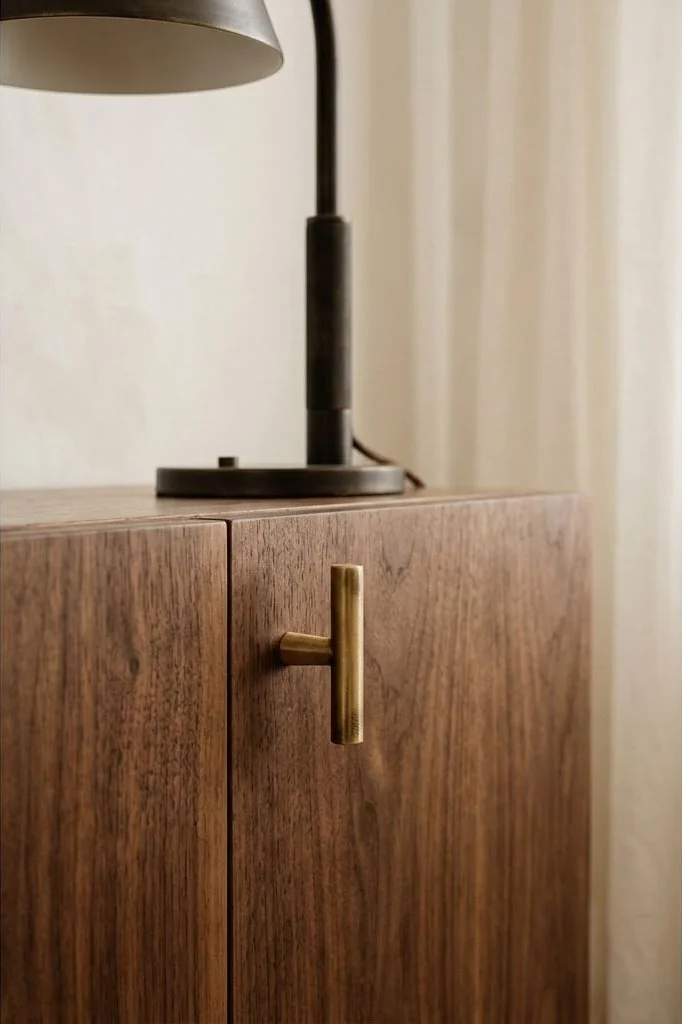
Unlacquered brushed brass, dark oil-rubbed bronze, and blackened iron provide timeless grounding. Use them sparingly on architectural details: the slender stem of a task floor lamp, cabinet door pulls on an oak credenza, or the hardware framework of a wall sconce. To see how metal fixtures interact with evening illumination, explore our dedicated breakdown on sculpting warmth with organic modern living room lighting rules.
Frequently Asked Questions
How do I keep a neutral living room from looking boring?
The solution lies in maximizing tactile contrast rather than adding bright accent colors. Combining materials with drastically different textures – such as porous travertine, nubby bouclé, slubby linen, fluted oak, and matte ceramics – creates rich visual shadow play and depth while maintaining a calm, cohesive palette.
Is bouclé fabric durable enough for everyday living room use?
High-quality bouclé made from dense wool blends or tightly looped performance fibers is remarkably durable and naturally conceals minor wear. For households with pets, look for bouclé with tight weave tension to prevent claws from snagging individual loops.
Can I apply lime-wash paint over standard drywall?
Yes, but it requires proper surface preparation. You must apply a specialized mineral-based primer with fine aggregate to create mechanical tooth, allowing the slaked lime wash to bond securely with the drywall surface and cure into a durable, breathable finish.
How do you clean honed travertine furniture without damaging it?
Honed travertine is sensitive to acidic substances like vinegar, citrus, and wine. Clean the surface using a pH-neutral stone soap or a soft damp microfiber cloth with warm water. Applying a penetrating stone sealer once a year preserves its natural matte finish while resisting staining.
Textural layering transforms an ordinary room into a living sanctuary where every surface rewards the touch. By embracing the authentic imperfections of natural materials, you cultivate a timeless space grounded in quiet sophistication and enduring comfort.

1 comment