The upper perches of a wardrobe are frequently where closet organization breaks down. Located above eye level and requiring an intentional reach, upper shelves easily become chaotic holding zones for forgotten luggage, mismatched shoeboxes, and uncontained seasonal blankets. This disorganized sprawl creates visual clutter along the ceiling perimeter while trapping high-value storage volume in permanent disuse.
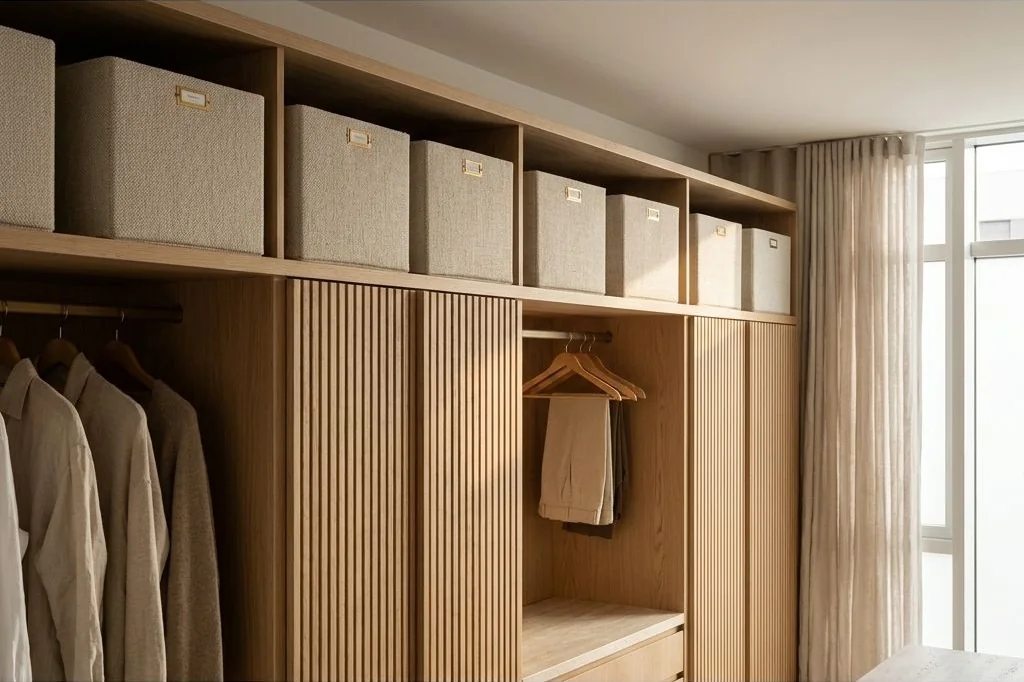
Curating your upper shelf closet storage bins transforms this dead airspace into a serene, high-density archival tier. By specifying uniform breathable linen containers, understated architectural labeling hardware, vacuum-compression workflows, and botanical pest barriers, you establish an organized secondary storage tier that complements the daily garments hung below.
Key Takeaways
- Structured fabric storage bins convert inaccessible upper airspace into an intentional, dust-protected textile archive.
- Breathable natural linen and cotton duck protect seasonal wools and silks from moisture retention and fiber suffocation.
- Understated architectural brass label frames provide instant content identification without visual shouting.
- Pairing vacuum compression bags inside rigid fabric bins quadruples archival volume while maintaining exterior uniformity.
- Natural red cedar blocks and dried lavender sachets deliver organic pest defense without chemical odor residue.
The Psychology of Upper Storage: Preventing Dead Zones
In spatial psychology, items stored above sixty-six inches from the floor fall outside our immediate daily peripheral consciousness. Because we cannot inspect these ledges without stepping backward or using a stool, they quickly accumulate items discarded during rushed cleaning sessions. Over time, the inability to identify what resides overhead induces subtle background anxiety whenever you enter the closet.
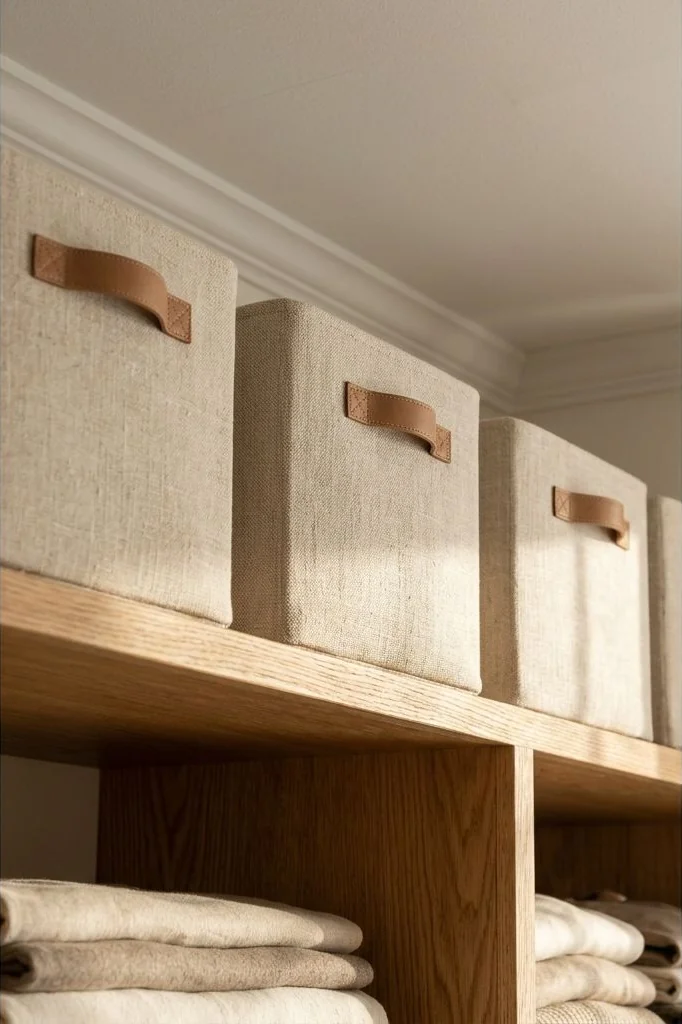
Establishing strict archival boundaries cures this psychological friction. By lining upper ledges with an unbroken, repetitive colonnade of matching neutral fabric bins, you establish an intentional architectural horizon. The ceiling perimeter appears tailored and composed, transforming an awkward void into a hallmark of refined domestic design.
For foundational perspectives on structural zoning throughout the entire wardrobe height, consult our core framework on closet organization architecture and space optimization.
Material Integrity: Breathable Canvas vs Plastic Bins
When selecting archival containers for fine clothing, material physics must dictate your choices. Clear plastic storage tubs are common in utility garages, but they represent a hazardous choice for organic natural textiles stored inside a residential wardrobe.
Air-tight plastic containers trap microscopic ambient moisture. When closet temperatures fluctuate across seasonal heating cycles, trapped condensation encourages mold, mildew, and yellowing of pale linen fibers. Furthermore, non-breathable polymers can off-gas plasticizers that break down delicate silk proteins over extended storage periods.
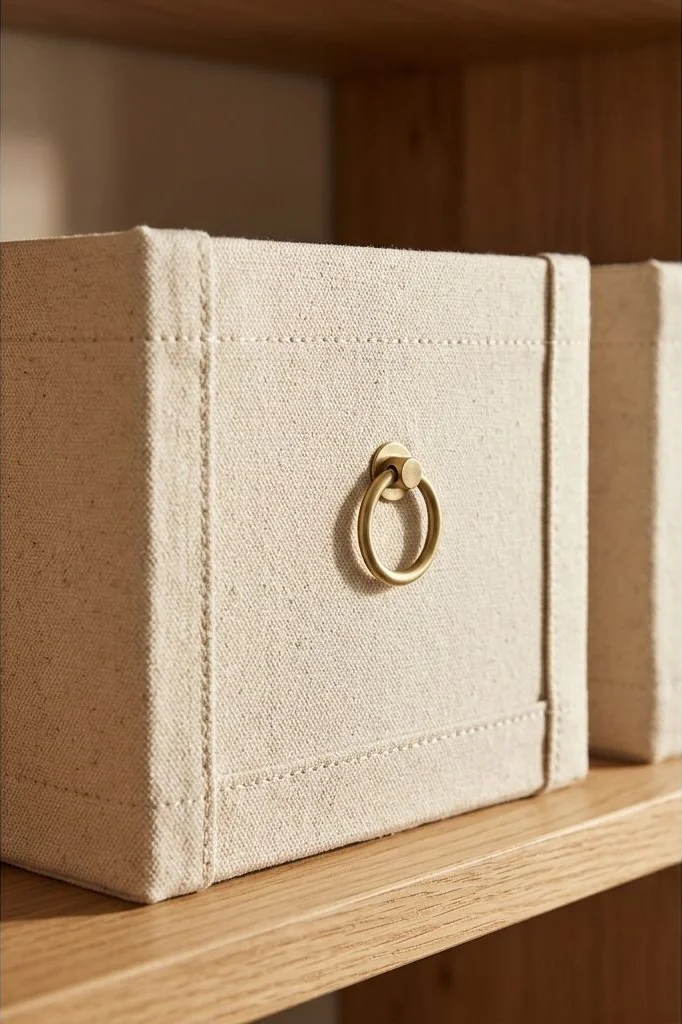
Structured bins constructed from heavy unbleached cotton duck canvas or natural linen bonded to recycled fiberboard provide continuous micro-ventilation. Air circulates gently through the fabric matrix, preventing humidity build-up while offering a physical barrier against airborne dust particles. For deeper guidance on maintaining natural textiles, explore our study on capsule wardrobe natural fiber quality and longevity.
Typographic Labeling Architecture: Understated Identification
The downfall of many storage systems is aggressive labeling. Plastic label-maker tape with stark black lettering on fluorescent tape introduces discordant commercial aesthetic noise into what should be a peaceful residential dressing suite.
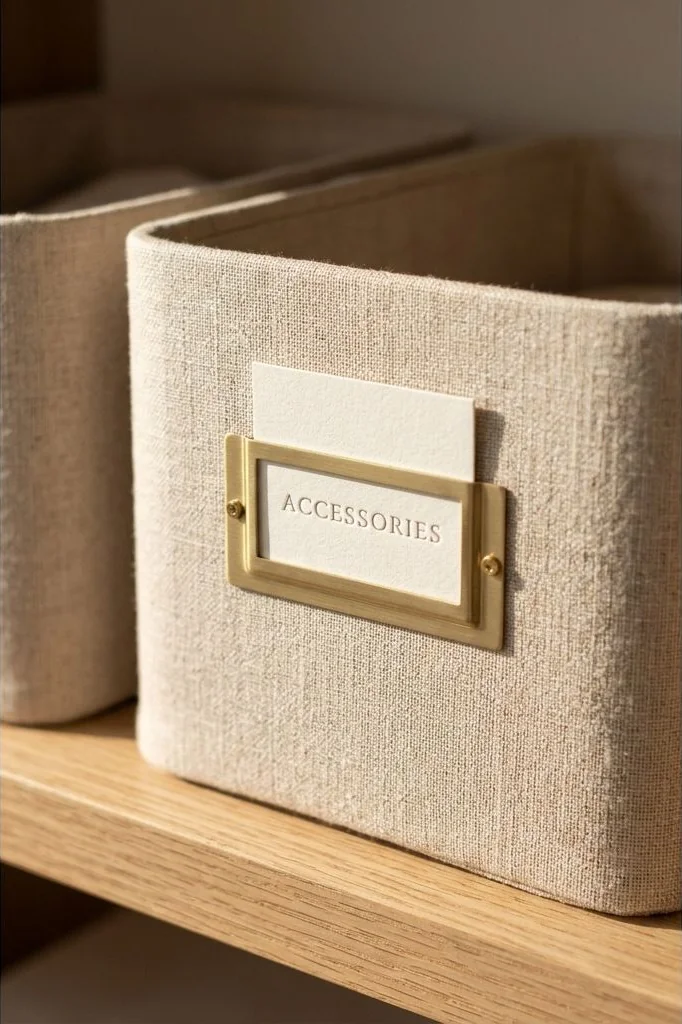
Architectural labeling utilizes slim bookplate label frames crafted from brushed brass or blackened steel, stitched directly to the front face of each fabric bin. Insert heavy letterpress cotton cardstock tags printed with a clean, understated sans-serif typeface in muted taupe or charcoal ink.
Labels should describe broad textile categories rather than microscopic inventories: *”Winter Cashmere,”* *”Linen Bedding,”* *”Silk & Eveningwear,”* or *”Travel Accessories.”* This broad taxonomy allows you to rotate seasonal pieces without constantly reprinting labels.
Seasonal Compression Protocols: Vacuum Seal Integration Inside Bins
Bulky winter gear – such as goose-down parkas, heavy cable-knit cardigans, and extra guest duvets – can consume immense physical volume, quickly overflowing standard storage bins. Attempting to force uncompressed down comforters into fabric containers causes lids to bulge and seams to split.
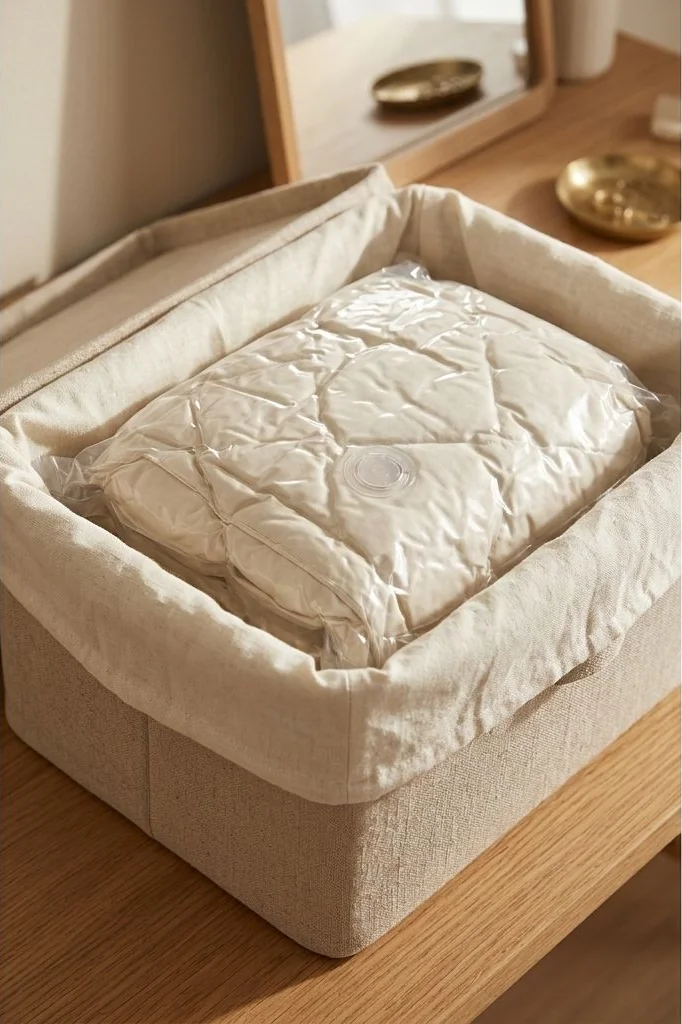
The optimal technique combines airtight vacuum compression bags with rigid exterior fabric bins. Fold seasonal garments neatly, seal them inside high-gauge compression bags, and extract excess air with a vacuum wand until volume decreases by seventy percent. Then, place the flattened parcel flat inside your linen storage container.
This hybrid methodology quadruples internal storage density while maintaining a crisp, uniform exterior cube profile on your shelves. When unpacked the following winter, natural down and wool fluff back to their original loft within twenty-four hours of hanging.
Natural Pest Protection: Cedar and Lavender Blocks
Storing wool, cashmere, and alpaca textiles overhead requires proactive defense against common clothes moths (*Tineola bisselliella*). Chemical mothballs manufactured from naphthalene emit noxious, persistent odors that settle permanently into clothing fibers and pose health hazards in residential bedrooms.
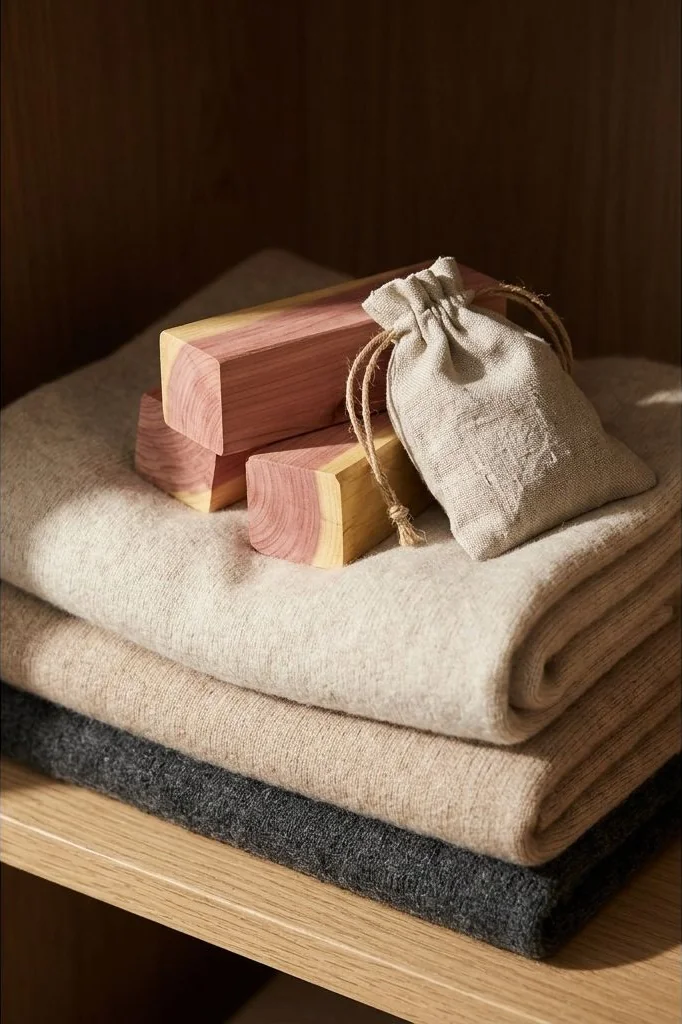
Organic botanical deterrents provide superior, safe protection. Place solid blocks of aromatic eastern red cedar (*Juniperus virginiana*) alongside small raw linen sachets filled with organic French lavender buds inside each storage bin. The natural essential oils within cedar and lavender mask the keratin scent of wool, deterring adult moths from depositing eggs.
Refresh cedar blocks every twelve months by rubbing them lightly with fine 220-grit sandpaper to reopen clogged timber pores, releasing fresh aromatic phytoncides that maintain natural pest resistance.
In addition to botanical pest control, maintaining ambient humidity levels between forty and fifty percent prevents mildew accumulation in stagnant upper ceiling pockets. Placing small rechargeable silica moisture-absorbing canisters inside high corner cubbies safeguards heirloom textiles during humid summer transitions.
Ergonomic Retrieval: Wooden Step Stools and High Reach Rails
A storage system is only as practical as its accessibility. If reaching an upper shelf requires dragging an unsightly metal stepladder from the garage or balancing precariously on a wobbly chair, you will naturally resist putting items away properly.
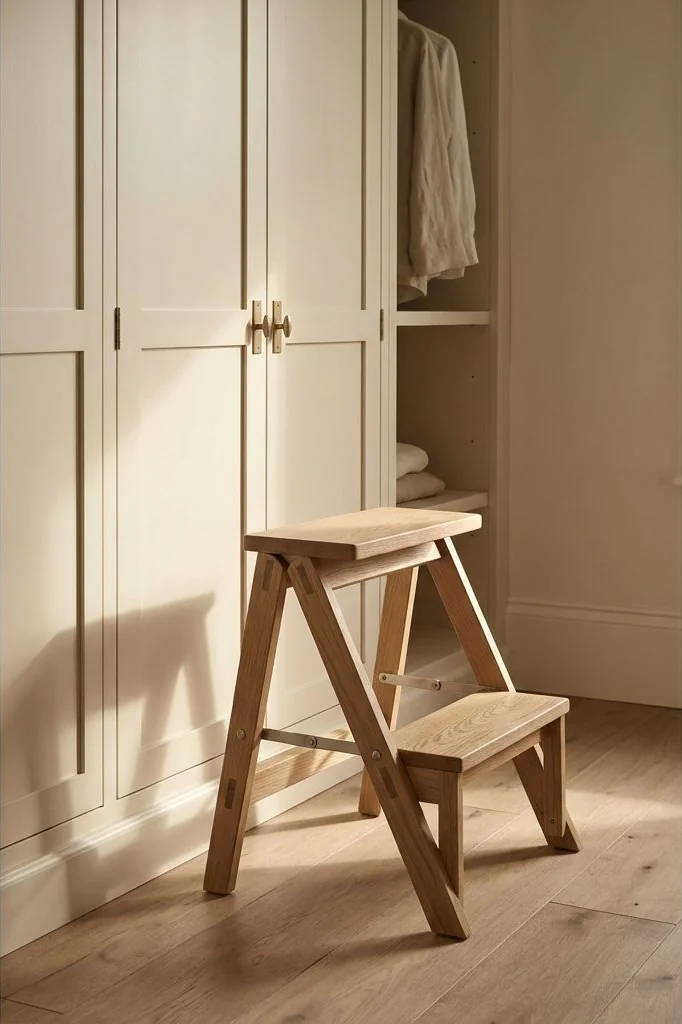
Incorporate dedicated architectural reach solutions directly into the dressing room aesthetic. A slender folding two-step library stool crafted from solid white oak can lean discreetly beside an armoire, acting as an intentional design accent when not in use. In larger walk-in suites, installing a brass rolling library ladder along an overhead rail provides effortless physical access while evoking historic estate libraries.
Writing on domestic craftsmanship, the editors of Architectural Digest emphasize that functional convenience must never come at the expense of tactile beauty. Explore our complete gallery of architectural prints and domestic living resources at ornista.com.
Frequently Asked Questions
How much weight can standard upper wardrobe shelving support safely?
A standard three-quarter-inch plywood or solid oak wardrobe shelf supported by continuous perimeter cleats or heavy-duty wall brackets safely supports forty to fifty pounds per linear foot. Distribute heavy items like books or dense luggage evenly across the span to prevent center shelf sagging.
How often should cedar blocks inside storage bins be replaced?
Solid cedar blocks do not need to be discarded. When their natural fragrance fades after several months, lightly sand the exterior wood grain with fine-grit sandpaper or apply two drops of pure cedar essential oil to revive their pest-repelling properties completely.
Should clothing be laundered or dry-cleaned before seasonal storage?
Always clean garments thoroughly before placing them into seasonal storage bins. Invisible perspiration, skin oils, and microscopic food particles attract clothes moths and oxidize into dark yellow stains over several months of storage if left untreated.