Opening a residential linen closet often feels like unearthing an archaeological dig of domestic textiles. Mismatched queen and twin sheets tangle in wrinkled heaps, spare duvet covers spill off high shelves, and bath towels of varying vintages and color palettes compete for dominance. When a houseguest arrives or a fresh sheet change is required on a Sunday evening, locating a complete matching bedding set becomes a frustrating treasure hunt. Approaching linen storage through the principles of warm minimalism transforms this utilitarian cupboard into an oasis of tactile serenity.
Key Takeaways
Essential strategies for curating an immaculate, hotel-caliber linen closet system:
- Enclosing irregular bedding inside uniform, breathable fabric bins immediately restores visual symmetry.
- The pillowcase bundle protocol guarantees that fitted sheets, flat sheets, and pillow covers never get separated.
- Disciplined spa-style tri-folding conceals fraying towel hems and presents a unified curved edge across shelves.
- Discreet brass label holders provide subtle navigation cues without visual clutter.
- Natural red cedar blocks and dried lavender sachets defend precious textiles against moisture and pests without harsh chemicals.
An exceptional linen closet does not demand dozens of redundant towel sets; rather, it thrives on strict curation, fabric breathability, and geometric folding discipline. When your household inventory is pared down to three high-quality sets per bed and displayed with intentional spacing, linen maintenance feels effortless and refined. To see how these principles apply to daily apparel storage, explore our analysis of closet organization architecture and wardrobe systems.
The Linen Sanctuary: Transforming Utilitarian Storage into Tactile Luxury
In luxury boutique hotels, linen storage is treated with exceptional reverence. Shelving is spacious, air circulation is carefully maintained, and textiles are grouped strictly by room assignment and material weight. In residential interiors, however, linen closets are frequently squeezed into dark hallway niches lacking proper ventilation.

To design a true linen sanctuary, begin by evaluating shelf spacing. Solid slatted timber shelves – ideally crafted from aromatic cedar or sealed white oak – allow air to circulate beneath stacked fabrics, preventing fiber suffocation. Maintain vertical shelf clearances of fourteen to sixteen inches for bulky winter duvets, and ten to twelve inches for daily bath towels and hand cloths. For broader inspiration on architectural material selection, visit the Ornista warm minimalist design studio.
The Pillowcase Bundle Technique for Sheet Set Integrity
The most persistent headache in household linen management is the missing pillowcase phenomenon. Sheets are washed and dried together, but during the folding process, flat sheets end up on one shelf while pillowcases drift into another corner, leaving incomplete sets that cause annoyance during bed making.

The pillowcase bundle protocol solves this dilemma with elegant simplicity. Fold the fitted sheet, flat sheet, and one pillowcase into tidy, uniform rectangles. Then, slide the entire three-piece stack directly inside the second matching pillowcase, folding the excess fabric over to form a sleek, self-contained fabric packet. When it is time to change linens, you grab a single neat parcel that contains every required piece, perfectly matched and ready to deploy.
Uniform Fabric Bins: Balancing Breathability with Visual Concealment
Even with careful folding, duvets, mattress protectors, and extra wool blankets possess irregular bulk that disrupts the visual rhythm of open shelving. Trying to make a puffy down comforter look like a tailored architectural block on an open shelf is an exercise in futility.

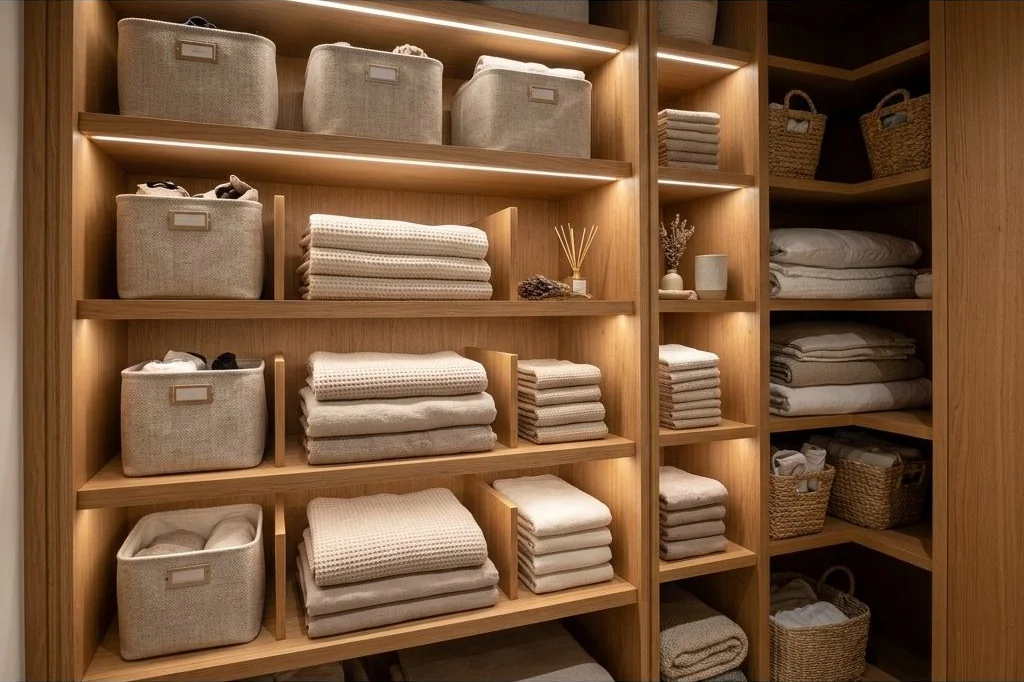
Uniform fabric bins restore immediate order by concealing bulky, irregular textiles behind consistent, tactile facades. Select heavy cotton canvas, woven linen, or felted wool storage boxes in a warm monochromatic hue like oatmeal, sandstone, or warm grey. Natural fibers are inherently breathable, allowing air to filter through while shielding heirloom quilts from airborne dust and yellowing light exposure, as outlined in Architectural Digest residential textile care and linen storage guidelines.
Aesthetic Labeling Systems: Embossed Metal and Letterpress Cards
Once textiles are concealed inside opaque fabric bins, clear labeling becomes essential to prevent family members or guests from rummaging through multiple boxes to find a beach towel or twin duvet. However, glaring white plastic label tape printed from handheld electronic labelers looks clinical and disrupts warm minimalist aesthetics.

Opt for discreet architectural labeling hardware. Slender antique brass or matte nickel bookplate card holders clipped onto fabric bin handles provide subtle, timeless navigation cues. Insert heavy cardstock cards printed with clean, understated typography specifying categories: “Primary King Sheets,” “Guest Waffle Towels,” or “Seasonal Throws.” This delicate touch communicates intentional care while keeping your organizational taxonomy legible for everyone in the home.
Towel Folding Geometry: Tri-Fold Consistency for Spa-Level Order
Bath towels are daily tactile essentials, yet when folded randomly in half, fraying side seams and uneven corners face forward on the shelf, creating visual chaos. In contrast, luxury spas fold towels so that only clean, rounded fabric folds are presented to the viewer.

To master the spa tri-fold, spread the bath towel flat, fold one long edge inward to the centerline, and fold the opposite long edge over it, creating a long, narrow three-ply strip. Then, fold the strip into thirds, tucking rough hems and tags completely on the interior. Stacking towels with their rounded folded spines facing outward creates a clean, architectural line that gives your bathroom or linen closet an immediate sensory upgrade. For vanity plumbing and toiletry organization strategies, study our guide on bathroom vanity storage and under-sink organization.
Moth and Moisture Defense: Cedar Blocks and Lavender Sachets
Enclosed closets can trap airborne humidity and attract clothes moths, especially when fine natural fibers like linen, cashmere, and wool are stored undisturbed for months. Traditional chemical mothballs emit toxic fumes and pungent odors that penetrate bedding and require multiple washes to dissipate.

Natural aromatic cedar and French lavender provide superior, botanical pest defense. Solid blocks of untreated Eastern red cedar naturally repel textile pests while absorbing ambient moisture from the air. Tucking hand-tied raw linen sachets filled with organic dried lavender between folded blankets imparts a delicate, soothing herbal fragrance that ensures clean sheets emerge smelling naturally fresh and calming every time.
Frequently Asked Questions
Common questions regarding linen closet systems, towel folding, and seasonal rotation:
How many towel and sheet sets should a minimalist household own?
The golden standard is three complete sets per bed and two to three bath towels per person: one set in active use, one set in the laundry cycle, and one clean set resting in the linen closet. This provides complete operational resilience without accumulating excess storage bulk.
How do you prevent folded towels from developing a sour smell in closets?
Ensure textiles are one hundred percent bone-dry before folding and storing them. In addition, avoid using synthetic fabric softeners, which coat natural cotton fibers with a waxy residue that traps bacteria and prevents towels from absorbing water effectively.
Should table linens be stored with bed linens and bath towels?
If space permits, store delicate table runners and cloth napkins in a dedicated shallow drawer or fabric box on a lower shelf. Rolling table linens around cardboard mailing tubes prevents hard fold creases, ensuring they are dinner-ready without frantic ironing.