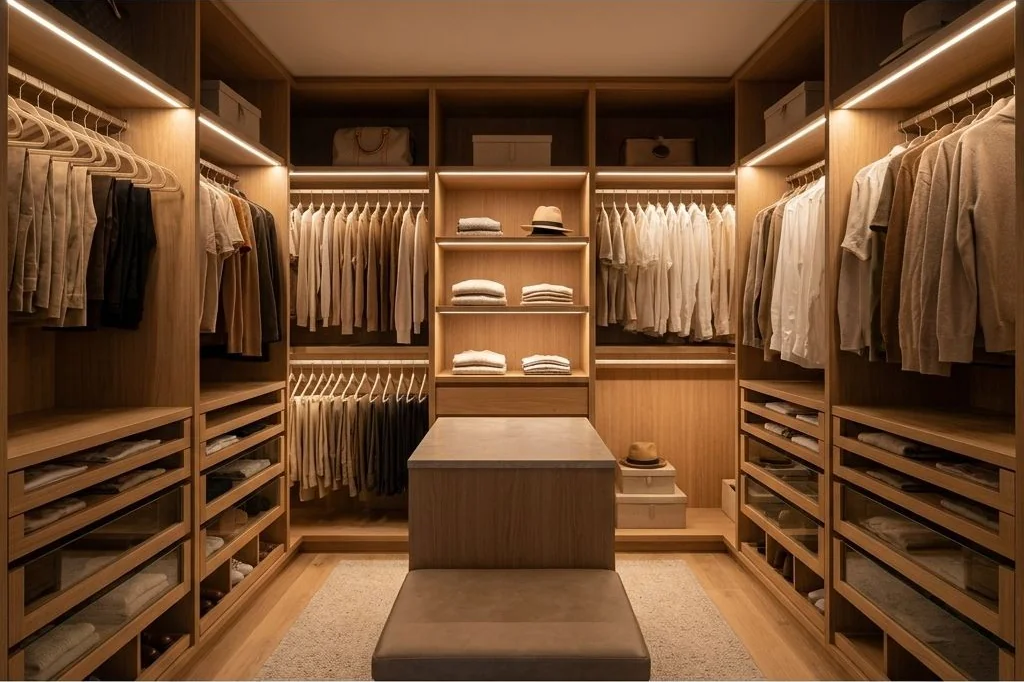
Opening a wardrobe in the morning sets the psychological tone for the entire day. Yet in many contemporary residences, the closet is treated as an afterthought – a dark, crowded cavern where oversized wooden hangers tangle with wire dry-cleaning hooks, folded knitwear topples into disorganized heaps, and shoes accumulate in an inaccessible pile on the floor. When getting dressed requires digging through crowded rails, decision fatigue begins before your morning coffee is poured. Approaching wardrobe storage through deliberate design transforms this utilitarian nook into an inspiring personal dressing suite.
Key Takeaways
Structural principles for engineering a serene, high-capacity wardrobe system:
- Ergonomic zonal planning separates primary active rotation from secondary seasonal archives.
- Switching to uniform slim velvet hangers recovers up to fifty percent of rail density while establishing visual calm.
- Clear acrylic shelf dividers prevent tall knitwear stacks from leaning and collapsing sideways.
- Angled shoe display shelving with subtle heel stops preserves fine leather while ensuring immediate pairing.
- Shallow velvet accessory inserts protect delicate items and eliminate drawer rummaging.
Effective wardrobe organization is not merely about owning fewer garments; it is about engineering clear sightlines, tactile harmony, and physical ease of retrieval. When every shirt, trouser, and coat hangs at an intentional height with uniform spacing, getting dressed transitions from frantic rummaging into a mindful, pleasurable ritual. To discover how intentional editing informs whole-home serenity, review our foundational guide on intentional decluttering for warm minimalist living.
Zonal Wardrobe Engineering: Primary Hanging and Secondary Staging
Architectural space planning dictates that items used daily should reside within the prime ergonomic strike zone – the vertical span between knee level and eye height. When designing a closet layout, divide vertical space into three distinct operational tiers: high-frequency active rails, mid-tier accessory drawers, and upper architectural vaults.

Reserve the prime horizontal rail for your current seasonal capsule. Long hanging garments – such as tailored trench coats, full-length dresses, and jumpsuits – require a dedicated vertical clearance of at least 60 to 65 inches to prevent hem creasing. Shorter garments like button-down shirts, blazers, and folded trousers function best on double-hung rail systems, which provide two stacked 40-inch hanging bays within an 84-inch ceiling span, effectively doubling usable rail real estate.
The Science of Slim Velvet Hangers for Spatial Uniformity
The single most transformative upgrade any homeowner can make to a disorganized closet is replacing mismatched hangers with uniform slim velvet models. Traditional wooden suit hangers, while handsome in boutique display windows, feature bulky 1.5-inch shoulder profiles that consume enormous physical space along a rail.

Slim velvet hangers measure approximately 0.2 inches in width, instantly recovering forty to fifty percent of rail capacity without crushing delicate fabrics. Crucially, the plush flocked texture creates gentle friction that keeps wide-neck tops, silk blouses, and lightweight linen shirts securely in place without requiring awkward plastic clips. Selecting a single neutral color palette – such as warm ivory, soft camel, or charcoal taupe – eliminates visual noise across the rod, as highlighted in Architectural Digest wardrobe layout standards.
Acrylic Shelf Dividers: Preventing Knitwear Avalanches
Heavy wool knits, cashmere sweaters, and structured sweatshirts should never be stored on hangers, as gravity will inevitably stretch the delicate shoulder fibers and deform the silhouette. However, stacking sweaters on open wooden shelves frequently results in leaning towers that collapse whenever an item is extracted from the middle.

Clear acrylic shelf dividers provide invisible structural support. By sliding onto solid wood or composite shelves at 10-to-12-inch intervals, these transparent panels keep folded piles completely upright and contained. Because the dividers are optically clear, they introduce zero visual clutter, allowing the rich textures of your knitwear collection to shine. For advanced storage techniques across vanity drawers and cabinetry, study our detailed insights on drawer division engineering and custom grid systems.
Shoe Display and Angle Geometry: Tiered Risers and Preservation
Footwear represents one of the most awkward storage challenges in residential architecture due to varying heights and irregular shapes. Tossing shoes onto closet floors causes scuffing, attracts dust bunnies, and ruins leather structure over time.

The optimal architectural solution is shallow shelving angled at approximately 20 to 30 degrees, equipped with a low front timber lip. Angling shelves outward allows you to view the full silhouette of dress shoes, loafers, and sneakers at a single glance. In compact reach-in closets where depth is limited, two-tier acrylic shoe risers double the capacity of flat shelves by stacking one shoe neatly above its mate. To explore spatial balance across living quarters, visit the Ornista architectural design studio.
Bespoke Accessory Trays: Velvet Inserts for Watches and Eyewear
Small daily accessories – including wristwatches, leather belts, sunglasses, and heirloom jewelry – frequently scatter across dresser surfaces, creating visual agitation. When these items lack dedicated homes, mornings turn into frantic searches for matching cufflinks or keys.

Installing shallow pull-out drawers fitted with bespoke velvet or micro-suede modular compartments creates a luxurious, organized sanctuary for personal essentials. Each watch rests on a tailored cushion, sunglasses lie flat without risk of lens abrasion, and belts coil smoothly into square niches. This thoughtful compartmentalization protects your investment pieces while ensuring that finishing touches are selected with effortless grace.
Seasonal Upper Shelf Architecture: Uniform Linen Storage Boxes
The uppermost shelf of a wardrobe – typically hovering seven feet above the finished floor – often becomes a neglected graveyard for mismatched tote bags and cardboard boxes. Because this zone requires a small stepladder to reach comfortably, it should be dedicated exclusively to off-season archives and bulky bedding.

To preserve visual tranquility, replace random cardboard boxes with uniform, breathable linen fabric bins equipped with snug lids. Breathable natural fibers allow down duvets and heavy winter woolens to circulate air, preventing moisture buildup and musty odors. Labeling each bin with a discreet embossed brass card holder ensures effortless seasonal rotation when temperatures shift.
Frequently Asked Questions
Common questions regarding wardrobe architecture, hanger selection, and spatial systems:
Do velvet hangers leave indents or creases on heavy suit jackets?
While slim velvet hangers are ideal for eighty percent of your wardrobe, heavy wool tailored suit jackets and structured overcoats benefit from contoured velvet suit hangers with wider molded shoulder pads. This preserves jacket shoulder canvassing while maintaining fabric grip.
How much clearance is required between hanger tops and the shelf above?
Leave a minimum of 2.5 to 3 inches between the top curve of your hanging rod and the bottom surface of the upper shelf. This clearance ensures you can lift hangers on and off the rail effortlessly without scraping knuckles or catching hanger hooks.
How do I prevent dust from accumulating on open closet shelving?
Ensure adequate air circulation and use enclosed fabric bins for items stored longer than two weeks. In addition, positioning a quiet HEPA air purifier inside or adjacent to a walk-in wardrobe significantly reduces ambient textile dust and lint accumulation.