Modern residential living frequently suffers from an unspoken spatial paradox: homes expand in physical square footage, yet interior rooms feel increasingly suffocated by material possessions. Closets overflow with unchosen apparel, kitchen credenzas accumulate forgotten gadgets, and surface tabletops become accidental landing pads for daily debris. When disorganization reaches a tipping point, many homeowners turn toward traditional purging methods, discarding bags of items in an afternoon of frantic cleaning. Yet within several months, the clutter invariably creeps back into the corners.
Key Takeaways
Core philosophies for transitioning from reactive discarding toward architectural home serenity:
- Intentional decluttering treats every square foot as an architectural canvas rather than a temporary holding zone.
- Evaluating possessions by sensory resonance and functional frequency replaces emotional guilt with objective clarity.
- Vertical filing and bespoke modular drawer division maintain visible inventory without disrupting neighboring items.
- Curating meaningful sentimental artifacts within dedicated plaster alcoves transforms memories into sculptural art.
- Natural fiber storage vessels harmonize interior aesthetics, making daily maintenance feel calm rather than clinical.
This recurrent cycle occurs because conventional organizing systems focus almost entirely on elimination rather than spatial stewardship. Reimagining foundational decluttering principles through the lens of warm minimalism shifts the dialogue from deprivation toward intentional curation. By pairing intuitive emotional reflection with sophisticated interior architecture, a residence evolves into a calm, functional sanctuary. To understand our foundational philosophy regarding tactile balance, explore the Ornista warm minimalist design studio.
Shifting from Categorical Purging to Spatial Stewardship
The original Japanese philosophy of organizing captivated the globe by introducing a transformative concept: gathering every item of a single category into a central pile to confront cumulative volume. While powerful as an initial awakening, categorical purging often leaves homeowners surrounded by clinical, hollow rooms that feel stripped of warmth and character. Extreme minimalism produces white-box starkness that resists everyday human relaxation.

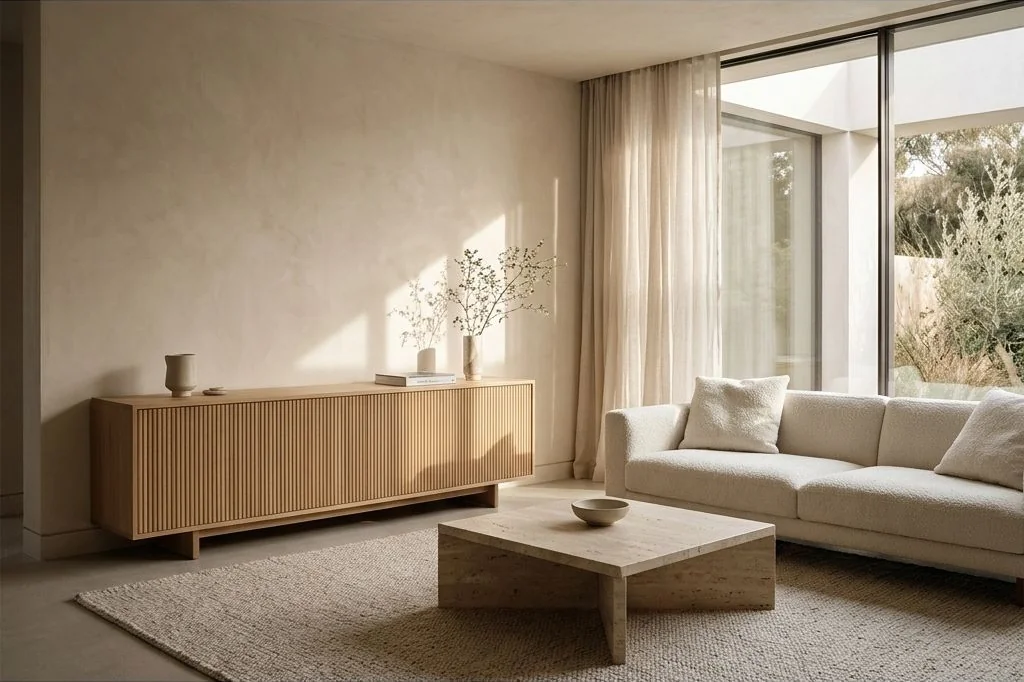
Spatial stewardship redefines this dynamic by considering the room architectural envelope first. Instead of asking how much can be removed, the resident considers how air, morning daylight, and natural circulation move through the room. Furniture pieces – such as a low-slung oak console or a travertine plinth – are given generous perimeter clearances, allowing negative space to act as a luxurious visual buffer against sensory overload.
The Sensory Evaluation: Beyond Sparking Joy to Functional Utility
Asking whether an object sparks emotional joy remains a poetic starting point, but modern households require a more nuanced evaluation matrix. A heavy cast-iron skillet, a precision vegetable peeler, or a linen iron might not provoke poetic butterflies in the stomach, yet each serves an indispensable function in daily culinary life.

A reimagined sensory rubric assesses objects across three distinct dimensions: tactile quality, daily utility, and aesthetic contribution. Does the item feel balanced and comfortable in hand? Does it perform its task reliably without frustration? Does its material presence enrich the visual tone of the room? As documented in Architectural Digest residential design and organization insights, pairing tactile natural materials with functional restraint creates spaces that promote psychological calm.
The Vertical Storage Protocol for Drawers and Open Shelving
Horizontal stacking is the primary architect of domestic chaos. When garments, linen sheets, or kitchen towels are stacked flat on top of one another, retrieving an item from the bottom inevitably wrinkles or dislodges the entire pile. Within days, visual clutter re-establishes dominance inside the storage unit.

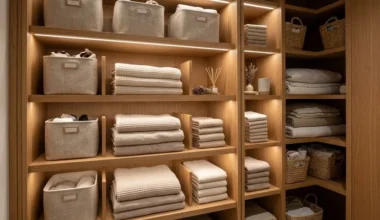
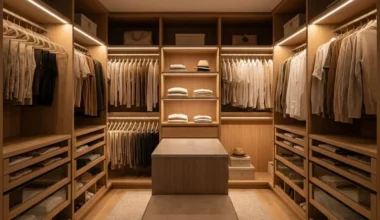
The vertical filing protocol treats drawers like library archives. By folding garments into compact, self-supporting rectangles positioned upright, every piece remains immediately visible. You can select a morning garment with one gentle motion, leaving adjacent rows undisturbed. For broader spatial layouts and custom storage architecture, explore our comprehensive breakdown of closet organization architecture and wardrobe systems.
Curating Sentimental Artifacts Through Intentional Display
Sentimental possessions often represent the most emotionally fraught category during any home editing project. Traditional advice suggests storing heirlooms in plastic containers under the bed or in the attic. However, consigning cherished family artifacts to dark storage totes diminishes their emotional value while creating dead storage weight.

The warm minimalist alternative transforms sentimental curation into fine art. Rather than keeping twenty fragile souvenirs in an unorganized box, select three evocative items: a hand-carved wooden bowl from an overseas excursion, a vintage brass compass, or a framed black-and-white family portrait. Give these chosen artifacts dedicated architectural prominence within a plaster wall niche or atop a fluted oak credenza. Illuminating these focal pieces with soft illumination creates serene emotional resonance; explore our guide on circadian rhythm and ambient lighting protocols for detailed fixture specifications.
Spatial Inflow Governance: Establishing the One-In-One-Out Ritual
Decluttering without establishing strict inflow protocols is an exercise in futility. Modern consumer culture constantly introduces new items into the home via online deliveries, promotional gifts, and impulse purchases. Without a conscious threshold filter, spatial equilibrium disintegrates.

The one-in-one-out standard provides an infallible defense. Whenever a new coat, ceramic dishware set, or hardback novel enters the threshold, an existing counterpart must be donated, sold, or recycled. This rule enforces an enduring material equilibrium, ensuring that storage volume never exceeds the structural capacity of your furniture.
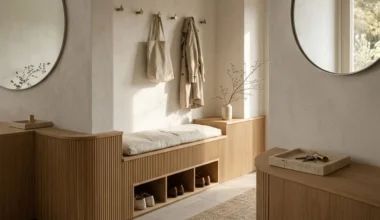
To support this equilibrium, establish an intentional transitional staging tray near your main entry. Placing incoming mail, packages, and seasonal accessories into a dedicated linen-lined drawer prevents paper clutter from scattering across dining tables or kitchen islands. A five-minute sorting ritual every evening keeps circulation paths open and protects the visual serenity of your sanctuary.
Designing Aesthetic Containers: Natural Materials over Plastic Bins
A common mistake during home organization drives is purchasing sets of translucent plastic storage tubs. While functional in a utility basement, clear plastic introduces visual chaos into living quarters because colorful, mismatched contents remain visible through the plastic walls. Plastic containers feel commercial, sterile, and visually loud.

Warm minimalism replaces plastic bins with opaque, tactile vessels crafted from organic materials. Textured oatmeal canvas baskets, fluted oak trays, brushed brass hardware, and hand-woven seagrass crates conceal domestic necessities while imparting earthy, grounding character to open shelving. Organizing becomes an extension of architectural interior design rather than a chore.
Frequently Asked Questions
Common questions regarding reimagining intentional decluttering and spatial home balance:
How can I declutter when my partner or family members prefer keeping more items?
Start exclusively with your personal possessions and dedicated zones, such as your wardrobe or workspace. Demonstrating the peaceful, effortless functionality of an edited space inspires household members far more effectively than issuing demands or touching their belongings.
What is the best way to handle expensive items that are rarely used?
Acknowledge the sunk cost fallacy. Holding onto an uncomfortable pair of shoes or an unused kitchen machine will not recover the money spent; it merely extracts ongoing spatial rent and mental guilt. Selling the item or gifting it to someone who will use it releases both physical space and psychological burden.
How often should a minimalist home undergo a decluttering review?
A seasonal cadence – conducted four times per year at the turn of spring, summer, autumn, and winter – provides ideal rhythm. Seasonal reviews align with natural wardrobe transitions and home maintenance rituals without feeling burdensome.