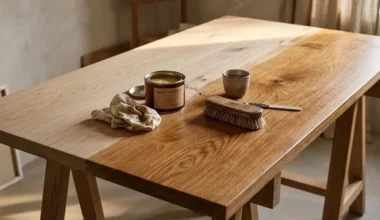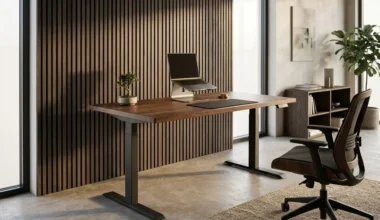
Selecting solid wood desk tops for scandinavian setup represents far more than choosing an ordinary office work surface. In Scandinavian architecture and intentional workspace design, the desk acts as the primary tactile anchor of the room. It establishes a direct physical bridge between natural raw materials and focused cognitive effort. Unlike synthetic laminates or cold composite boards, authentic timber possesses warmth, cellular depth, and a dynamic organic presence that matures gracefully alongside your daily routines.
Creating an intentional minimalist workstation requires a rigorous balance of structural integrity, wood species selection, and surface chemistry. When every peripheral, monitor arm, and cable run is thoughtfully integrated, the desktop becomes the visual focal point of the interior. Grounding the room in sustainable forestry, traditional joinery, and breathable finishes transforms daily work into a calm, centered experience rooted in Nordic design heritage.
Key Takeaways
Essential considerations for choosing a solid wood Scandinavian desktop:
- European white oak delivers exceptional surface hardness and bright, light-reflective warmth ideal for compact Nordic workstations.
- American walnut introduces rich architectural contrast and refined chocolate tones that ground open-plan studios.
- Continuous wide-plank lumber highlights uninterrupted cathedral grain figures, whereas edge-grain butcher blocks maximize dimensional stability.
- Plant-based hardwax oils nourish deep timber cells and preserve silky open pores, avoiding the synthetic plastic feel of film finishes.
- A desktop thickness of 1.5 to 1.75 inches prevents deflection across wide spans without overwhelming sit-stand lifting columns.
Oak vs Walnut: Selecting the Right Hardwood Foundation
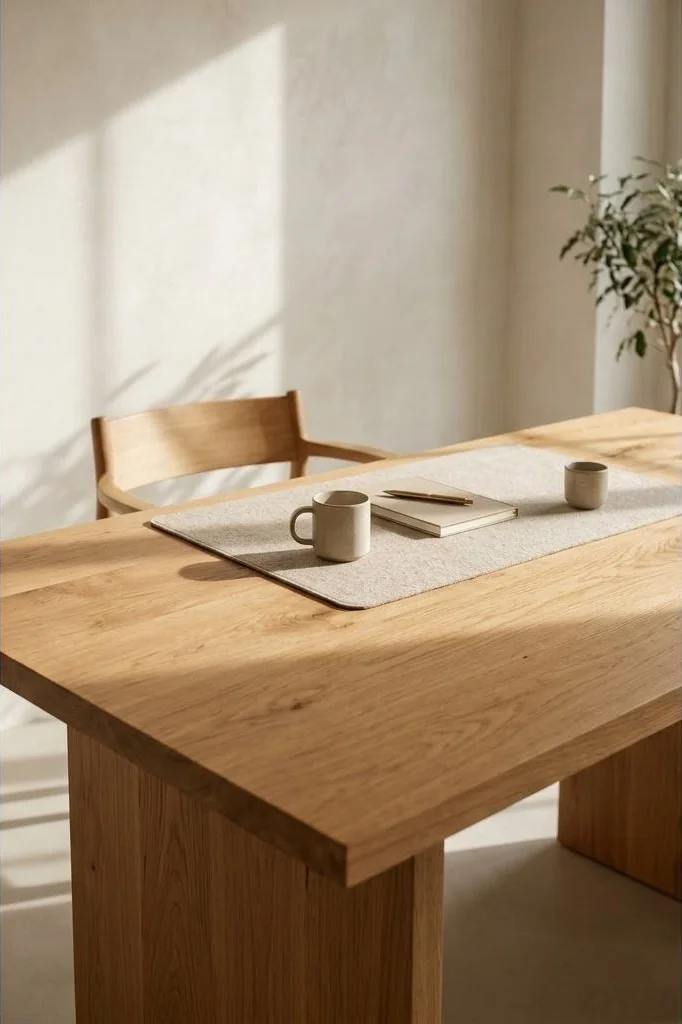
The choice between European white oak and American black walnut defines the atmospheric foundation of your workspace. White oak has long served as the cornerstone of Scandinavian cabinetry due to its tight cellular grain, pale wheat undertones, and remarkable resistance to surface abrasions. With a Janka hardness rating of approximately 1,360 pounds-force, oak easily withstands the weight of heavy desktop accessories, clamped monitor mounts, and continuous typing friction without developing noticeable surface compression. For an expansive overview of organic interior foundations, explore the Ornista design philosophy.
American walnut offers a distinctly contemplative alternative. Weighing in at a slightly softer Janka rating of 1,010 pounds-force, walnut compensates for minor hardness trade-offs with unparalleled visual depth. Its complex heartwood showcases hues spanning from smoky taupe to rich espresso, intersected by fine purple-grey rays that absorb harsh ambient reflections. While white oak bounces natural morning daylight across the workstation to cultivate an airy ambiance, walnut acts as a visual anchor that draws focus inward, making it particularly suited for creative writing studios and architectural drafting offices.
Butcher Block vs Continuous Plank Construction
Solid wood desk construction generally falls into two distinct categories: edge-grain butcher block slabs and continuous wide-plank glue-ups. Butcher blocks are constructed from numerous narrow hardwood staves, typically 1 to 2 inches in width, bonded under immense hydraulic pressure with moisture-resistant aliphatic resin adhesives. This staggered configuration balances opposing grain tensions, making butcher block surfaces exceptionally stable in environments subject to substantial seasonal humidity fluctuations.
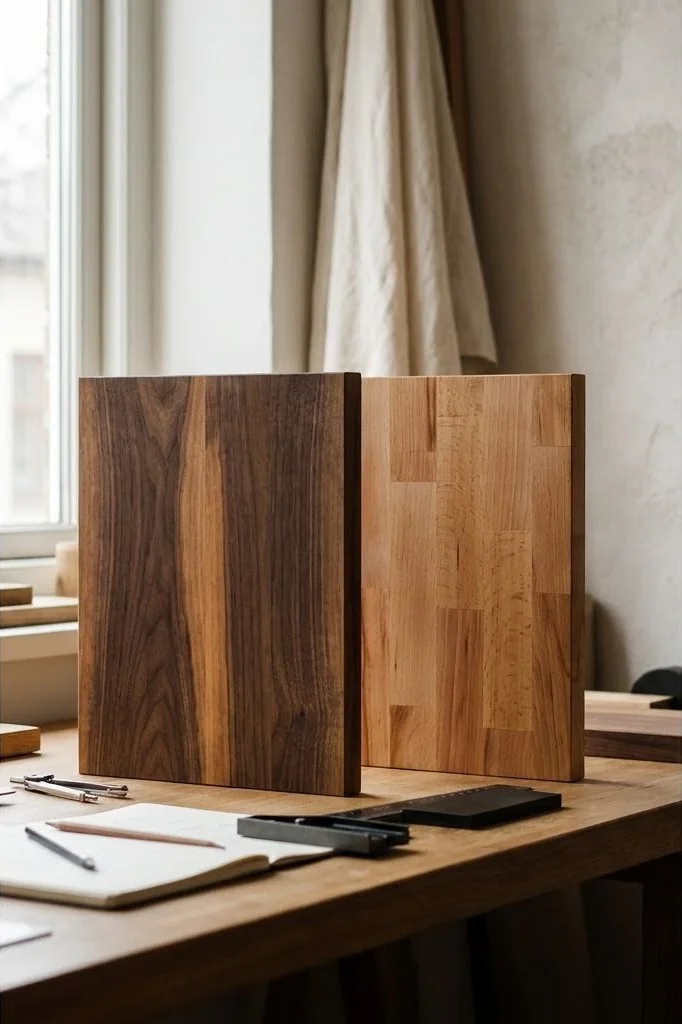
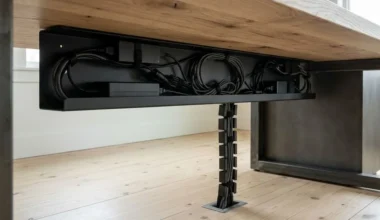
In contrast, continuous wide-plank desktops use 4 to 6 substantial boards running the full length of the table. This methodology preserves the natural flow of cathedral grain patterns, sapwood ribbons, and medullary rays across the desktop plane. While wide planks demand precise kiln-drying to equilibrium moisture contents between 6% and 8%, they provide an irreplaceable architectural authenticity that feels sculpted rather than manufactured. When pairing either construction method with clean desk routing, implementing hidden cable routing for minimalist desk setup ensures that no messy wire bundles distract from the handcrafted joinery.
Hardwax Oil vs Matte Polyurethane: Surface Tactility and Protection
How timber is sealed determines both its daily maintenance demands and its tactile connection to the human skin. Conventional factory furniture frequently relies on sprayed polyurethane or conversion varnish. These synthetic coatings create an impermeable plastic film across the wood surface. While polyurethane resists pooling liquids effortlessly, it suffocates the open pores of hardwood, imparting a slick, synthetic barrier that turns cold under human forearms and cannot be localized when scratched.
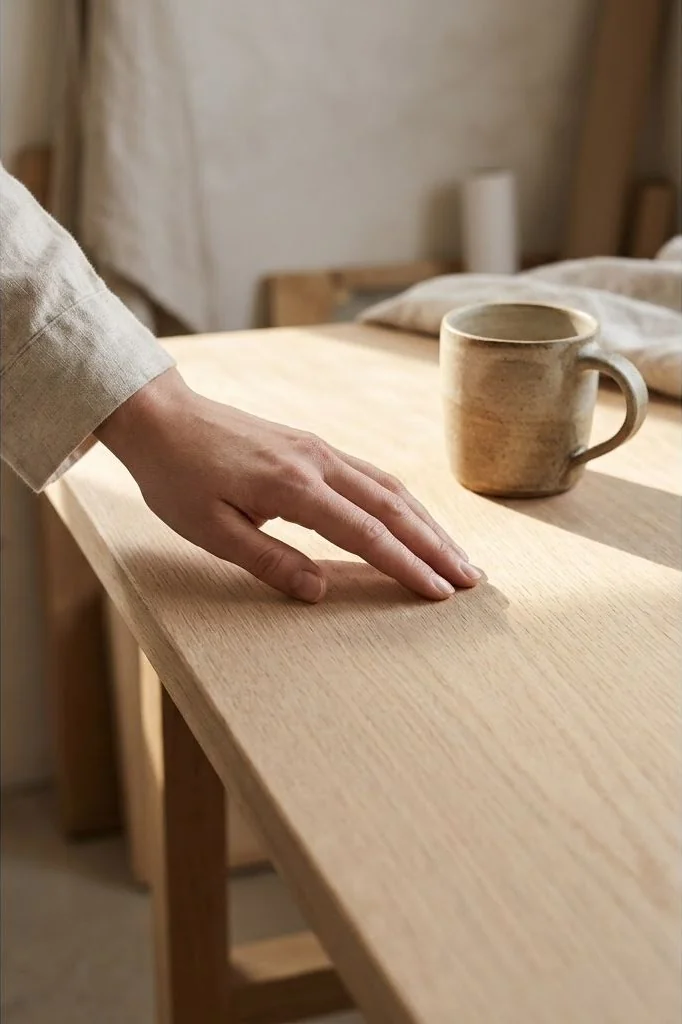
Scandinavian craft philosophies favor natural hardwax oils formulated from plant-based carnauba and beeswax suspended in linseed or thistle oils. Rather than curing into a top film, the micro-porous oils penetrate deeply into the wood capillaries while the natural waxes cure at the surface. This chemical bond protects against coffee spills while allowing the timber to breathe, maintaining a velvety matte texture where individual grain ridges remain palpable to the touch. Detailed material standards published by Architectural Digest emphasize that tactile authenticity in high-end spaces depends heavily on breathable oil treatments that age into a rich, living patina.
Desktop Thickness and Structural Deflection Standards
Desktop thickness directly dictates structural rigidity and visual proportion. A desktop that is too thin appears flimsy and risks permanent sag under the weight of heavy studio monitors and books, while an overly massive slab creates visual heaviness that clashes with Nordic airy design principles. For desks spanning 60 to 72 inches in width, a finished thickness between 1.25 and 1.75 inches provides the optimal structural threshold.
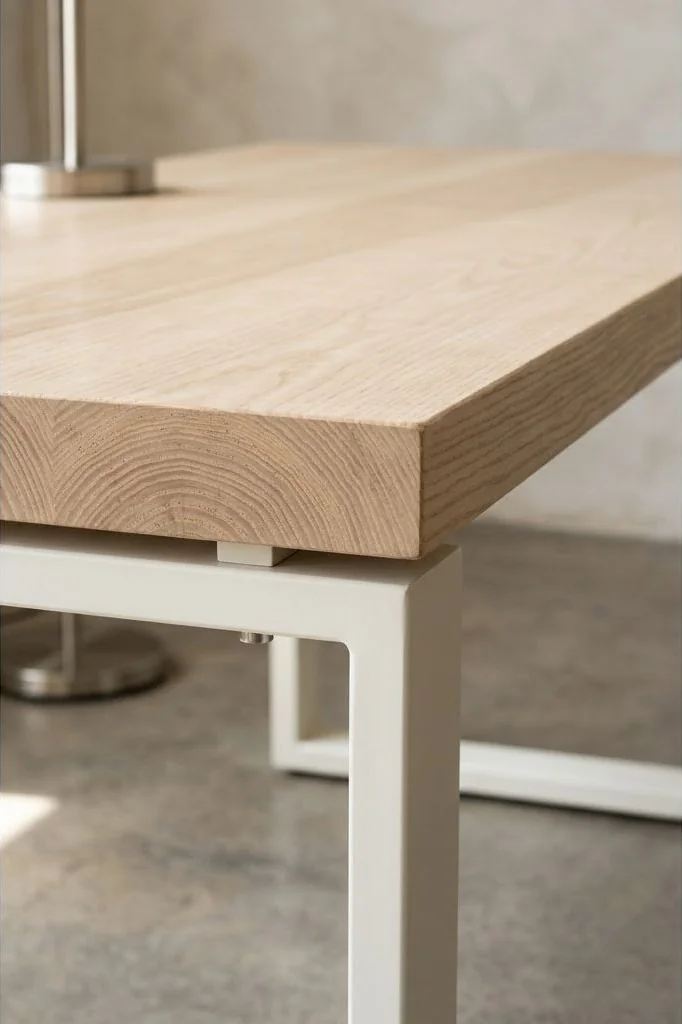
Wood deflection over time obeys the structural formula for beam bending, where rigidity increases with the cube of the thickness. Increasing thickness from 0.75 inches to 1.5 inches increases resistance to bending eightfold. This mechanical strength is vital when mounting heavy articulating monitor arms, which generate intense focal point torque along the rear edge. Solid hardwood slabs at 1.5-inch thickness absorb these dynamic clamping loads without requiring clumsy metal reinforcement bars across the underside.
Harmonizing Desk Wood with Surrounding Flooring and Joinery
A common spatial dilemma in Scandinavian interior design is coordinating the desktop wood species with existing architectural flooring and cabinetry. Striving for an exact 100% color match between desk and floorboards frequently results in visual monotony, where furniture pieces appear to dissolve into the floor plane. Intentional spatial layering embraces controlled contrast while honoring shared undertones.
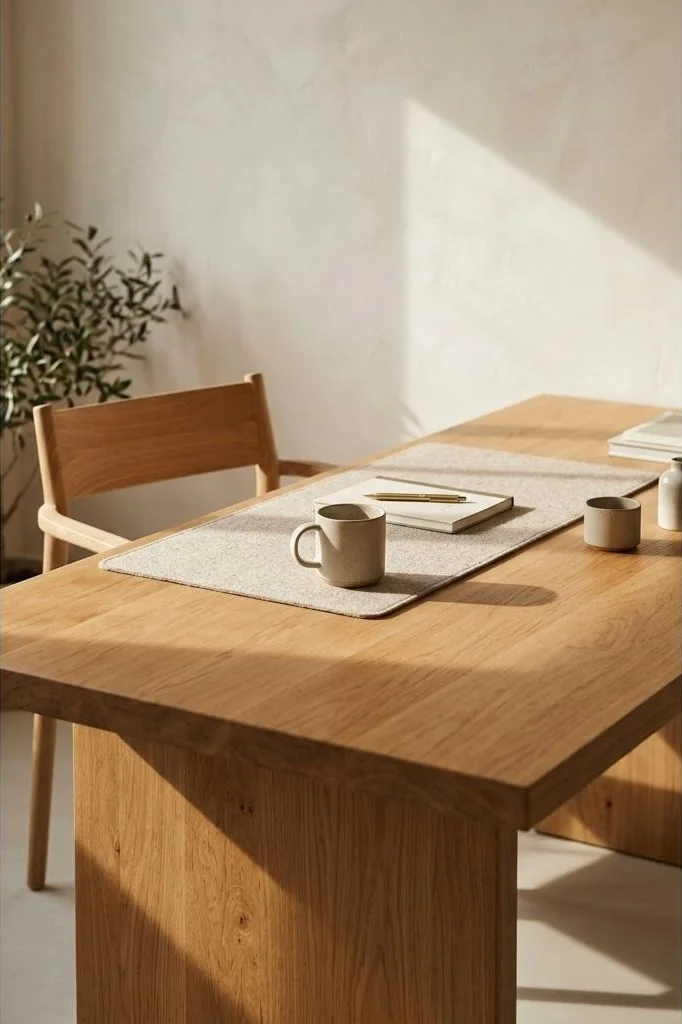
When working with pale European ash or bleached pine flooring, pairing a natural white oak desk establishes a gentle two-tone warmth that maintains vertical visual hierarchy. If the floor consists of cool poured concrete or grey limestone tiles, a warm walnut or smoked oak slab introduces immediate organic grounding. Anchoring the desk upon a dense, un-dyed wool or braided jute area rug creates an intentional buffer zone, separating the timber tabletop from the surrounding floor plane and establishing an independent zone of focused calm.
Edge Profiles: Chamfered, Beveled, and Bullnose Details
The micro-geometry of the desktop perimeter defines how comfortably your arms interact with the workstation over extended hours. Standard ninety-degree square edges often present unyielding pressure points against wrists and forearms during long typing sessions, cutting off circulation and wearing away surface finishes prematurely. Custom milling transforms these contact zones into ergonomic assets.
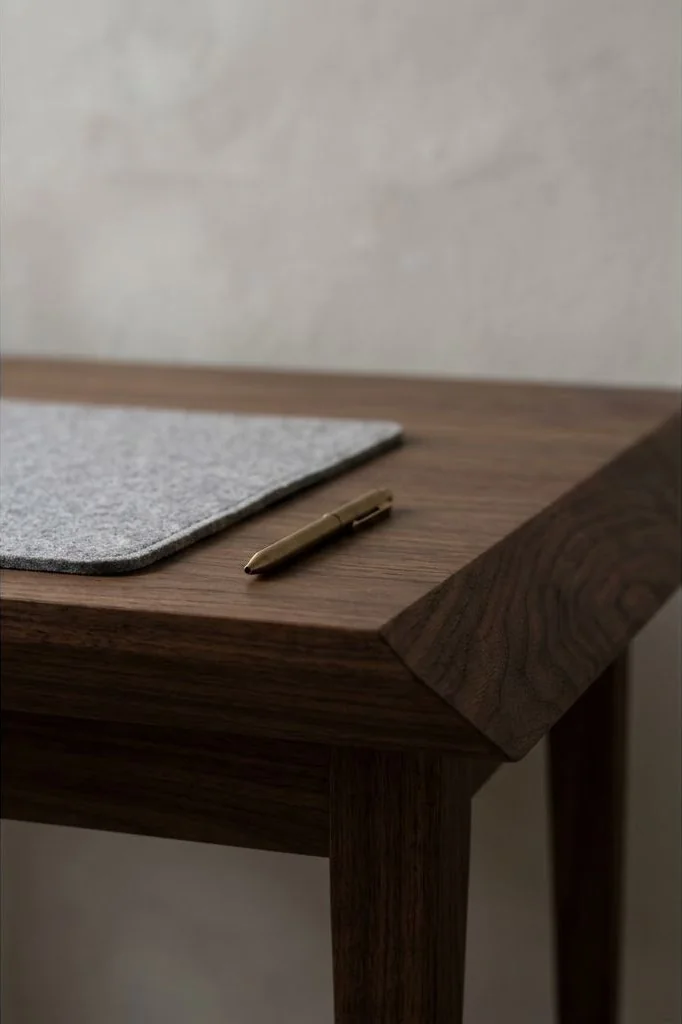
A gentle 45-degree under-chamfer or reverse knife-edge profile creates the optical illusion that the desktop is floating gracefully above the frame, reducing perceived visual mass while maintaining full core structural depth. Alternatively, a subtle 3mm round-over edge softens forearm contact points without sacrificing architectural crispness. To preserve these hand-shaped profiles and prevent premature dehydration, adhering to routine solid wood desk maintenance and care keeps the grain silky, protected, and tactile across decades of daily use.
Frequently Asked Questions
What is the best wood species for a Scandinavian minimalist desk?
European white oak and American ash are widely considered the premier wood species for Scandinavian workstations. They combine high Janka hardness ratings with light, warm honey and cream undertones that reflect natural light and pair seamlessly with neutral interior palettes.
How thick should a solid wood desktop be for heavy monitor mounts?
A thickness between 1.25 and 1.75 inches is ideal. This range provides robust mechanical strength to support heavy articulating monitor clamp arms without sag or cracking, while remaining within the weight limits of standard motorized standing desk frames.
Why choose hardwax oil over polyurethane for a home office desk?
Hardwax oil penetrates into the timber pores rather than forming a synthetic plastic film on top. This preserves the natural, warm, breathable touch of the wood grain and allows minor scuffs or water marks to be spot-repaired without sanding down the entire tabletop.
Does solid wood warp on motorized standing desk frames?
Solid wood will expand and contract across its grain with seasonal humidity shifts. To prevent warping or cupping on metal frames, always use slotted screw holes with washers that permit horizontal movement, and ensure the wood is sealed equally on both top and bottom faces.
Investing in an authentic solid wood desktop grounds the home workspace into a sanctuary of tactile intention, where honest craftsmanship and natural grain geometry bring lasting equilibrium to daily productivity.