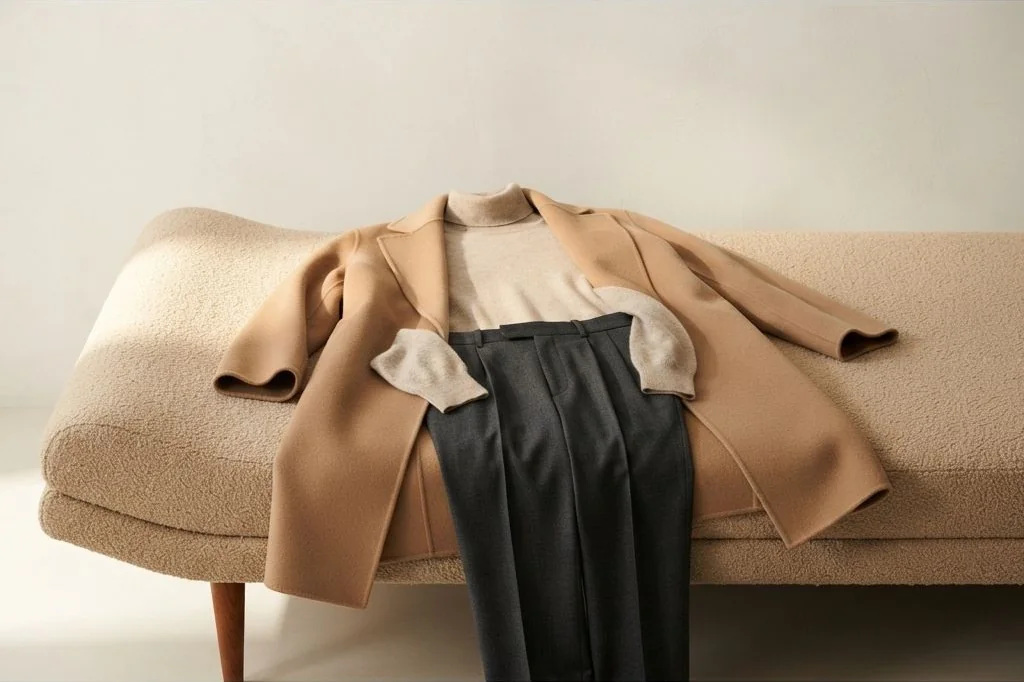
Dressing between seasons presents a continuous micro-climate challenge. Shifting outdoor temperatures, air-conditioned offices, and unpredictable rain showers frequently tempt people into purchasing bulky seasonal clothing that remains unworn for months. Mastering transitional layering formulas for a 30-piece capsule wardrobe eliminates seasonal clutter by treating clothing as an adaptable architectural system. By deploying fine-gauge knitwear, breathable woven bases, and structured unlined outerwear, your curated garments modulate thermal comfort with effortless visual grace. Explore our curated perspectives on mindful living and intentional spaces at Ornista intentional spaces.
Key Takeaways
- A three-tier layering framework combines a moisture-wicking base layer, an insulating fine-gauge mid-layer, and a protective architectural shell.
- Fine-gauge merino wool (14 to 16 gauge) delivers superior thermal regulation without creating bulk beneath tailored sleeves.
- Unlined outerwear crafted from dense cotton gabardine or boiled wool functions smoothly across varying indoor and outdoor settings.
- Textural juxtaposition – such as pairing crisp cotton poplin with brushed alpaca – introduces visual depth to monochrome outfits.
- Proportional harmony relies on balancing cropped or structured top layers with fluid, high-waisted lower silhouettes.
The Three-Tier Architecture of Transitional Dressing
Just as sustainable architecture employs passive thermal envelopes to balance temperature, intentional wardrobes utilize a three-tier system to manage fluctuating environmental conditions. Each tier fulfills a distinct mechanical function while contributing to the overall visual composition:
Tier One comprises the foundational next-to-skin layer. Constructed from lightweight organic cotton, silk-cotton jersey, or modal, this layer absorbs moisture and creates a smooth foundation. Tier Two introduces thermal insulation through fine-gauge knitwear, tailored vests, or unlined cardigans that trap ambient body heat. Tier Three serves as the architectural envelope – an unstructured overcoat, trench, or chore jacket that deflects wind and defines your external silhouette.

Calibrating Knitwear Gauge for Low-Bulk Modularity
A frequent error in seasonal layering is selecting knitwear that is too heavy for comfortable pairing beneath jackets. Chunky 3-gauge fisherman sweaters look handsome outdoors, but they bunch awkwardly around the armholes when layered under a tailored blazer, restricting arm movement.
For seamless transitional modularity, prioritize fine-gauge knitwear spun between 14-gauge and 18-gauge extra-fine merino wool. These gossamer-light knits slip beneath unstructured jackets with zero friction. Merino wool fibers possess microscopic crimps that react dynamically to body heat, keeping you warm during morning commutes while releasing excess moisture in heated indoor spaces. For full guidance on evaluating yarns and weave densities, study our capsule wardrobe fabric selection guide.

Textural Contrast as an Alternative to Heavy Outerwear
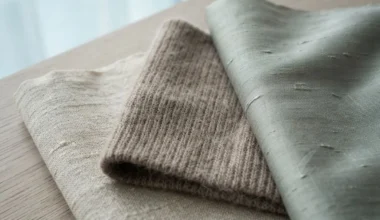
During transitional seasons, relying on monochromatic styling can sometimes feel visually flat. Rather than adding bright colors or loud patterns, introduce rich tactile contrast across each layered tier. This technique mirrors Scandinavian interior concepts, where raw stone, washed linen, and smooth timber coexist in understated harmony.
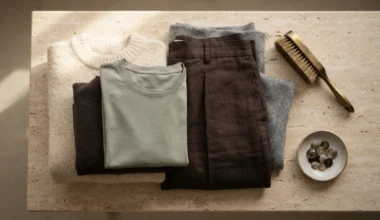
Pair a crisp cotton poplin button-down shirt with a brushed alpaca wool scarf and a heavy wool flannel trouser. The sharp, papery hand of the poplin juxtaposed against the cloud-like halo of alpaca creates intriguing visual depth without adding physical weight. This tactile interplay mirrors our design philosophy in lifestyle objects, such as pairing tactile wool felt and bridle leather accessories, where organic materials ground daily environments in sensory authenticity.

The Unlined Overcoat: Year-Round Outerwear Discipline
Traditional winter overcoats rely on synthetic polyester or cupro linings to slide over suits. While practical in sub-zero blizzards, lined coats trap excessive humidity during mild autumn and spring days. The quintessential transitional piece is an unlined, double-faced wool wrap coat or a classic cotton gabardine trench.
Double-faced wool involves two fine layers of wool woven together with micro-threads, creating finished surfaces on both the interior and exterior. This architectural construction requires minimal internal structure, draping softly over your shoulders like a structured shawl. When mornings are brisk, tie the belt firmly over a turtleneck; as afternoon temperatures climb, wear it open over a simple tee for effortless movement.

Proportional Geometry: Cropped Tops and Fluid Bottoms
A well-curated layer must respect human anatomical proportions. Piling long cardigans over elongated tunics visually shortens the body and produces an unfocused profile. In contemporary fashion editorial design, international publications like Vogue emphasize that balancing volume between upper and lower halves creates timeless elegance.
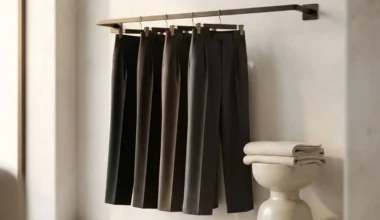
When styling layers, apply the rule of thirds. A slightly cropped, boxy boiled wool jacket that terminates at the natural waistline pairs gracefully with high-waisted, wide-leg pleated trousers. The short upper tier establishes an elongated leg line, allowing the trousers to flow with sculptural presence. For complete garment recommendations and inventory counts, review the core 30-piece checklist.

Streamlining Morning Dressing Routines
Developing repeatable layering formulas removes the decision fatigue associated with seasonal transitions. By predetermining three dependable combinations – such as a fine-gauge knit under an unstructured blazer, an unlined canvas overshirt over a silk tee, or a wrap coat layered over cashmere – you approach your closet with serene confidence.
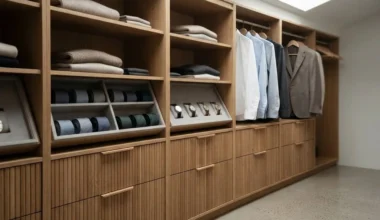
To implement this in practice, designate a physical staging zone in your dressing space. A sculptural wooden valet stand or a dedicated wall peg creates a designated holding area for tomorrow morning’s ensemble. Laying out your base, mid-layer, and outerwear pieces the evening before allows you to verify proportional harmony in advance while eliminating rushed morning deliberations.
Furthermore, pay close attention to garment care during transitional periods. Because natural protein fibers like wool and cashmere naturally shed odors, avoid unnecessary washing or dry-cleaning cycles between wears. Simply hanging pieces on wide-shoulder timber hangers in a well-ventilated dressing nook for twelve hours refreshes the weave, releasing daytime wrinkles and preserving fiber elasticity for seasons to come.
This intentional framework frees cognitive energy for creative pursuits. Rather than fretting over the day’s fluctuating forecast, you know that each component of your 30-piece wardrobe interfaces harmoniously with the rest, adapting as the day unfolds.

Frequently Asked Questions
How can I layer without overheating in climate-controlled indoor environments?
Focus on button-down or open-front mid-layers (such as lightweight cardigans, chore jackets, or unstructured blazers) rather than heavy pullovers. Open silhouettes permit instantaneous temperature adjustments by simply opening or removing the outer layer.
What is the best fabric for next-to-skin transitional base layers?
Long-staple organic cotton jersey, lightweight modal, and sandwashed silk provide optimal breathability and comfort. They prevent sweat accumulation while feeling soft and luxurious against sensitive skin throughout active days.
Can a linen shirt be worn during cool autumn and winter months?
Yes, heavy-weight Belgian linen (240 to 280 gsm) functions wonderfully as an autumn mid-layer. Layered underneath a fine merino wool sweater and topped with a wool trench, linen’s slubby texture adds rich character while offering comfortable insulation.
How do I prevent knitwear from pilling when worn beneath jackets?
Select knits constructed from tightly spun two-ply or three-ply yarns, which resist surface friction. Smooth silk or cupro lining in jacket sleeves also reduces mechanical abrasion against the knit fibers.
Approaching transitional layering through architectural clarity transforms seasonal Dressing into an artful expression of functional elegance. When every layer is chosen with intention, unpredictable weather becomes an invitation to celebrate tactile craftsmanship.