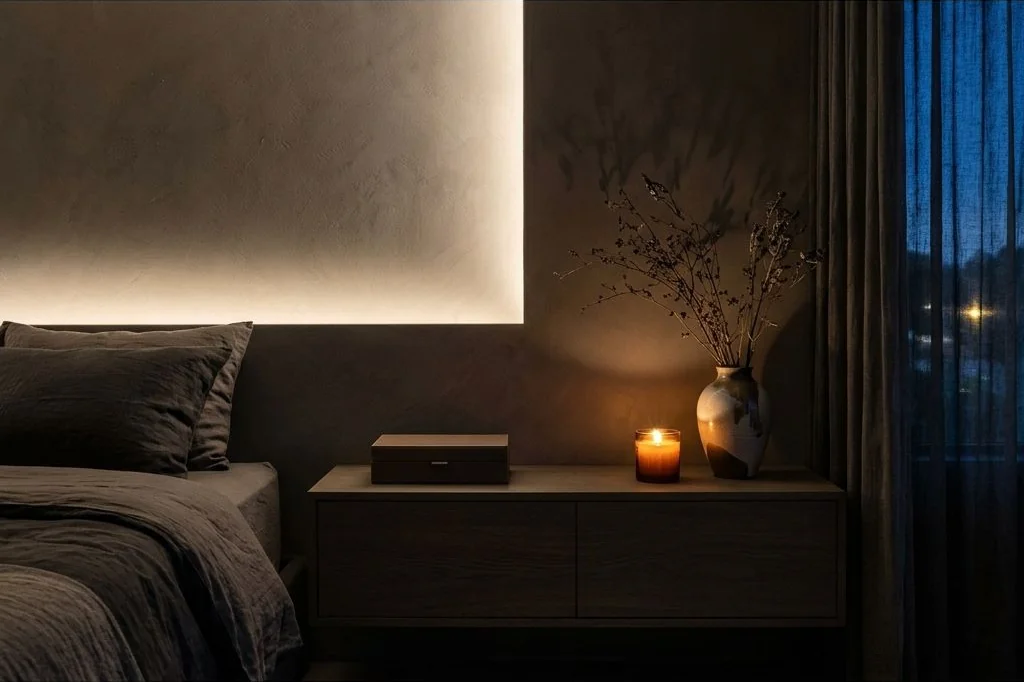
In a hyper-connected global economy, the boundary separating professional obligation from private domestic sanctuary has quietly dissolved. Remote work laptops remain open on dining tables, messaging applications chime during family dinners, and bedside screens illuminate dark bedrooms with urgent inquiries. This state of chronic cognitive tethering prevents the central nervous system from completing its necessary decompression cycle. Instituting an intentional evening digital sunset severs these persistent notification loops, granting your mind permission to detach, restore emotional equilibrium, and prepare for restorative nocturnal rest. Discover timeless architectural aesthetics for peaceful living at the Ornista curated home collection.
Key Takeaways
Crucial behavioral and environmental pillars for executing an evening digital shutdown:
- Persistent evening notifications sustain heightened cortisol levels, disrupting slow-wave and REM sleep architecture.
- A formal end-of-day shutdown ritual relieves subconscious anxieties by recording open tasks into an analog container.
- Replacing high-intensity blue screen illumination with warm 2400K indirect lighting signals natural melatonin secretion.
- Physically storing smartphones inside covered leather valet boxes eliminates subconscious visual triggers to check feeds.
- Curating analog evening wind-down activities – such as reading print books or brewing herbal tea – primes deep physical relaxation.
The Physiology of Evening Hypervigilance
When you check a work-related email at eight in the evening, your brain does not perceive it as a neutral informational transaction. The autonomic nervous system interprets unexpected communications as potential status threats, interpersonal conflicts, or impending crises. Heart rate variability drops, muscle tension increases, and your body enters a subtle state of vigilance.
Simultaneously, blue-wavelength light emitted by high-resolution digital displays suppresses pineal melatonin production by up to fifty percent. Even if you manage to fall asleep, sleep fragmentation increases, leading to shallow nocturnal rest and sluggish cognitive performance the following morning. Just as a grounded morning ritual, as detailed in our guide to the mindful morning launchpad and cognitive priming, activates daytime focus, a deliberate digital shutdown safeguards your evening recovery.
The Formal Work Shutdown Protocol
The human brain struggles to relax when unfinished loops linger in working memory. In psychology, this phenomenon is recognized as the Zeigarnik effect: uncompleted tasks intrude upon conscious thought far more frequently than finished undertakings.
To overcome this cognitive trap, execute a systematic shutdown sequence forty-five minutes before dinner:
- Clear Immediate Communication Queues: Scan your inbox for urgent items that genuinely require a brief acknowledgement; defer substantive replies until the following morning.
- Update Strategic Logs: Log completed items and transfer lingering to-dos into your master spreadsheet system or analog planner, applying structured frameworks from our guide on time blocking architecture.
- The Physical Closure: Close all open browser tabs, shut down running applications, lower your laptop screen firmly, and tidy your work surface so no scattered paperwork remains visible.

Spatial Thresholds: The Leather Valet Quarantine
Keeping a smartphone in your pocket or face-up on a living room coffee table guarantees failure. Neuroimaging studies demonstrate that the mere visual presence of a smartphone within eyesight drains cognitive capacity, as your brain constantly expends energy resisting the subconscious urge to check notifications.
Implement an out-of-sight physical boundary. Position a handcrafted leather or timber valet box in an entryway console or hallway shelf. At seven in the evening, engage Do Not Disturb mode, deposit your smartphone inside, and close the lid. By hiding screens from direct line-of-sight, the behavioral loop of compulsive checking is severed at the root.

Atmospheric Transformation: Amber Light Ecology
Modern homes are frequently illuminated by overhead LED fixtures emitting cold 5000K daylight spectra well into the evening hours. This artificial daylight tricks your evolutionary circadian biology into believing noon persists indefinitely.
Transition your domestic lighting to an ambient twilight ecology as dusk falls:
- Extinguish harsh ceiling fixtures completely in favor of localized, low-height accent lighting.
- Utilize lamps fitted with ultra-warm 2200K to 2400K filament bulbs that mimic the spectral warmth of open hearths.
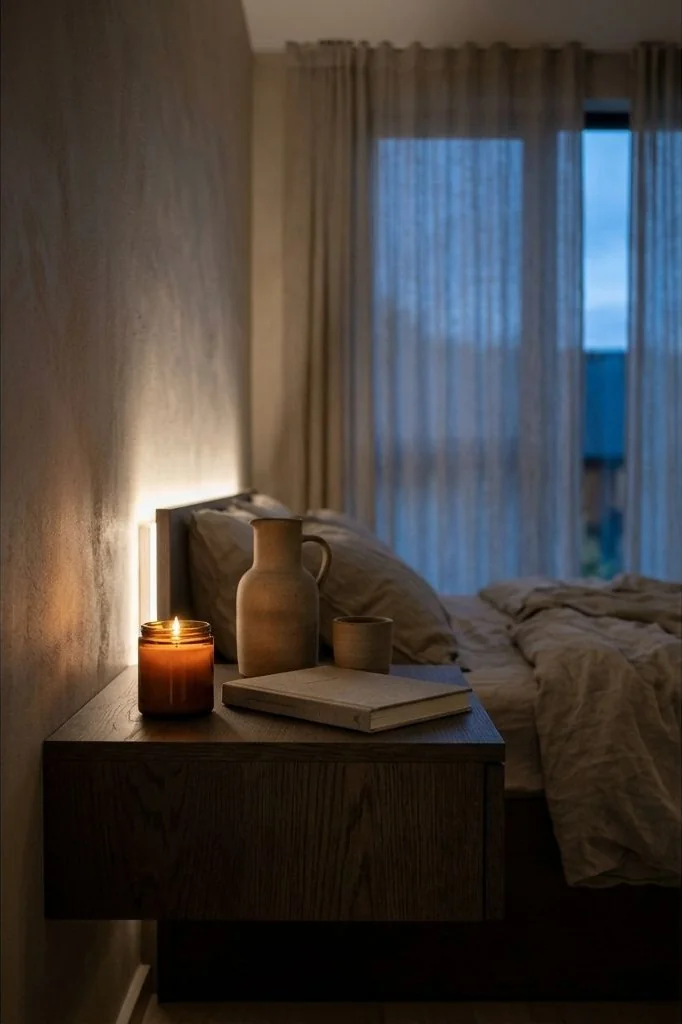
- Incorporate beeswax or soy candles in textured ceramic or amber glass holders to introduce organic flicker and gentle aromatic grounding.

Analog Replacement Rituals: Tea and Literature
Behavioral psychology teaches that you cannot simply eliminate an established habit; you must substitute it with an equally compelling alternative. If you abruptly eliminate evening scrolling without a replacement, boredom will draw you back toward your screen within twenty minutes.
Cultivate soothing sensory alternatives. Prepare a warm infusion of loose-leaf chamomile, holy basil, or passionflower in a stoneware mug. Settle into an ergonomic armchair paired with a physical cloth-bound book – biography, architecture, or poetic literature rather than fast-paced digital thrillers. The tactile weight of paper pages and the physical scent of ink anchor your sensory awareness, facilitating effortless neurological slowing.

Sanctifying the Sleep Environment
The bedroom must remain a sovereign zone reserved strictly for intimacy and recovery. When televisions, tablets, and charging cables colonize nightstands, the room loses its therapeutic power.
Outfit your bed in pure natural fibers – washed French flax linen or organic percale cotton. Linen fibers possess remarkable thermoregulatory and moisture-wicking properties, preventing nocturnal overheating and ensuring uninterrupted sleep cycles. Pair natural textiles with blackout window drapery to maintain an undisturbed cocoon of total darkness.

Acoustic Architecture: Softening the Auditory Landscape
Visual screens are not the only stimulus keeping the evening brain in a state of high alert. Auditory pollution – sudden smartphone notification alerts, loud television broadcasts, and jarring sirens – triggers involuntary sympathetic startle reflexes. Designing a calm acoustic sanctuary allows the auditory cortex to power down gently.
Introduce subtle analog soundscapes during your wind-down period. Soft instrumental acoustic music, gentle ambient rain field recordings, or low-frequency natural white noise masks sudden household noises and promotes synchronized slow-wave neural patterns. Pairing acoustic calm with tactile natural materials creates a multisensory perimeter of restorative domestic quiet.
Frequently Asked Questions
What if my employer expects immediate responses to late-evening messages?
Establish explicit communication boundaries during working hours. Clarify that emergencies can be reached via direct phone calls, while standard messaging channels are reviewed first thing the next morning. In practice, true emergencies are exceptionally rare.
Is reading on a dedicated e-reader acceptable during an evening digital sunset?
E-ink devices with warm front-lights that emit zero blue spectrum light are significantly better than backlit tablets or phones. However, physical paper books remain the gold standard for full cognitive detachment.
At what time should I initiate my digital sunset?
Aim to power down professional work tools between 6:00 PM and 7:00 PM, and store personal entertainment devices away at least sixty to ninety minutes prior to your target sleep time.
What should I do if my mind continues racing with work ideas after turning off screens?
Keep a physical bedside notebook and pencil. Jot down thoughts in two or three shorthand sentences to signal your brain that the idea has been captured safely for tomorrow.
Reclaiming Sovereignty Over Your Twilight Hours
Detaching from digital feeds is not an act of avoidance; it is an act of deep personal preservation. When you honor the natural cycle between focused daytime output and tranquil evening rest, your intellect regains the stamina required for enduring excellence. For complementary strategies on curating balanced, functional home wardrobes and lifestyle collections, review our guidance on transitional modular layering systems.
Disclaimer: The evening wellness habits and environmental recommendations described in this article are designed for educational purposes. Individuals managing clinical insomnia or circadian rhythm disorders should seek specialized advice from certified sleep specialists.