Modern professional life frequently suffers from fractured attention. Knowledge workers oscillate between open browser tabs, persistent communication pings, and fragmented to-do lists, ending twelve-hour days feeling cognitively drained yet functionally unproductive. True productivity is not about cramming more low-value tasks into overflowing calendars; it requires structural intention. Establishing time blocking architecture rooted in natural ultradian rhythm principles restores calm spatial and mental order to demanding creative workflows. Ground your daily rituals in timeless design principles at the Ornista curated living sanctuary.
Key Takeaways
Core foundations for implementing ninety-minute focus cycles in modern workspaces:
- Human cognitive stamina naturally peaks and wanes in rhythmic ninety-minute ultradian cycles.
- Time blocking architecture treats daily attention as finite spatial real estate rather than an elastic container.
- Physical environment design – natural oak finishes, tactile analog timers, and dedicated task lighting – anchors focus reflexes.
- Deliberate rest intervals between focus blocks allow neural networks to consolidate complex insights.
- Asynchronous communication buffers protect primary deep work blocks from reactive interruptions.
The Biology of the Ultradian Rhythm
In cognitive neuroscience and chronobiology, researchers recognize that the human brain operates on rhythmic physiological oscillations known as basic rest-activity cycles. While circadian rhythms regulate our twenty-four-hour sleep-wake cycle, ultradian rhythms modulate energy expenditure across ninety to one hundred and twenty-minute intervals throughout daylight hours.
During the first seventy to eighty minutes of an ultradian cycle, alertness, synaptic velocity, and prefrontal oxygenation rise to peak capacity. However, as ninety minutes approach, cellular waste products accumulate in neural tissue, potassium-sodium pumps fatigue, and the brain signals an unmistakable physiological need for rest: subtle sighing, restlessness, eye dryness, and mental drift.
When professionals attempt to push through this fatigue with excessive caffeine and forced willpower, they enter a state of toxic exhaustion. By architecting your workday around two or three protected ninety-minute blocks separated by genuine recovery periods, you work in harmony with biological reality rather than fighting against it.
Spatial Foundations: Designing the Focus Sanctuary
Attention is deeply environmental. An individual cannot maintain calm mental clarity while seated at a desk cluttered with tangled cables, scattered paper receipts, and blinking device screens. Every visual object in your peripheral vision competes for neural bandwidth, forcing your brain to expend subconscious energy suppressing background noise.
To support rigorous time blocks, your workstation must embody intentional minimalism:
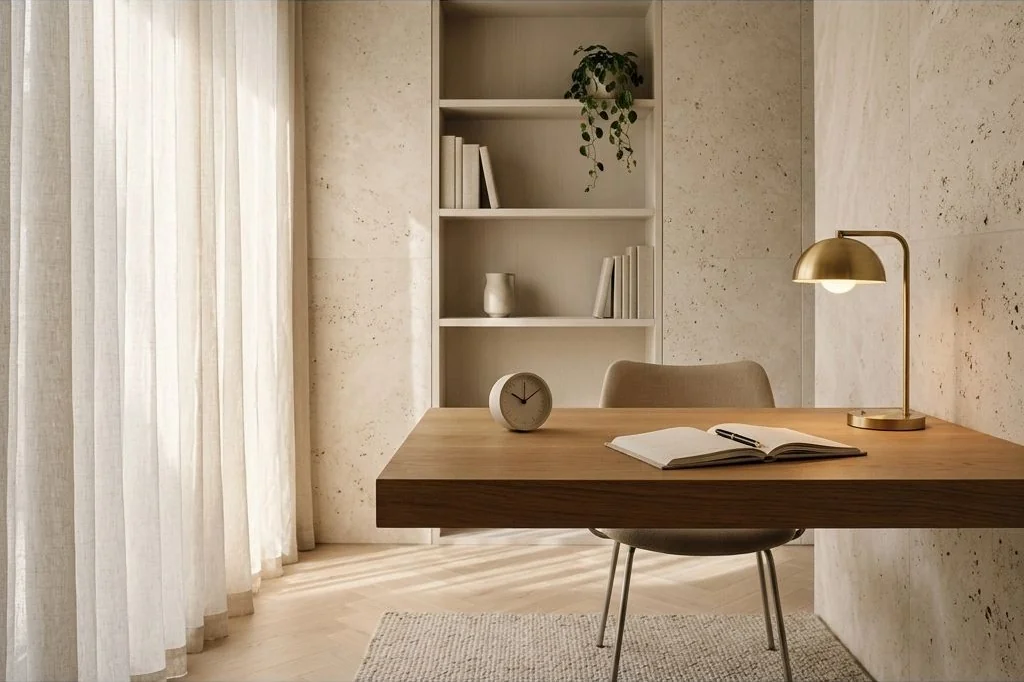
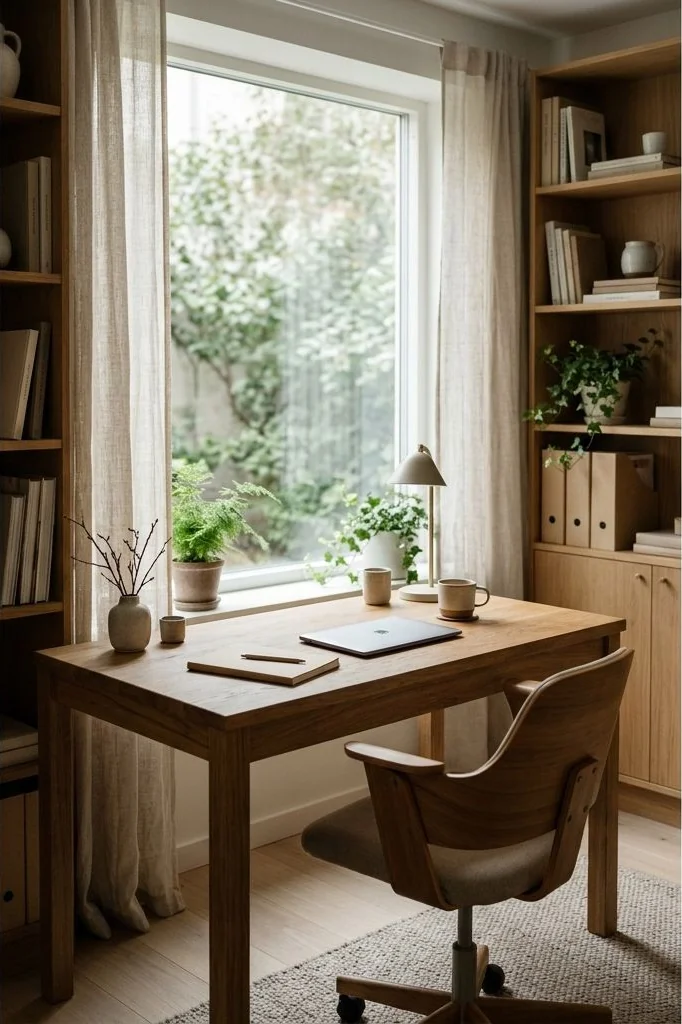
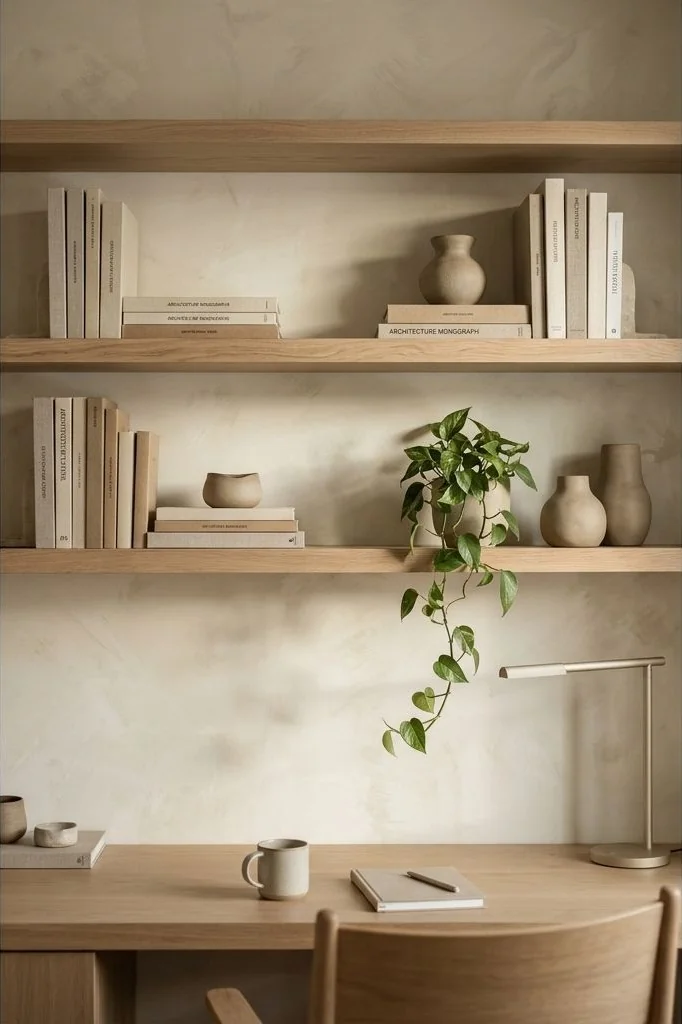
- Tactile Natural Materials: Solid white oak or ash timber desks provide acoustic dampening and warm organic grounding, replacing cold synthetic laminates.
- Curated Hardware Clearance: Keep only three items on the active desk plane: a primary display, a keyboard mat, and a notebook for physical ideation.
- Diffused Daylighting: Position desks perpendicular to natural light sources, using sheer linen window panels to eliminate screen glare while maintaining circadian connection.
For detailed strategies on curating functional, clutter-free personal spaces, study our guide on minimalist closet spatial organization.

Analog Cues: The Power of Tactile Friction
One of the most insidious points of failure in digital time-tracking apps is that the tracking instrument resides on the very screen that hosts endless digital temptations. When you open a mobile phone or browser tab to start a timer, you glance at unread notification badges, and attention fractures before the focus block begins.
Deploying analog instruments reintroduces tactile ceremony to deep work. A weighted mechanical dial timer crafted from matte ceramic or solid walnut creates an intentional physical threshold. Twisting the dial to ninety minutes produces a satisfying mechanical click, signaling to your sensory nervous system that all secondary inputs are officially silenced until the bell rings.

Structuring the Daily Focus Architecture
A resilient daily architecture divides eight working hours into distinct operational zones, ensuring critical deep work happens before reactive administrative demands take over:
| Time Window | Architectural Focus Block | Primary Cognitive Objective | Environmental Configuration |
|---|---|---|---|
| 08:30 – 10:00 | Deep Block I: Core Creation | High-friction strategic writing, coding, or spatial planning | Full screen, phone docked in another room, warm task lamp |
| 10:00 – 10:30 | Ultradian Decompression | Physical movement, hydration, pour-over tea, natural light exposure | Zero screens, walking outdoors or gentle stretching |
| 10:30 – 12:00 | Deep Block II: Complex Problem-Solving | System architecture, data analysis, deep editorial review | Dual document view, ambient music, closed email client |
| 12:00 – 13:30 | Nourishment & Midday Reset | Nutritious lunch, walking, casual conversation, mental clearing | Complete detachment from work surfaces |
| 13:30 – 15:00 | Collaborative Block | Team synchronizations, client calls, creative reviews | Video camera engaged, collaborative whiteboard open |
| 15:00 – 16:30 | Administrative Triage & Inbox Clearing | Email processing, invoicing, calendar scheduling, ticket updates | Rapid multi-tab processing, administrative closure |
Notice that high-cognitive demands are front-loaded into morning blocks when executive function is fresh. By quarantining reactive communication to the late afternoon, you prevent other people’s emergencies from derailing your most important creative milestones. To explore how deliberate material selections enhance daily comfort, read our analysis of capsule wardrobe fabric quality guidelines.
Lighting as a Cognitive State Trigger
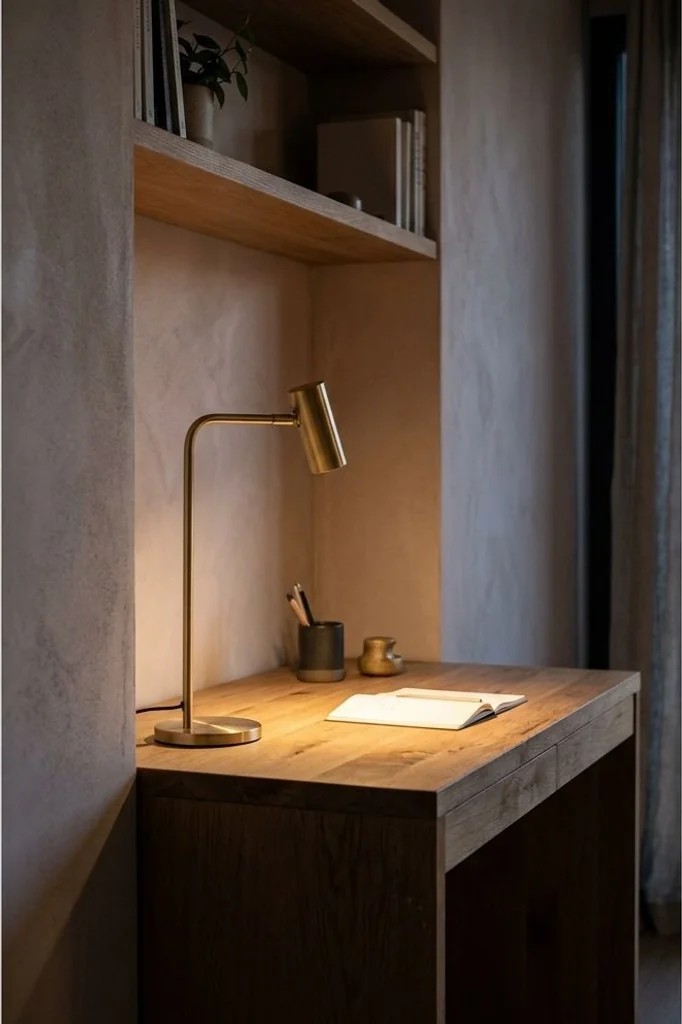
Architectural lighting design is one of the most underutilized levers in workspace productivity. Human circadian biology responds profoundly to color temperature and lux intensity. During morning focus cycles, crisp 4000K neutral light supports alertness and sharp visual acuity. As afternoon deep blocks wind down, transitioning to warm 2700K indirect illumination signals to the parasympathetic nervous system that the intense operational phase is concluding.
Using a dimmable brass task lamp with directional beam shaping creates an intimate pool of illumination directly over your work surface, casting the rest of the room into soft, unobtrusive shadow. This optical cocoon draws visual attention inward, making external room distractions invisible to your conscious focus.

Protecting Boundaries Against Reactive Intrusions
The most beautifully designed time-blocking schedule collapses if boundaries are porous. In corporate environments, colleagues default to treating open calendar slots as invitations for spontaneous meetings. To safeguard your ninety-minute blocks, treat them as non-negotiable appointments with your craft:
- Public Calendar Labeling: Mark focus blocks on shared company calendars with descriptive, respected labels such as “Deep Focus: Project Architecture (Async Only).”
- Batching Asynchronous Responses: Set automated Slack or email statuses explaining that messages are reviewed twice daily at designated times.
- Physical Do-Not-Disturb Markers: In shared home or studio spaces, closing an office door or lighting a specific amber desk candle establishes an unambiguous physical signal that you are unavailable.
Frequently Asked Questions
What if my workday is interrupted by unpredictable emergencies?
Build a thirty-minute buffer block directly into midday schedules. When an authentic emergency arises, absorb it into the buffer rather than letting it encroach on morning deep focus blocks.
Is ninety minutes too long for beginners struggling with focus?
If ninety minutes feels intimidating initially, begin with forty-five-minute blocks paired with ten-minute decompression periods. Gradually expand duration over several weeks as cognitive stamina builds.
How should I spend the thirty-minute decompression period between blocks?
Avoid social media or checking news feeds during rest intervals, as digital inputs keep visual and cognitive networks engaged. Instead, walk outdoors, drink water, stretch, or practice mindful breathing to truly restore neural stamina.
Can time blocking work for creative professionals whose inspiration is spontaneous?
Yes. Time blocking does not dictate what inspiration produces; it guarantees an undisturbed container where inspiration has permission to arrive without competing interruptions.
Restoring Intentional Balance to Daily Creative Endeavors
When you structure your days around intentional ninety-minute focus cycles supported by tactile material beauty and calm environmental boundaries, work ceases to feel like an endless sprint against digital chaos. You reclaim control over your intellectual stamina, producing work of enduring depth while preserving emotional tranquility for home and personal life. For complementary perspectives on curating modular systems across diverse lifestyle domains, review our comprehensive framework for transitional modular layering systems.
Disclaimer: Productivity systems and spatial organization principles detailed in this article are designed for educational guidance. Individual focus capacity, scheduling constraints, and workplace obligations vary across professions and organizational environments.