The space where you begin and conclude each day exerts a quiet yet profound psychological influence over your mental equilibrium. When a closet is cramped, poorly illuminated, and stuffed with neglected garments, the act of getting dressed triggers subtle sensory agitation. Minimalist closet spatial organization approaches the dressing area not merely as utilitarian storage, but as an architectural gallery for mindful curation. By adopting open timber shelving, uniform hangers, and disciplined spacing, your wardrobe becomes a calming visual sanctuary that celebrates intentional living. Learn more about our spatial philosophies and curated environments at Ornista architectural design.
Key Takeaways
- Open wardrobe systems transform curated garments into an architectural design feature, fostering everyday accountability and visual calm.
- Uniform solid oak or beechwood hangers maintain consistent shoulder geometry and reduce visual visual clutter across the garment rail.
- Preserving a strict two-inch breathing gap between hung items prevents fabric friction, wrinkling, and claustrophobic closet crowding.
- Shallow linen-lined drawers equipped with compartmentalized wooden dividers protect delicate knitwear, ties, and leather accessories.
- Concealed warm 2700K to 3000K LED strip lighting provides glare-free illumination that renders natural fabric colors truthfully.
The Psychological Clarity of Open Wardrobe Systems
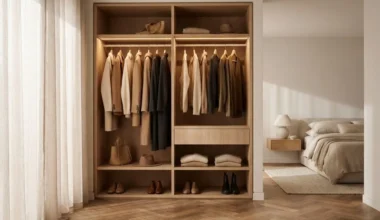
Traditional deep-set closets with heavy hinged doors encourage mindless accumulation. Items pushed into shadowed corners or buried on high dark shelves are quickly forgotten, leading to duplicate purchases and disorganization. An open wardrobe system – constructed from natural white oak, powder-coated steel uprights, and lime-washed walls – places your entire 30-piece collection into gentle daylight.
Living with an open system enforces honest curation. Because every hung shirt, tailored trouser, and knit layer remains in clear view, you naturally select only garments that align with your aesthetic values. Visual transparency removes the mental burden of searching through clutter, turning your morning dressing ritual into an effortless, serene experience. To explore how to assemble the ideal core collection for an open system, consult the 30-piece capsule wardrobe checklist.

Spatial Disciplines: The Two-Inch Air Gap and Uniform Hangers
The visual harmony of a garment rail depends on rhythm and negative space. Mixing flimsy dry-cleaner wire hangers with bulky plastic retail frames creates jarring visual discord. Wire hangers also bend under the weight of heavy wool, causing dimples and stretched necklines on delicate knits.
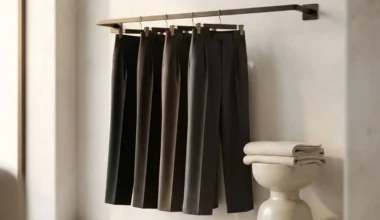
Standardize your entire wardrobe on uniform solid beechwood or white oak hangers. For tailored jackets and heavy overcoats, choose contoured wishbone hangers with wide, sculpted shoulder pads that support the garment’s internal canvas. Maintain a strict discipline of leaving at least two inches of empty space between adjacent hangers along the rail. This air gap allows natural fibers to breathe, lets creases fall out naturally, and creates the serene visual spacing of an upscale boutique.

Drawer Engineering: Modular Linen-Lined Dividers
While structured tailoring belongs on hangers, delicate knitwear, cashmere, and accessories demand supportive flat storage. Hanging sweaters causes gravitational stretching that elongates collars and deforms side seams permanently:
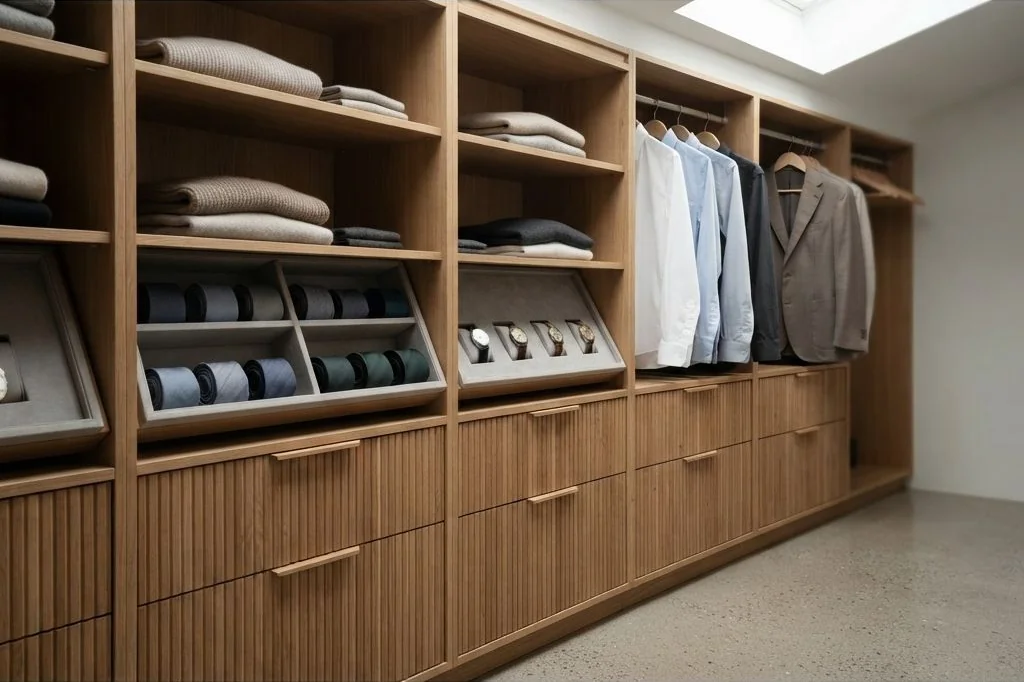
Incorporate shallow pull-out drawers (six to eight inches deep) lined with raw unbleached Belgian linen. Shallow drawers prevent the temptation to stack sweaters ten layers deep, which creates wrinkling at the bottom of the stack. Use solid timber or canvas drawer dividers to create individual homes for rolled leather belts, silk ties, and watches. As design authorities at Architectural Digest note, thoughtful internal joinery and tactile drawer linings bring quiet craftsmanship into intimate domestic rituals.

Upper Storage: Concealing Out-of-Season Essentials
Even in a year-round 30-piece capsule, occasional seasonal surplus – such as heavy winter scarves, extra blankets, or lightweight summer swimwear – requires out-of-sight resting zones. Storing these items haphazardly on open high shelves creates visual heaviness above eye level.
Utilize uniform lidded storage boxes crafted from bookbinding canvas, neutral linen, or woven rushgrass. Positioning three or four identical storage cubes along upper shelves establishes a clean, continuous horizontal datum line. Add vegetable-tanned leather pull loops and discreet cardholder slots for understated identification. To maintain harmonious color balance throughout the dressing space, coordinate storage materials with capsule wardrobe color palette formulas.

The Valet Stand: Creating an Evening Staging Ritual
One of the most restorative spatial additions to an intentional bedroom is a minimalist valet stand or prep hook. Deciding what to wear during hurried morning moments frequently leads to rushed choices and discarded clothing tossed over chairs.
Establishing an evening staging ritual changes this dynamic completely. Before retiring for the night, assemble your complete outfit – trousers, base layer, knitwear, and shoes – on a slender steel or wooden valet stand. Surveying the complete ensemble in a tranquil state ensures proportional harmony before morning begins. This deliberate ritual mirrors the mental clarity cultivated by our daily decluttering rituals for Scandinavian workspaces.

Lighting Architecture: 2700K Warmth and True Color Rendering
Illumination can make or break a closet design. Standard recessed ceiling downlights cast harsh overhead shadows and distort delicate neutral shades like ecru, slate, and charcoal. Furthermore, cool fluorescent bulbs make spaces feel clinical and unwelcoming.
Install warm, diffused LED strip lighting concealed within vertical wardrobe uprights or behind horizontal shelf fascias. Specify high Color Rendering Index (CRI 95+) diodes calibrated between 2700K and 3000K. This warm, continuous vertical wash illuminates garments evenly from collar to hem, ensuring that fabric colors and textures appear authentic and inviting every time you reach for an item.
In addition to illumination, consider acoustic resonance within your dressing alcove. Hard tile floors and bare plaster walls can create sharp echo reverberation that introduces subtle subconscious tension during morning routines. Introducing a dense, low-pile wool rug beneath the wardrobe rail and hanging heavy Belgian linen drapery dampens ambient sound, fostering the acoustic tranquility of a quiet architectural pavilion.

Frequently Asked Questions
Does clothing collect dust in an open wardrobe system?
In an active 30-piece capsule wardrobe, garments are worn and rotated regularly, preventing dust accumulation on everyday items. For seasonal outerwear or formal suiting that rests for weeks, breathable unbleached cotton garment bags provide protection without trapping moisture.
What is the ideal hanging rail height for full-length coats versus shirts?
A hanging rail for full-length overcoats and trench coats requires a vertical clearance of sixty to sixty-five inches. For shirts, blazers, and folded trousers, a clearance of forty to forty-two inches prevents hems from dragging on shelves below.
How can I prevent moth damage in an open closet without using chemical mothballs?
Aromatic American red cedar blocks and dried lavender sachets offer natural, non-toxic moth deterrence. Lightly sanding the cedar blocks once every six months refreshes their organic essential oils, keeping wool and cashmere safely protected.
How often should a minimalist wardrobe spatial audit be conducted?
Conduct a gentle spatial check at the midpoint of each season. Evaluate whether any garments required repairs, whether spacing remained consistent, and whether any unworn items should be removed to preserve negative space on the rail.
Architecting an open minimalist wardrobe system transforms dressing from a hurried logistical task into a tranquil daily ritual. When space, light, and natural materials unite in harmony, intentional living begins right at your closet door.