In modern menswear and womenswear, trousers form the true architectural anchor of personal silhouette. While tops and knitwear capture immediate eye-level attention, the rise, drape, and hem break of your trousers govern bodily proportions and overall visual poise. In an intentional wardrobe, relying solely on tight synthetic denim or unstructured track pants produces an informal, ungrounded appearance. Integrating tailored trousers into a capsule wardrobe establishes a versatile foundation that bridges boardroom formality and relaxed weekend ease. Discover more about our approach to spatial harmony and intentional curation at the Ornista intentional spaces platform.
Key Takeaways
- A high-waisted rise (resting at the natural belly button) elongates the lower body line and creates comfortable ease across the hips.
- Forward pleats provide functional expansion when sitting, preventing pocket flaring and fabric pulling across upper thighs.
- A subtle ‘slight break’ or clean ‘no break’ hem geometry creates an unbroken vertical line that pairs cleanly with both loafers and boots.
- Pairing formal pleated trousers with casual heavy cotton t-shirts and minimalist sneakers creates an effortless modern contrast.
- Natural fibers such as heavy wool flannel, crisp cotton cavalry twill, and Belgian linen ensure seasonal breathability and graceful drape.
The Geometry of Rise: Why High-Waisted Cuts Endure
Over recent decades, mass-market retail trends repeatedly popularized low-rise trousers that sit precariously on the hip bones. While inexpensive to manufacture because they use less fabric, low-rise cuts sever the torso awkwardly, truncating the visual length of the legs and requiring constant adjustment when sitting down.
Classical tailoring adheres to the natural waistline – the narrowest point of the torso, situated approximately one inch above the navel. A high-waisted rise allows the waistband to rest securely against the pelvic bone without pinching. When you tuck in a crisp poplin shirt or fine merino knit, the unbroken expanse of fabric cascades smoothly down the legs, creating an elegant column of proportion. For complementary insights into building an entire wardrobe around these proportions, review the 30-piece capsule wardrobe checklist.

Pleats and Waistband Engineering: Functional Freedom
Flat-front trousers are often marketed as modern, but they lack mechanical flexibility. When the human body transitions from standing to sitting, the thigh circumference expands naturally by one to two inches. In a flat-front trouser cut close to the body, this expansion strains the seams and pulls side pockets open like wings.
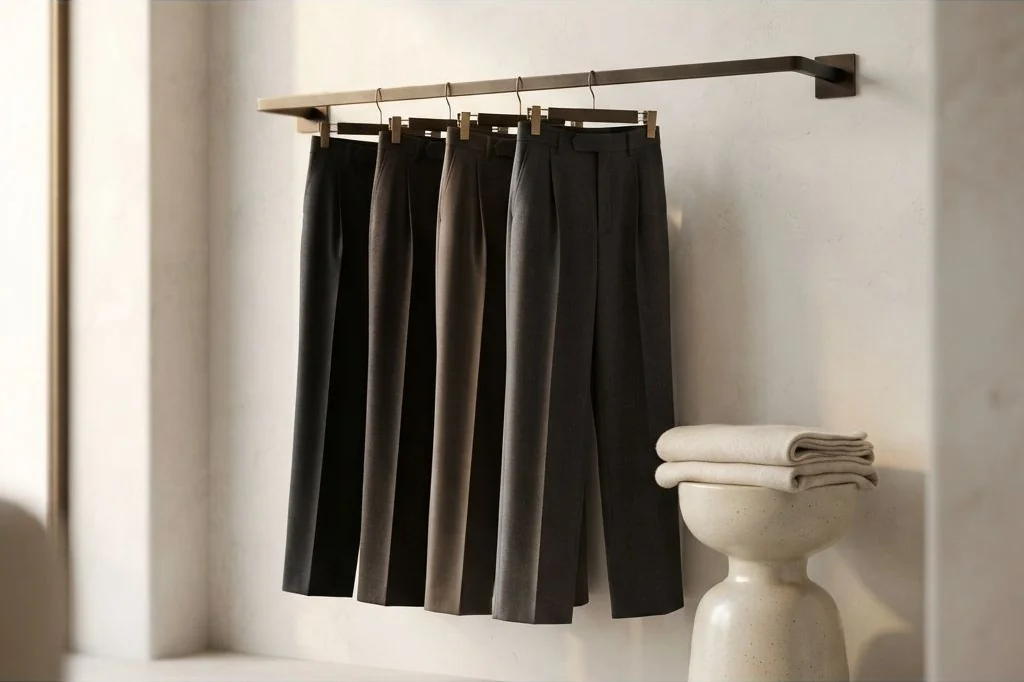
Forward pleats – folds of fabric that point inward toward the fly seam – act as passive architectural expansion joints. When standing, pleats lie flat and crisp, maintaining a clean vertical crease down the leg. When sitting, the folds gently expand to accommodate muscle movement, ensuring complete comfort without bunching. Extended waistband closures with adjustable side buckles eliminate the need for a belt, streamlining the waistline into a seamless sculptural transition.

Hem Break Architecture: Calibrating the Ankle Line
The hem break refers to the fold or indentation that occurs where the bottom edge of the trouser leg meets the top of the shoe. Getting this proportion wrong can undermine an otherwise impeccable garment:
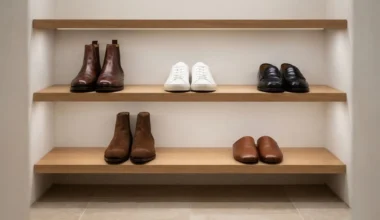
A full puddle break – where excessive fabric gathers in accordion folds over the shoe instep – looks sloppy and dated. Conversely, an exaggerated cropped ankle can look precarious when paired with structured footwear. The ideal capsule standard is a slight break, where the front hem lightly touches the top of the shoe, creating a single soft fold while the rear hem grazes the shoe heel. To see how hem breaks interact with footwear lasts, examine our analysis of the modular five-pair shoe capsule.

High-Low Styling: Modernising Tailored Trousers
The greatest versatility of tailored trousers lies in their capacity to refine everyday casual wear. In modern styling, pairing dress trousers solely with matching suit jackets and ties feels overly rigid for contemporary lifestyles.
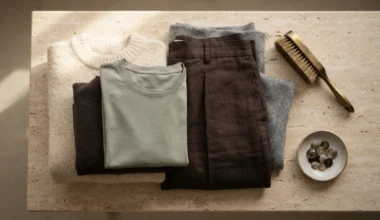
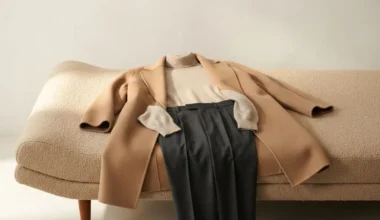
Embrace high-low juxtaposition. Wear a pair of charcoal pleated wool trousers with a heavyweight optic white boxy cotton t-shirt and clean white leather sneakers. The structured drape of the wool provides refined gravity, while the casual t-shirt keeps the outfit relaxed and approachable. As highlighted by leading fashion authorities at Vogue, combining sharp tailoring with casual foundational elements embodies modern understated luxury.

Fabric Weight and Seasonal Draping Characteristics
How a trouser hangs is dictated primarily by the density and weave of its fabric. Light, flimsy synthetic fabrics lack the gravitational mass needed to maintain a clean vertical crease, resulting in fabric that clings to thighs and calves awkwardly:
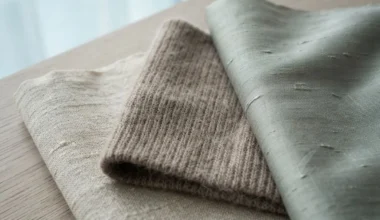
For autumn and winter, invest in heavy wool flannel weighing between 340 and 400 gsm. The brushed surface traps heat while its natural weight pulls the trouser leg down into a sculptural line. For spring and summer, choose high-twist tropical wool (fresco) or heavy Belgian linen (260 gsm). Fresco weaves possess an open porous structure that breathes in humid weather while remaining remarkably wrinkle-resistant. To see how these fabrics coordinate with upper layers, review our guide on transitional layering formulas.

Storage and Pressing Rituals for Tailored Bottoms
Maintaining the crisp architecture of tailored trousers requires proper hanging techniques. Draping trousers over a standard wire hanger creates a stubborn horizontal crease across the mid-thigh that requires repeated ironing, weakening the delicate wool fibers over time.
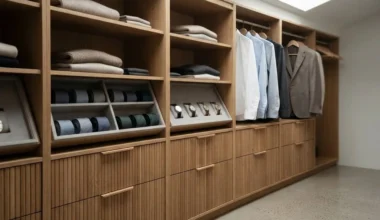
Instead, use solid beechwood clamp hangers that secure the trousers upside down by their bottom hems. Suspended in this manner, the natural weight of the waistband and pocketing pulls the fabric taut, naturally easing out sitting creases overnight without artificial heat. This mindful preservation approach mirrors our daily philosophies on spatial serenity, such as our guide on daily decluttering rituals to foster calm throughout living and working spaces.

Frequently Asked Questions
How many pairs of tailored trousers belong in a 30-piece capsule wardrobe?
A balanced capsule typically includes three to four pairs of tailored trousers: one pair in charcoal wool flannel, one pair in taupe tropical wool, one pair in washed linen or cotton twill, and one pair of dark selvedge denim for relaxed settings.
Can tailored trousers be washed at home, or do they require dry cleaning?
Wool flannel and structured suiting trousers should only be dry-cleaned once or twice a season. Spot cleaning with a damp cloth, hanging upside down overnight, and occasional gentle steaming is all that is required for ongoing freshness.
What is the difference between single and double pleats?
A single pleat provides a moderate expansion fold that maintains a streamlined front, ideal for slimmer frames. A double pleat introduces an additional smaller fold, offering maximum drape and generous room through the hips and seat.
How wide should the leg opening be on classic tailored trousers?
A classic tailored leg opening typically measures between eight and nine inches when laid flat (sixteen to eighteen inches in total circumference). This width drapes cleanly over shoe uppers without billowing or constricting the ankle.
Integrating architectural tailored trousers into your capsule wardrobe anchors everyday dressing in enduring grace and comfort. When proportion, fabric weight, and tailoring craft align, simple silhouettes become a daily sanctuary of style.