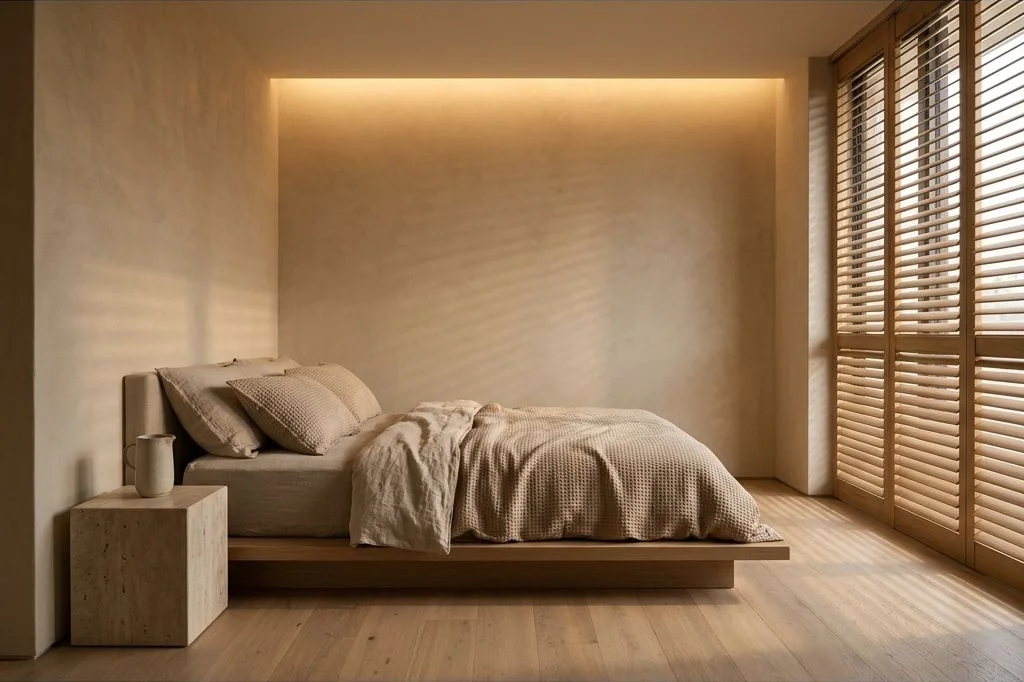
Waking up should feel like a gentle biological emergence rather than an acoustic emergency. Yet for millions of urban professionals, the day begins with the startling blast of an electronic alarm clock, catapulting heart rate and stress hormones into instant overdrive. In dark bedrooms with drawn blinds, this sudden sensory shock triggers grogginess and morning disorientation that lingers for hours. Incorporating ambient transitional lighting through automated dawn simulation aligns waking physiology with natural solar mechanics, supporting gradual neurochemical activation and serene morning energy. Connect with refined spatial philosophies at the Ornista intentional design atelier.
Key Takeaways
Core principles for implementing automated dawn simulation and transitional morning illumination:
- Gradual thirty-minute illumination ramps stimulate the cortisol awakening response smoothly before conscious waking occurs.
- Transitional spectrums shifting from 2000K soft amber up to 3500K warm daylight dissipate sleep inertia without auditory startle.
- Indirect wall-wash channels and cove troughs prevent direct glare on sensitive, sleep-adapted eyes.
- Zoned transitional corridors provide a progressive lighting gradient between darkened bedrooms and bright functional living areas.
- High-CRI bathroom vanity illumination delivers accurate color rendition for grooming while priming neurological focus.
The Physiology of Sleep Inertia and Acoustic Alarms
When an abrupt acoustic alarm sounds during deep delta-wave sleep or rapid eye movement cycles, the brain experiences an immediate surge of adrenaline and noradrenaline. While this primal fight-or-flight reaction succeeds in forcing physical consciousness, it leaves the prefrontal cortex in a state termed sleep inertia – a prolonged period of cognitive impairment, sluggish decision-making, and emotional irritability.
Natural morning awakening, by contrast, is governed by the cortisol awakening response. In pristine natural settings, the gradual intensification of pre-dawn twilight penetrates closed eyelids. Specialized photoreceptors alert the central nervous system that daytime is imminent, prompting the brain to steadily dial down melatonin production while initiating a controlled rise in cortisol and metabolic rate. By the moment eyes open naturally, the mind is alert, grounded, and primed for the day ahead.
Engineering the Thirty-Minute Dawn Ramp
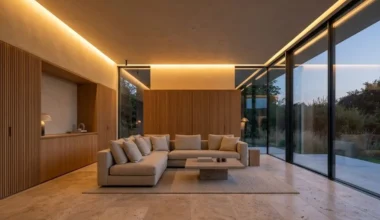
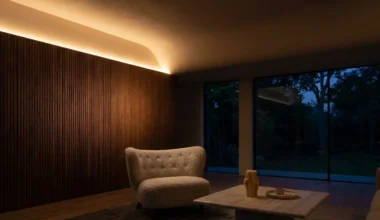
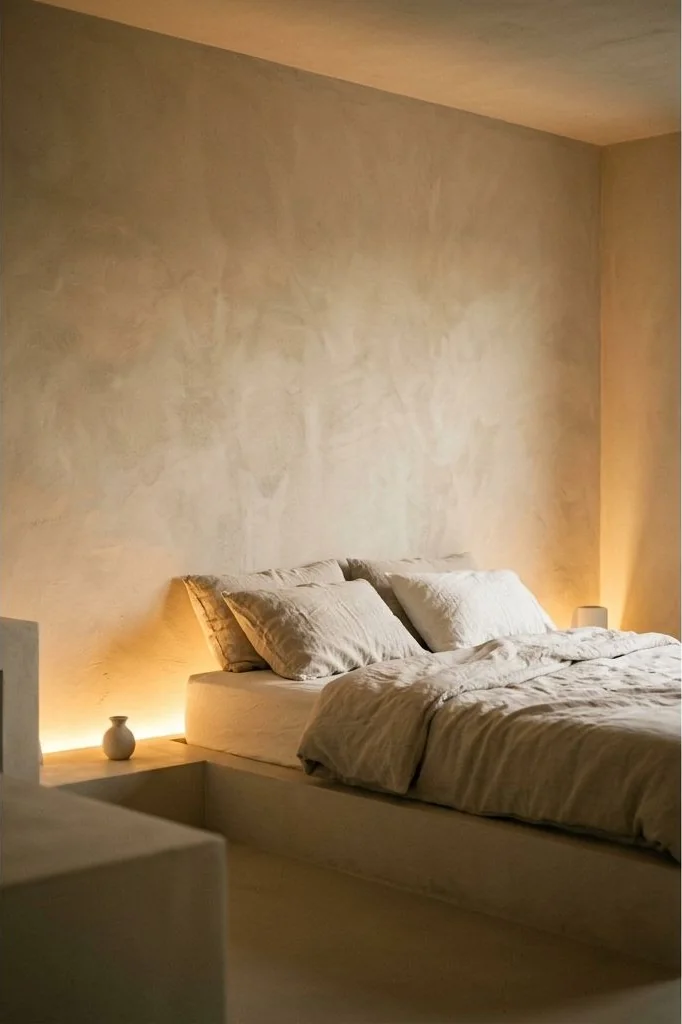
Modern smart home automation enables residences to recreate this delicate dawn progression with surgical precision. Rather than relying on standalone tabletop novelty gadgets that cast harsh circular hot spots across the bed, sophisticated architectural lighting utilizes continuous linear cove channels or concealed plaster wall-washers.
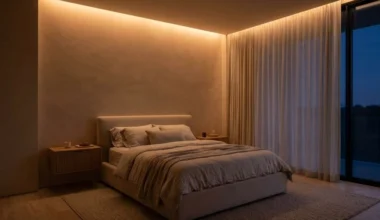
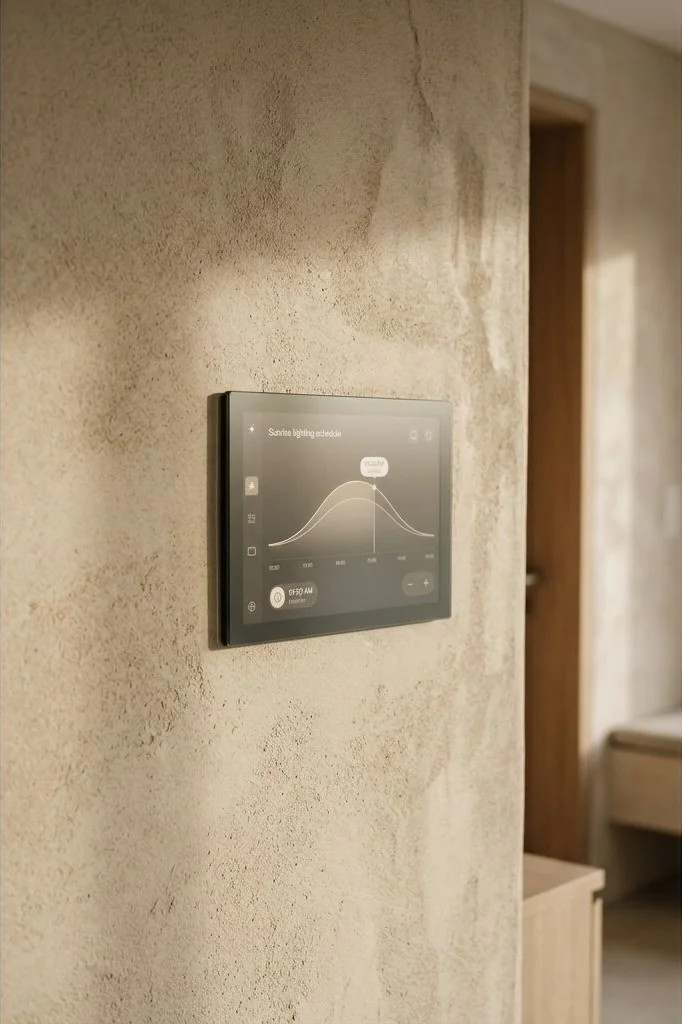
The dawn sequence initiates thirty minutes prior to target wake time at an imperceptible one percent luminous intensity, calibrated to an ultra-warm 2000K candle hue. Over the subsequent fifteen minutes, the automated controller executes a smooth logarithmic curve, expanding output to twenty-five percent while steadily shifting color temperature to 2700K. In the final ten minutes, the spectrum brightens to 3500K at sixty percent output, casting a warm golden wash across ceilings and walls that effortlessly awakens the sleeper before any backup acoustic chime is required.

Architectural Dressing Corridors as Transitional Buffers
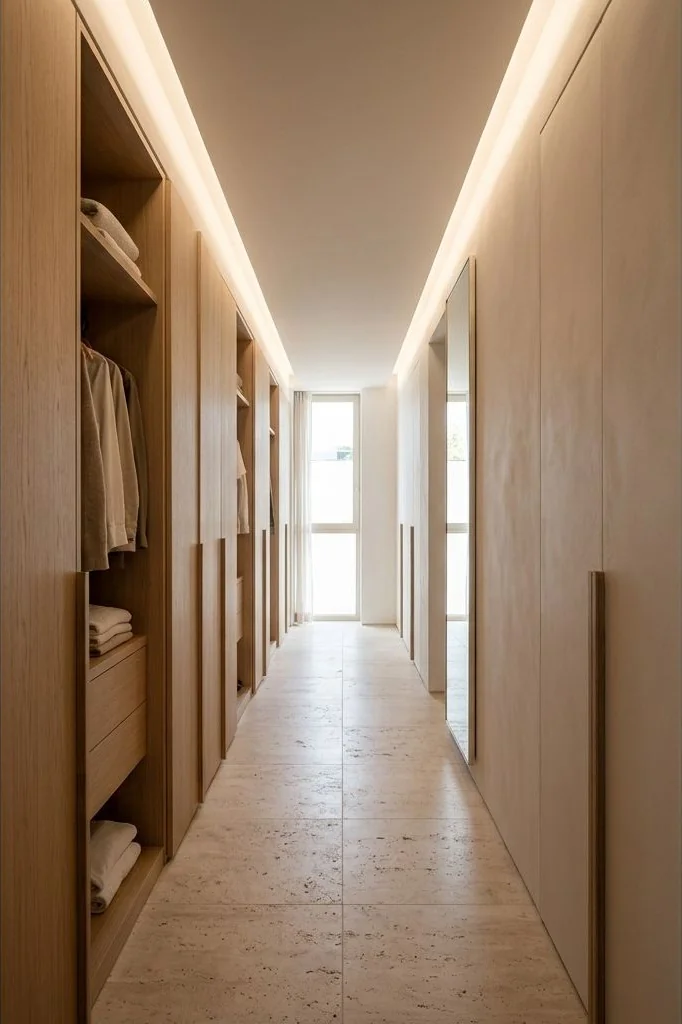
Stepping directly from a softly illuminated bedroom into a stark, brightly lit kitchen or bathroom creates acute visual discomfort and sensory recoil. Architectural planning must establish transitional zones – hallways, dressing corridors, and vestibules – that act as light airlocks between spatial realms.
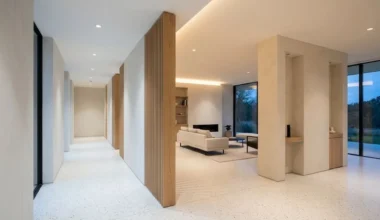
By programming hallway ceiling troughs to operate at 3000K and moderate thirty percent output during morning hours, the eye experiences a natural stepped adjustment. White oak cabinetry, fluted millwork, and neutral lime-wash wall finishes gently absorb and bounce ambient photons, creating a calming visual runway that guides movement toward morning duties. To synchronize physical spaces with intentional morning routines, read our in-depth framework for a mindful morning launchpad and cognitive priming.
Optimizing Bathroom Grooming Illumination for Alertness
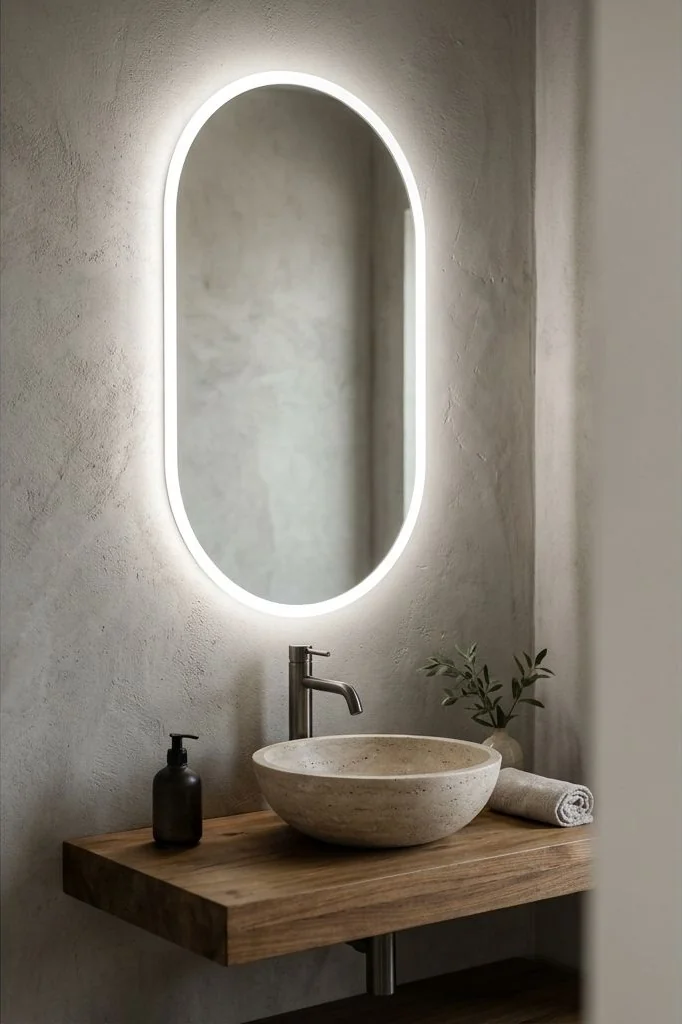
Once the individual reaches the master en-suite bathroom, the lighting schedule transitions from gentle awakening to crisp biological priming. The morning bathroom routine requires balanced front-facing illumination that eliminates facial shadows while signaling full daytime alertness to the nervous system.
Incorporate backlit mirrors and diffused vertical perimeter sconces calibrated to 4000K with a Color Rendering Index exceeding 95. Frontal vertical light delivers light directly to the pupil plane, suppressing remaining melatonin traces while ensuring accurate visual assessment for shaving, skin application, and grooming. Avoid overhead bare spotlights, which cast unflattering under-eye shadows and induce visual squinting.
Customizing Schedules for Variable Household Rhythms
A static dawn schedule that triggers identically seven days a week quickly becomes a source of domestic frustration on weekends. Robust smart home platforms provide conditional logic and calendar integration to support diverse waking schedules across household members.
Configure automated offsets that delay weekend dawn sequences by sixty to ninety minutes, allowing restorative sleep-in periods without discarding circadian structure entirely. For households with shifting shift-work or early travel commitments, wall-mounted touch controllers or tactile bedside rotary switches allow one-touch schedule adjustments without opening distracting smartphone screens. For complementary guidance on structuring daily focus blocks, review our system for time blocking architecture and uninterrupted focus cycles.
Integrating Morning Illumination with Natural Daylight
Artificial dawn simulation should never operate in isolation from natural sunlight; rather, it should serve as a harmonious bridge until outdoor daylight enters the home. In bedrooms equipped with automated drapery or sheer roman blinds, the smart home coordinates the lighting ramp with window treatments.
At the apex of the thirty-minute artificial lighting ramp, silent motorized motors slowly draw back blackout shades, allowing authentic morning sun to flood the space. As natural lux levels rise, internal light sensors gradually dim artificial cove channels, creating an undetectable transition from simulated dawn to genuine outdoor light. This seamless integration connects inhabitants with the natural environment while preserving privacy.
Frequently Asked Questions
Can dawn simulation work effectively for heavy sleepers who usually sleep through alarms?
Yes. Even with closed eyelids, human retinal cells detect increasing light intensity, which steadily brings heavy sleepers out of deep delta sleep into lighter sleep stages. Pairing the light ramp with an emergency soft acoustic backup five minutes after the ramp concludes guarantees prompt awakening without startle.
What color temperature is best to begin a morning dawn simulation?
Begin at 2000K to 2200K amber at one to three percent brightness. This mimics the low-angle atmospheric scattering of natural pre-dawn sunlight, allowing the brain to register light without triggering harsh glare discomfort.
Does simulated dawn lighting help combat seasonal affective disorder in winter?
Yes. During dark winter months when sunrise occurs well after work schedules begin, automated dawn simulation provides the neurological light cues that modern urban schedules demand, significantly reducing seasonal morning fatigue.
How much ceiling clearance is needed for an effective cove lighting channel?
A minimum of four to six inches of vertical clearance between the top of the cove lip and the ceiling plane allows the light beam to expand into a smooth, seamless wash without creating a visible line of LED diode cutoff.
Awakening with Intention and Natural Grace
The first thirty minutes of conscious awareness set the tone for the entire waking day. By exchanging frantic auditory alerts for the quiet, majestic progression of ambient transitional lighting, domestic architecture aligns human daily life with the timeless cadence of the earth. Mornings transform from a battle against exhaustion into a peaceful, empowering ritual that sustains creative work and emotional presence.
Disclaimer: The spatial lighting recommendations and chronobiology concepts discussed in this article are offered for home lifestyle enrichment. Individuals dealing with severe sleep onset issues or medical circadian phase disorders should consult qualified medical professionals.