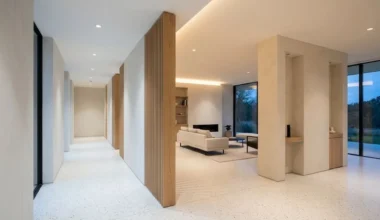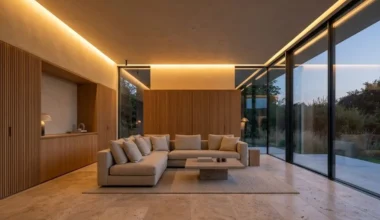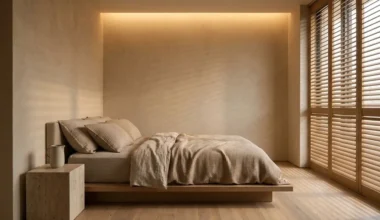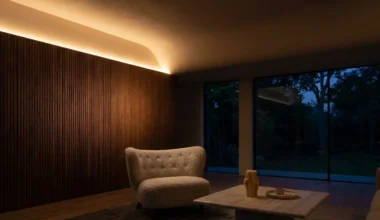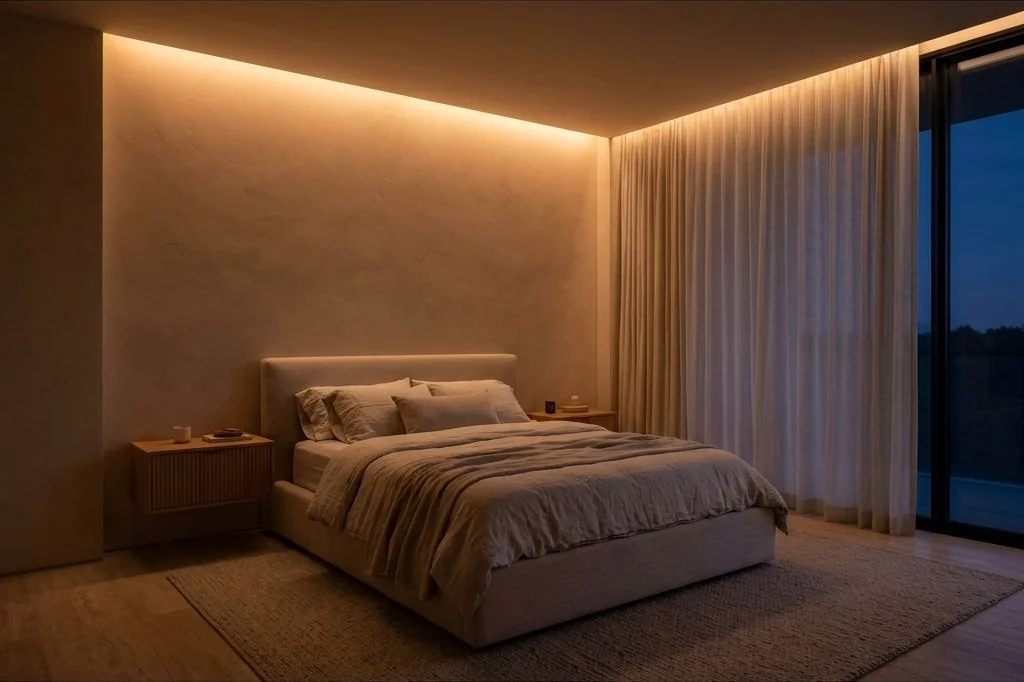
Deep, restorative sleep is the cornerstone of cognitive clarity and physical rejuvenation. In contemporary domestic environments, however, artificial nighttime lighting acts as an invisible endocrine disruptor. Standard ceiling fixtures emitting high-intensity cool white light trick human physiology into believing the sun remains high in the sky, delaying critical neurochemical cascades. Calibrating smart lighting color temperature specifically for evening relaxation preserves melatonin synthesis, smooths bedtime transitions, and safeguards deep slow-wave sleep cycles. Discover refined architectural living solutions at the Ornista curated living studio.
Key Takeaways
Fundamental strategies for protecting nocturnal hormonal balance through automated color temperature control:
- Short-wavelength blue emissions between 460nm and 490nm trigger retinal ganglion cells to suppress melatonin production by up to eighty percent.
- Transitioning residential color temperatures below 2200K two hours before bedtime facilitates natural sleep latency without pharmaceutical aids.
- Positioning light sources below eye level mimics the descending evening sun, reducing melanopic lux stimulation.
- Automated bathroom and hallway path lighting operating under five lux prevents sleep disruption during nocturnal awakenings.
- Motorized window textiles insulate bedroom sanctuaries from ambient streetlight pollution.
The Endocrinology of Evening Light Exposure
Human neurobiology does not possess an internal on-off switch; rather, it responds to chemical concentrations governed by the circadian pacemaker in the brain. As dusk descends in nature, ambient lighting shifts down through the color spectrum toward long-wavelength reds and oranges. This spectral shift signals the pineal gland to convert serotonin into melatonin, initiating drowsiness and lowering core body temperature.
When domestic interiors remain flooded with standard 4000K or 5000K downlights past sunset, the melanopsin photopigment within retinal ganglion cells remains continuously activated. According to clinical research into melatonin physiology and circadian regulation, even moderate domestic lighting levels can delay melatonin onset by more than ninety minutes. The physiological result is heightened nocturnal arousal, prolonged sleep latency, and reduced duration of stage-three slow-wave sleep, which is critical for cellular regeneration.
Defining the Evening Zero-Blue Protocol
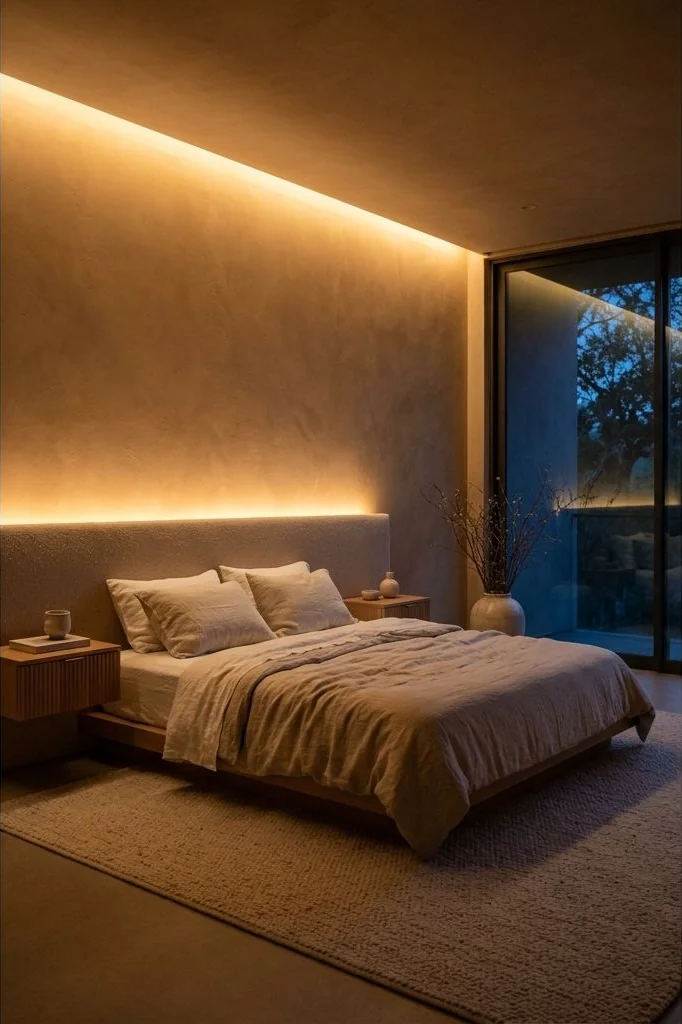
To eliminate disruptive blue frequencies without plunging a residence into premature darkness, smart lighting must transition into an evening zero-blue regime. Beginning approximately two hours before planned sleep, automated schedules adjust tunable LED emitters from their daytime settings down to an ultra-warm range between 2000K and 2200K, while reducing luminous output to twenty percent.
In this long-wavelength spectrum, the emitted light resembles the warm glow of an open hearth or a beeswax candle. Because human retinal ganglion cells possess negligible sensitivity to amber wavelengths beyond 600 nanometers, the visual system enjoys comfortable illumination for reading and conversation while the hormonal system proceeds uninhibited with melatonin synthesis.
Geometric Distribution and Eye-Level Principles
Spectral temperature represents only one dimension of circadian design; fixture geometry and beam angle exert an equally potent biological influence. Intrinsically photosensitive retinal cells are concentrated primarily in the lower nasal quadrant of the human retina, naturally arranged to monitor light descending from the sky overhead.
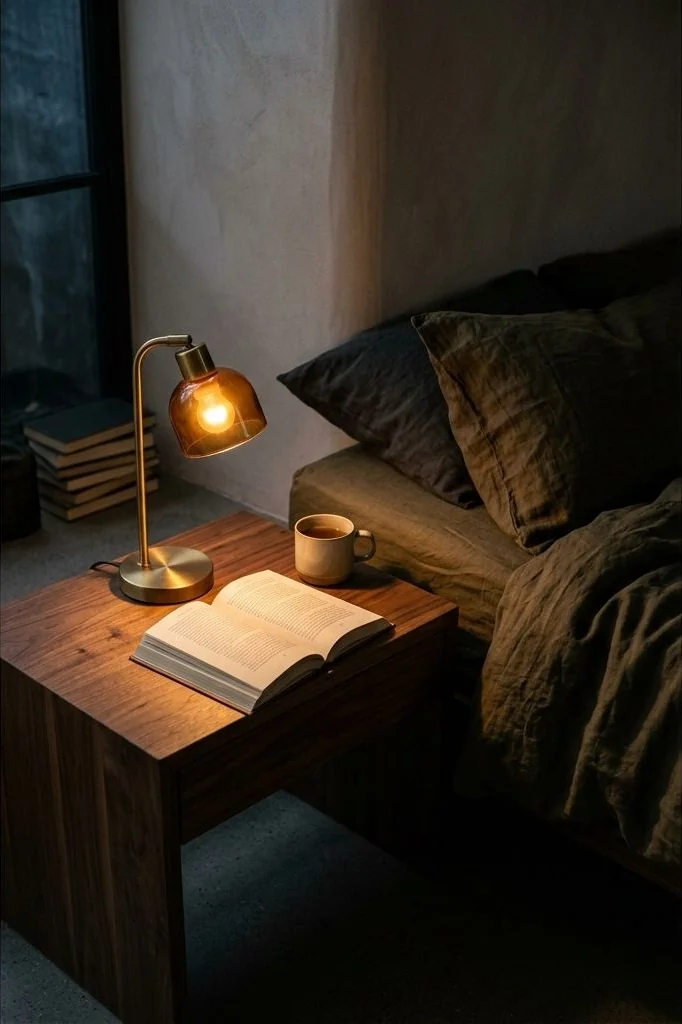
Consequently, high overhead downlights stimulate these photoreceptors with maximum efficiency, regardless of their dimmed state. For evening wind-down sequences, smart systems should extinguish high-angle recessed downlights entirely, transitioning illumination exclusively to low-level fixtures: floor-standing paper lamps, credenza accent lights, and low wall sconces mounted below eye level. This vertical zoning prevents direct retinal excitation, fostering immediate psychological relaxation. For comprehensive wind-down practices, explore our protocol for an evening digital sunset and peaceful bedroom ritual.
En-Suite Bathroom Transitions and Midnight Navigation
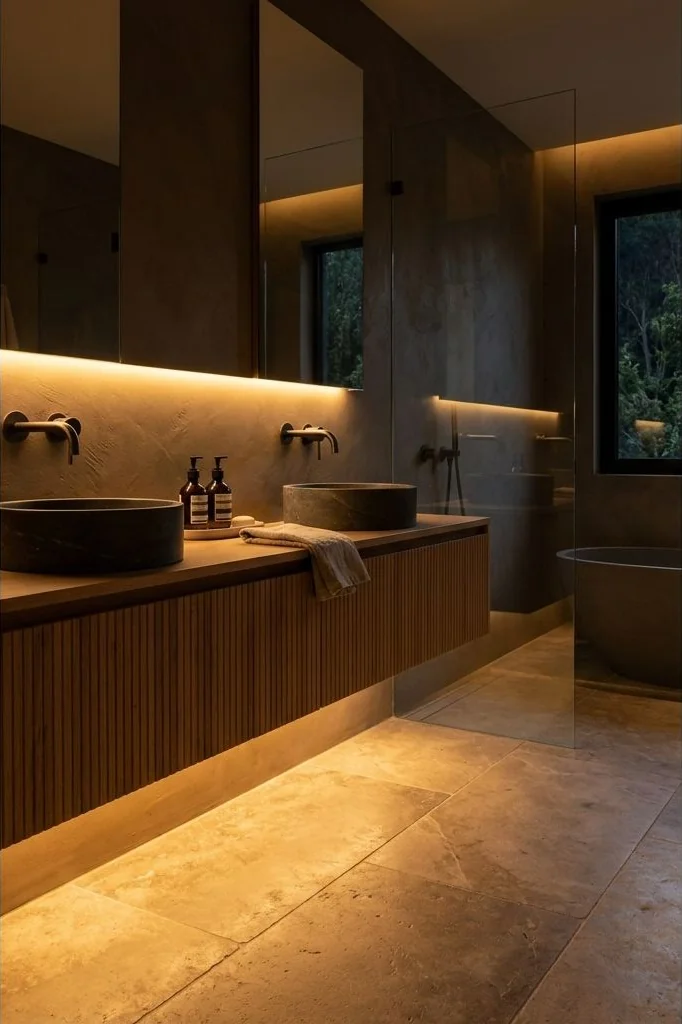
The master en-suite bathroom represents the most dangerous circadian hurdle in modern residential layouts. Late-evening personal hygiene rituals frequently force individuals into spaces dominated by high-wattage mirrored vanities and cold-white recessed spots. A five-minute tooth-brushing session under 4000K vanity lights delivers an intense melanopic shock, resetting the suprachiasmatic nucleus and destroying hours of careful melatonin accumulation.
Discreet smart lighting architecture remedies this friction by programming dedicated bathroom night scenes. After nine in the evening, primary vanity bars deactivate in favor of concealed floating vanity toe-kick strips and recessed niche lights calibrated to 2000K at fifteen percent brightness. This provides ample visibility for evening tasks while preserving the somnolent mental state required for swift sleep initiation upon returning to bed.
Tactile Rituals to Reinforce Biological Cues
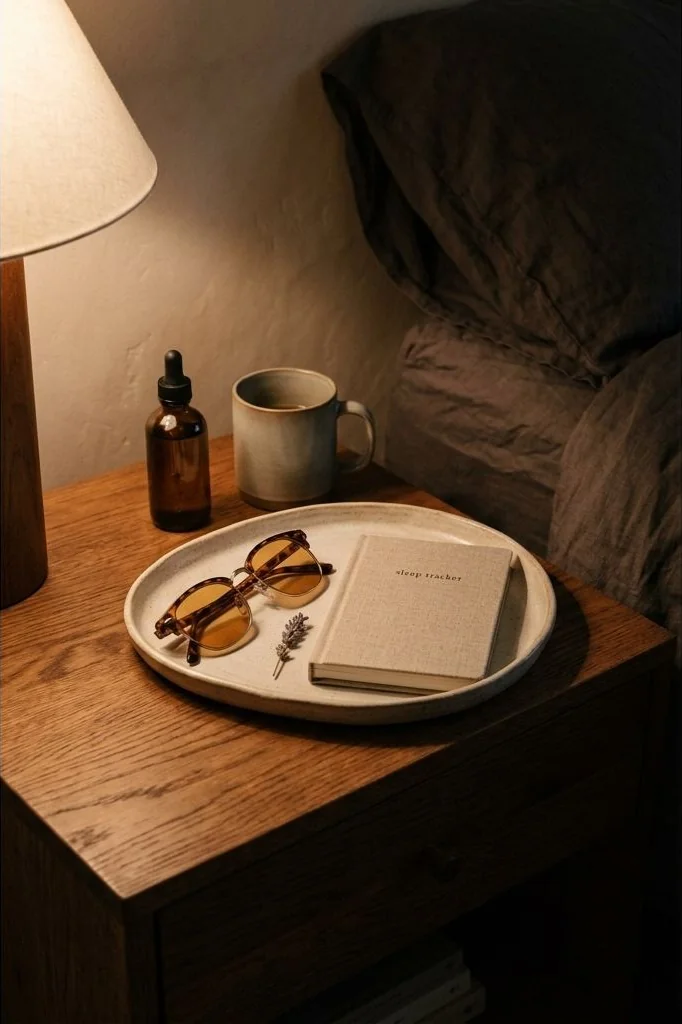
While automated smart schedules handle ambient light transitions behind the scenes, intentional tactile habits anchor sleep conditioning in conscious behavior. Combining automated lighting drops with tactile materials creates multi-sensory feedback loops that reinforce neurological relaxation.
Introduce washed Belgian linen bedspreads, raw timber side tables, and natural stone catchalls for evening reading glasses. As lights shift into deep amber hues, these textured surfaces absorb glare and impart a tactile grounding sensation that digital screens cannot offer. To structure physical wardrobes and spaces with similar mindful intention, review our guide to minimalist closet spatial organization and intentional layouts.
Nocturnal Sleep Continuity and Under-Bed Halo Channels
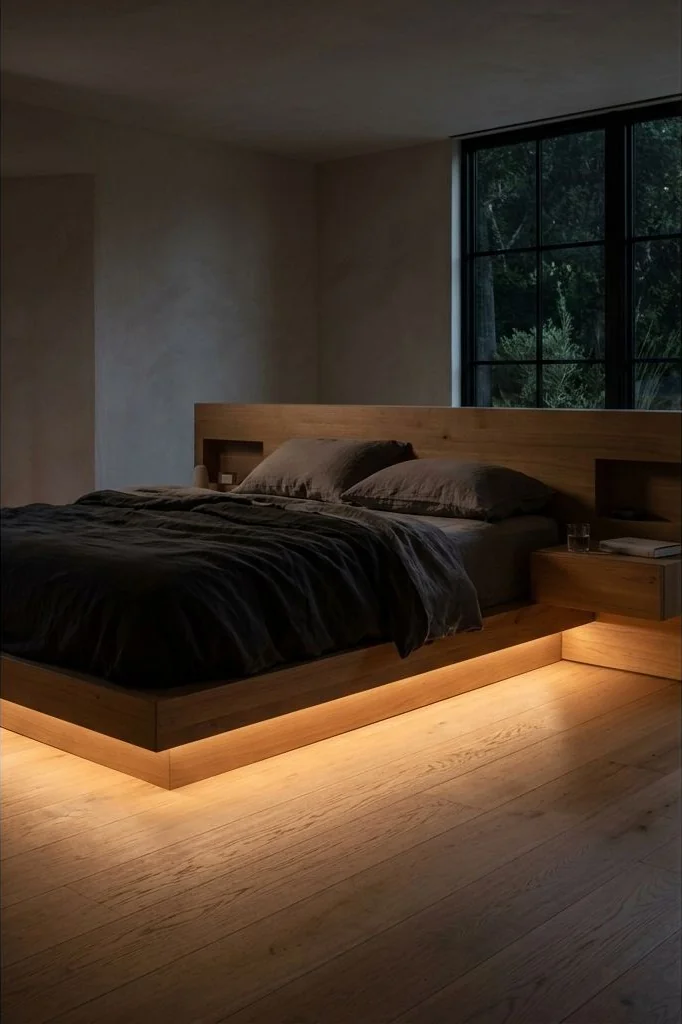
When waking during the night, stumbling in total darkness presents safety risks, yet turning on traditional room switches disrupts the sleep cycle for hours. The optimal solution lies in automated sub-bed halo channels linked to discreet floor pressure pads or low-position infrared sensors.
When feet touch the floor between midnight and six in the morning, a concealed 1800K LED ribbon beneath the platform bed frame activates at three percent intensity. This produces a soft carpet of amber glow that illuminates footing without reaching eye level. The sleeper navigates the room with complete confidence, and upon returning to bed, slides effortlessly back into delta-wave sleep.
Frequently Asked Questions
Can red night lights actually improve sleep quality compared to dim white bulbs?
Yes. Deep amber and red light wavelengths possess no biological capability to stimulate melanopsin-containing retinal ganglion cells. As a result, using warm amber illumination maintains steady melatonin production whereas dim white bulbs continue to trigger alertness signals in the brain.
How does smart lighting help people who struggle with late-night screen exposure?
While screen blue-light filters reduce direct emissions, high ambient room light compounds retinal strain. Smart lighting automatically counterbalances electronic devices by lowering background contrast and shifting surrounding room tones into soothing amber shades that encourage natural fatigue.
What is the ideal Color Rendering Index for evening bedroom fixtures?
Look for tunable white fixtures with a CRI rating of 95 or higher and an R9 value above 90. High CRI ensures that even at low 2000K color temperatures, skin tones and natural bedroom textiles maintain pleasing, authentic appearances rather than muddy tones.
Should all lights in the house transition to warm temperatures simultaneously?
Zoned scheduling is recommended. Social spaces like dining rooms and kitchens can remain at 2700K until dinner concludes, while bedrooms and relaxation lounges begin their warm amber drop sixty to ninety minutes earlier to prepare occupants for sleep.
Cultivating Restorative Sanctuaries Through Intentional Illumination
Designing for sleep is ultimately an act of architectural care. By orchestrating smart lighting color temperature around human biology, domestic sanctuaries transcend static shelter, actively defending mental peace and physiological health. Restful evenings pave the way for vibrant, energized mornings, establishing an enduring rhythm of restorative living. To discover how rhythmic planning enriches daily creative workflows, read our analysis of time blocking architecture and sustained creative stamina.
Disclaimer: The neurobiological insights and smart lighting strategies described here are provided for general educational enhancement. Individuals experiencing persistent insomnia or chronic sleep apnea should seek diagnosis and care from board-certified medical sleep specialists.